
Project Type: Hospitality
Rusty Parrot Lodge and Spa
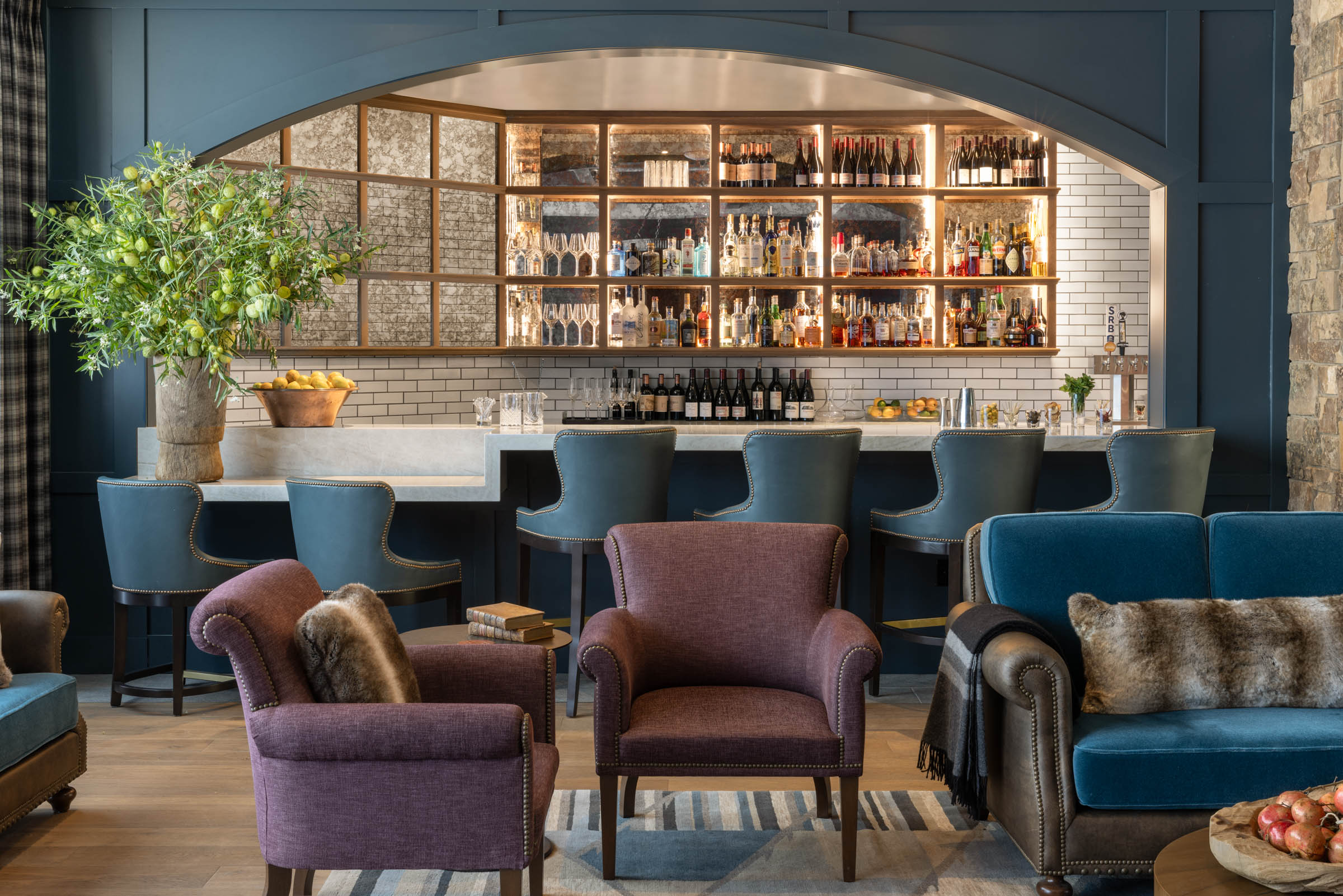
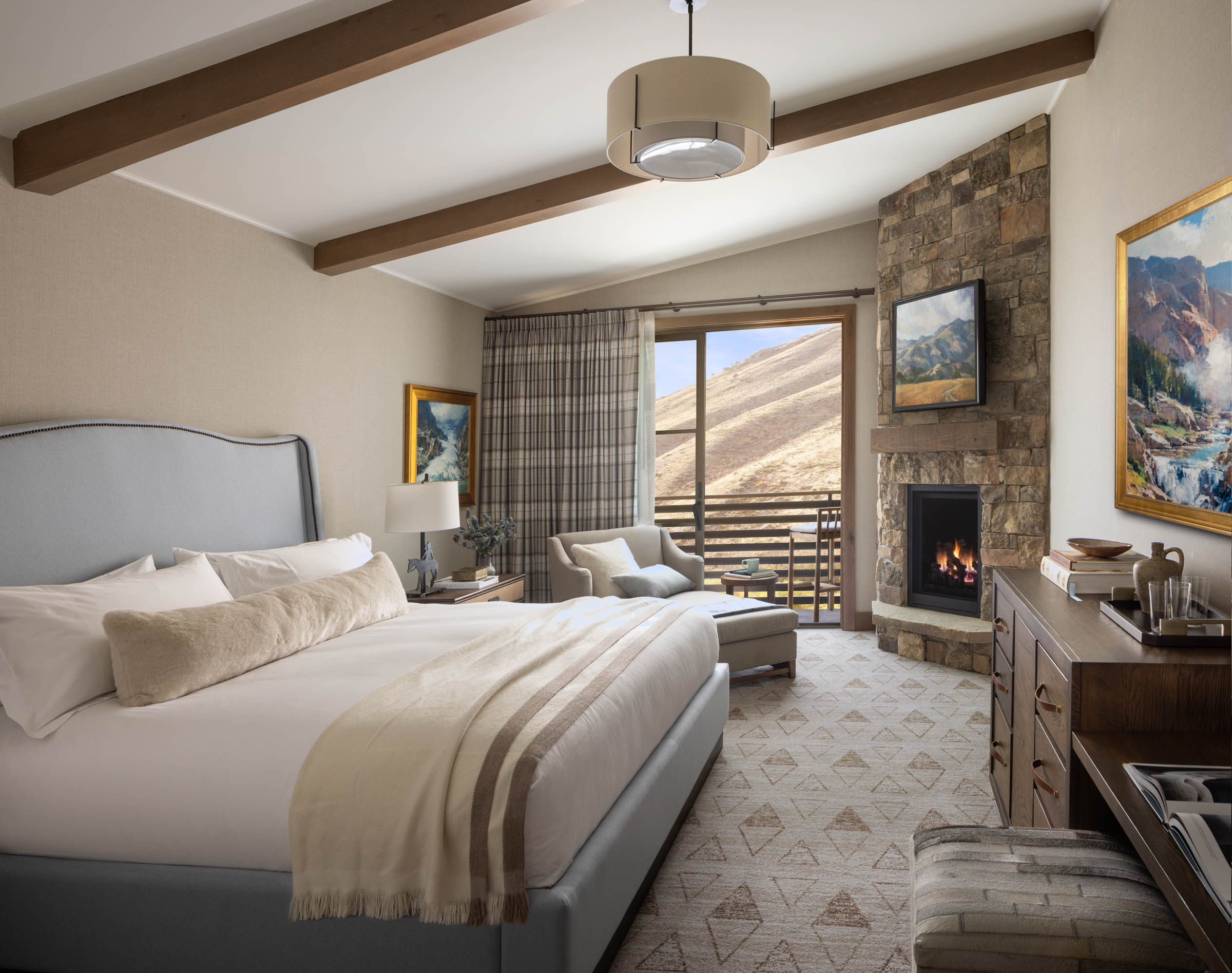
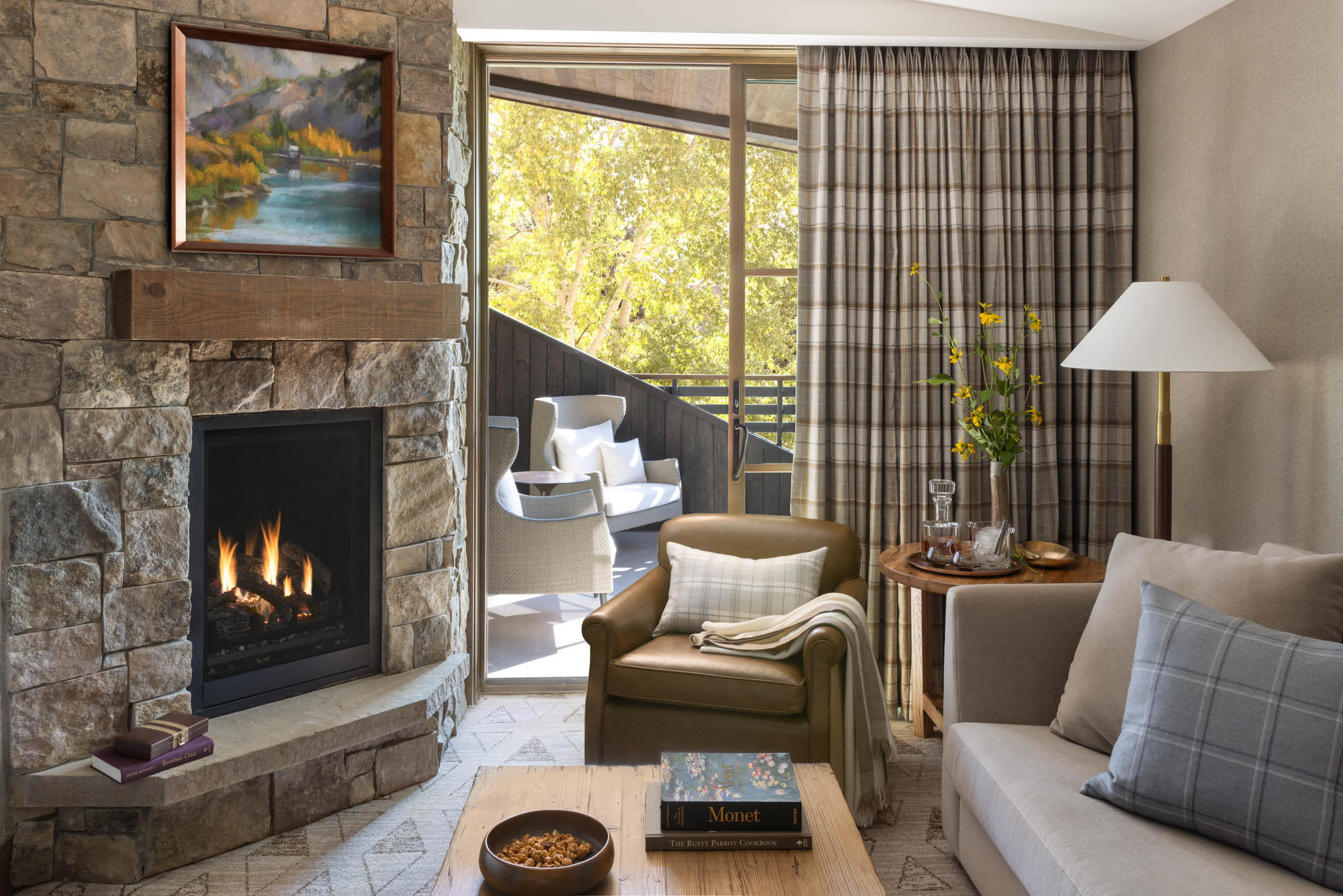
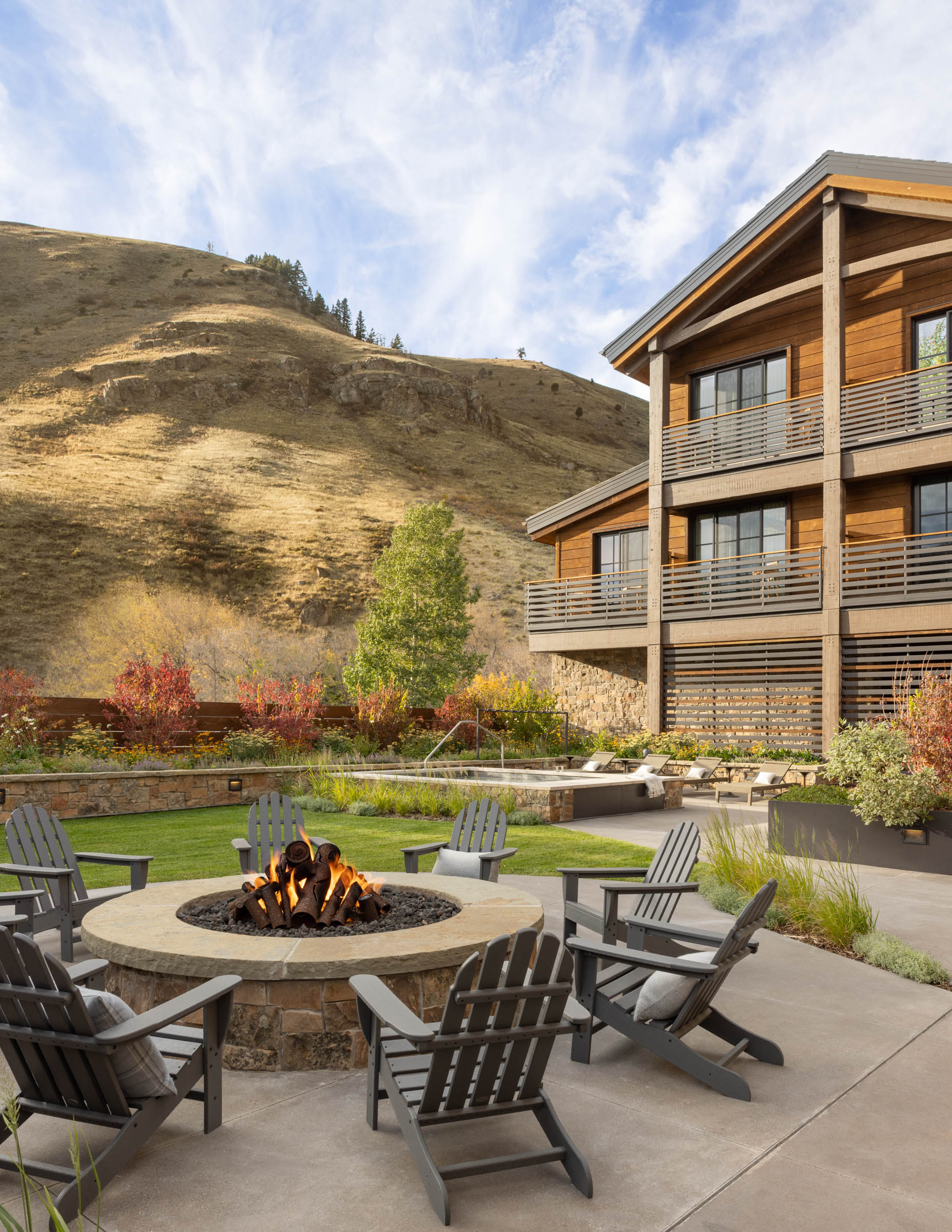
Replacing a beloved building with a new version – one that doesn’t disappoint those who remember, and were fans of, the original – remains one of the most interesting, and tricky, of design opportunities. How do you protect and preserve and, at the same time, advance and innovate? That was the challenge when R+B was selected to resurrect the Rusty Parrot Lodge, an iconic Jackson, Wyoming luxury inn that had been destroyed by fire. The owners were determined to recapture the eccentric flavor that popularized the original – even as they recognized the need to contemporize the design (and make it code-compliant), improve the lodge’s amenities, and render the entirety a model of sustainability.
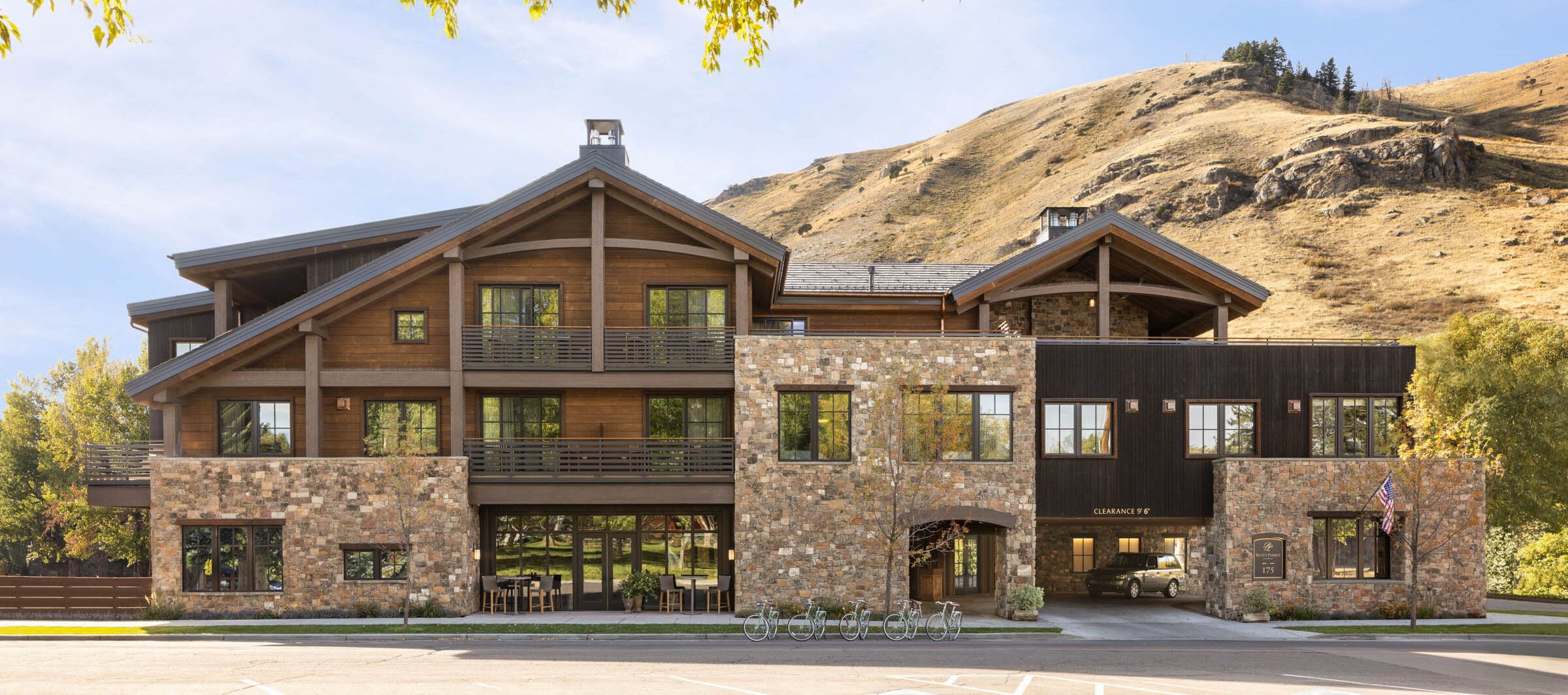
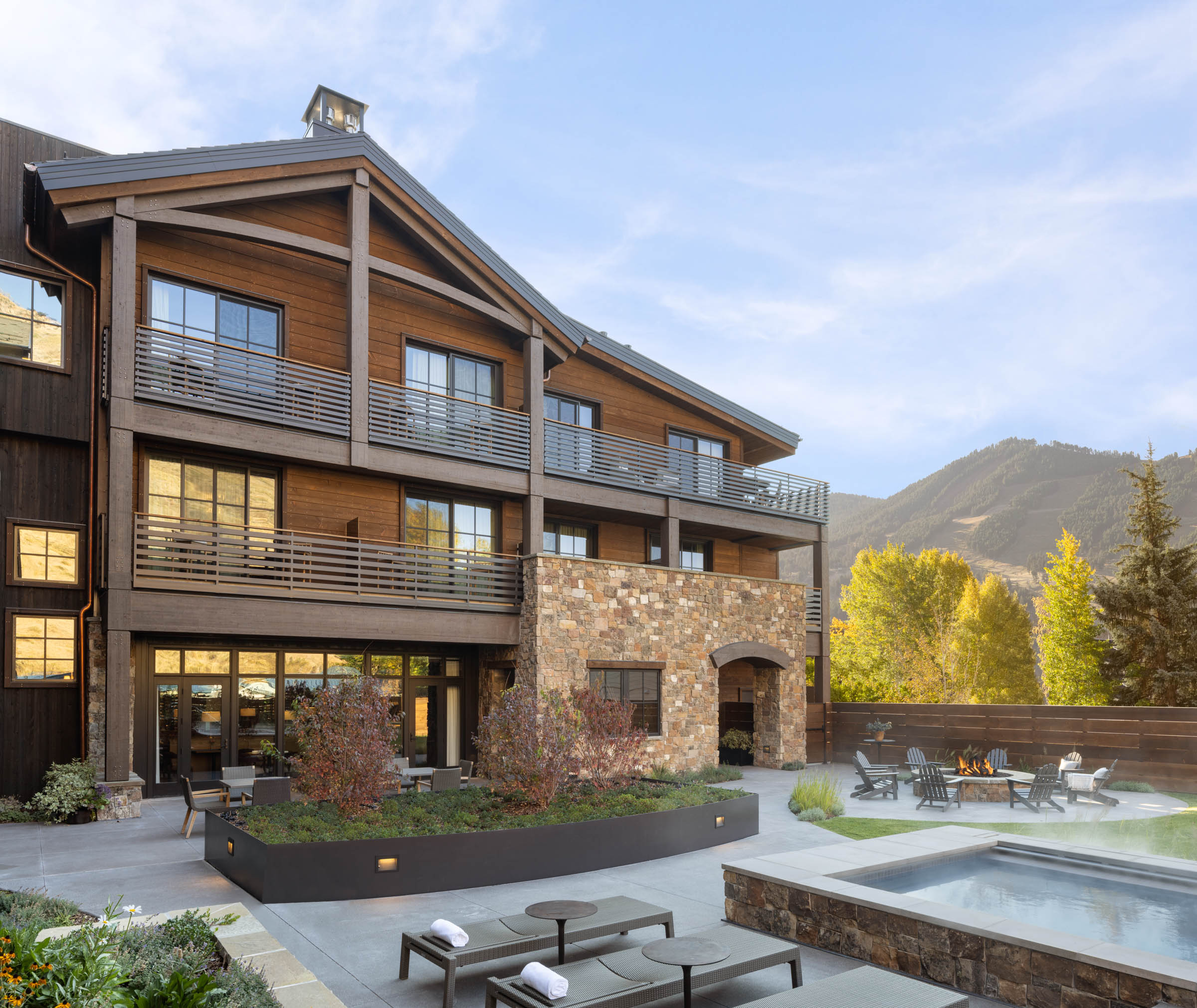
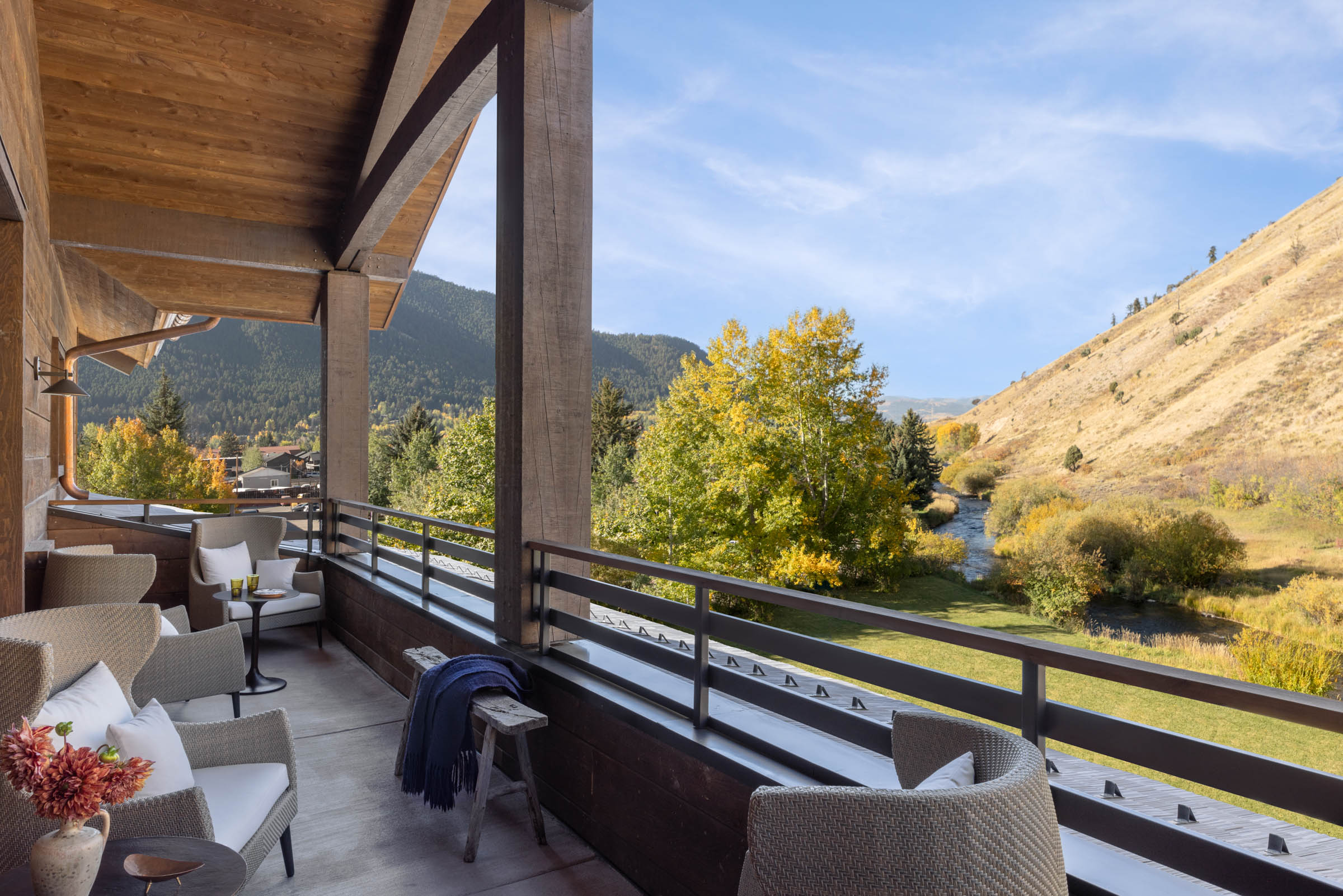
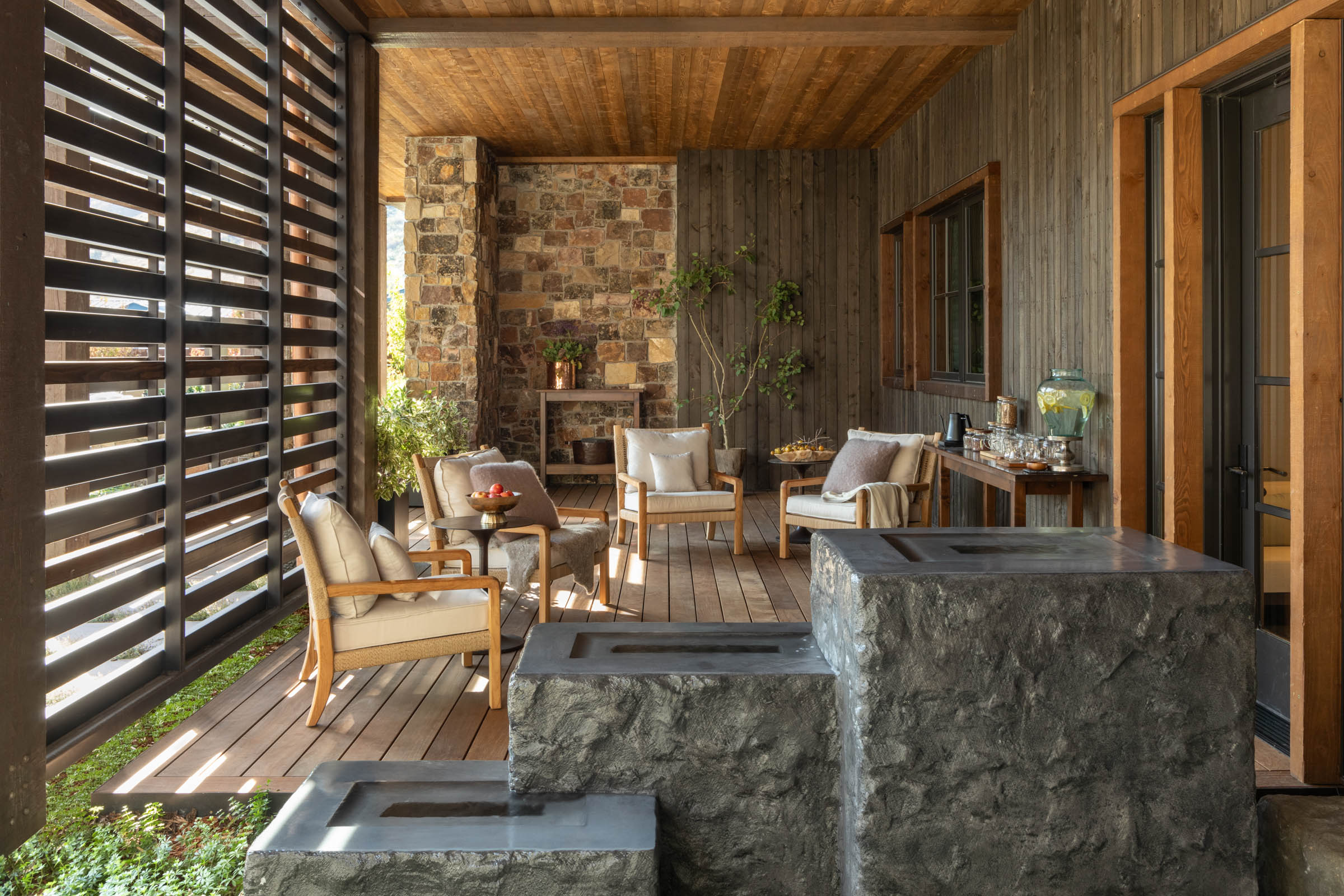
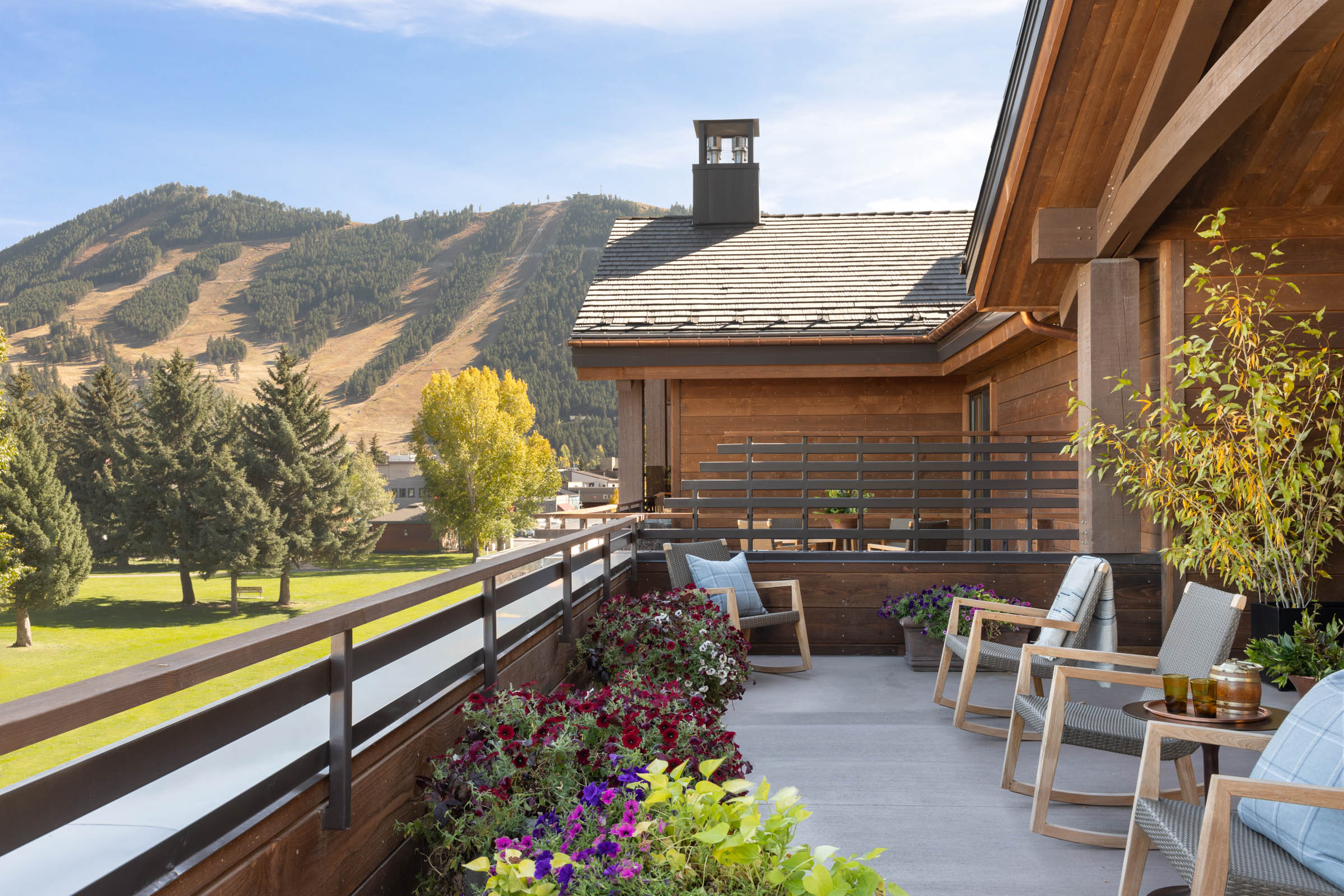
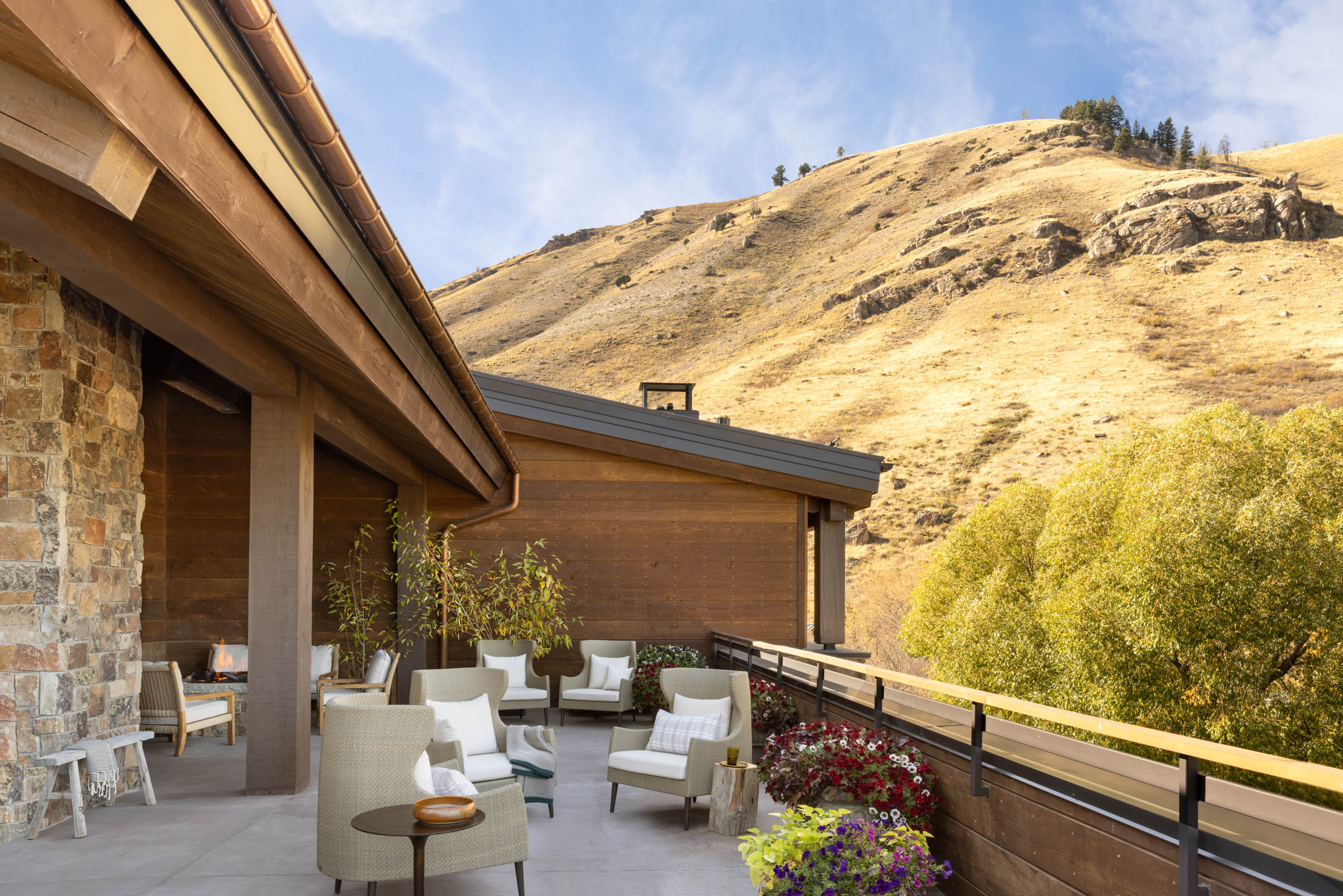
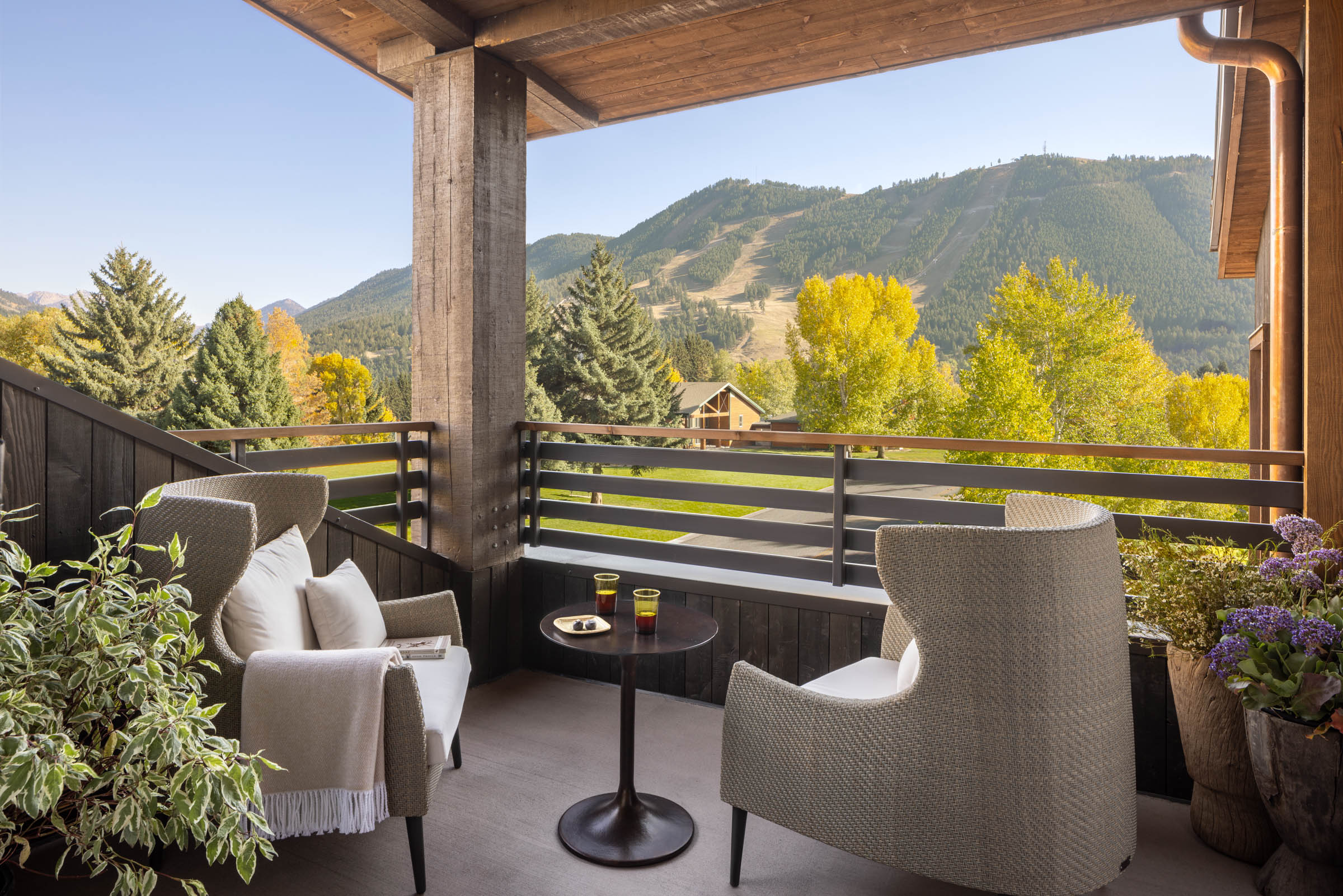
The site, at the convergence of the town grid and its rural surroundings, suggested a complementary architecture, at once urban and indebted to regional traditions. Inspired by the great lodges of the historic west, the wooden, three-story gabled structure emerges from low stone walls suggestive of a preexisting artifact, a seductive interweaving of past and present. Compliance with the town’s zoning standards influenced the inclusion of private porches and communal balconies – the latter named The Perch and the Wildlife Deck – which allow the building to taper in mass and scale while generating an undulating rhythm of solids and voids that, not least, affords an embrace of a spectacular setting comprised of mountains, valleys, wildlife, and parklands.
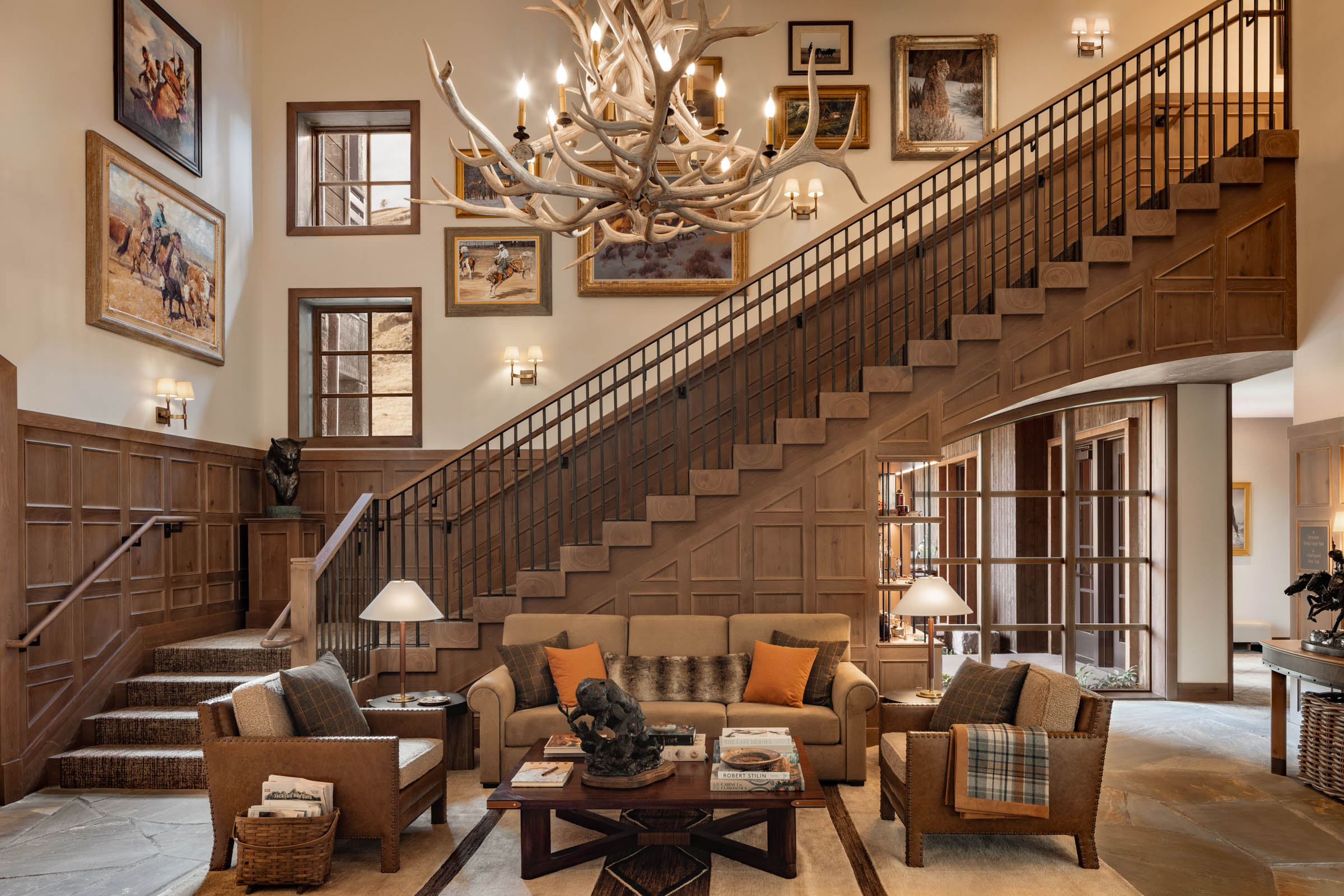
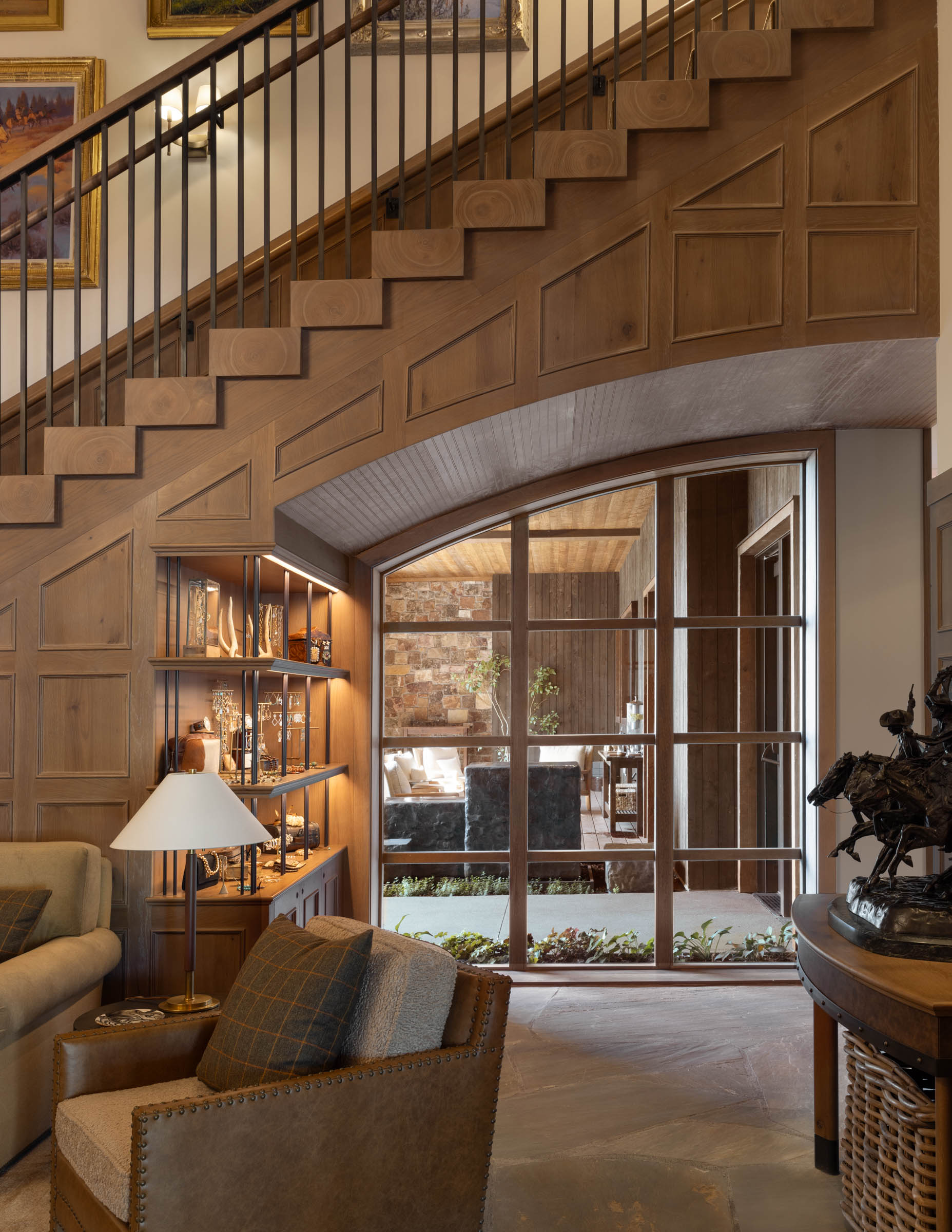
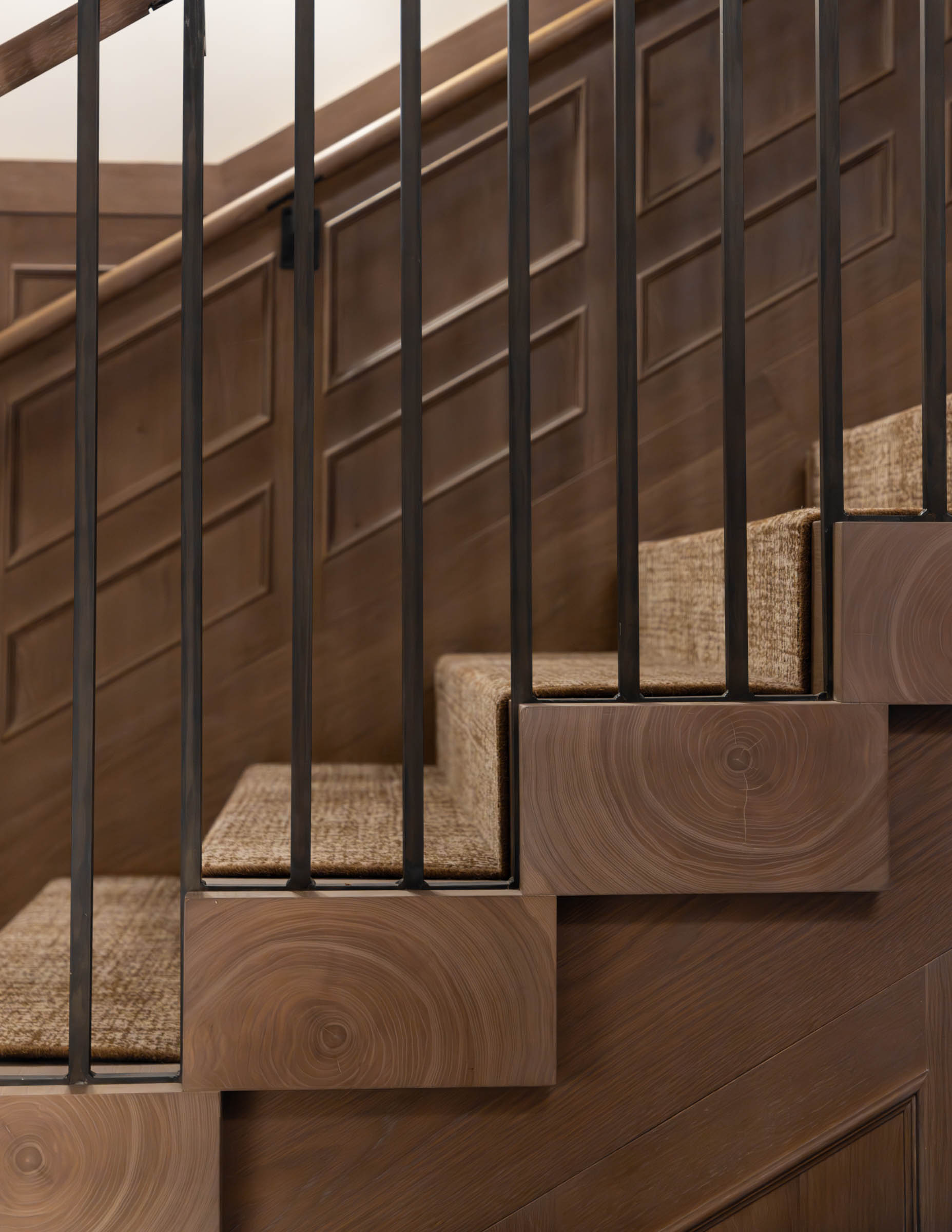
On the exterior, the inclusion of a porte-cochère ensures that arriving guests enter the lodge while entirely protected from the region’s inclement weather. Within, the owners expressed a commitment to preserving the old Parrot’s warm domestic character, famously reinforced by the seductive scent of on-site baking. In response, R+B crafted a commanding grand stair – the new interior’s defining feature – which, in addition to connecting the lodge’s three floors and encouraging collective conviviality, draws the aromas upward, infusing the entirety with the pleasurable presence of home cooking.
R+B’s embrace of sustainable practice includes an open-loop ground-source heat pump, geothermal cooling via a subterranean natural aquifer, and advantageous siting driven by optimal solar access. Subterranean parking reduces the site’s visual footprint, and enabled the construction of a tranquil south-facing garden revealing panoramic views and warmed by the sun.
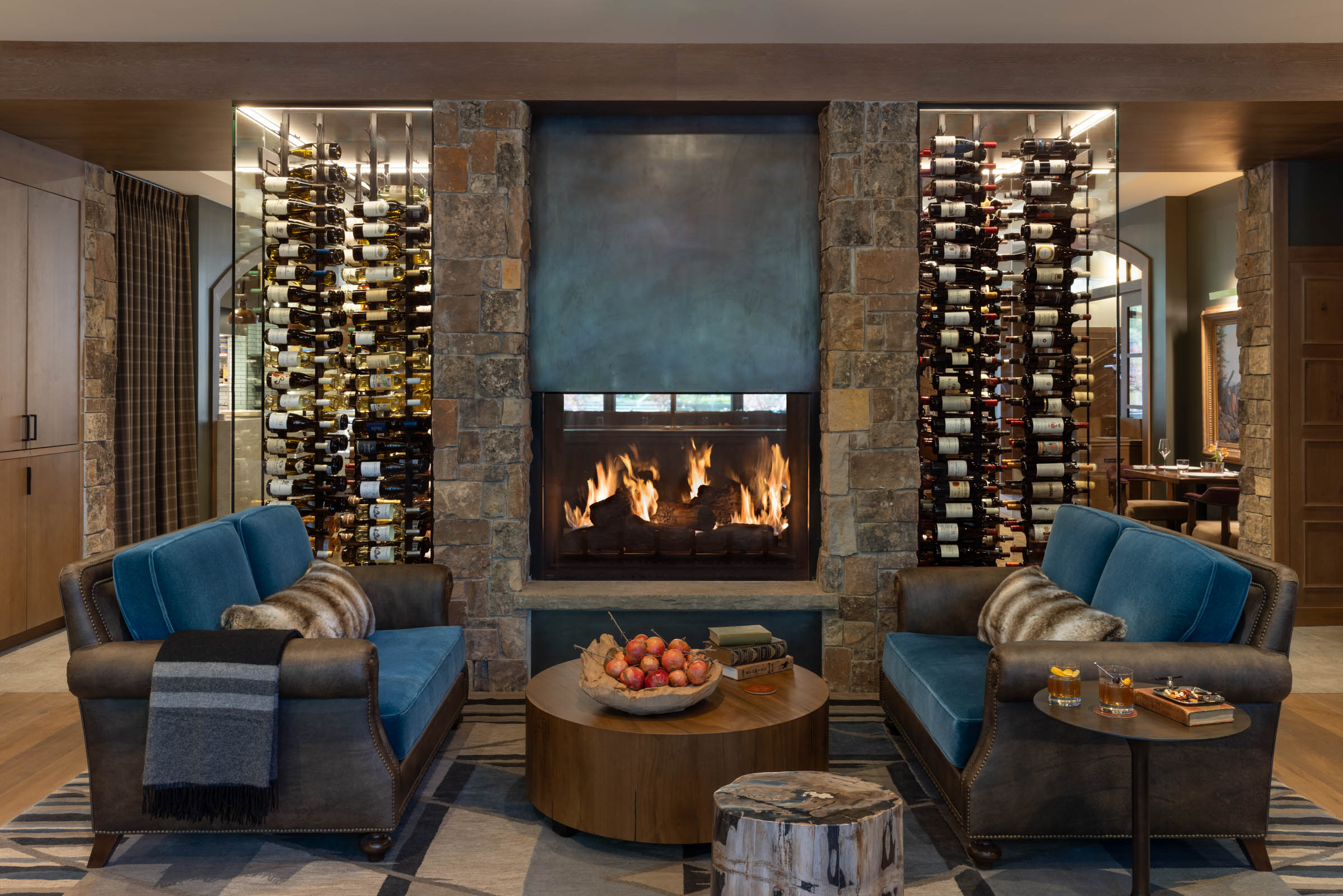
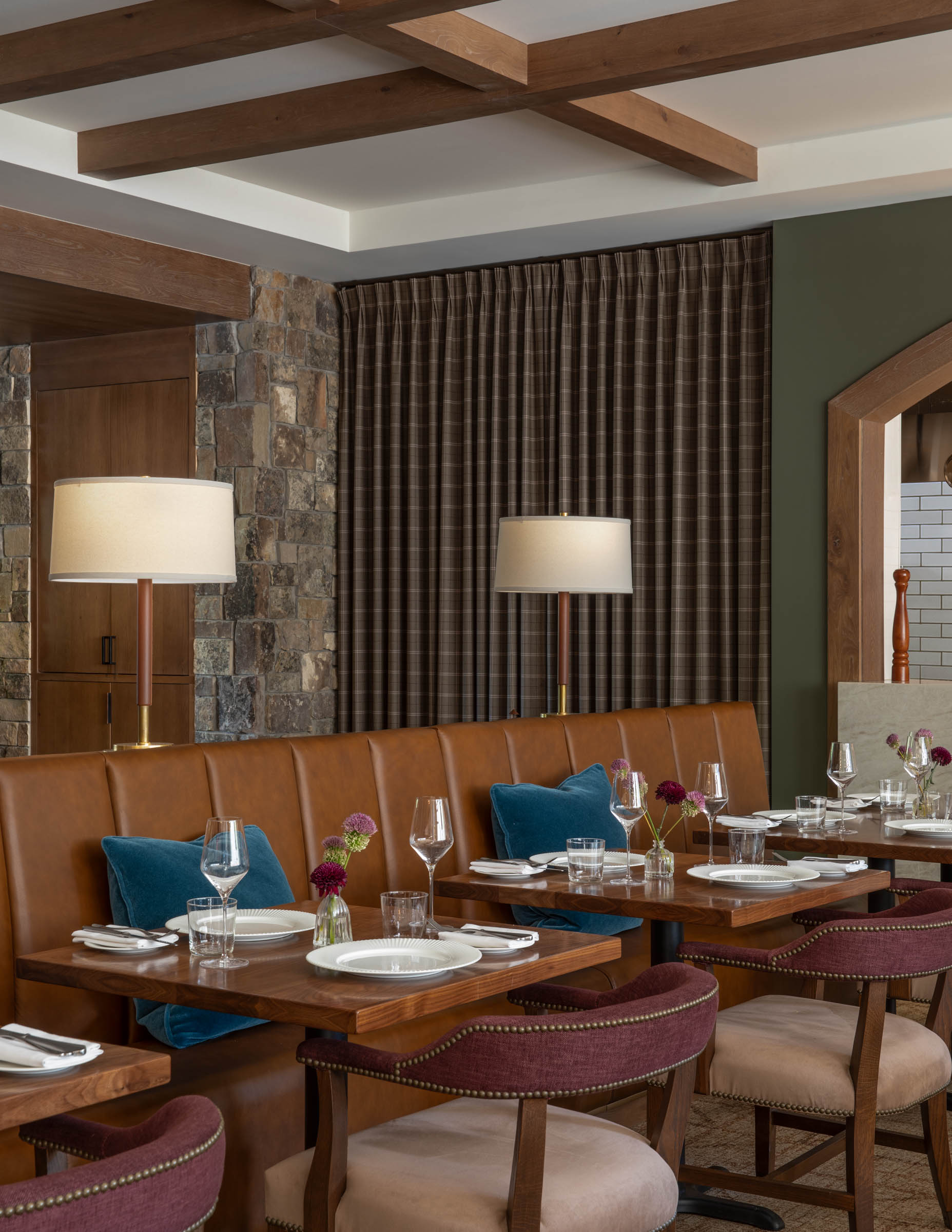
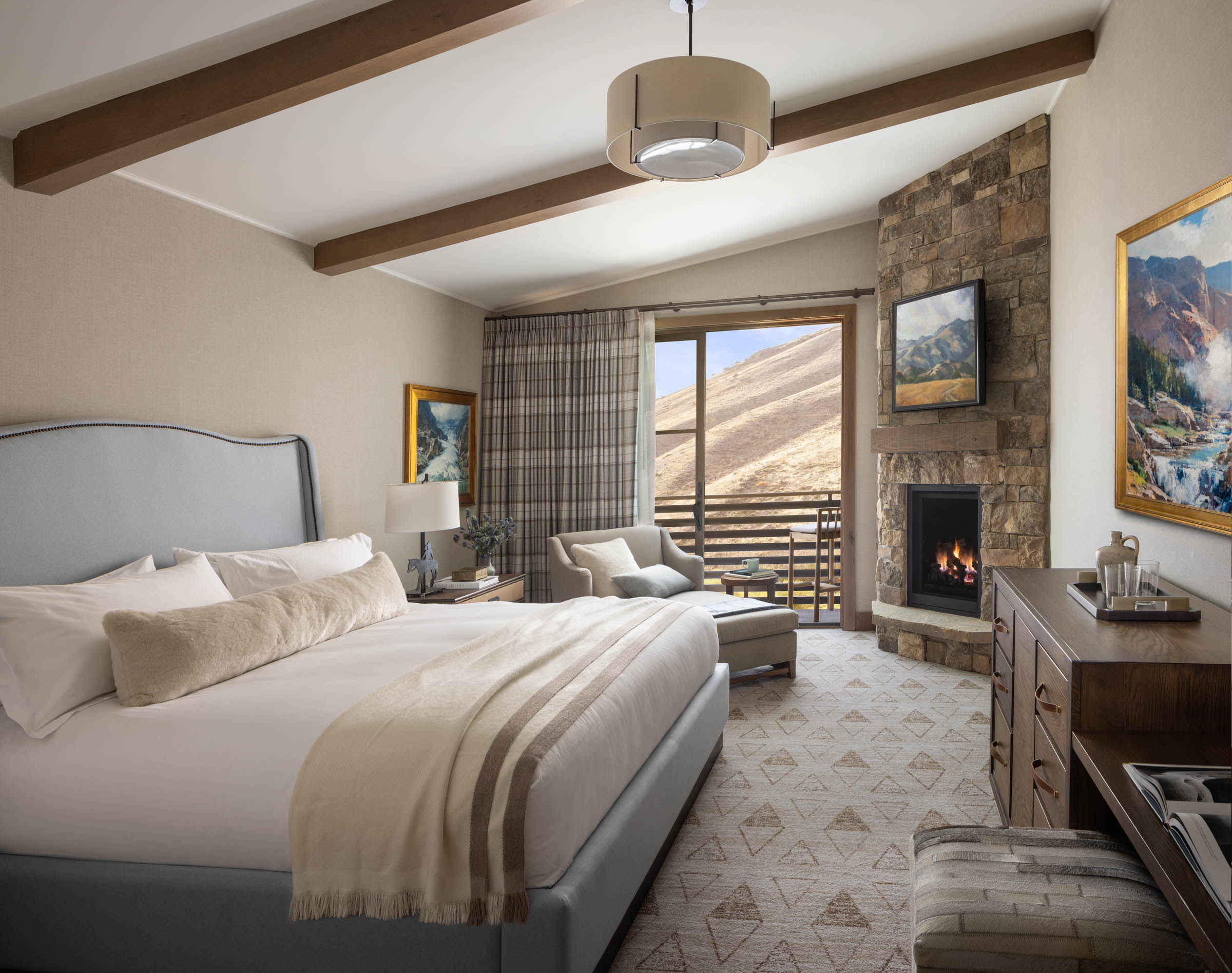
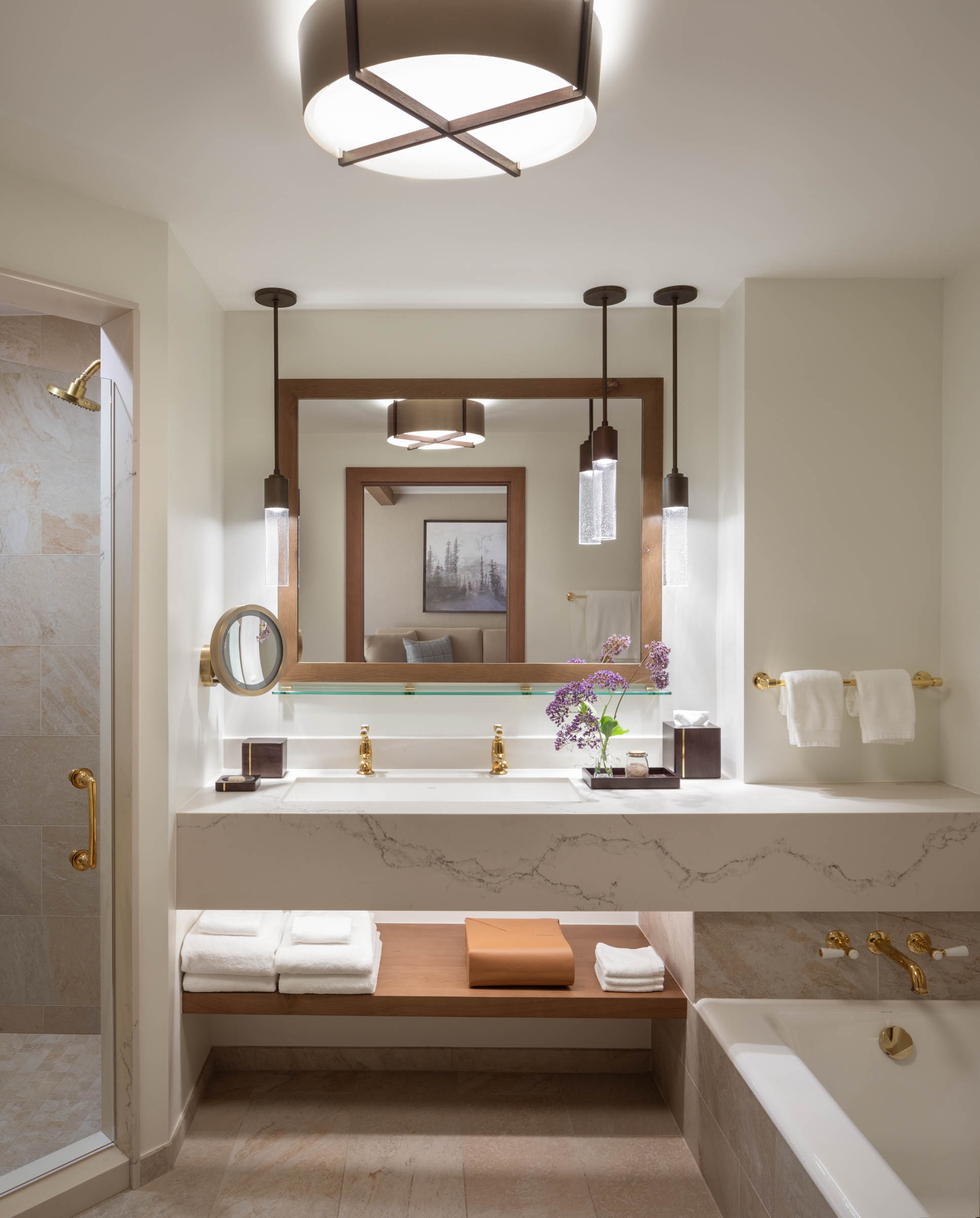
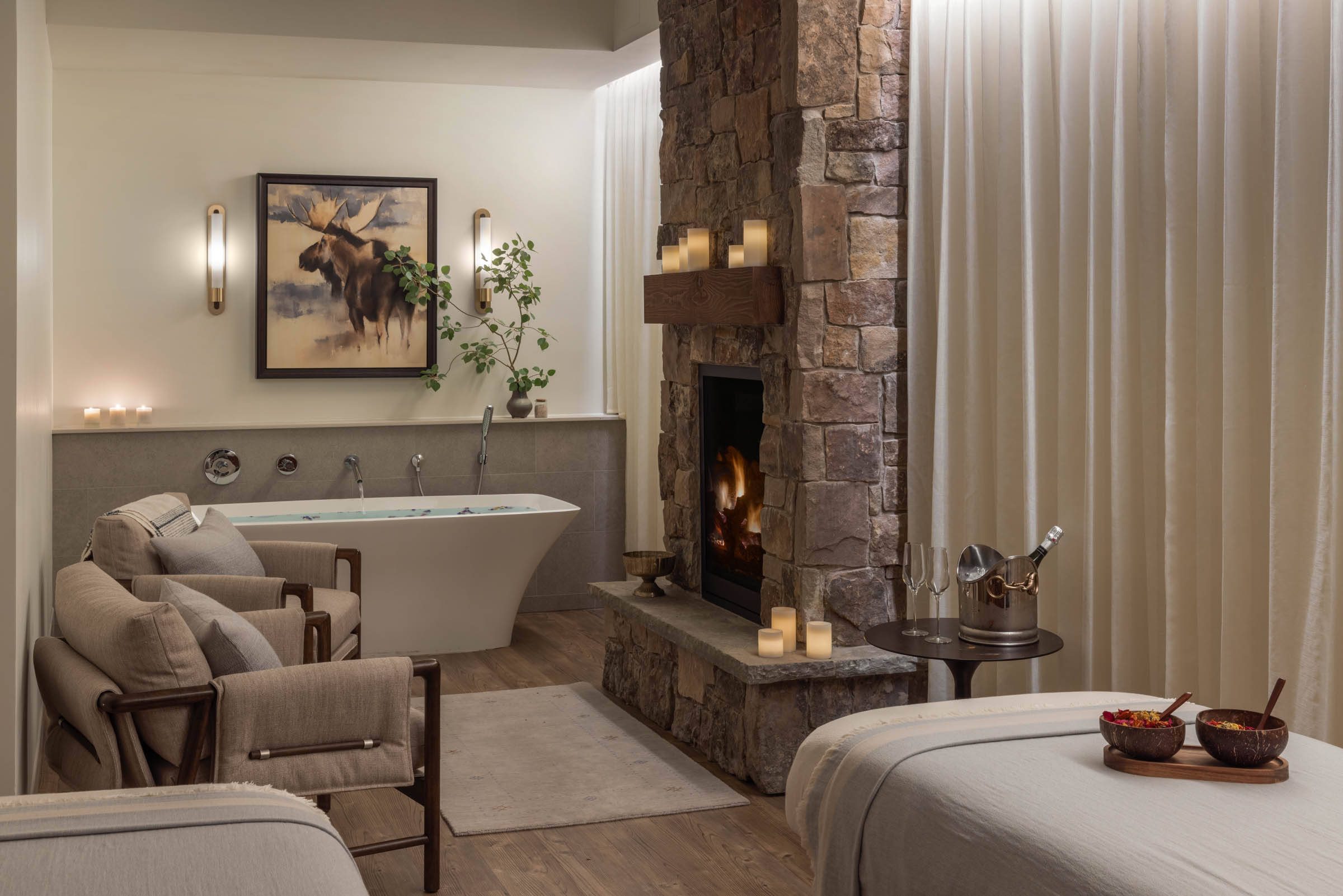
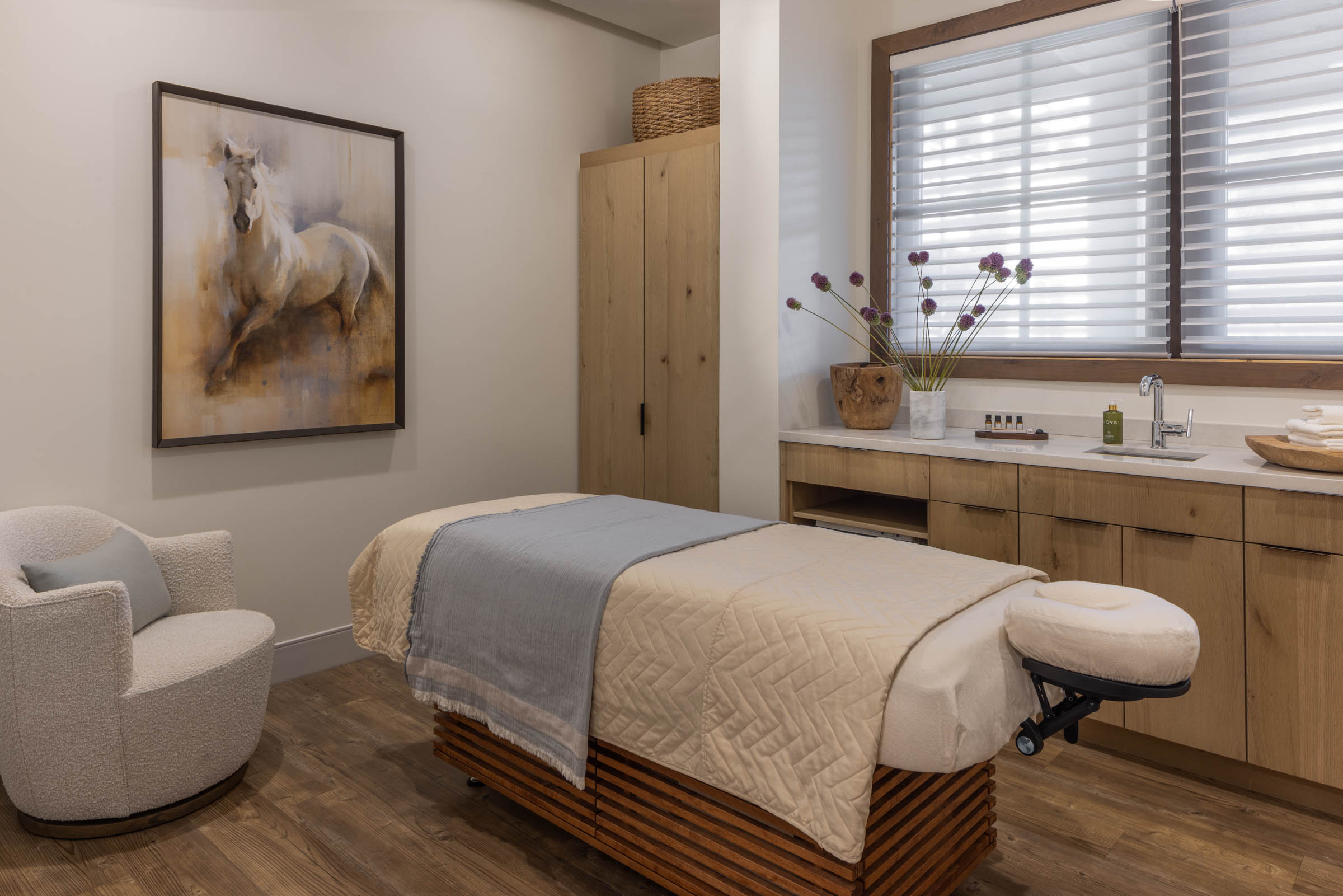
A central theme of the project was a sense of discovery, a philosophical underpinning of the original lodge. Accordingly, a series of ‘found moments,’ which encourage guests to explore the environment in comfort, are nested in the design; the experience is reinforced by a new spa, the gourmet Wild Sage restaurant (featuring a homespun open kitchen), and a double-sided fireplace shared by the domestic-scale lobby and barroom. Natural and local materials, migrated from the exterior into the décor, craft a subtle merging of the lodge and its surroundings.
The new Rusty Parrot bridges old and new, urban and rural, rustic and refined, and home and hospitality. The outcome brings back a lost legacy and – better still – sets the stage for the making of new memories.
Project Size
50,500 SF
Publications
R+B Services
-
Architecture
-
Interior Architecture
-
Renderings
Project Team
-
Interior Designer: WRJ
-
Landscape Architect: Agrostis
-
Structural Engineer: KLAA
-
Mechanical Engineer: Energy 1
-
Civil Engineer: Y2 Consultants
-
Photographer: Lisa Romerein
-
Renderings: Motiv
-
Contractor: ZCM
Matsuhisa Aspen
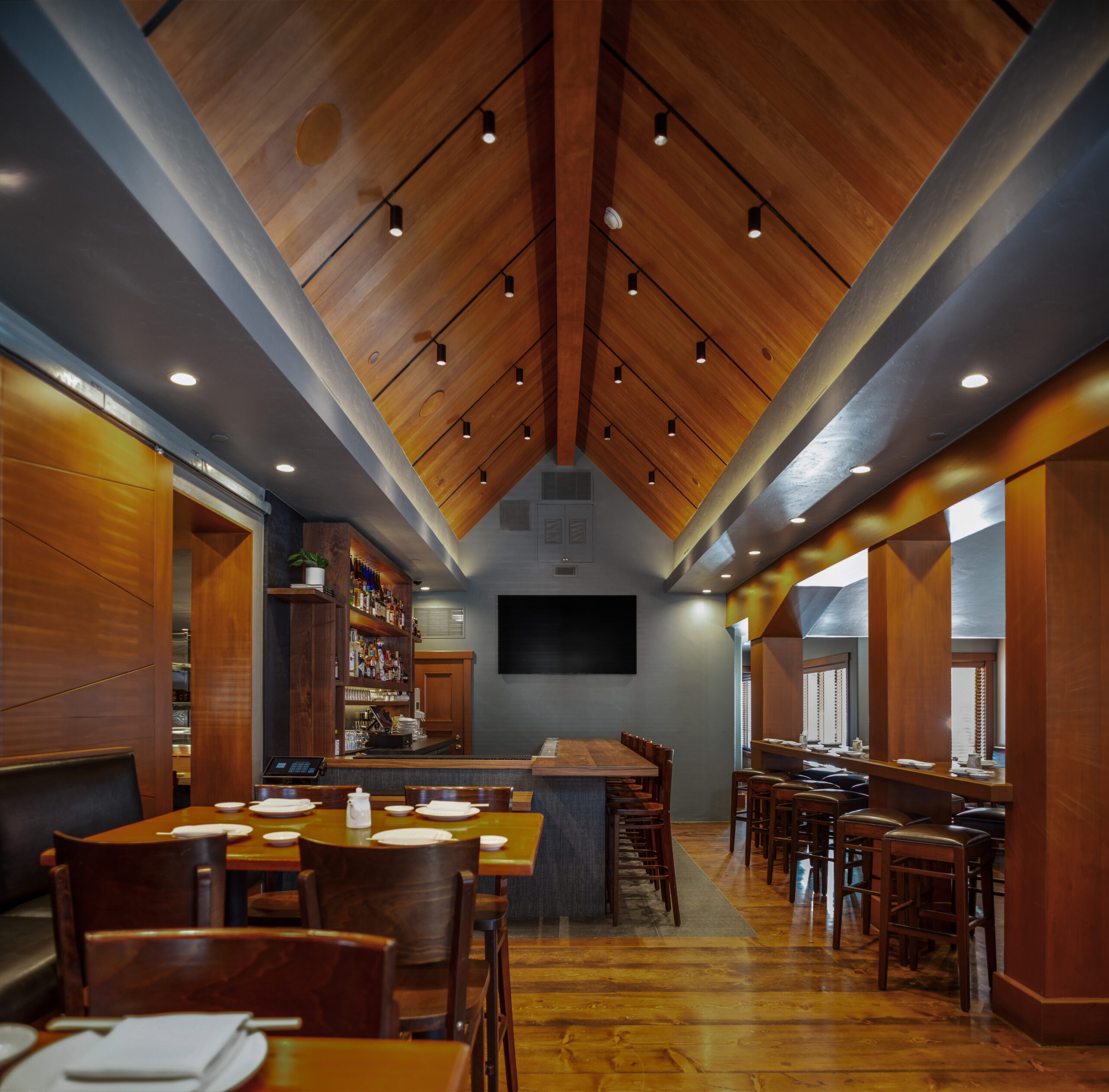
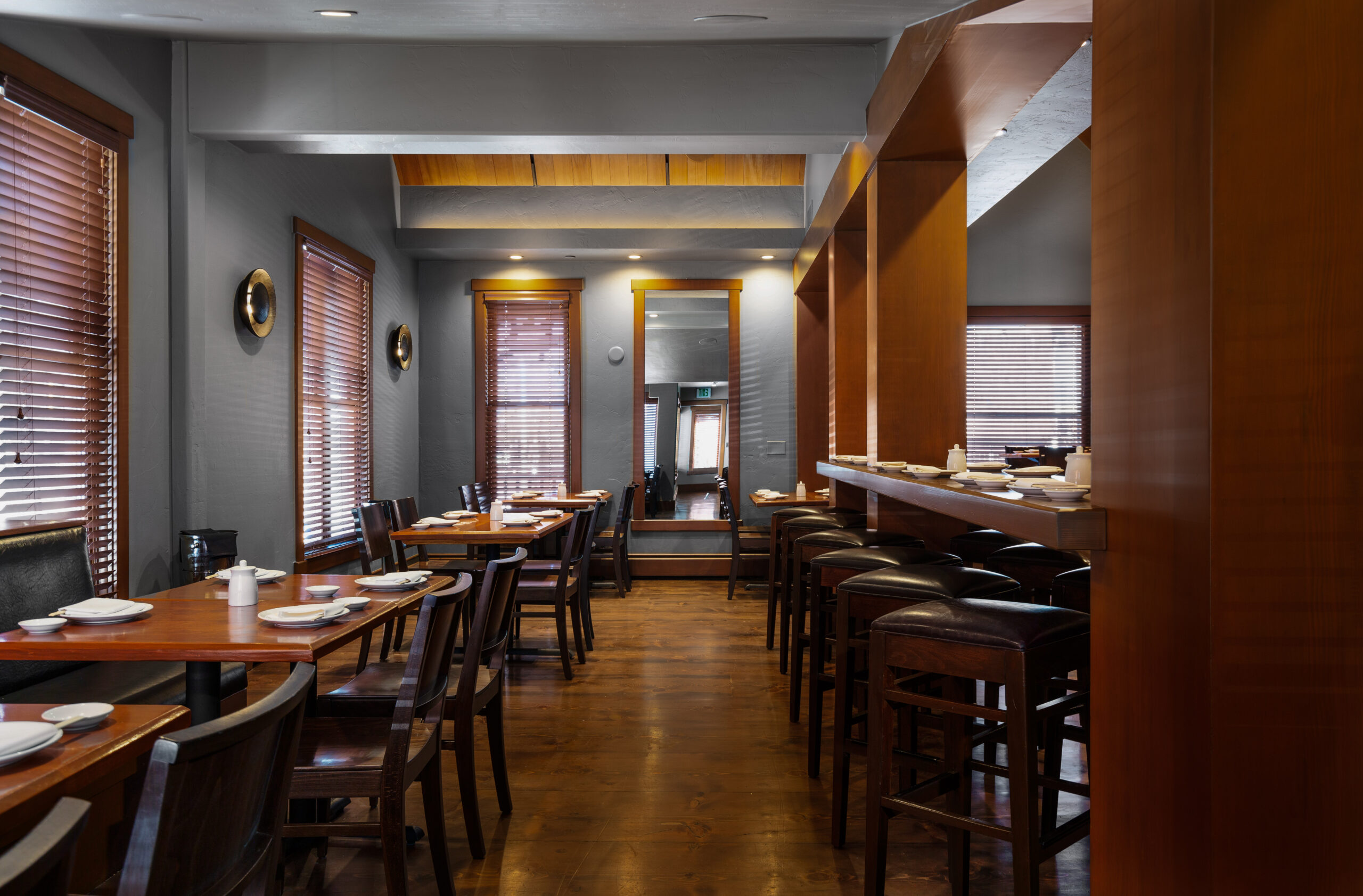
When Matsuhisa Aspen opened in 1998 inside a 120-year-old Victorian house on Main Street, it made history as the first Matsuhisa location outside of Chef Nobu’s original Beverly Hills restaurant and it has been one of Aspen’s most important dining destinations ever since. Nestled on Main St, the building retains its original wood siding, historic windows, and gabled roofline, lending it the character of a genuine local landmark.
Rowland+Broughton’s second collaboration with the world-renowned chef is a continued creative partnership that speaks to the trust and shared vision the two have developed across projects. Here, R+B honors the building’s storied history while introducing the subtle, modern interventions a contemporary restaurant demands.
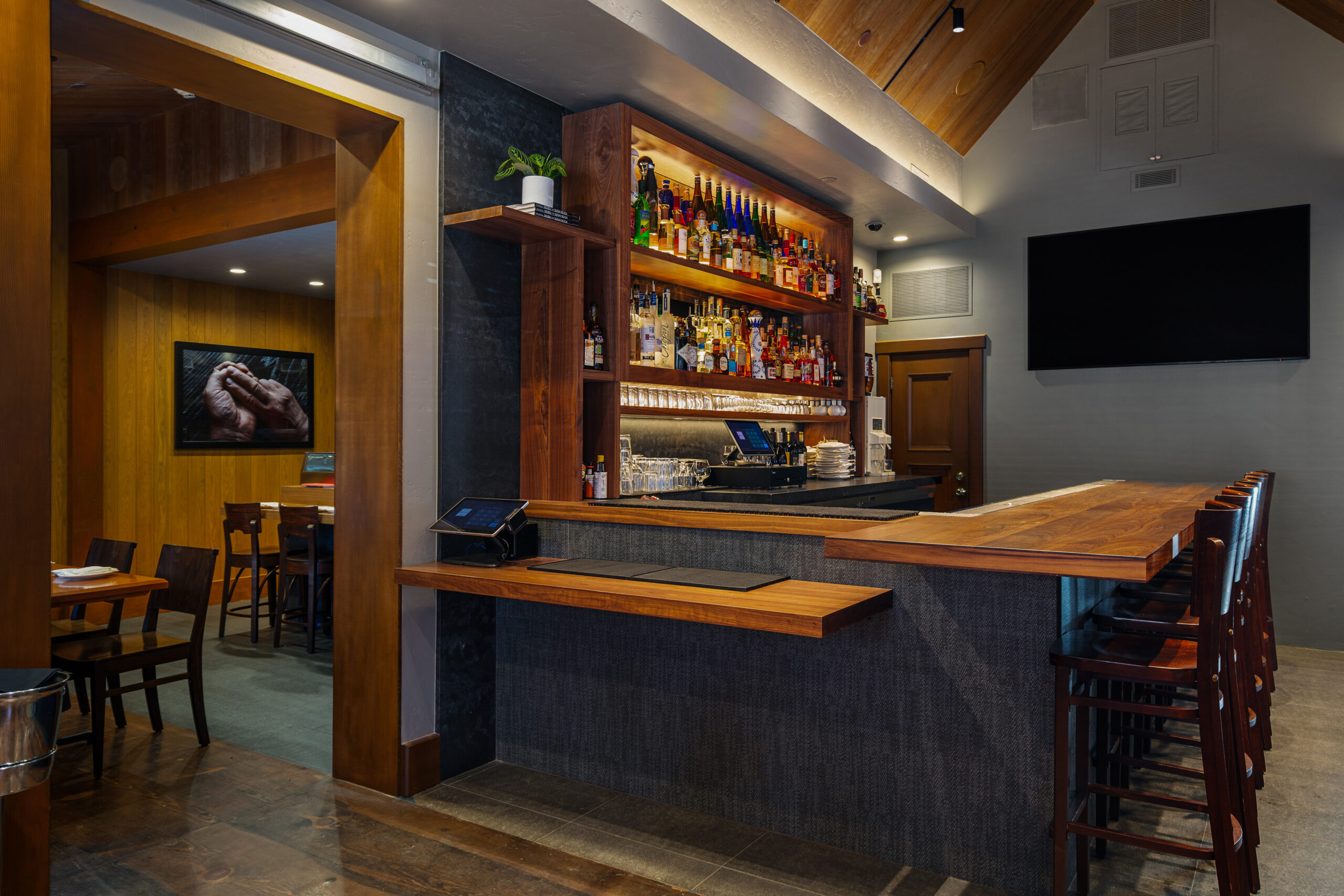
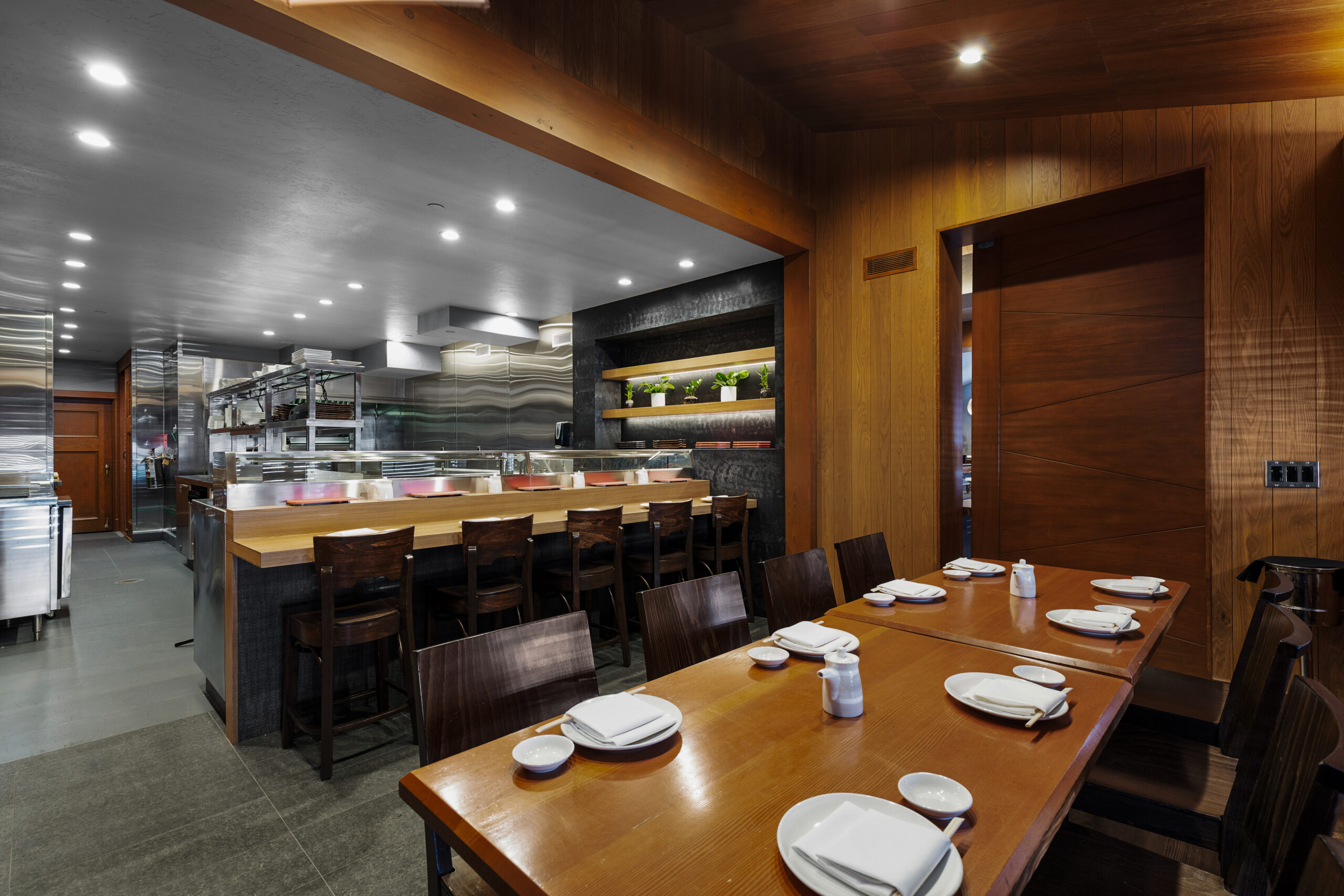
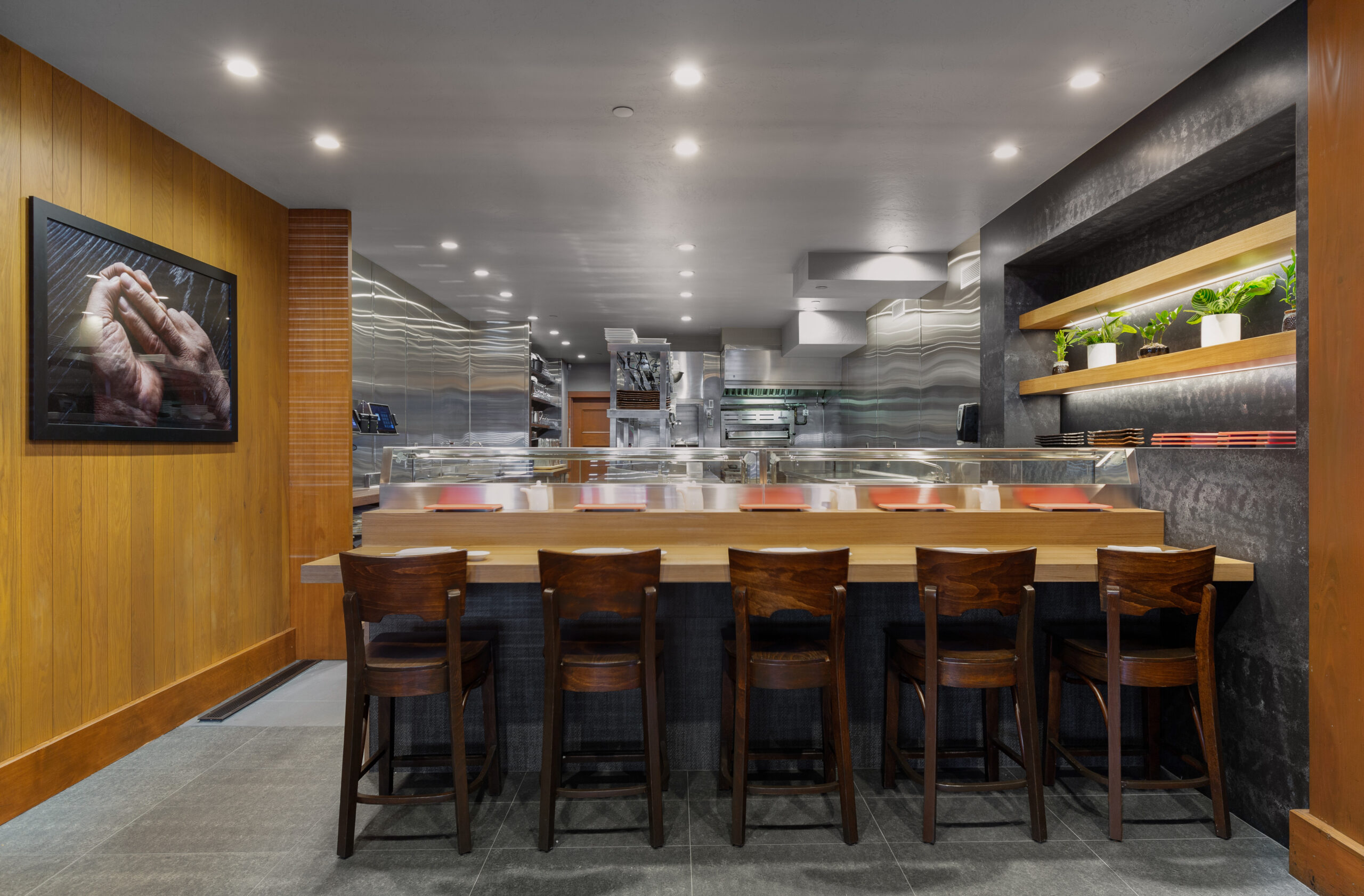
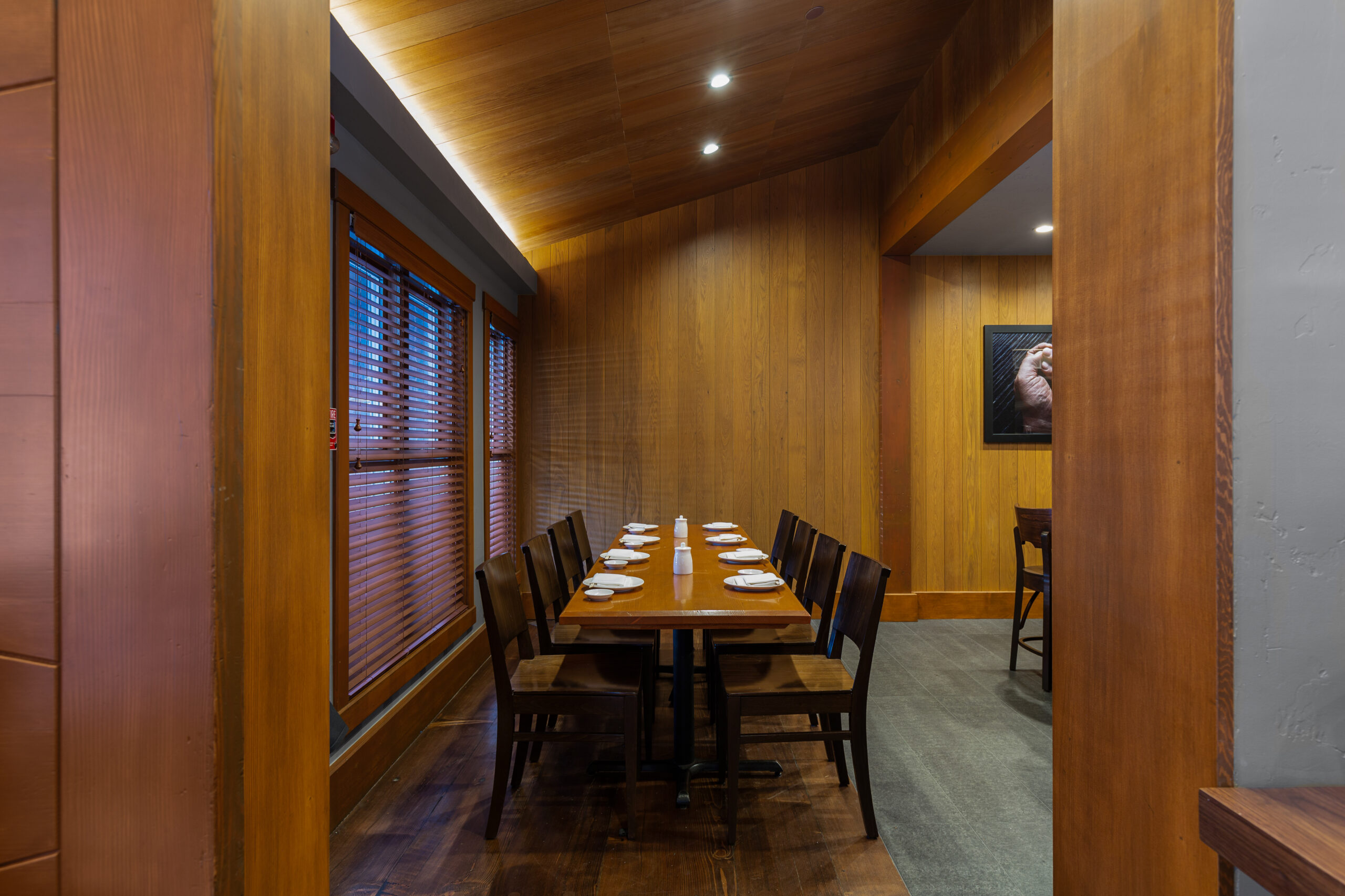
The design is guided by the principles of Japanese restraint: an intentionally minimalist interior where clean lines, natural materials, and a neutral palette allow the food and the experience to lead. The most transformative move is perhaps the most atmospheric. The sloped ceilings of the casual street-level space are clad in six-inch Soundply Burmese teak planks, their warmth and acoustic softness immediately shifting the mood upon entry. New wall sconces complement track lighting integrated directly into the plank ceiling, together creating a layered, intimate light environment.
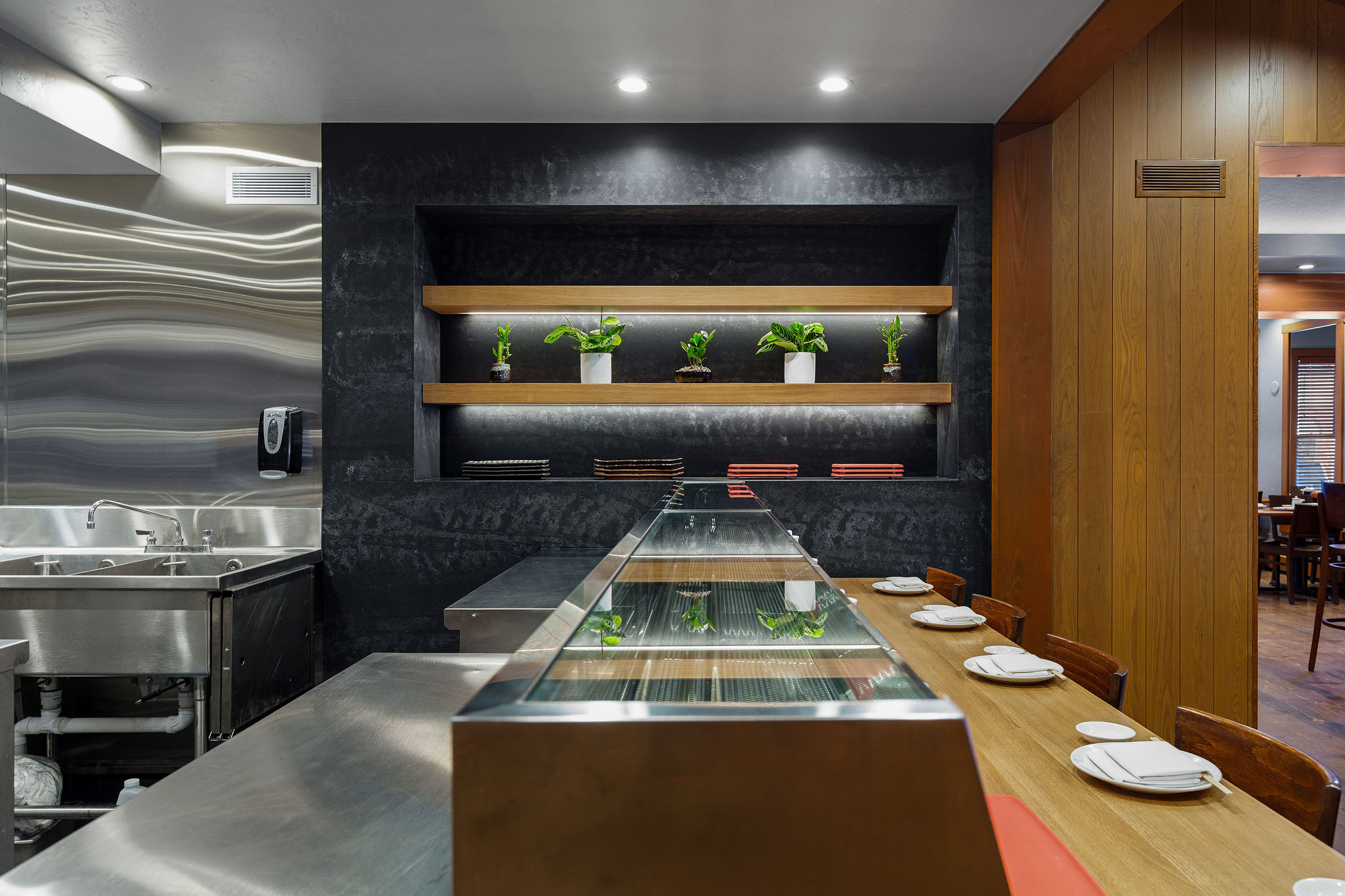
Downstairs, the main dining room centers on a natural walnut cocktail bar and a sushi bar that spans half the length of the room in a sweeping, social counter that anchors the space and celebrates the craft at the heart of Chef Nobu’s program. Bamboo-wrapped ceilings add another layer of warmth and texture, tying the materiality of the room to its Japanese identity. Freestanding tables and banquettes, along with a central communal table, provide a range of seating that accommodates everything from a quiet dinner for two to a lively group gathering.
Chef Nobu’s new-style Japanese cuisine draws on classical training in Tokyo and years spent living and cooking in Peru, Argentina, and around the world — a global sensibility expressed in signature dishes such as Yellowtail Sashimi with Jalapeño, Black Cod Miso, and White Fish Tiradito. The interior R+B created is a worthy stage for that vision: warm, grounded, and quietly considered, it recedes gracefully to let the food lead.
The project was times deliberately to Aspen’s off-season and completed ahead of the holiday rush — a logistical achievement that required precise coordination across every phase, from demolition to final finishes, without compromise to the quality the restaurant’s reputation demands.
Project Size
1,725 SF (225 guests capacity)
Publications
R+B Services
-
Architecture
-
Interior Design
-
Renderings
Project Team
-
Lighting Designer: Elumenate
-
Structural: REG
-
Mechanical: REG
-
Photographer: Brad Yamamoto
-
Contractor: Viking

Matsuhisa Denver
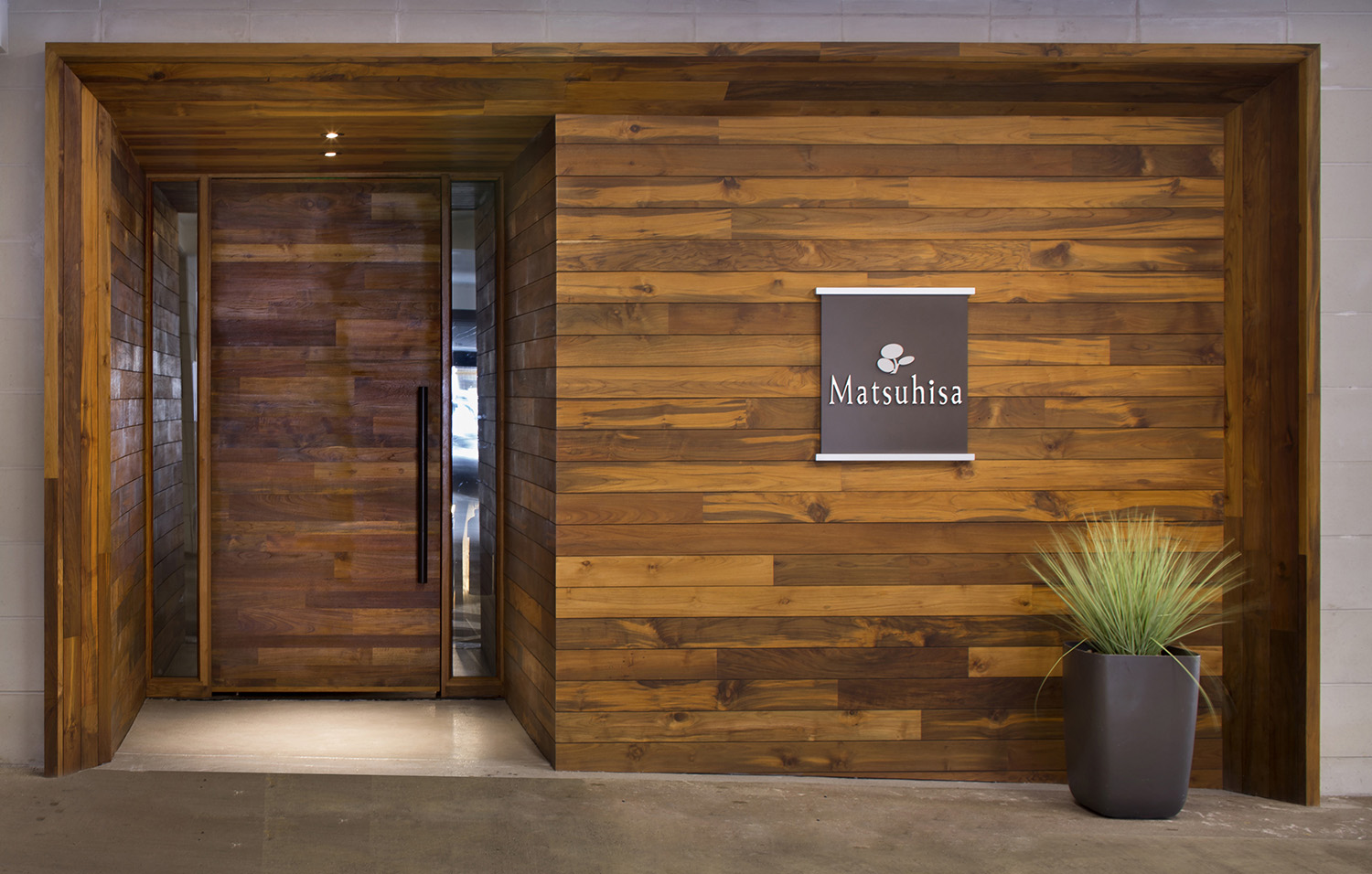
Working directly alongside Nobu Matsuhisa and the ownership team, R+B principals Sarah Broughton and John Rowland drew on their own travels to Japan to develop a design concept that is thoughtful, humble, and purposeful — remaining true to Japanese culture while firmly rooted in Colorado.
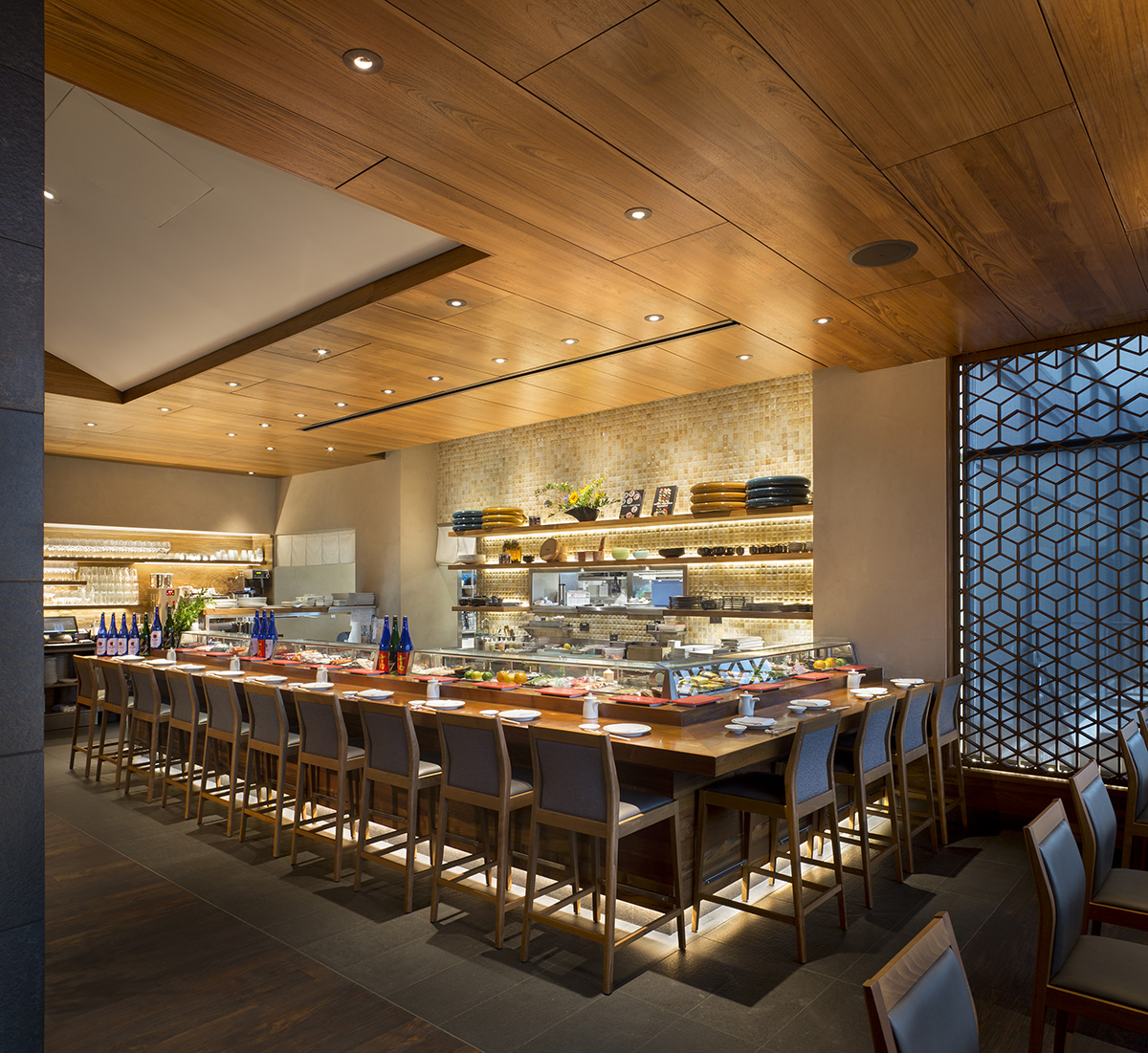
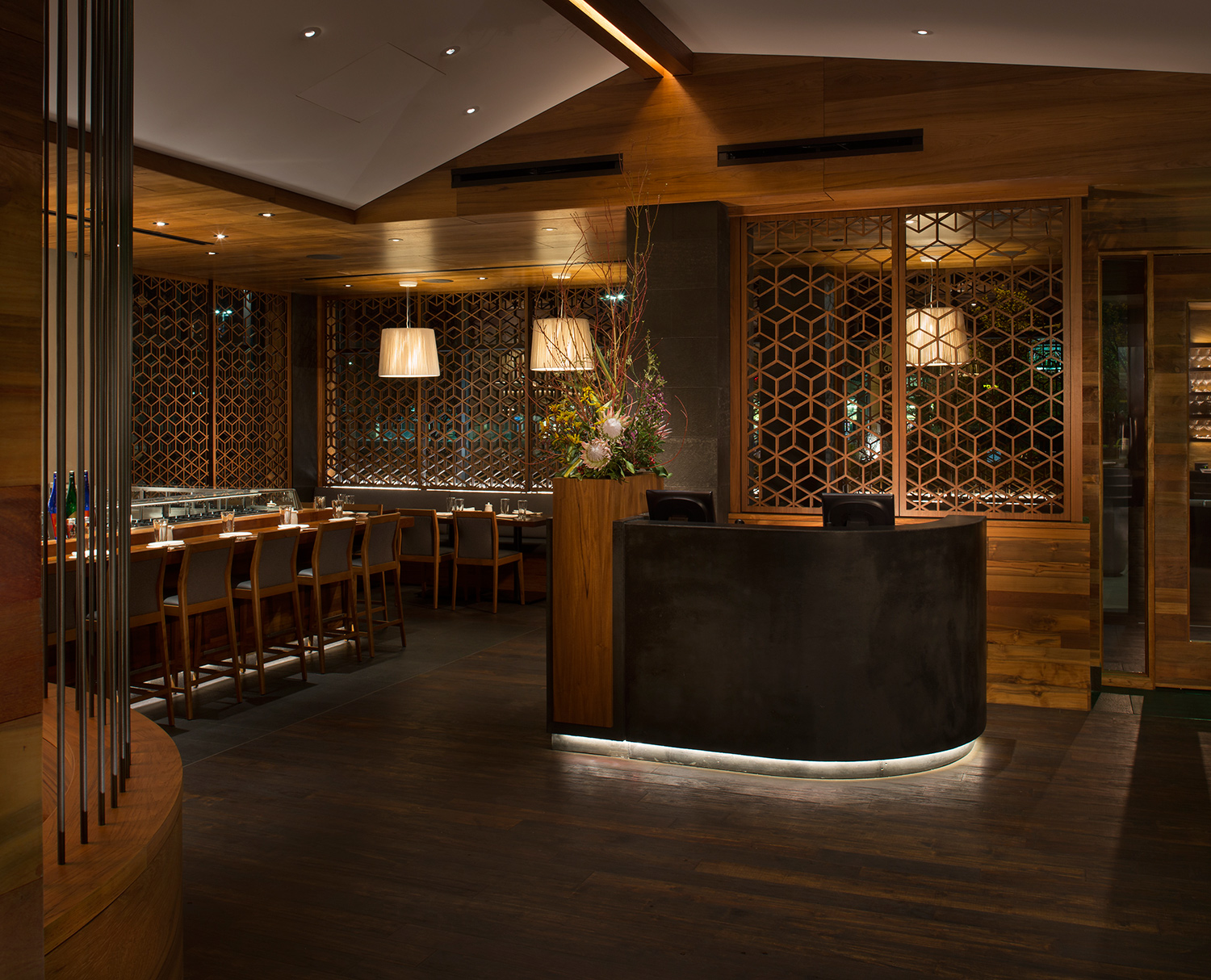
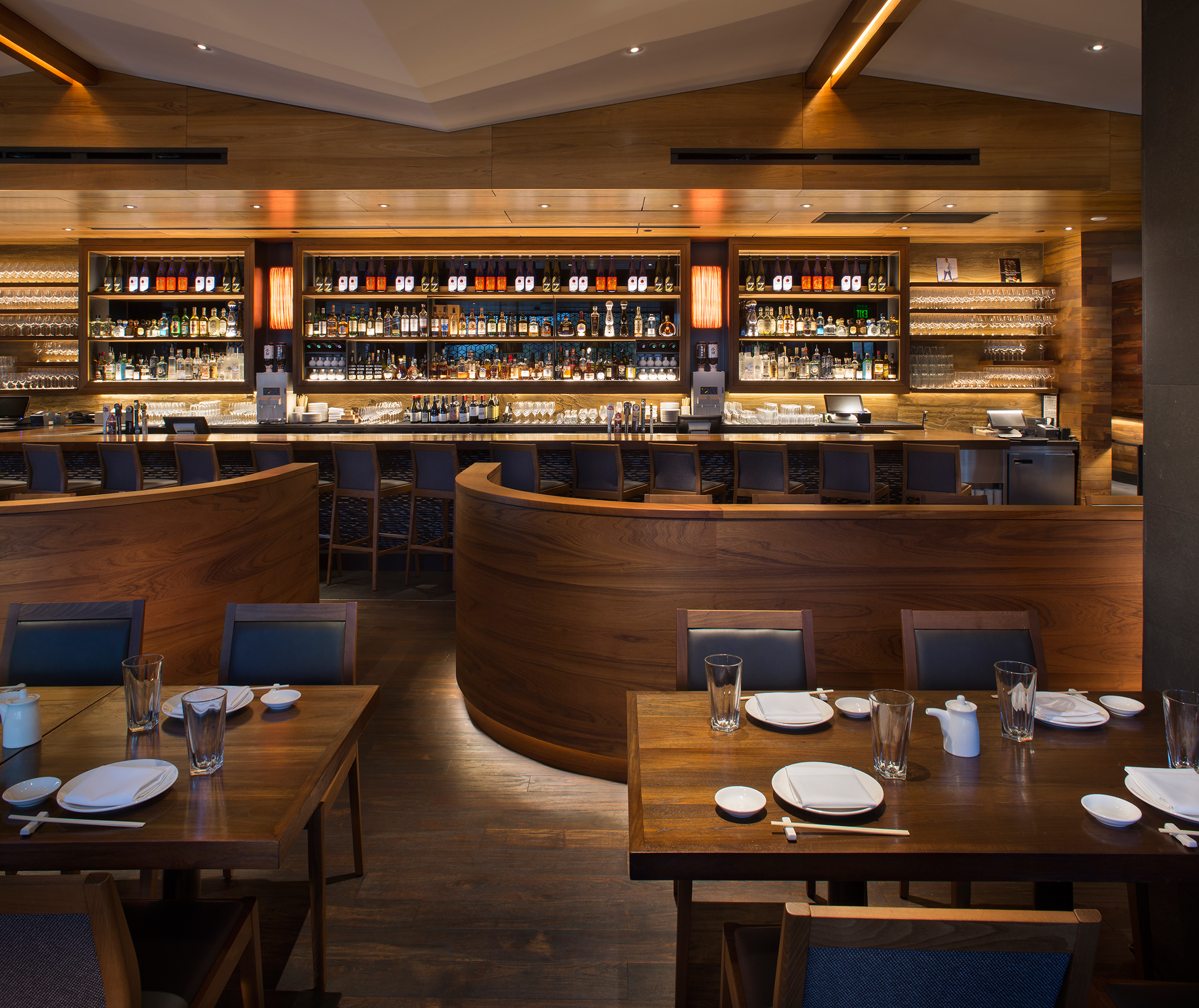
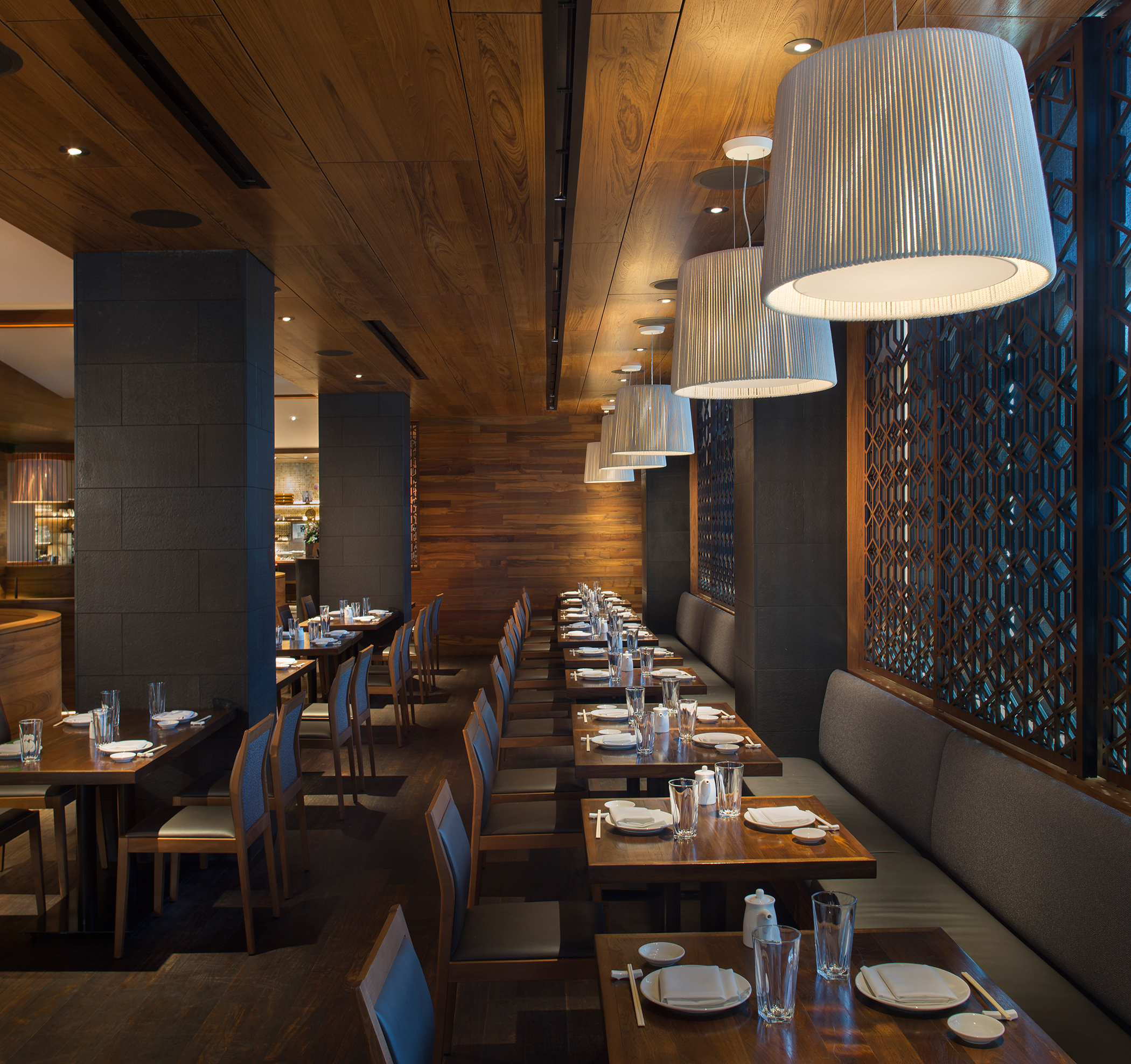
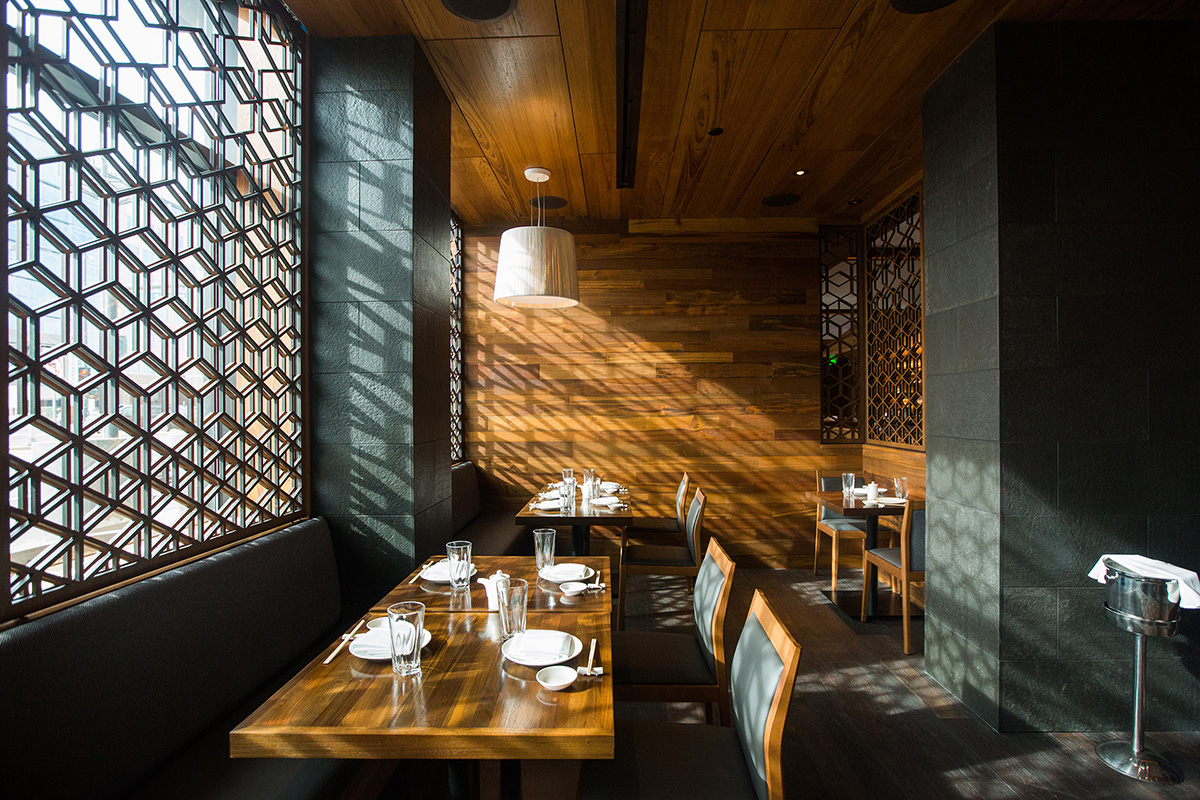
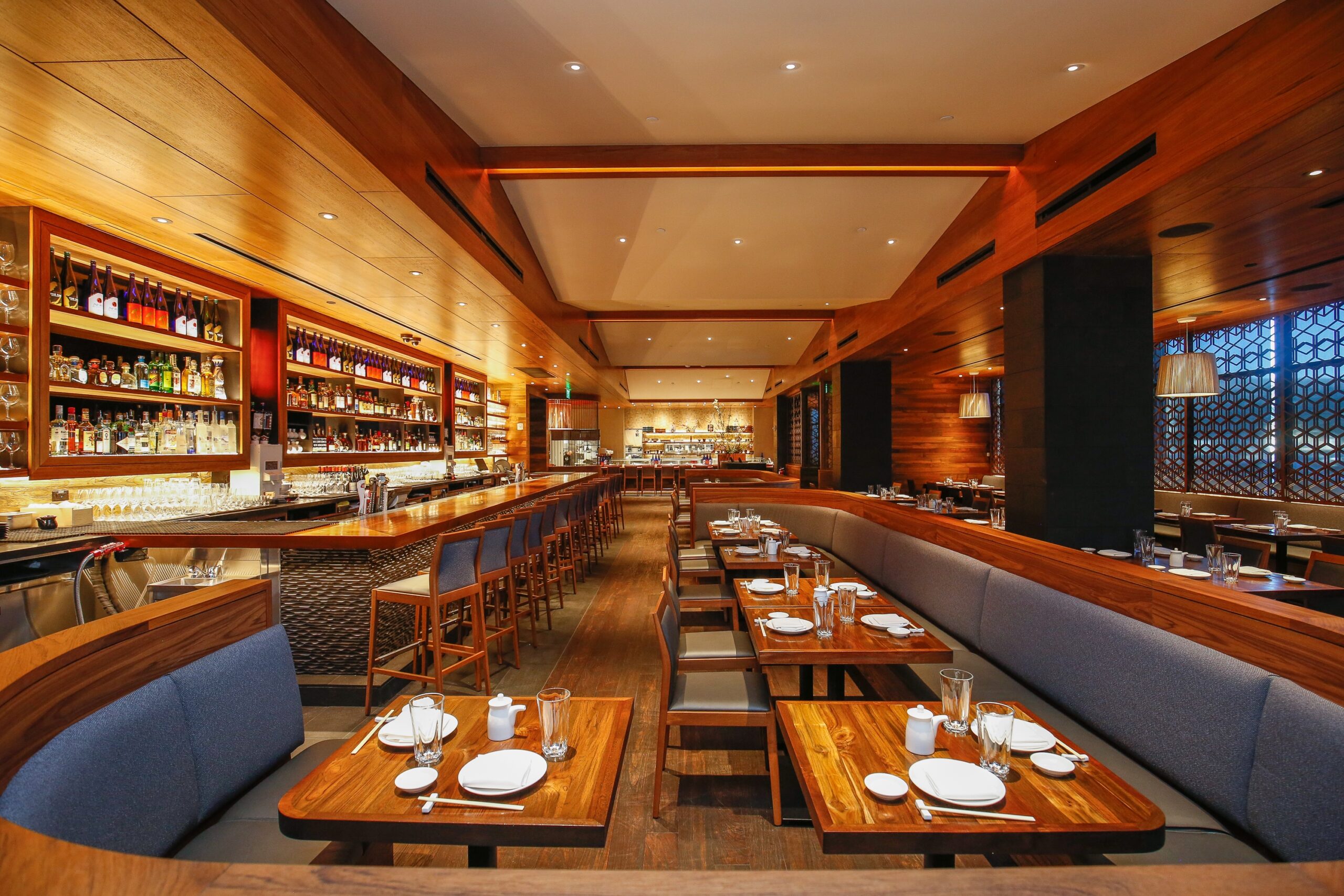
The 7,800 square foot Cherry Creek restaurant is unified by a single defining material: reclaimed Indonesian teak. Sourced sustainably and finished in both brushed tobacco and smooth cognac by IndoTeak, it runs through the floor, walls, ceilings, bar, sushi bar, and custom millwork and provides a continuous thread of warmth that gives the space its coherent identity. Against this foundation, deliberate textural contrasts emerge with brushed and flamed basalt stone by Waterworks, Marrone Toscana limestone by Ann Sacks, and leathered Sandalwood sandstone quarried from the Western Slope of Colorado at the back bar wall. A sloped acoustic ceiling, designed in collaboration with DL Adams Associates, carries a subtle nod to the Rocky Mountains visible to the west, while pendant lighting by Rafia from Fambuena and wall sconces from Aqua’s Nara and Simon Says Maybe collections layer warmth and intimacy across the dining room. Custom banquette seating, designed by R+B and fabricated by Avanti Fabricators, is upholstered in Luddington Gray Quartz by Designtex on the seat and Do-Si-Do in Meteor by Pollack on the back. Capri chairs and barstools by Sandler Seating complete the seating program.
R+B addressed the need for the guest experience to turn away from the street and toward the table this with one of the project’s most distinctive design elements: a custom wood screen system inspired by the traditional Japanese Asanoha, or hemp leaf, pattern, laser cut from walnut plywood in-house. Layered to create visual depth and texture, the screen becomes more open toward the top, allowing a carefully framed glimpse of Colorado’s bluebird sky while drawing attention back into the room. The sliding partition walls are teak, inset with resin panels by 3Form featuring Fray in Pearl, a full-circle material made from trimmings of prayer paper handmade by monks in the Himalayas from indigenous shrubs. Every division of space in the restaurant carries its own quiet story.
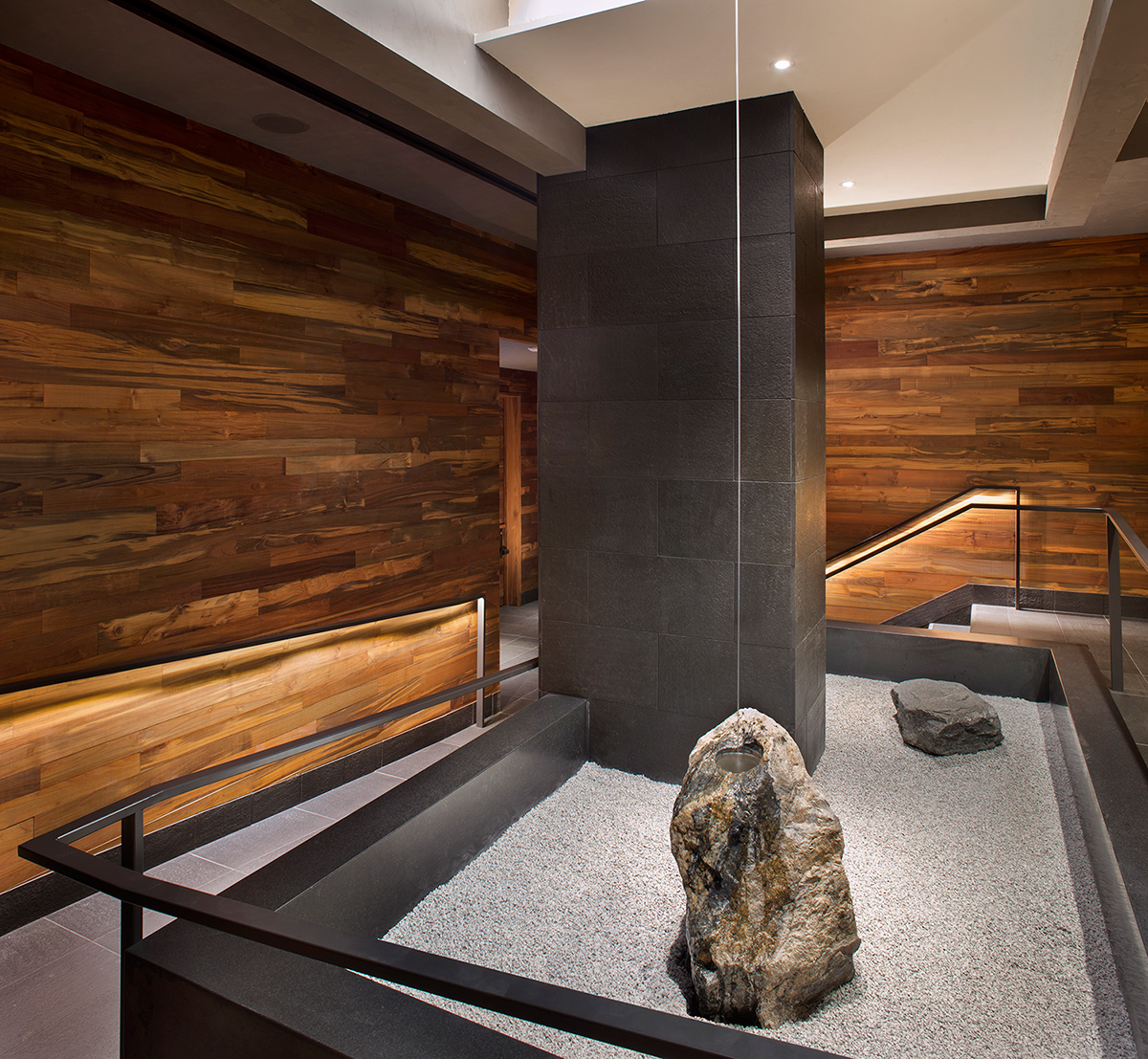
At the valet entrance, a gentle stream of water falls from the ceiling onto a granite boulder in a Zen garden. The fountain was custom designed inspired by the installations of Japanese sculptor Masatoshi Izumi, with the boulder hand-selected from a local Colorado supplier. It sets the tone for everything that follows: meditative, considered, and grounded in place. The Asanoha wood screen emerged from R+B’s in-house design and fabrication capabilities and is a traditional motif reinterpreted with the precision of the studio’s laser cutting tools.
The result is a dining environment that is warm without being heavy and minimal without being cold. It is a space that steps back gracefully to let the food, the ritual of the meal, and the craft of Chef Nobu’s culinary vision take their rightful place at the center.
I really enjoyed the process from beginning to end with the entire design team of very talented people. Great job! We all created a killer restaurant for thousands of people to enjoy for many years to come. – Todd Clark, Matsuhisa Partner and Director of Operations
Project Size
7,800 SF (200 guests capacity)
Project Awards
-
2018 ASID Crystal Award – Hospitality
-
2018 ASID – Judges Merit Award
-
2018 NEWH Rocky Mountain Chapter – TopID Award
-
2017 NEWH Rocky Mountain Chapter – TopID Award
-
2016 IIDA BESTaward – EAT&DRINK
Publications
-
NEWH Magazine, Fall 2017
-
Building Dialogue, September 2016
-
ENR, August 2016
-
Interiors Colorado, Summer 2016
-
Colorado Real Estate Journal, May 2016
-
Denver Eater, April 2016
-
Hospitality Design, April 2015
R+B Services
-
Architecture
-
Interior Design
Project Team
-
Design Collaborator: Yoshi Kida
-
Lighting Designer: Element Architectural
-
Structural Engineer: Monroe & Newell
-
Mechanical Engineer: Boulder Engineering
-
Audio/Visual: Xssentials
-
Photographer: Brent Moss

Bad Harriet
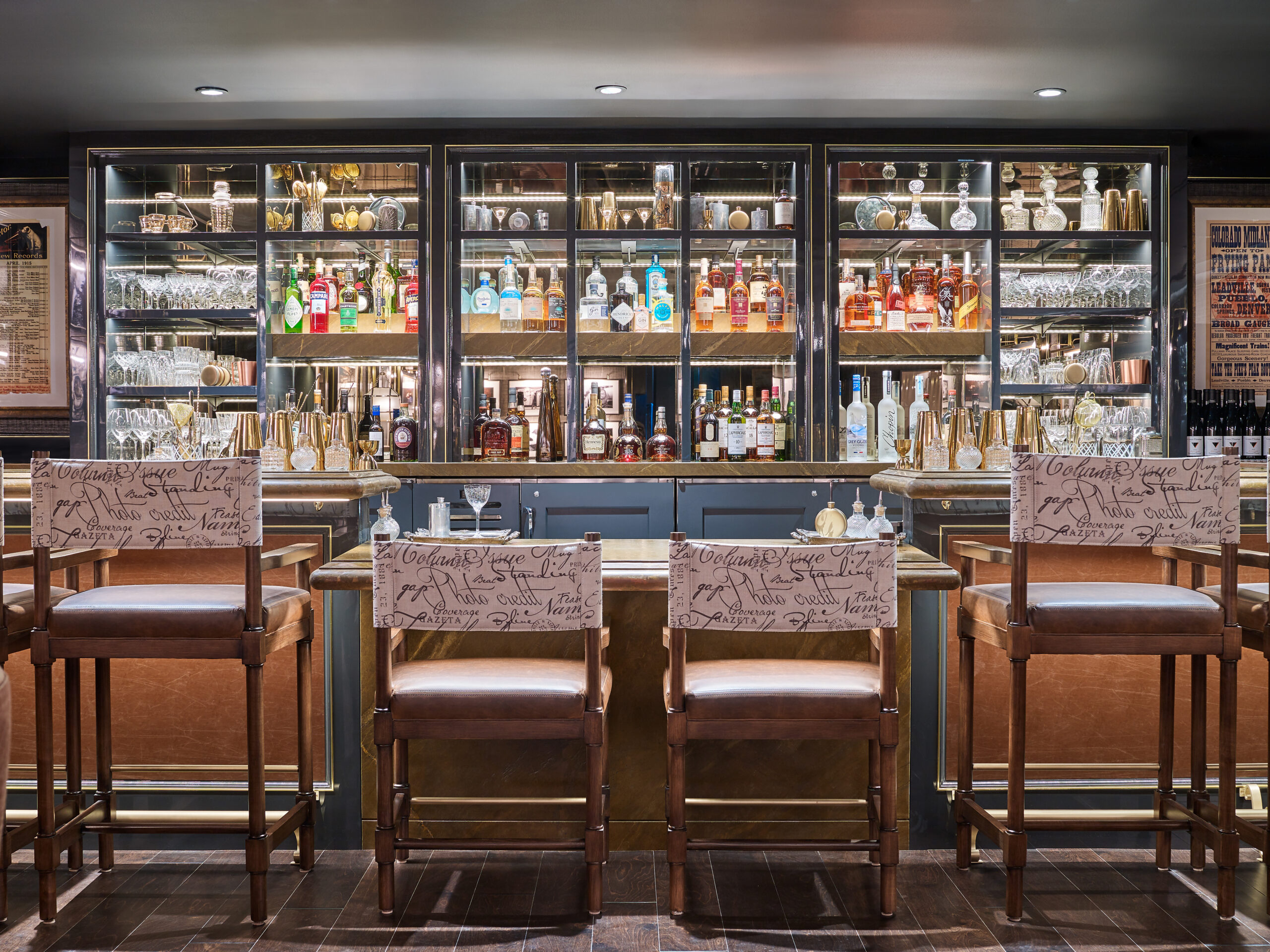
As part of a multi-program expansion of Hotel Jerome, an Auberge Collection and Aspen landmark for more than 125 years, the Rowland+Broughton design team restored the adjoining 1904 Aspen Times building and introduced Bad Harriet, an intimate underground speakeasy that serves as the project’s hidden centerpiece.
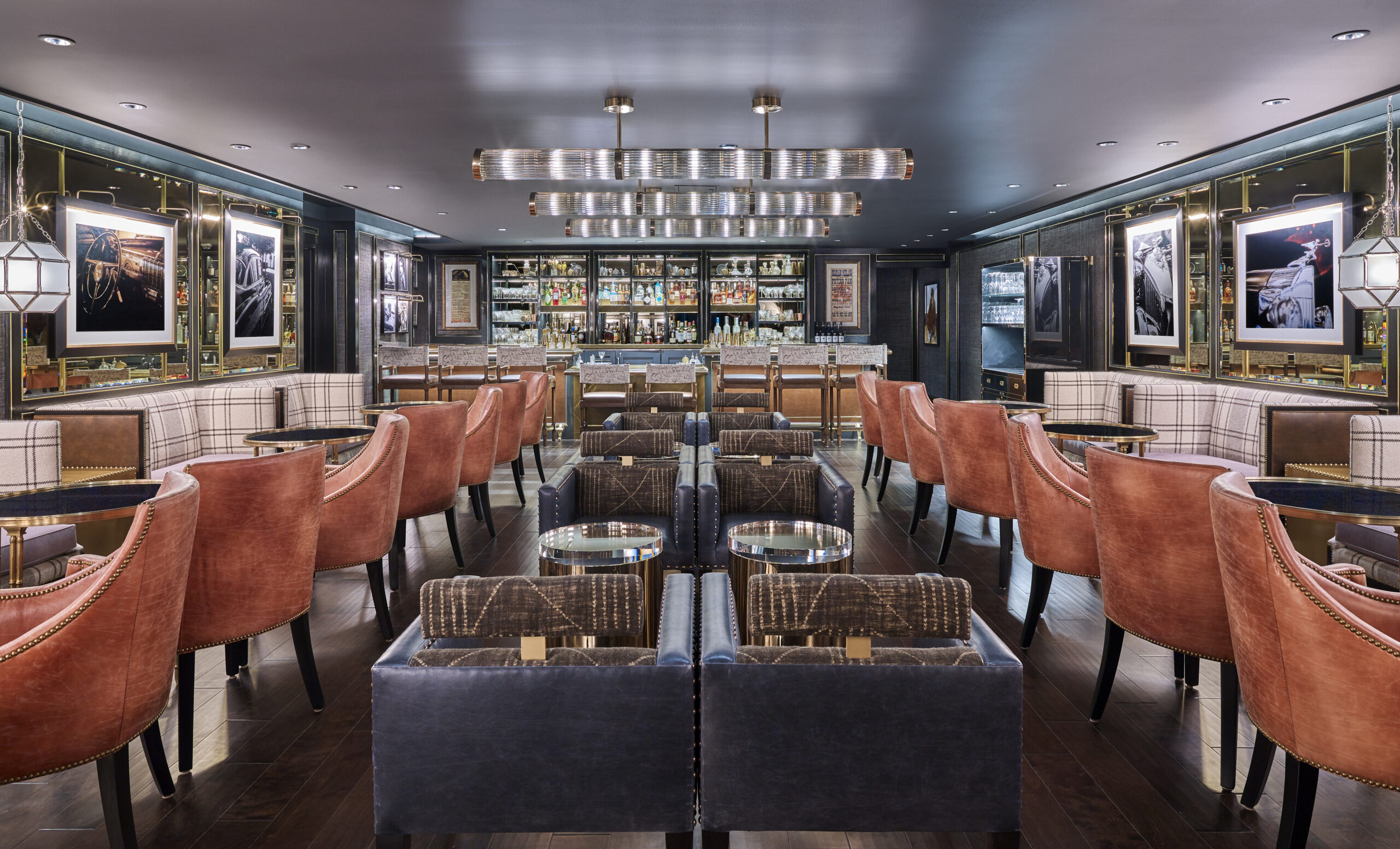
Named for Harriet Wheeler, wife of early Aspen developer Jerome B. Wheeler, the 55-seat cocktail lounge draws from the layered history of the site while offering a distinctly contemporary hospitality experience. The work began with the careful restoration of a structure that had been altered over time, returning clarity and integrity to its historic form.
In collaboration with TAL Studio, the interiors extend the building’s Victorian-era origins into a moody, refined atmosphere. Mirrored wall panels, polished accents, painted wood trim, and richly layered furnishings create a sultry intimacy, while a Bruna Terra leathered-stone bar brings weight and contemporary contrast. The result is a hidden destination that honors Aspen’s past while adding a memorable new layer to its hospitality culture.
Project Size
1,218 SF
Project Awards
-
2019 AIA Colorado Award of Distinction & Honorable Mention
-
2013 Hospitality Design Award Finalist
Publications
R+B Services
-
Architecture
-
Interior Architecture
Project Team
-
Interior Designer: TAL Studio
-
Photographer: Shawn O’Connor
-
Contractor: Haselden
Hotel Jerome
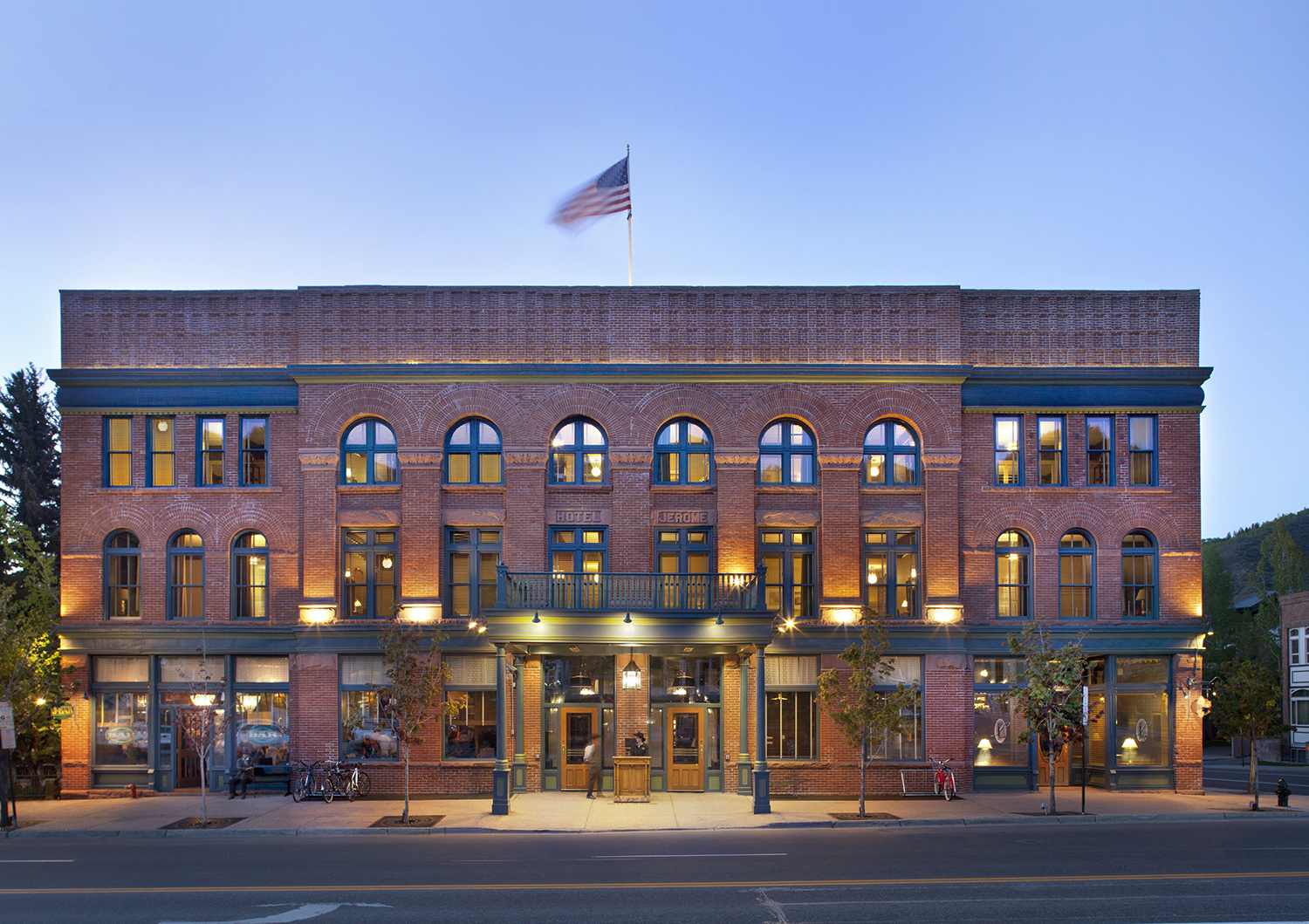
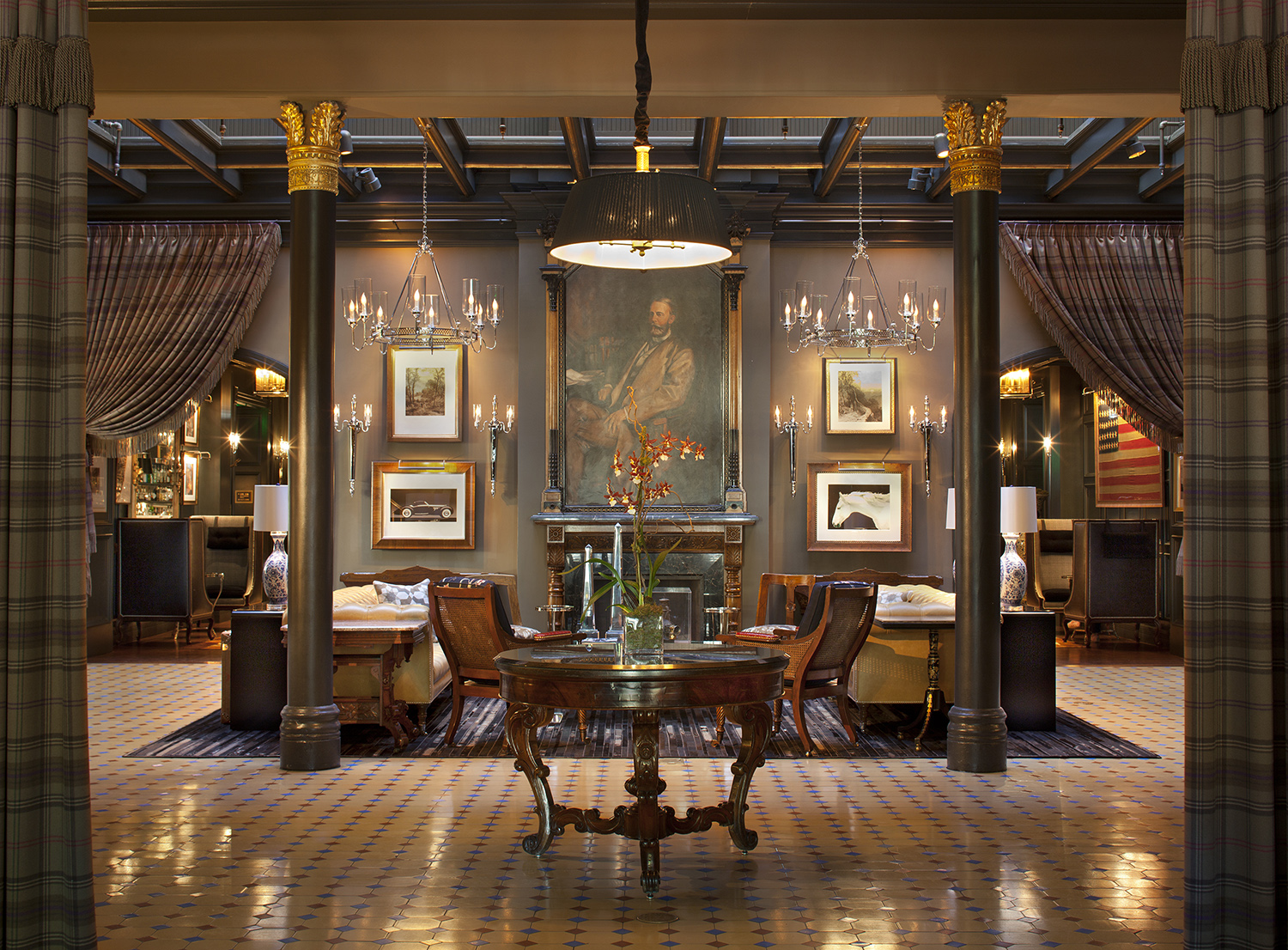
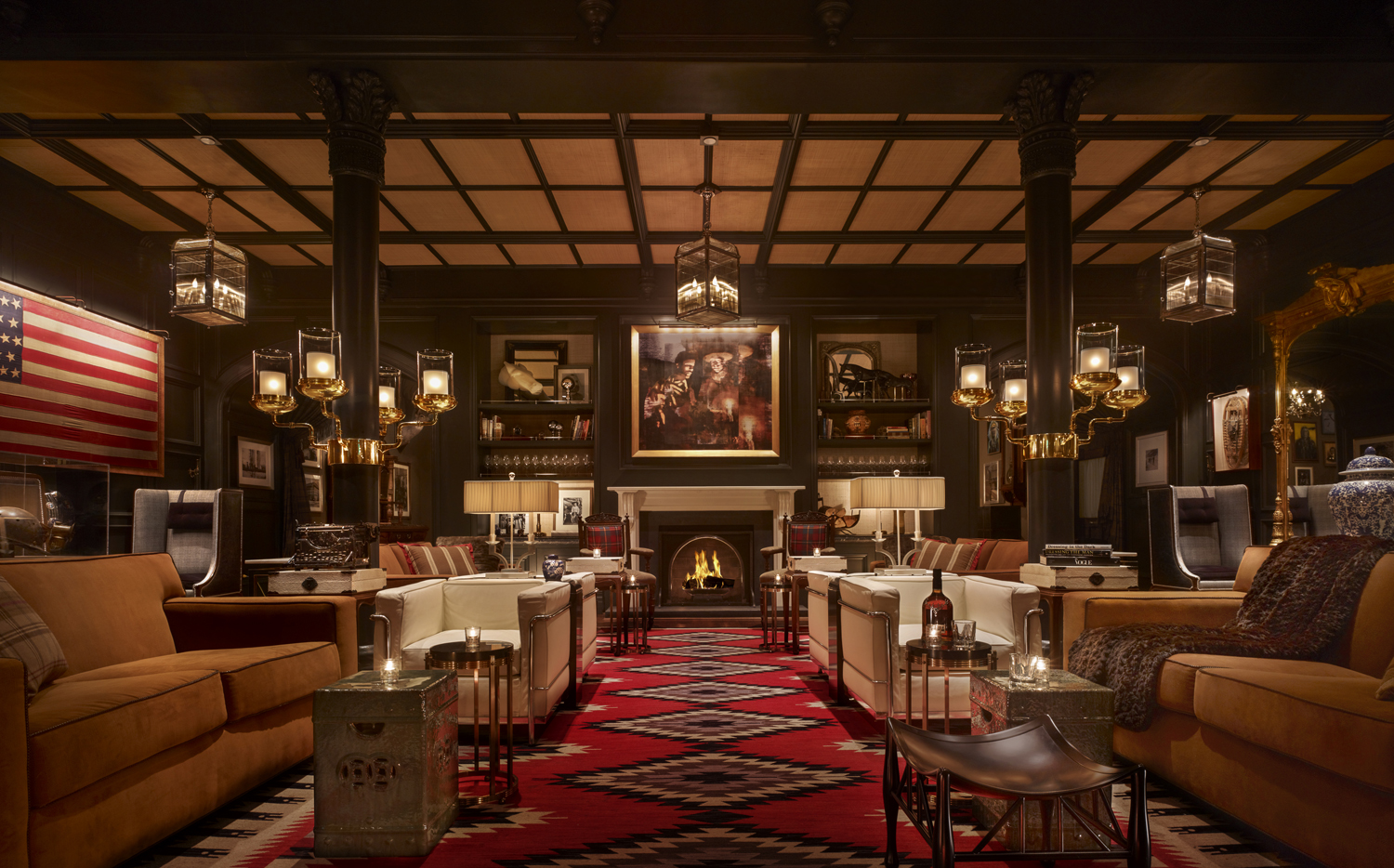
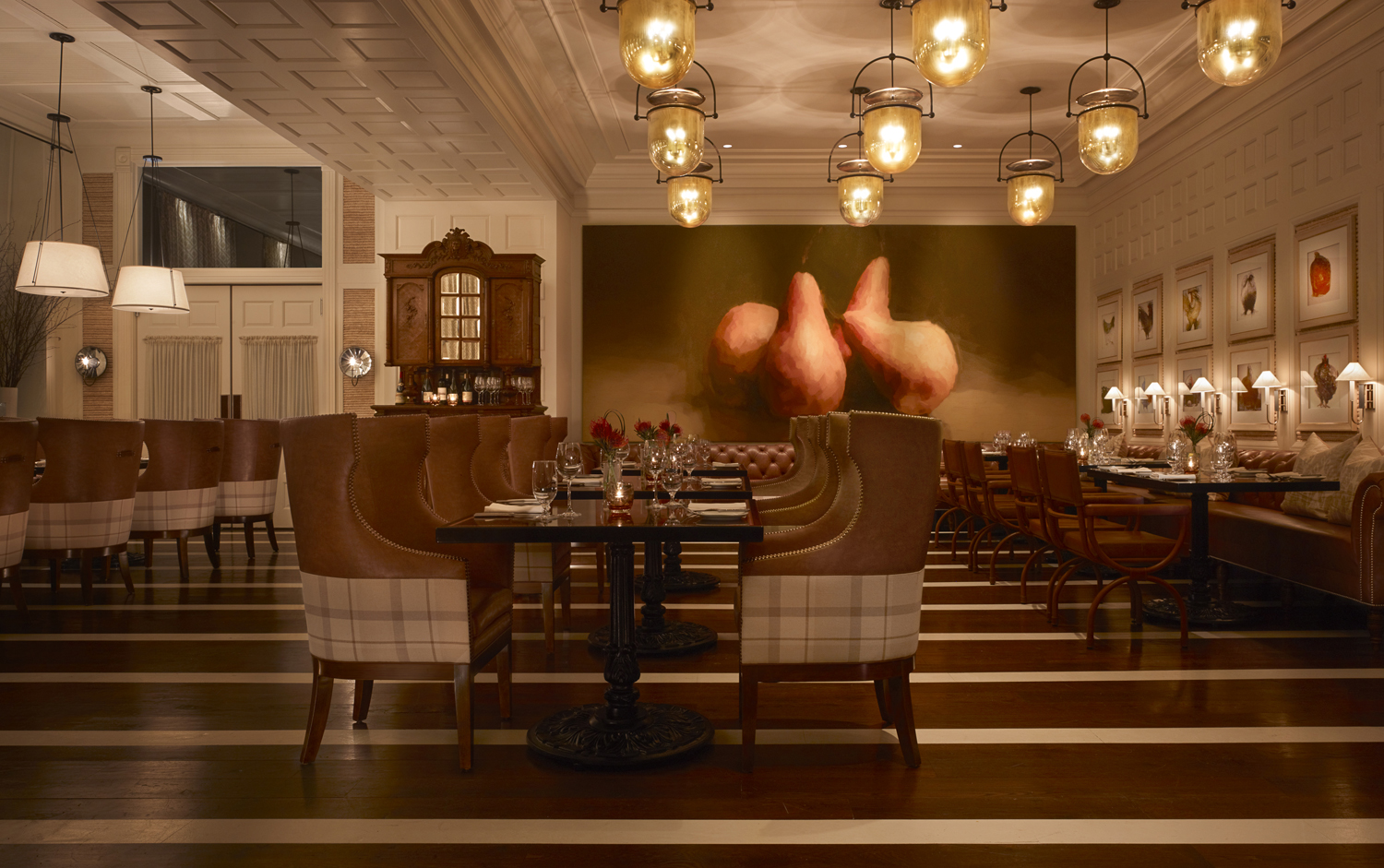
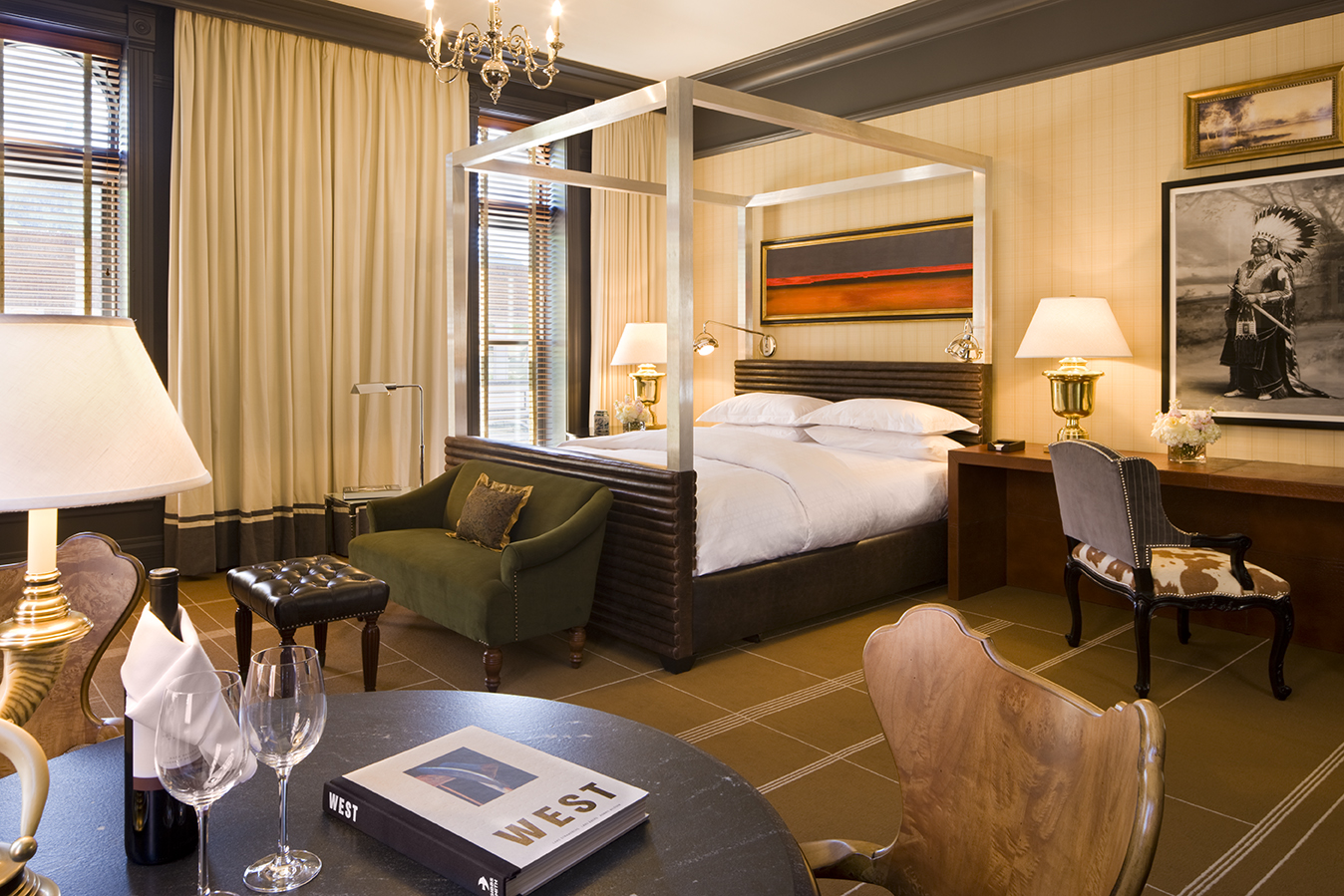
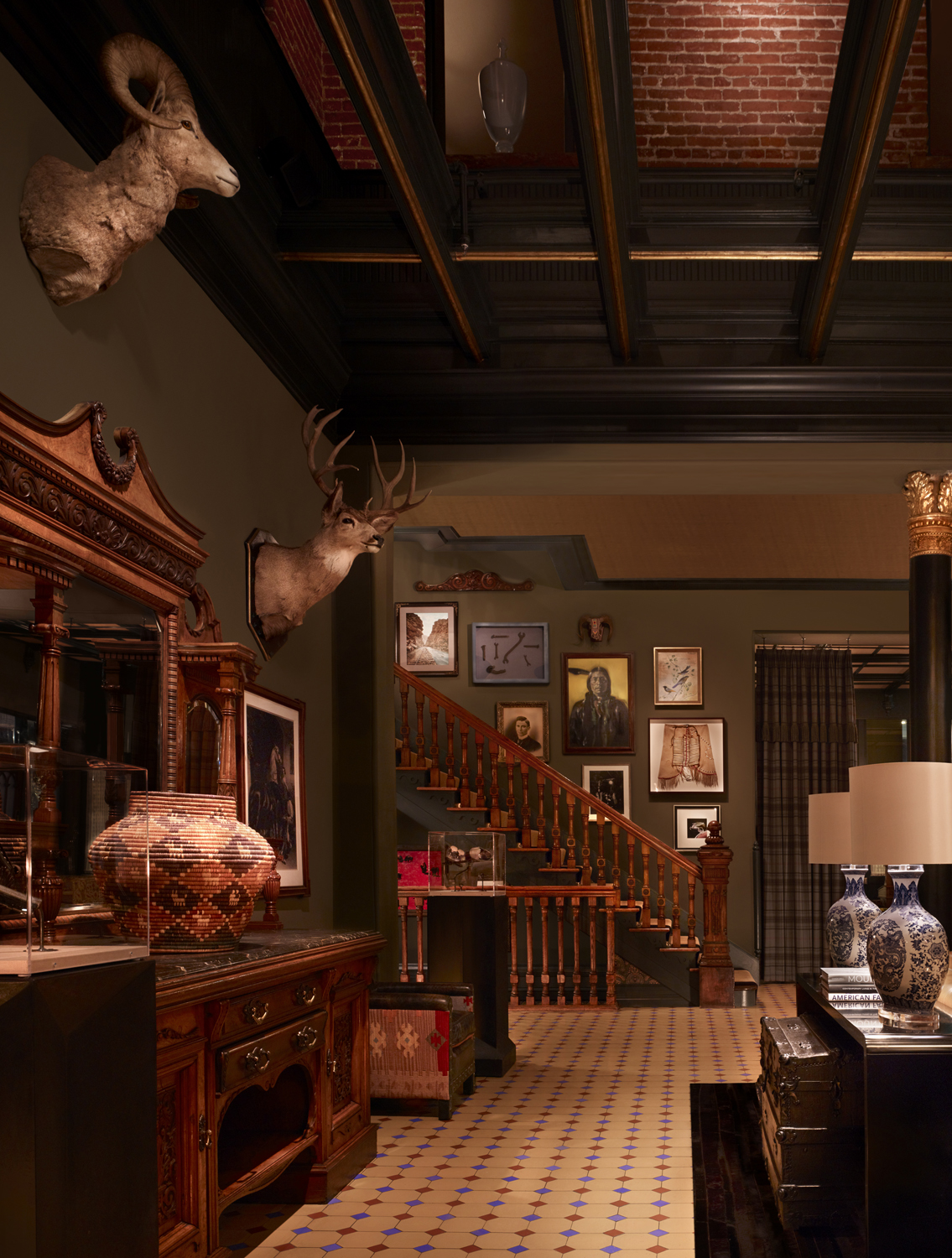
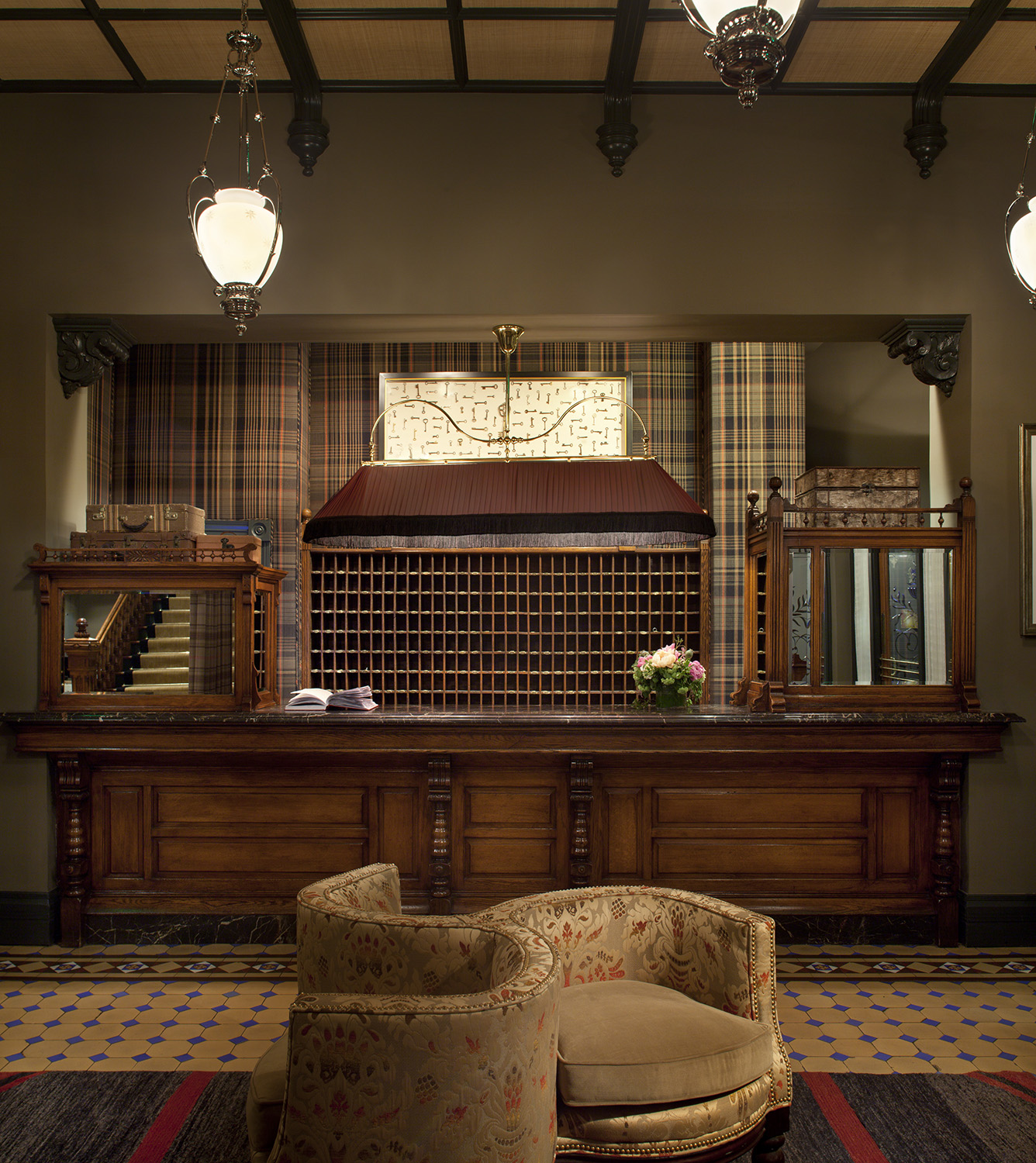
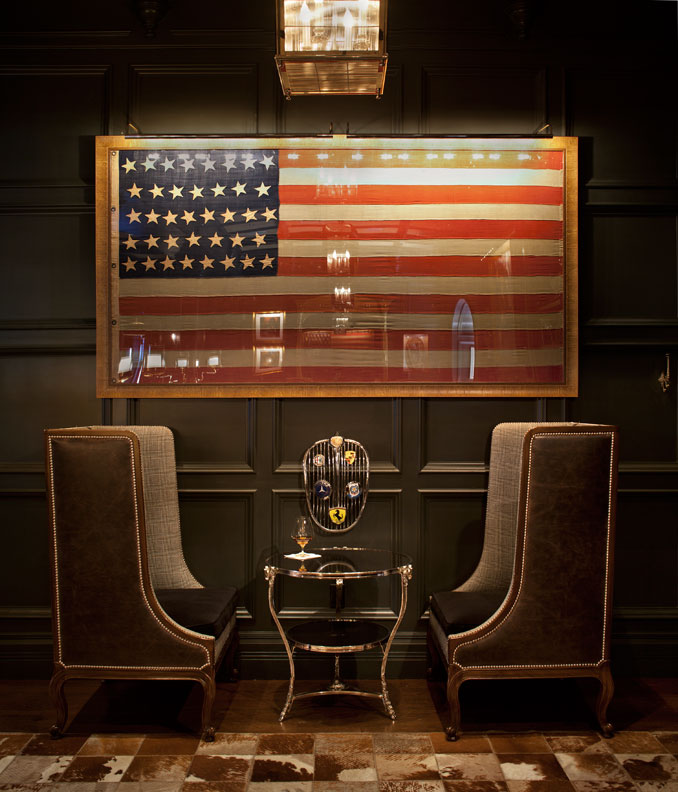
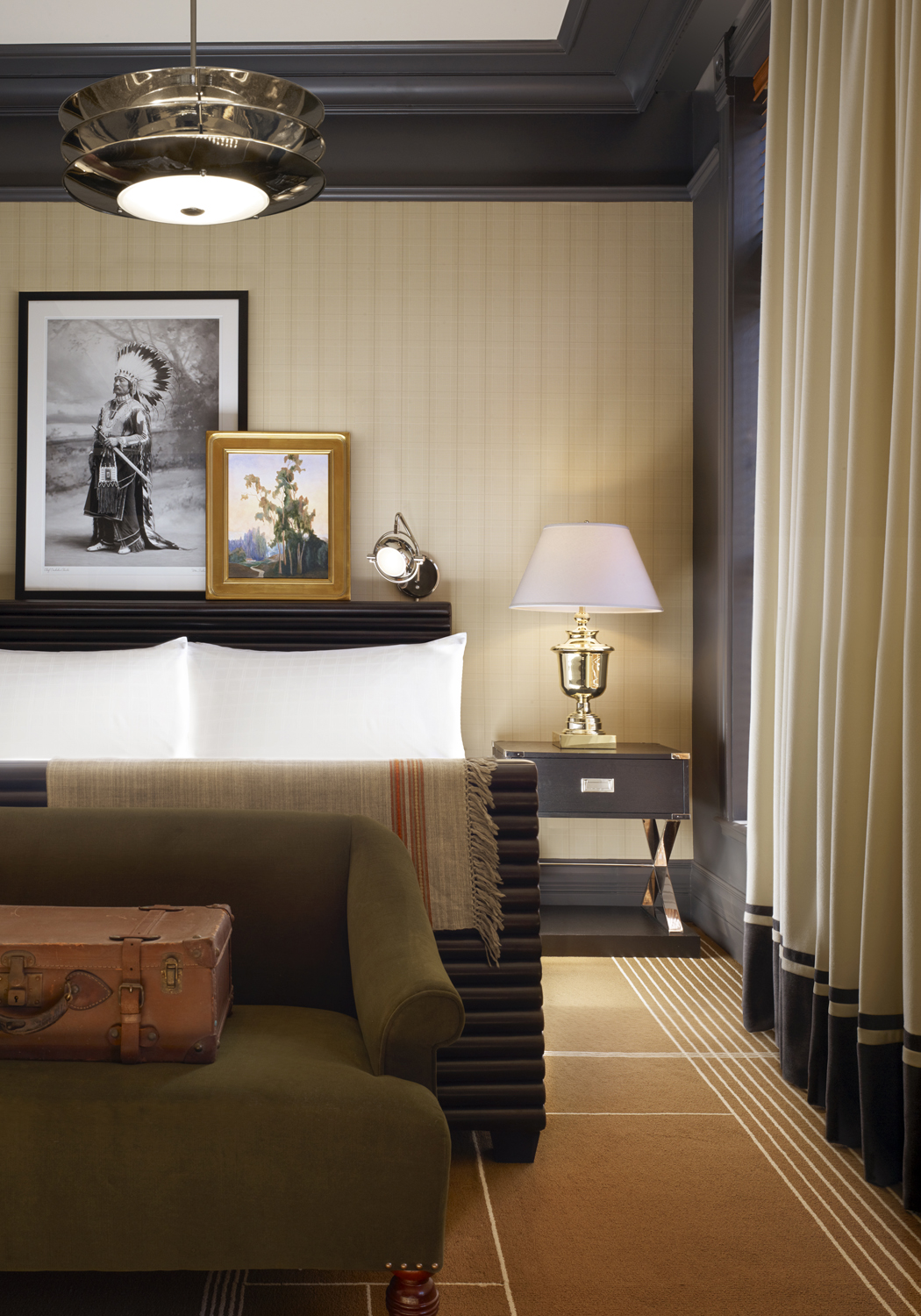
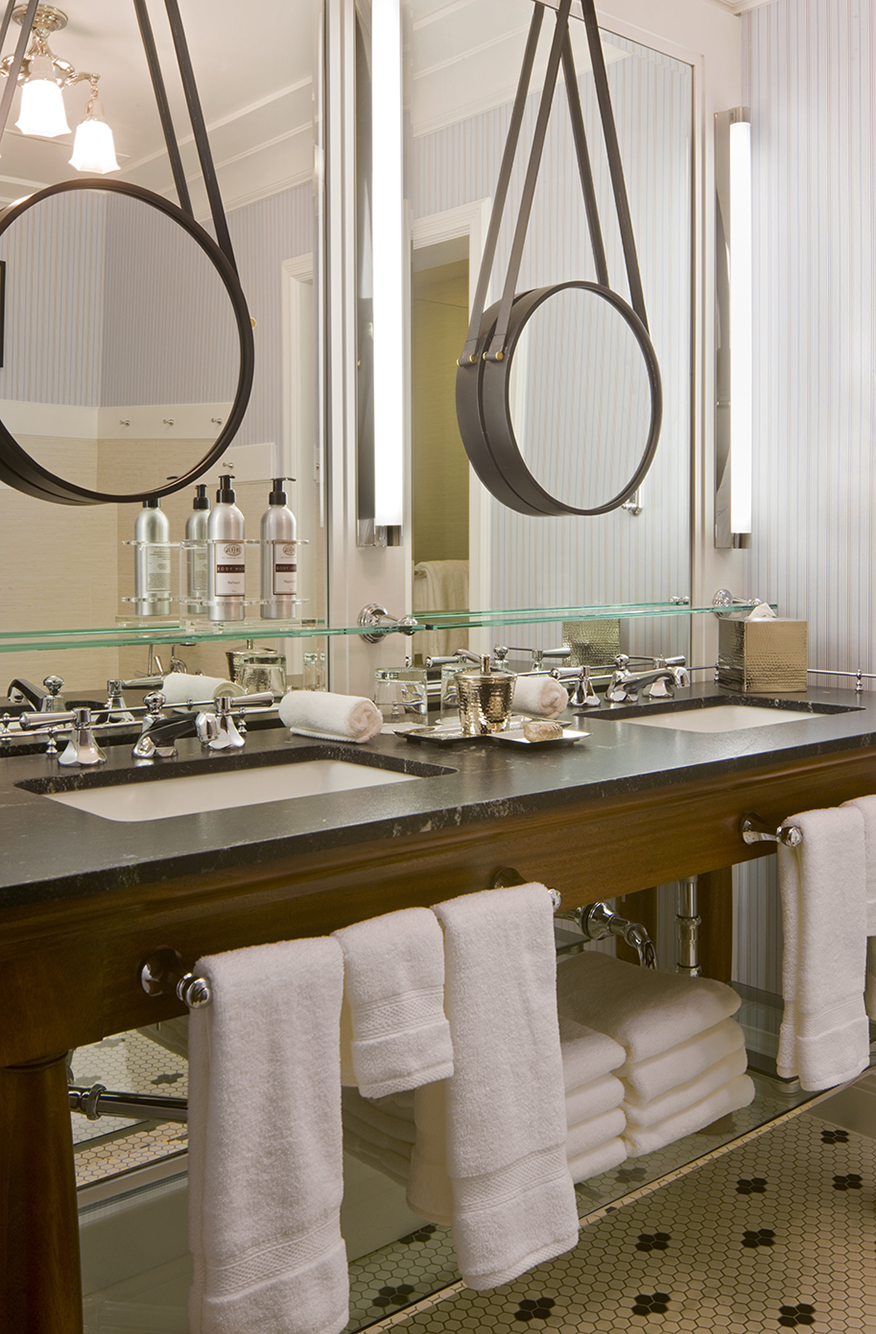
R+B served as Architect for the 2011–2012 renovation of the Hotel Jerome, a landmark building in Aspen, Colorado, built in 1889 and listed in the National Register of Historic Places in 1986. Operated by Auberge Resorts, the historic hospitality icon is a beloved gathering place for locals and travelers alike, home to The Living Room, Prospect Restaurant, The Library, and the iconic J-Bar.
The scope of work encompassed core & shell and fit-out improvements across hotel rooms, public spaces, and support areas — a comprehensive effort to modernize the building’s infrastructure and guest experience while preserving its historic character.
The project was recognized with five awards in 2013, including the ASID Crystal Award for Hospitality, the ASID Crystal Judges Merit Award for Commercial, the City of Aspen Historic Preservation Commission Award for Renovation, the IIDA Merit Award for Play, and was named a Hospitality Design Award Finalist.
Project Size
134,000 SF
Project Awards
-
2013 ASID Crystal Award – Hospitality
-
2013 ASID Crystal Award – Judges Merit Award for Commercial
-
2013 Historic Preservation Commission Award for Renovation
-
2013 IIDA Merit Award – Play
-
2013 Hospitality Design Award Finalist
Publications
-
LUXE, Winter 2014
-
Forbes Life, December 2013
-
Colorado Expression, June/July 2013
-
AubergeResorts.com, Winter/Spring 2013
-
Aspen Peak, Winter 2012
R+B Services
-
Architect of Record
-
Interior Architecture
-
Renderings
Project Team
-
Interior Designer: TAL Studio
-
Landscape Architect: Design Workshop
-
Structural Engineer: KL&A
-
Mechanical Engineer: BG Buildingworks
-
Photographer: Brent Moss
-
Photographer: David Marlow
-
Contractor: Haselden


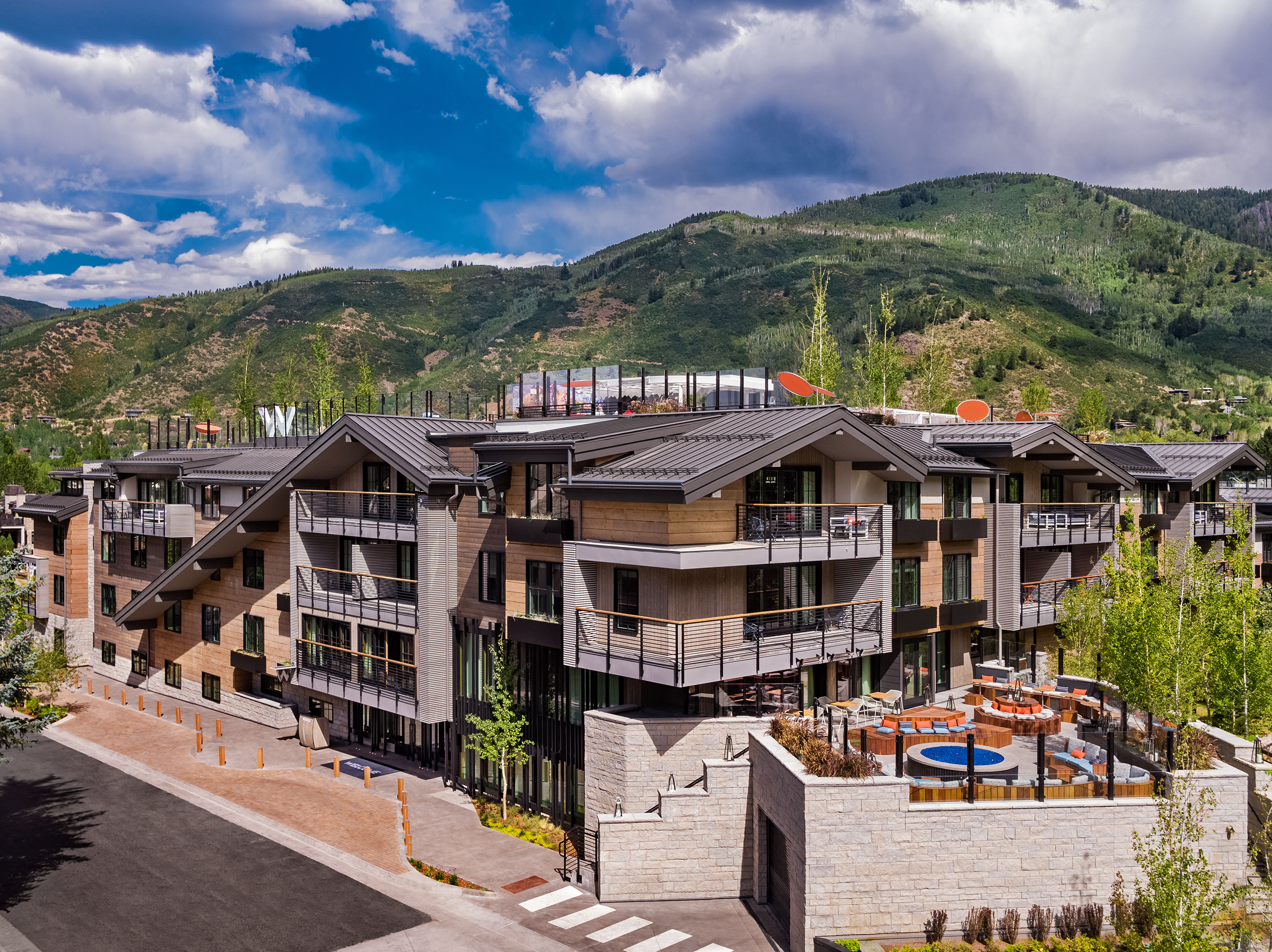
W Aspen Hotel
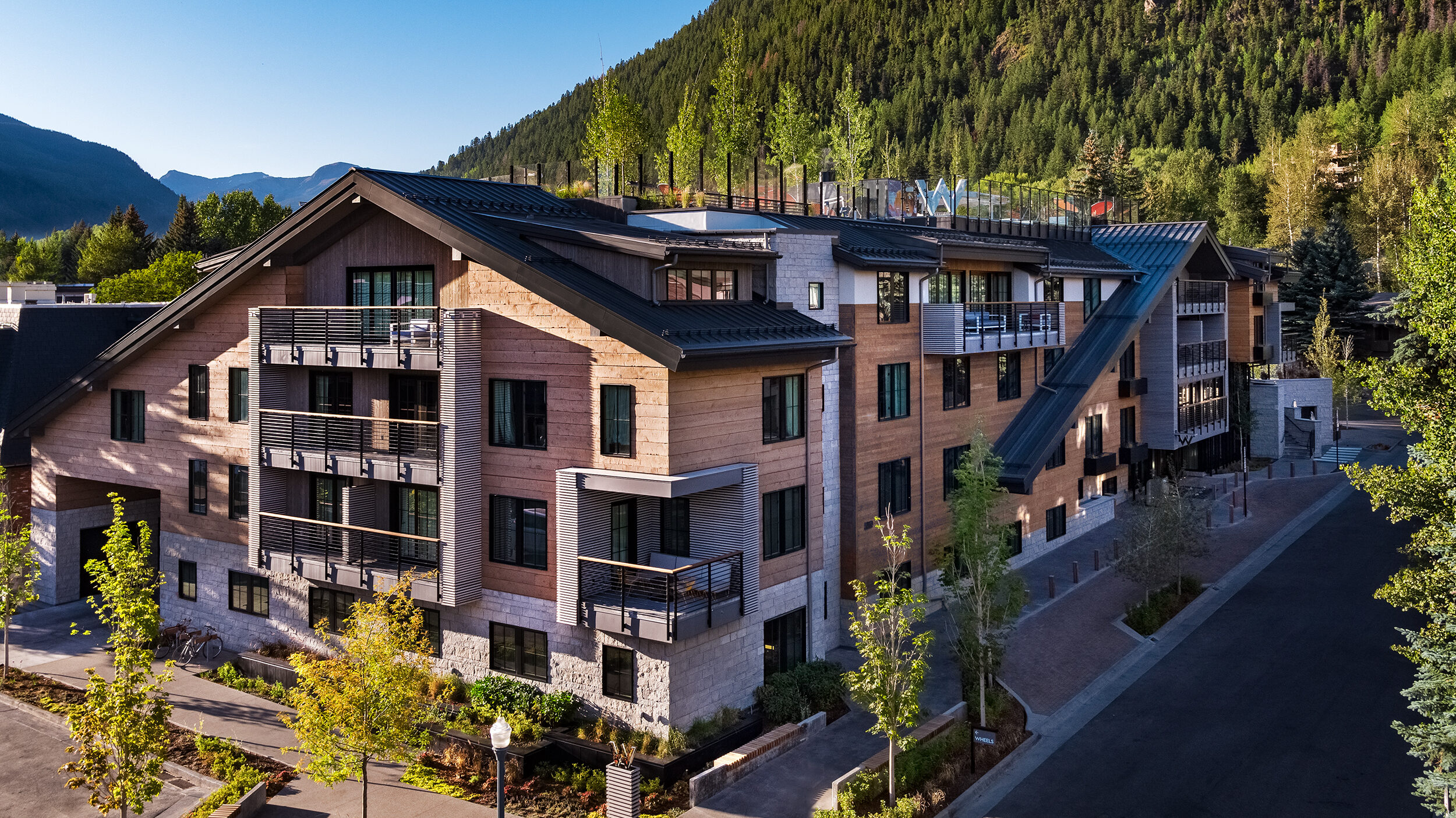
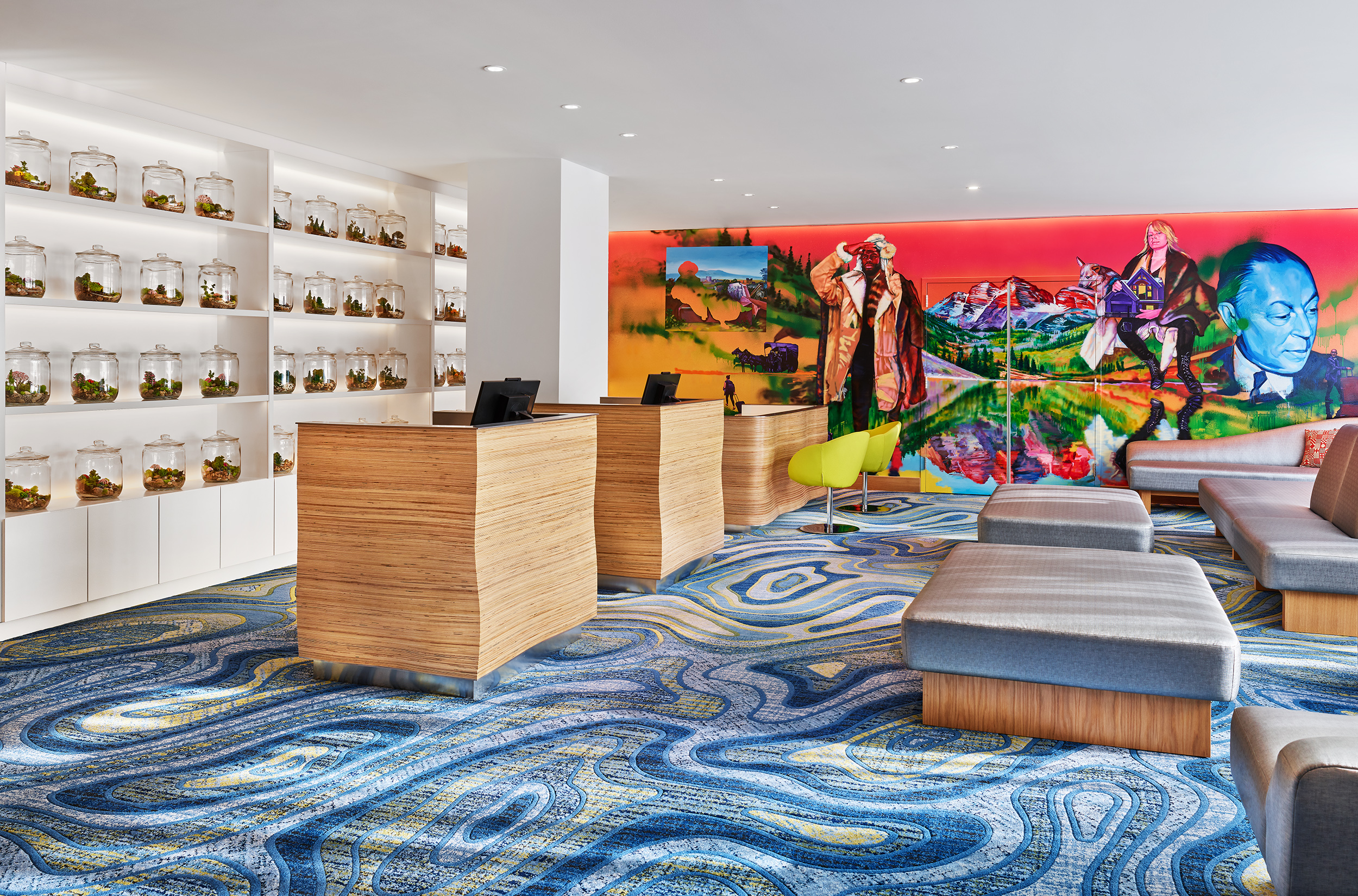
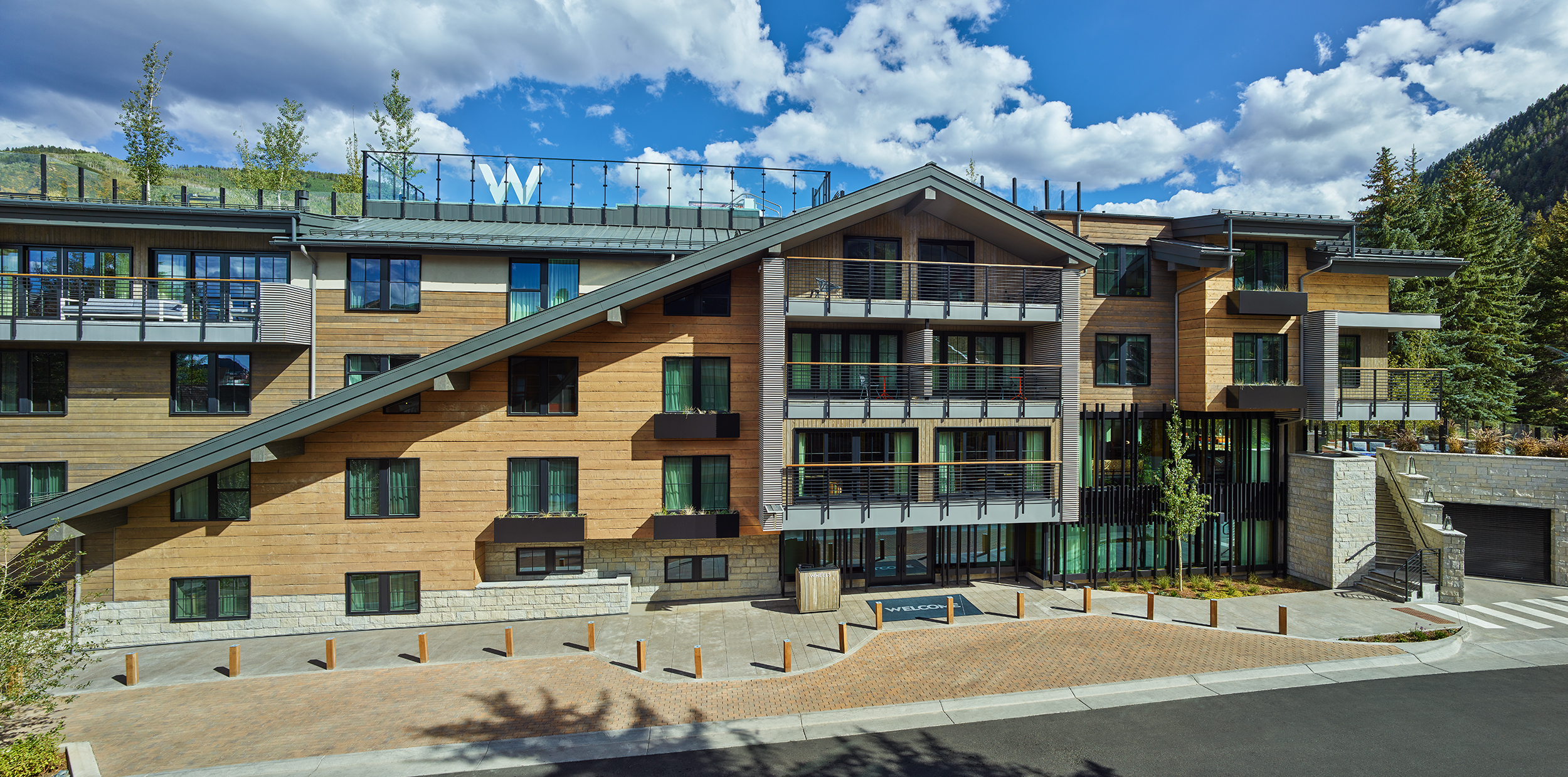
W Hotel’s first mountain escape in North America and the first new luxury Aspen hotel in 25 years, W Aspen and the Sky Residences at W Aspen builds on Aspen’s rich history and skiing heritage. Inspired by the infusion of a significant number of iconic ski chalets in the area in the 1940s-60s, R+B sought to design a modern interpretation of a traditional chalet.
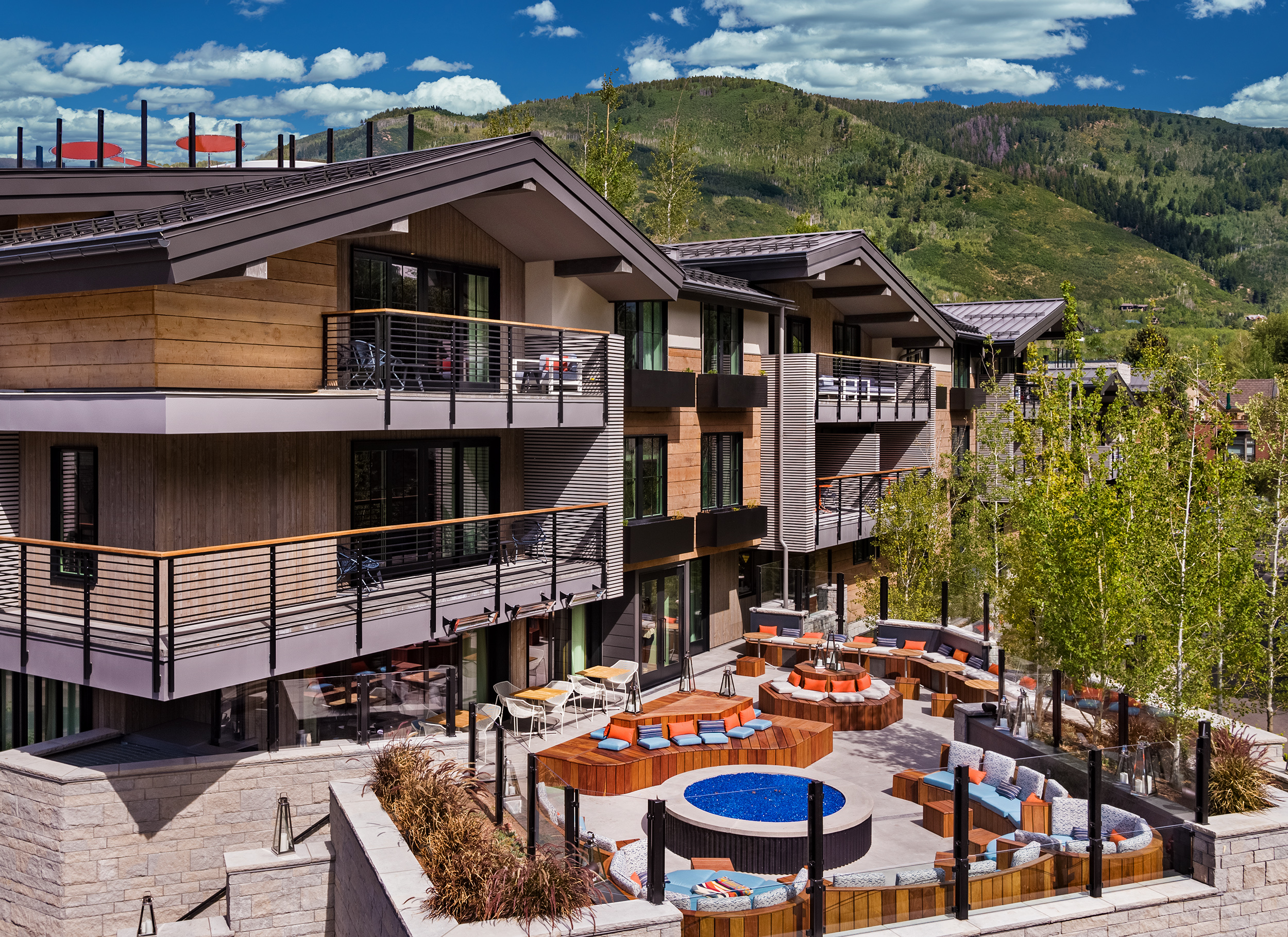
The architecture expresses a sense of a gradual evolution of form and space, while remaining grounded in the chalet vernacular. Traditional characteristics of low-pitched singular rooflines, deep overhangs, continuous balconies, and flower boxes are juxtaposed with varying roof compositions, along with modern railings and wood slats that organize balcony volumes.
Traditional materials are paired with modern elements to further embellish the dialogue between the past and present. The strong base of the W Aspen is Flint Hills gray limestone. Most of the structure’s walls are clad in thick-plank, band-sawn and rough-sawn wood siding, with a combination of natural and stained applications, from Montana Timber. A few upper wall sections of the building are stucco. The windows and doors are black metal cladding from Sierra Pacific. The roof and other flashing applications are black metal as well. Black-painted railroad rails hover in front of the entry lobby storefront to recall the rail yard that once occupied the property during Aspen’s mining era.
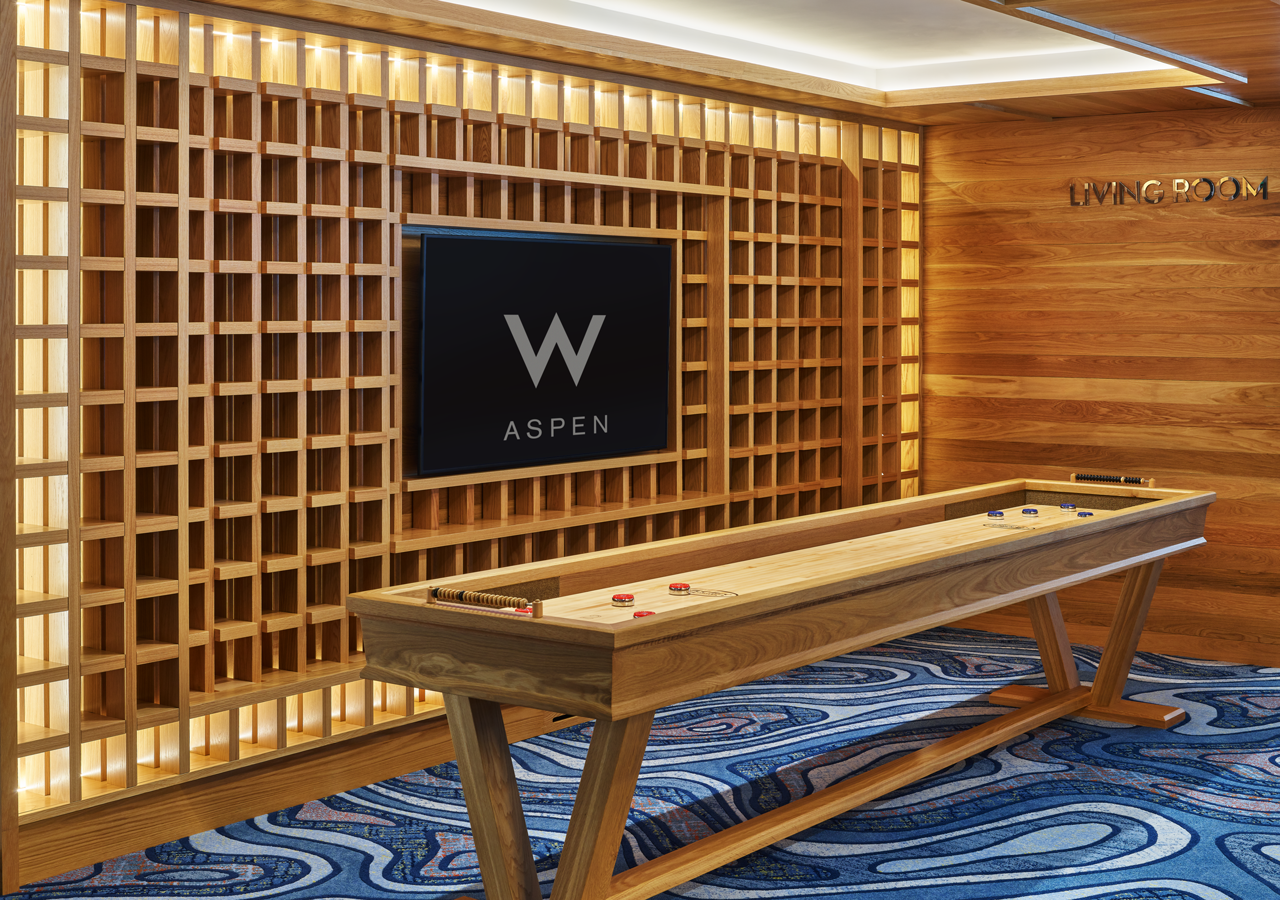
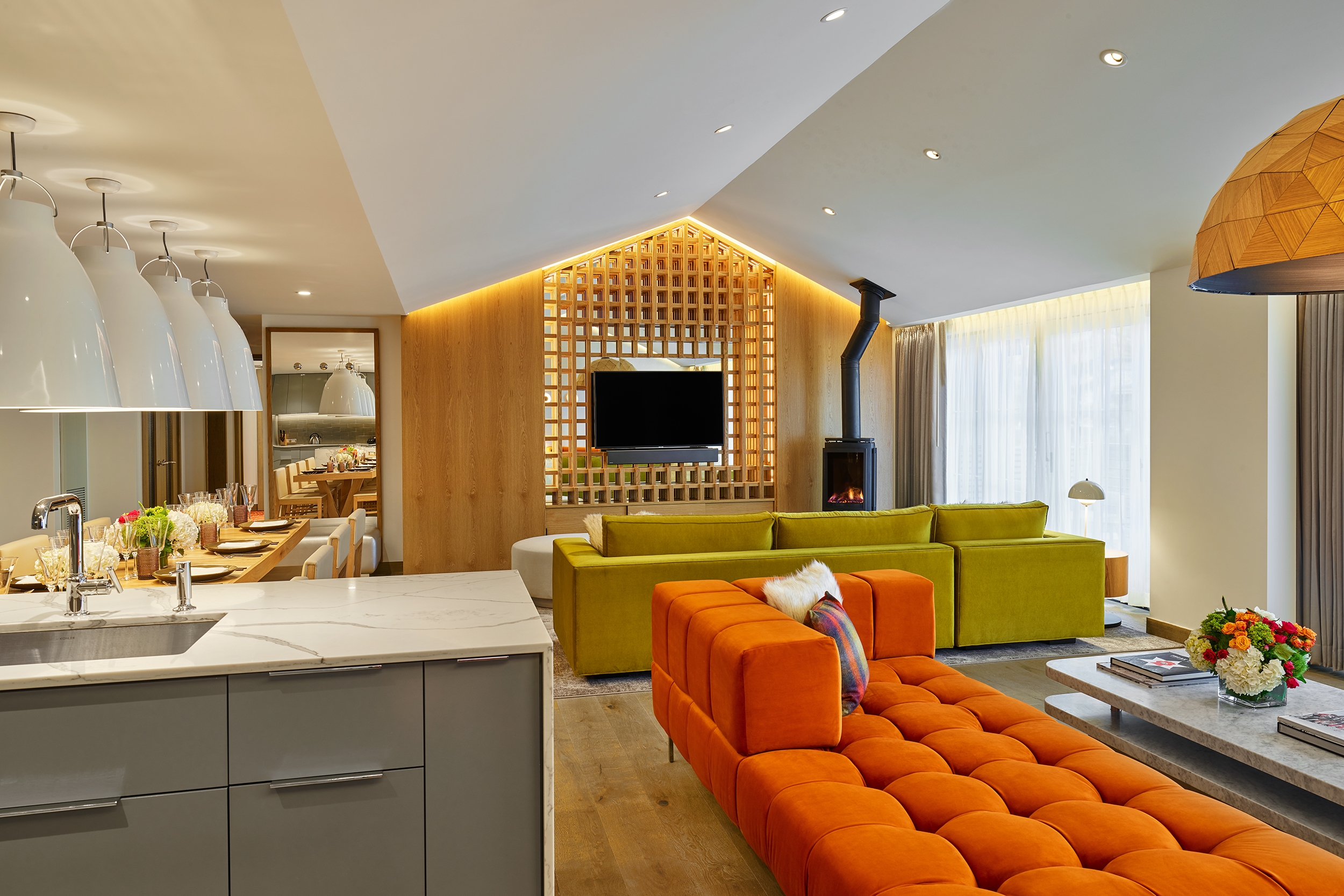
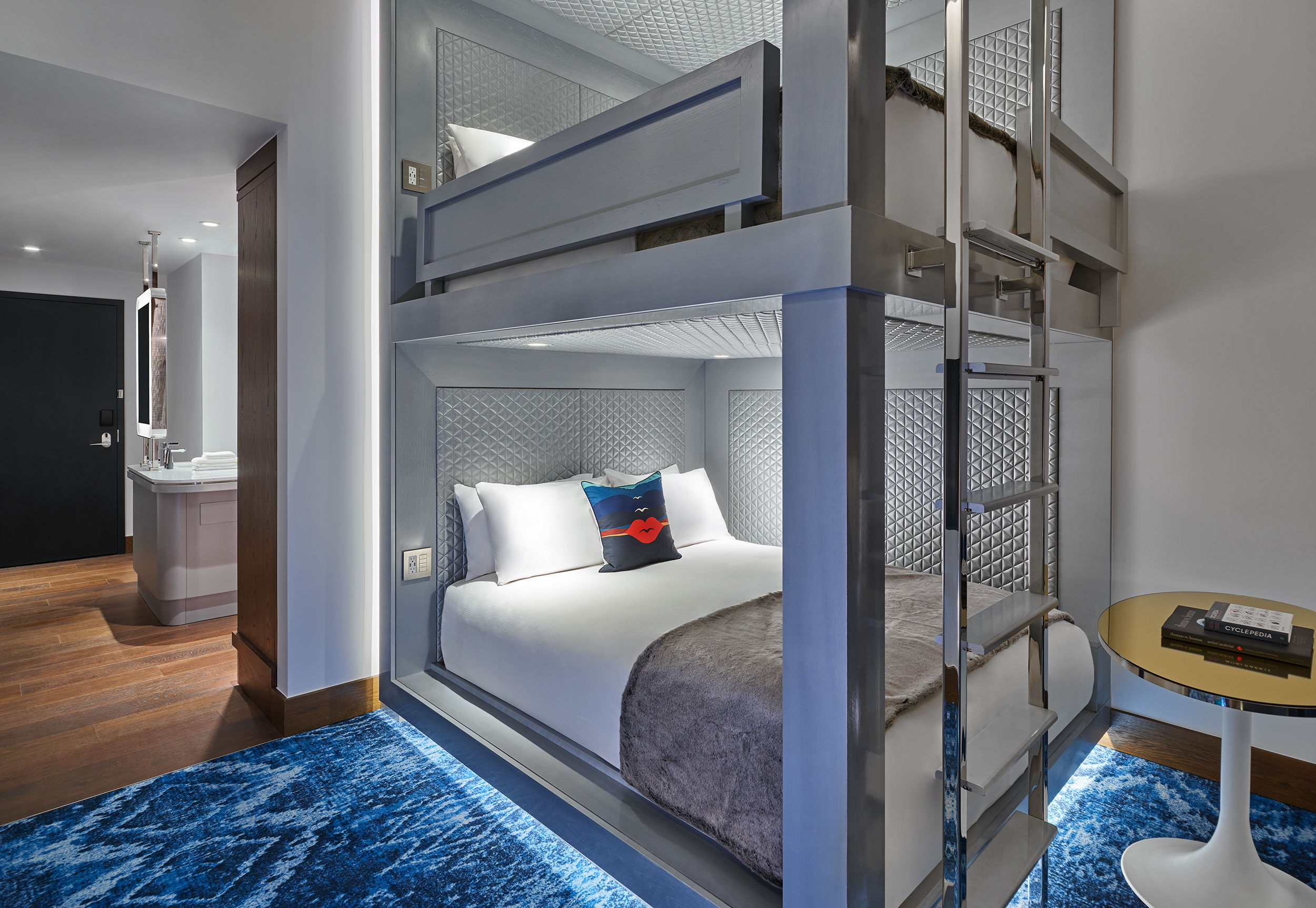
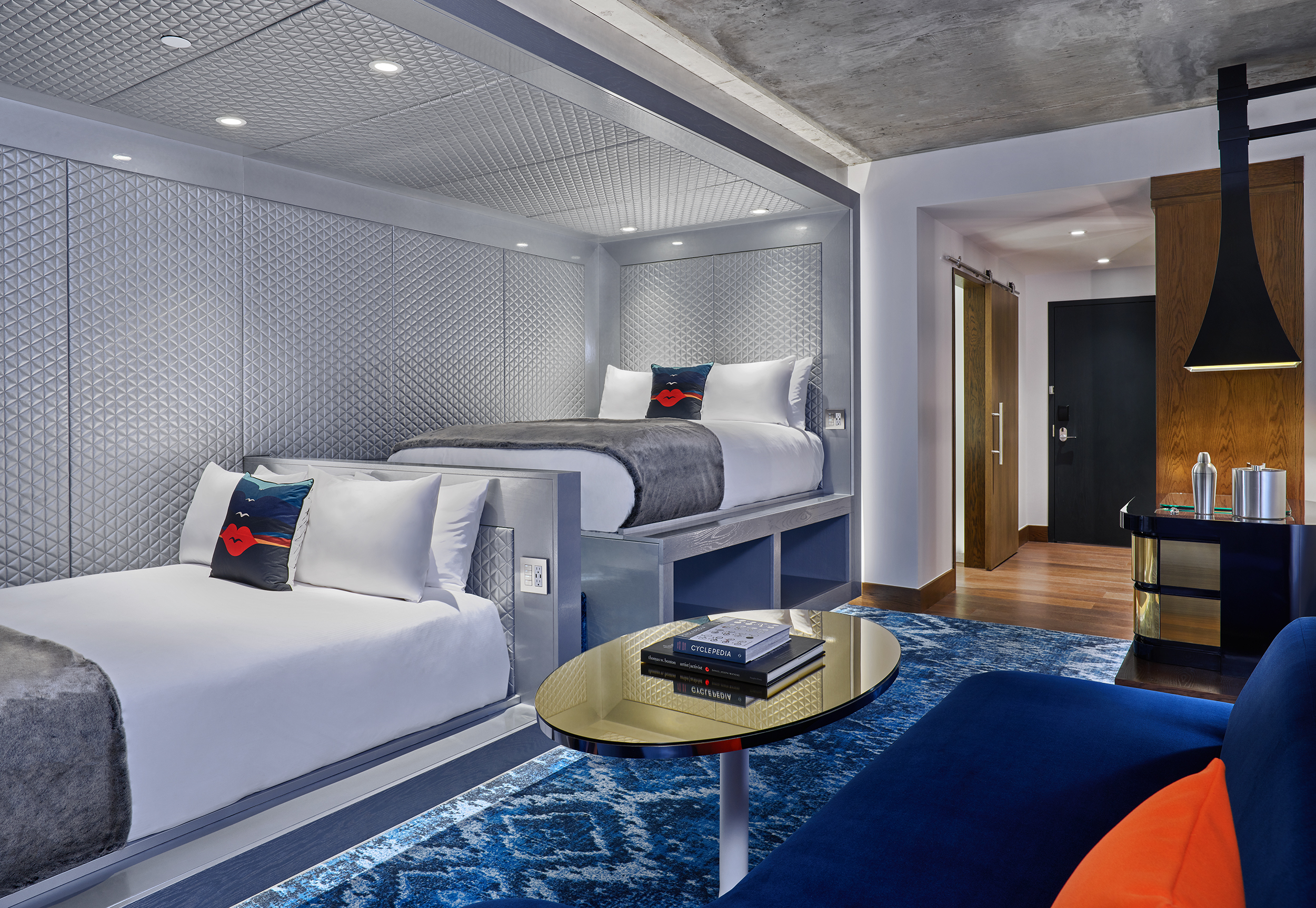
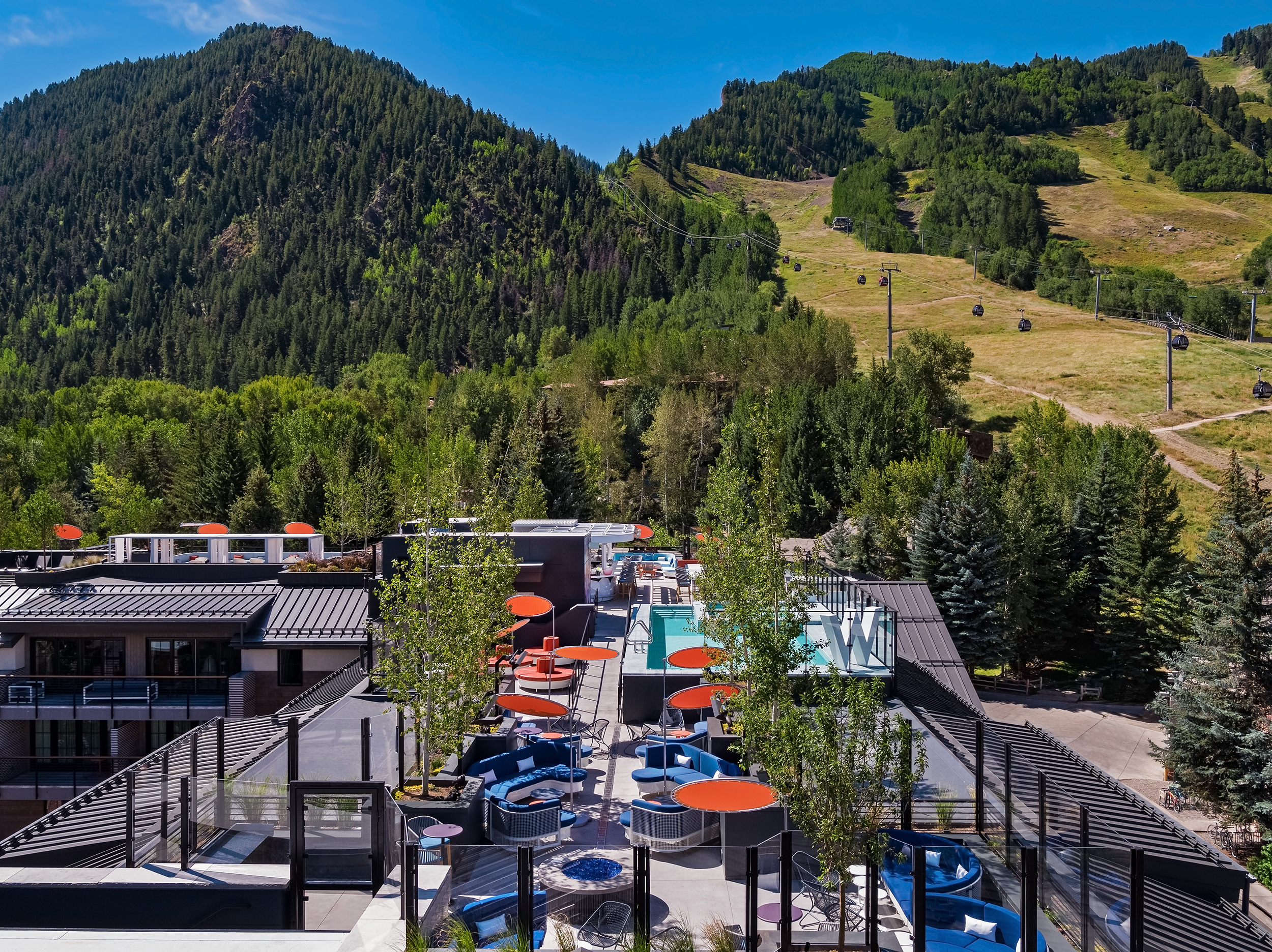
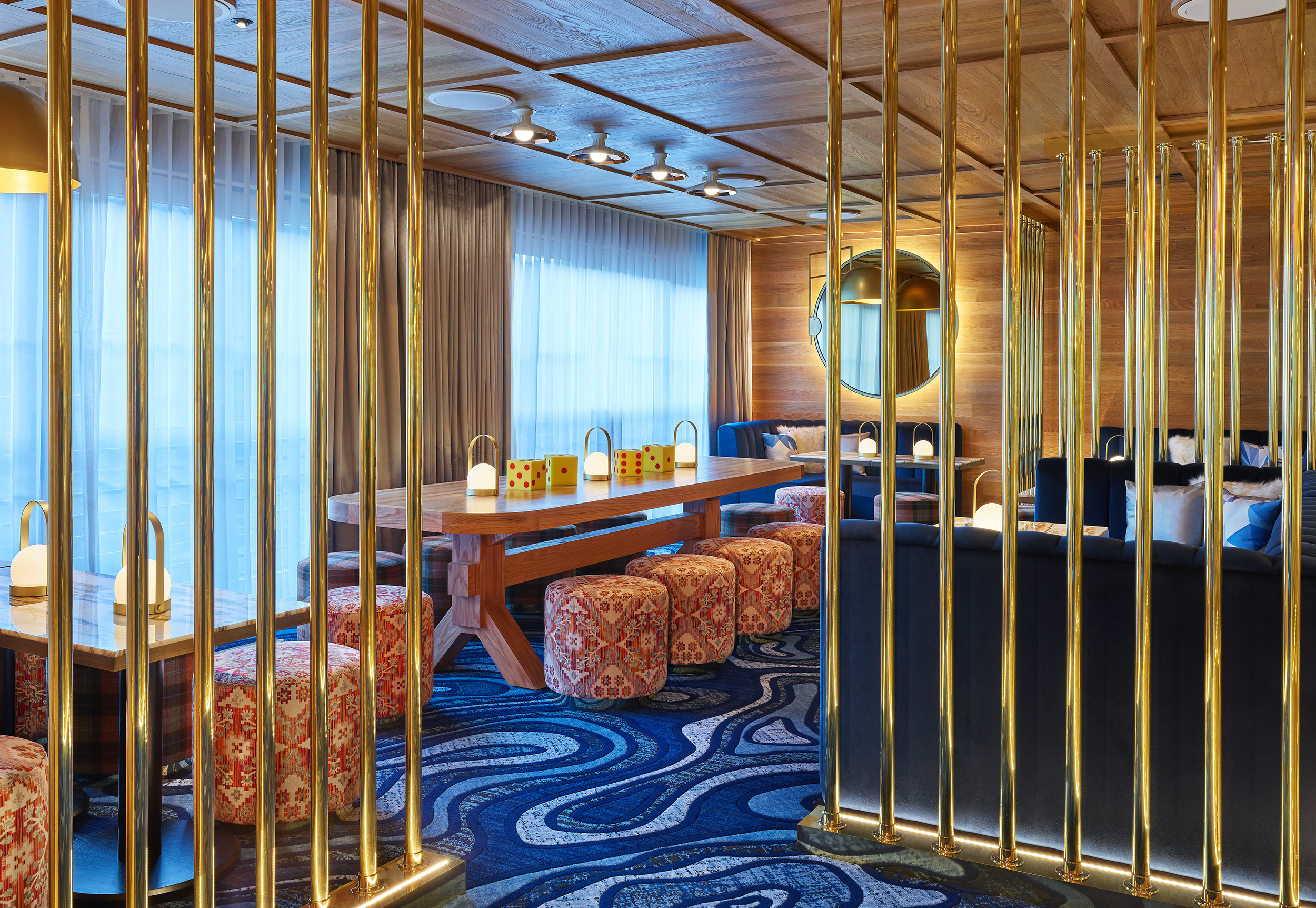
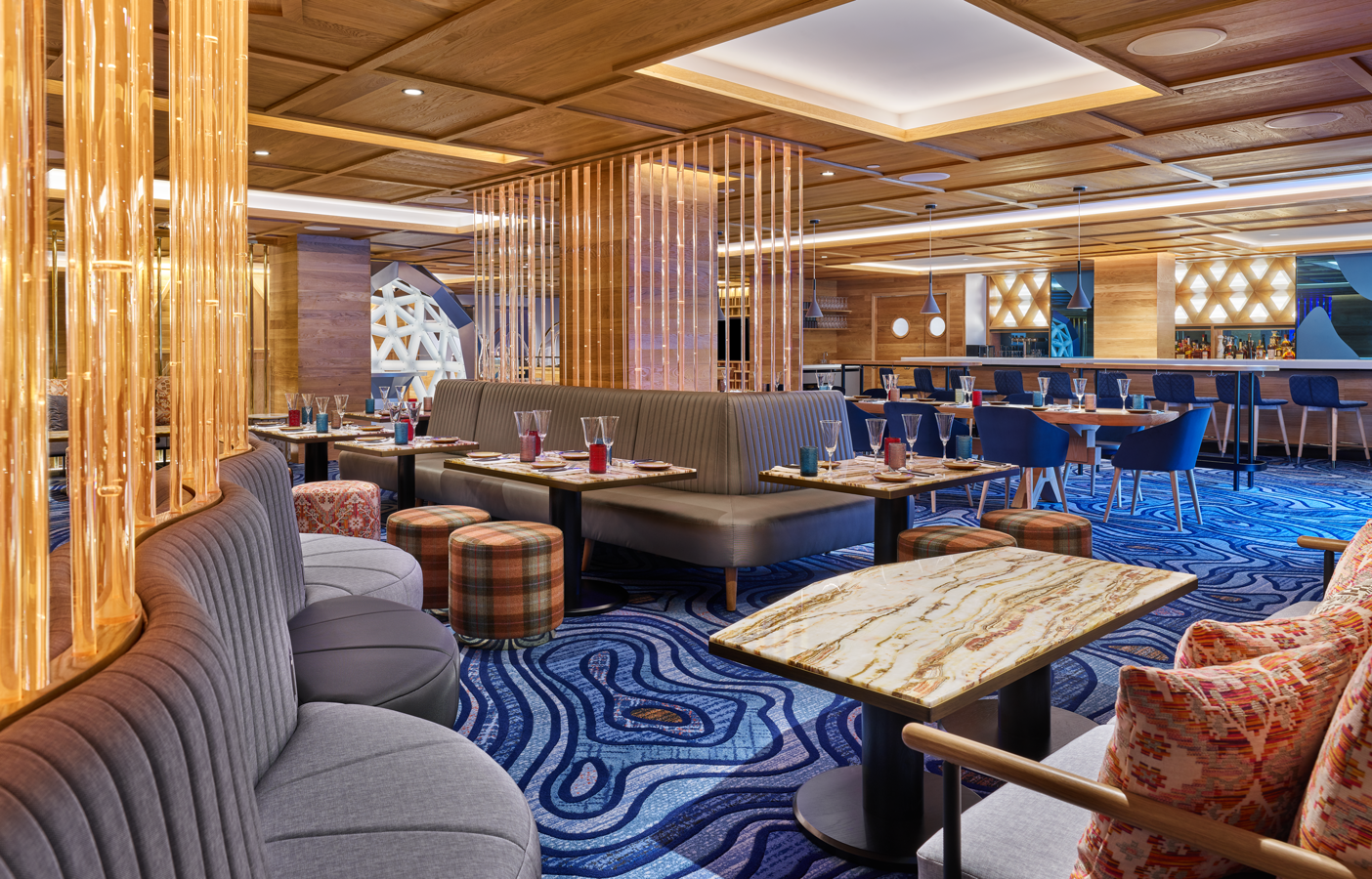
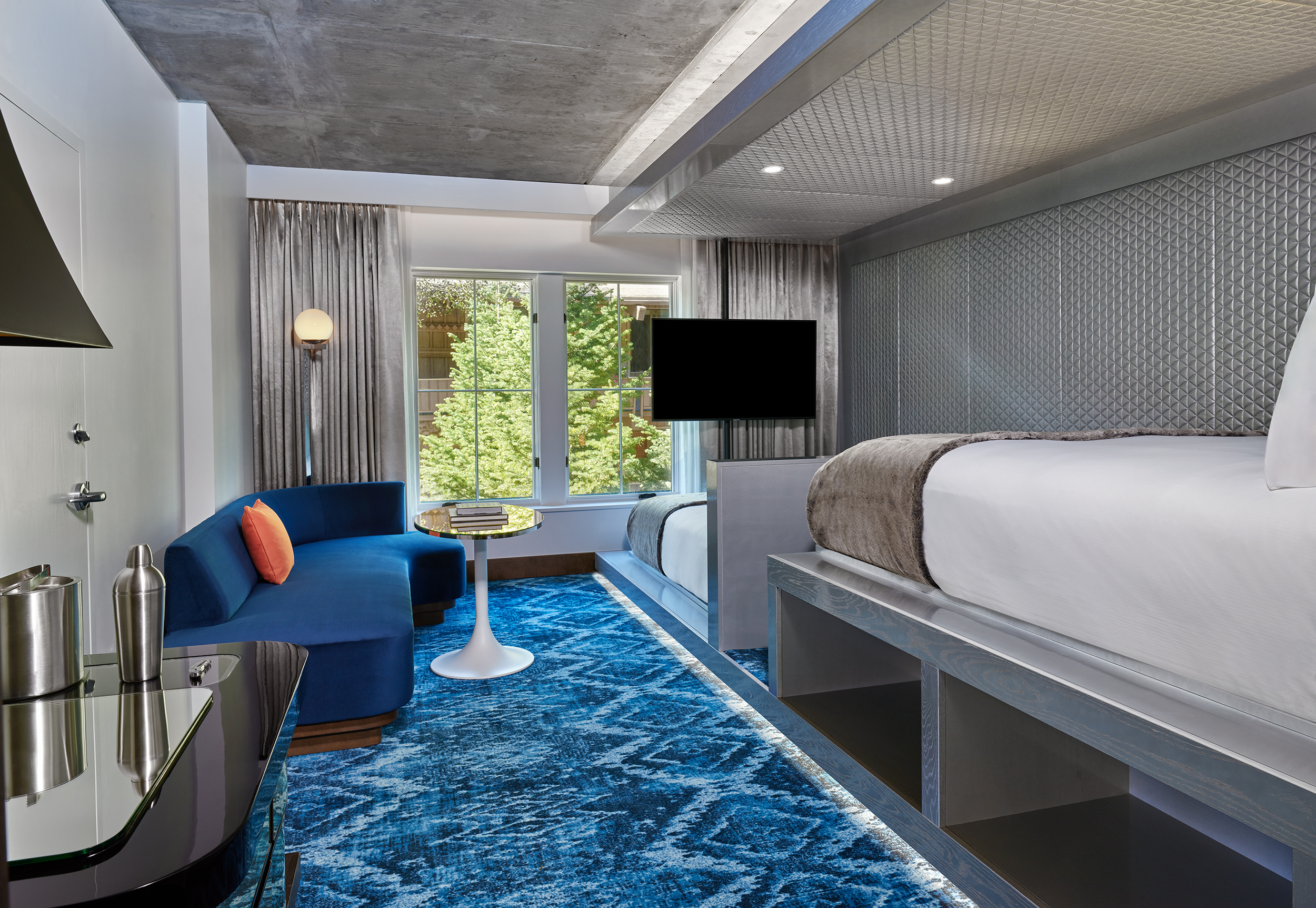
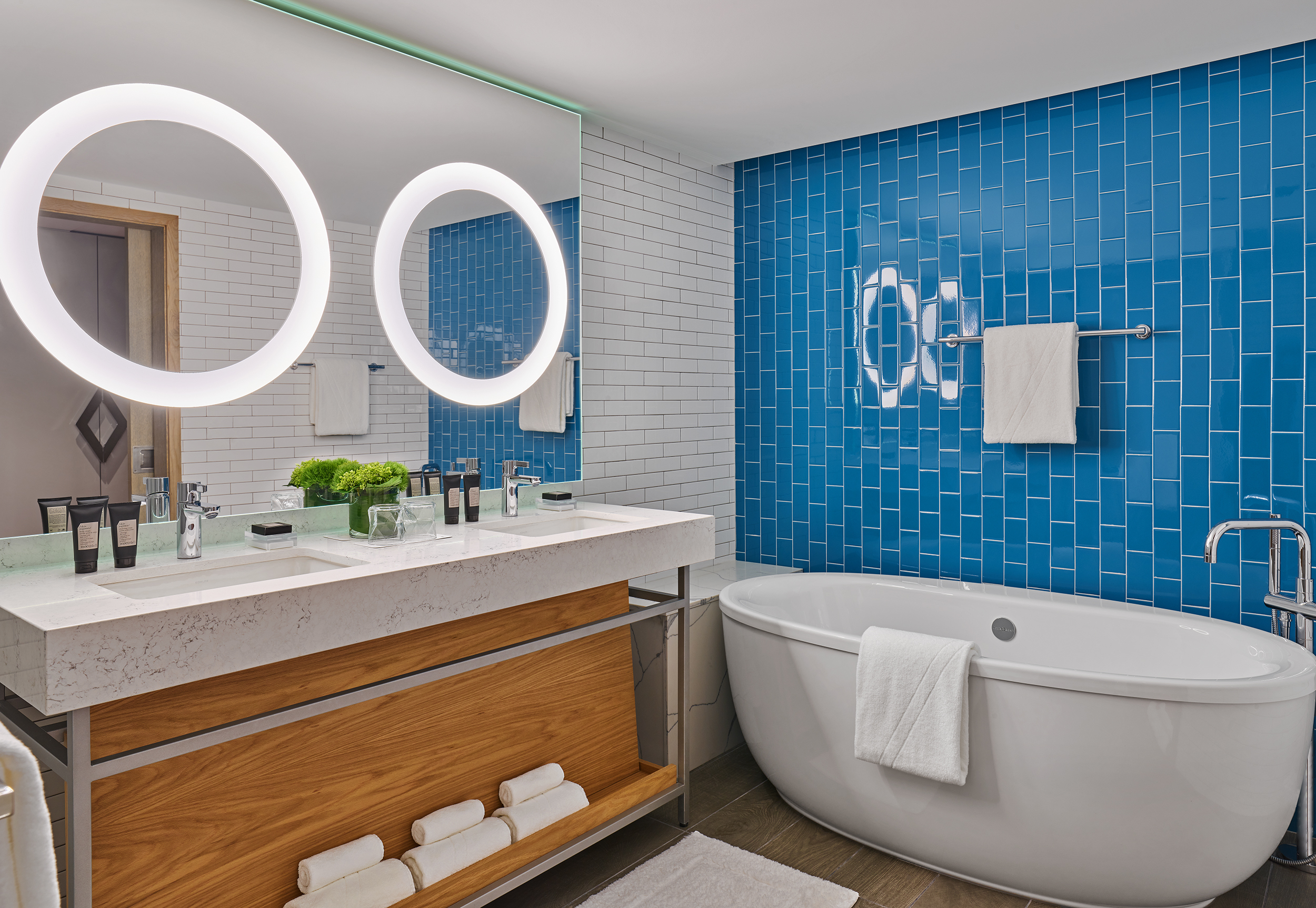
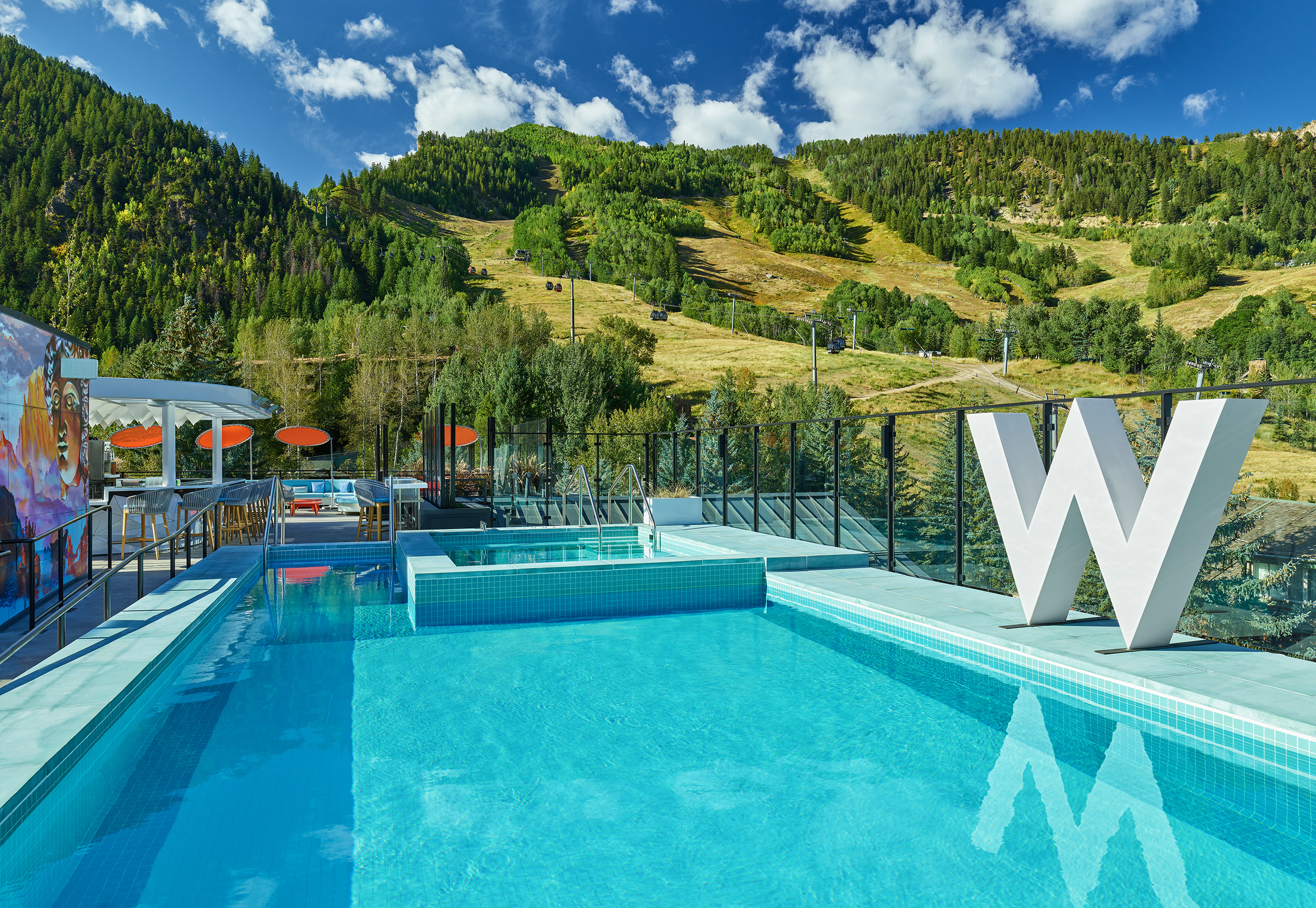
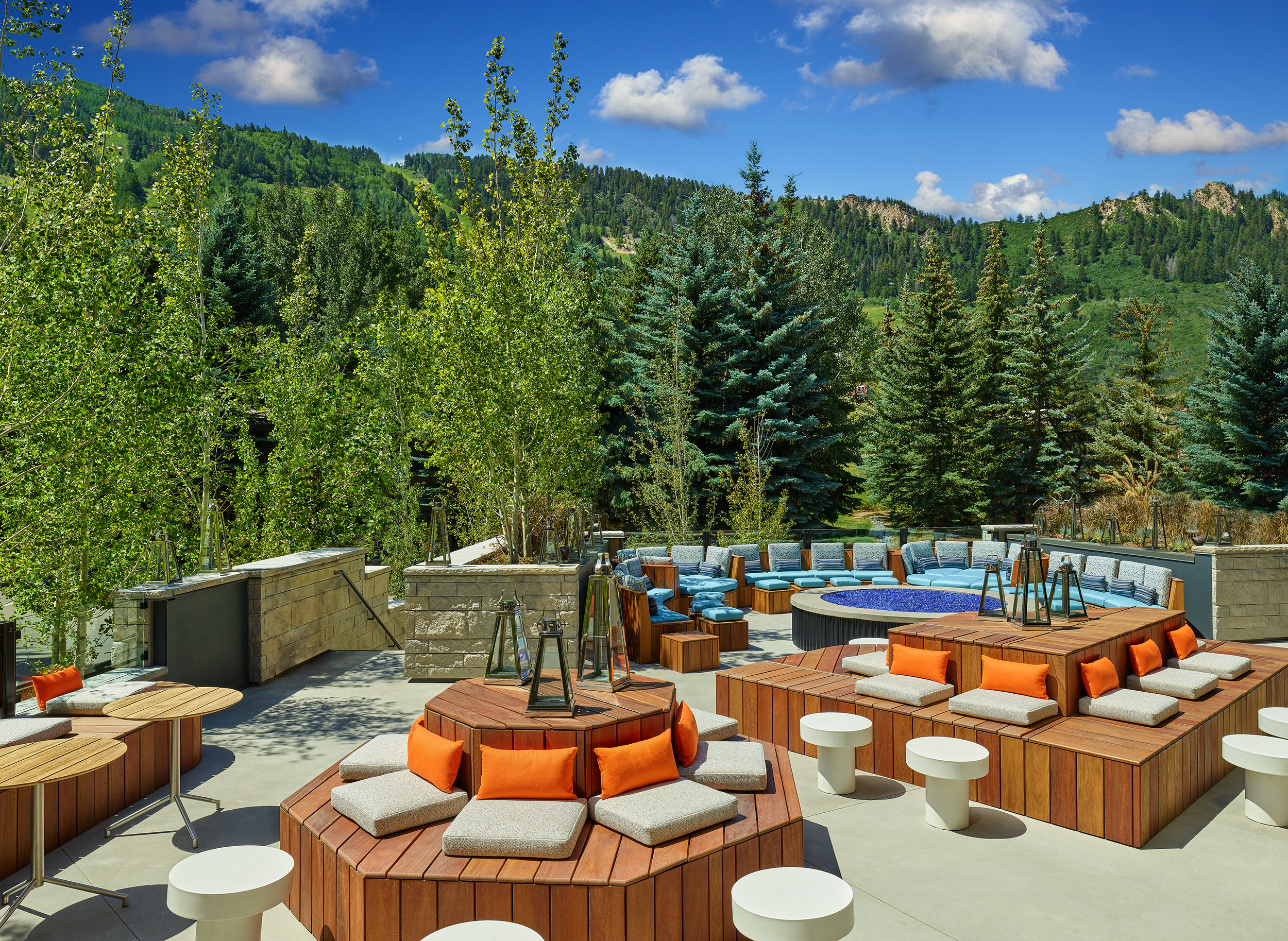
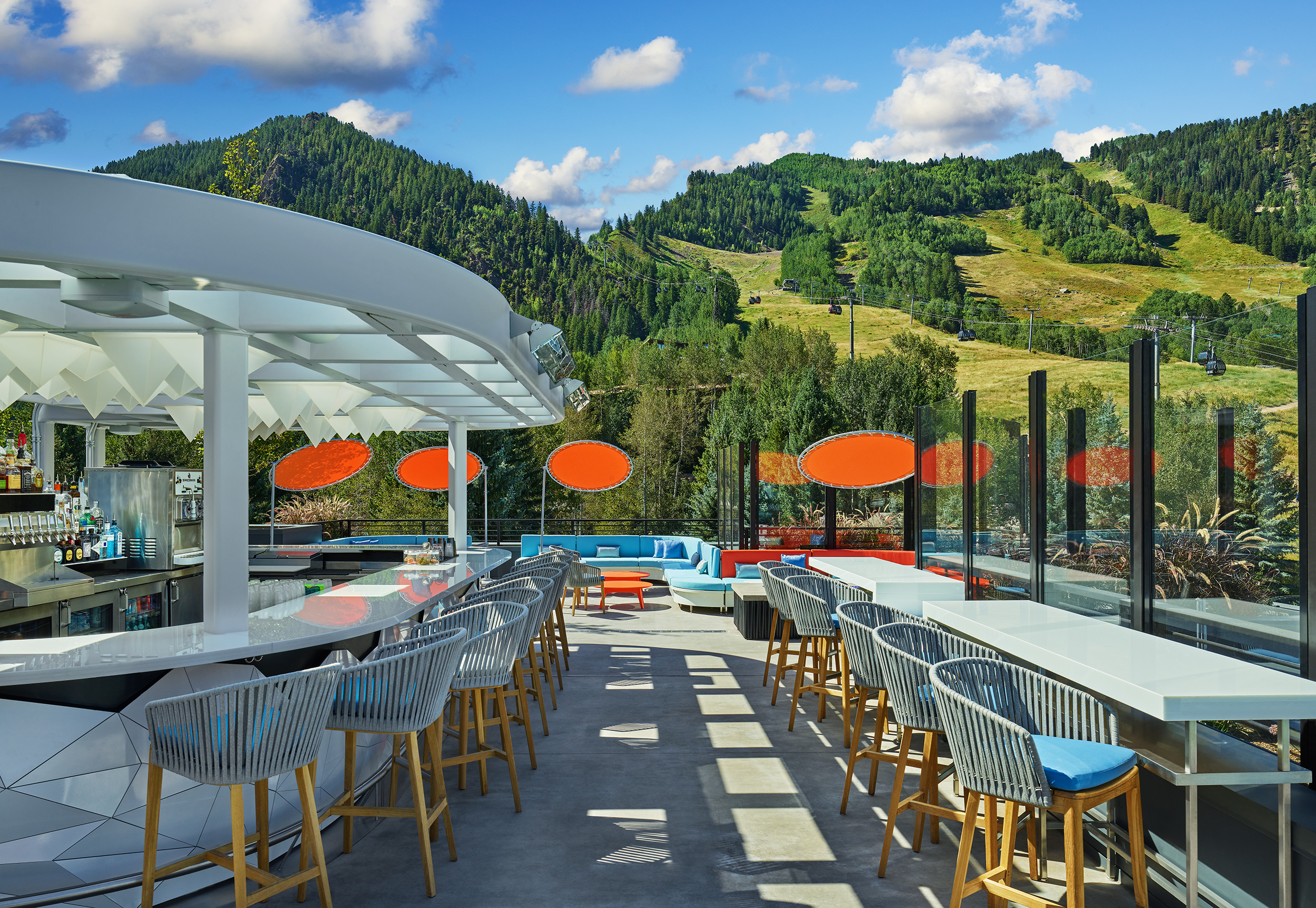
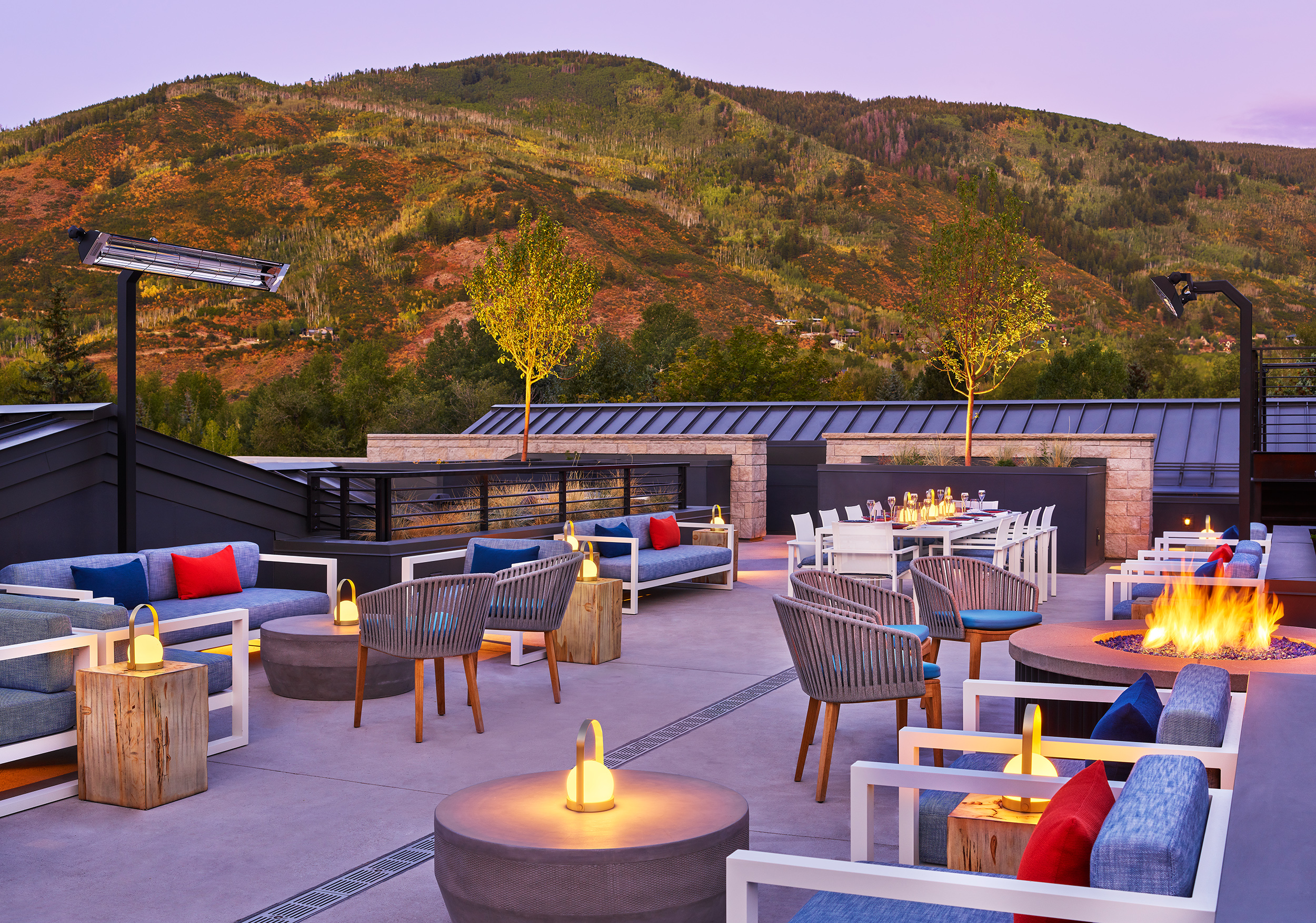
The 126,000 square foot project includes 88 guest rooms, and 11 W-branded residences, along with four WOW suites and one Extreme WOW suite that can be configured to be a one-, two- or three-bedroom space. The Living Room is a sophisticated alpine setting for dining and cocktails, and provides a large landscaped outdoor terrace for alfresco entertaining. 39 Degrees, a legendary après ski bar in the former Sky Hotel, is reinvented as an intimate cocktail lounge and grotto inspired by the famed Red Light District of Aspen. The year-round, all-weather rooftop WET® Deck features a heated pool, hot tub, fire pits, cabanas, full bar, dance floor, DJ booth, and panoramic views of Aspen. November through April, W Aspen Strategy Rooms serve as the hotel’s Ski & Snowboard shop, which will be operated by Four Mountain Sports.
In addition to working closely with hotel ownership and the development team on the conceptual design, public approvals and entitlements, R+B completed all phases of architecture and collaborated with the W brand’s in-house design team and NEMAWORKSHOP for the interior design.
Project Size
-
126,000 SF Project Total
-
88 Guest Rooms; 11 Fractional Residences
-
1,900 SF Gym
-
3,000 SF Lounge
-
1,600 SF Lounge Terrace
-
9,700 SF Roof Deck (Public)
-
2,300 SF Roof Deck (Residential)
-
1,100 SF Special Events Club
Project Awards
-
ASID Crystal Awards – Commercial Hospitality 10,000 SF and Over
Publications
-
Marriott Bonvoy Traveler
-
Hospitality Design
-
Snow Industry News
-
FRAME
-
Aspen Times Weekly
-
Aspen Daily News
-
The Aspen Times
-
Aspen Daily News
-
Aspen Sojourner
-
Aspen Magazine
-
Purist
-
Hospitality Net
-
The Aspen Times
R+B Services
-
Architecture
-
Interior Architecture
-
Entitlements
-
Renderings
Project Team
-
Interior Designer: Nemaworkshop
-
Landscape Architect: Bluegreen
-
Structural Engineer: KL&A
-
MEP Engineer: RTM
-
Civil Engineer: Sopris Engineering
-
Photographer: Jason Dewey
-
Contractor: Haselden