
Project Type: Residential


Mossywoods
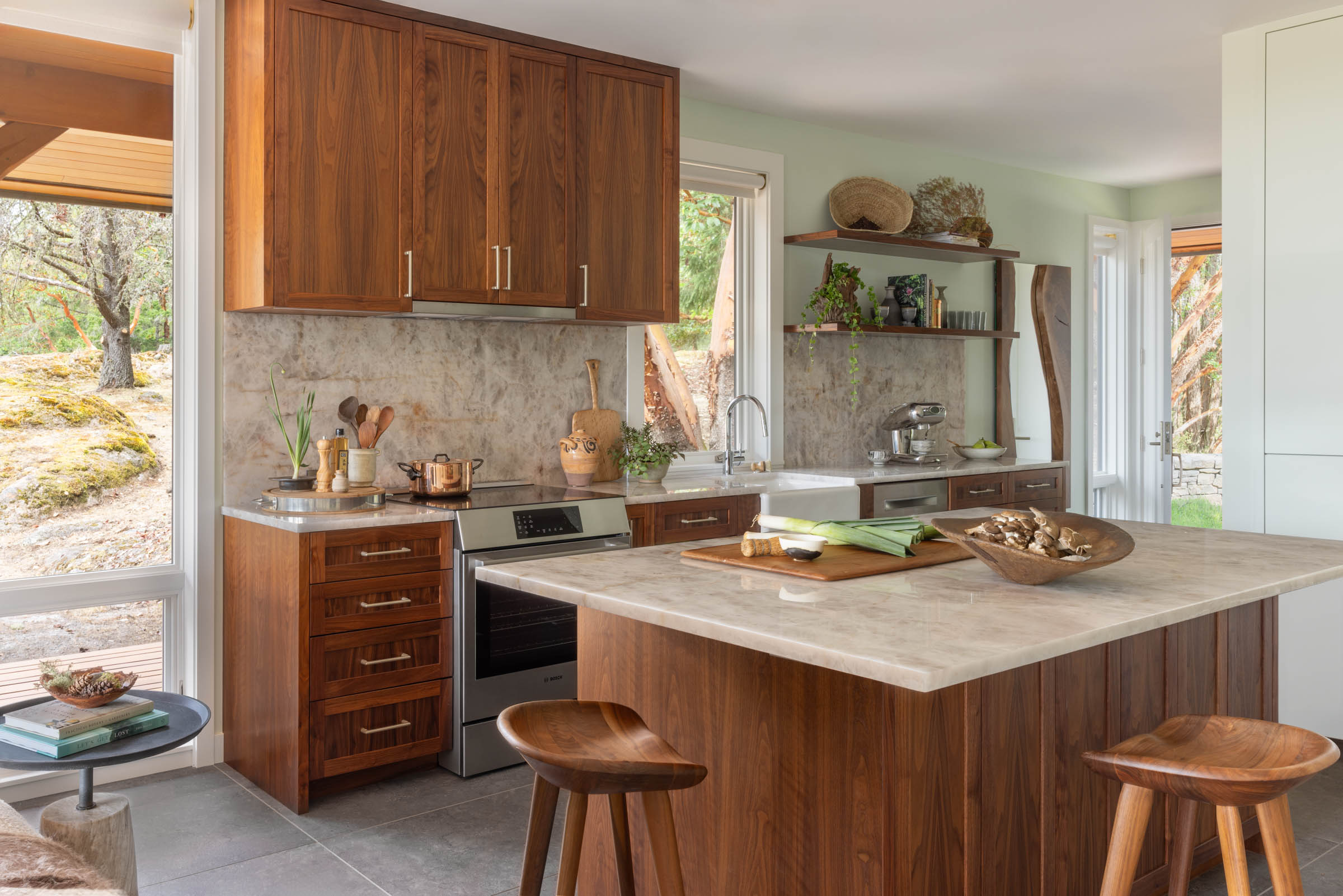
On Orcas Island, the largest of the San Juan Islands of the Pacific Northwest and colloquially known as “the gem of the San Juans,” this intimate 1,200 square foot “getaway” cottage is set on a forested site within a long-time family farm.
With the challenge of restoring and contemporizing the original structure while preserving its innate charm, the design team repurposed scalloped wood shingles and other exterior wood working details handcrafted by the owner-couple’s family. Multi-color siding was replaced for a more monochromatic aesthetic to draw focus to the natural surroundings.
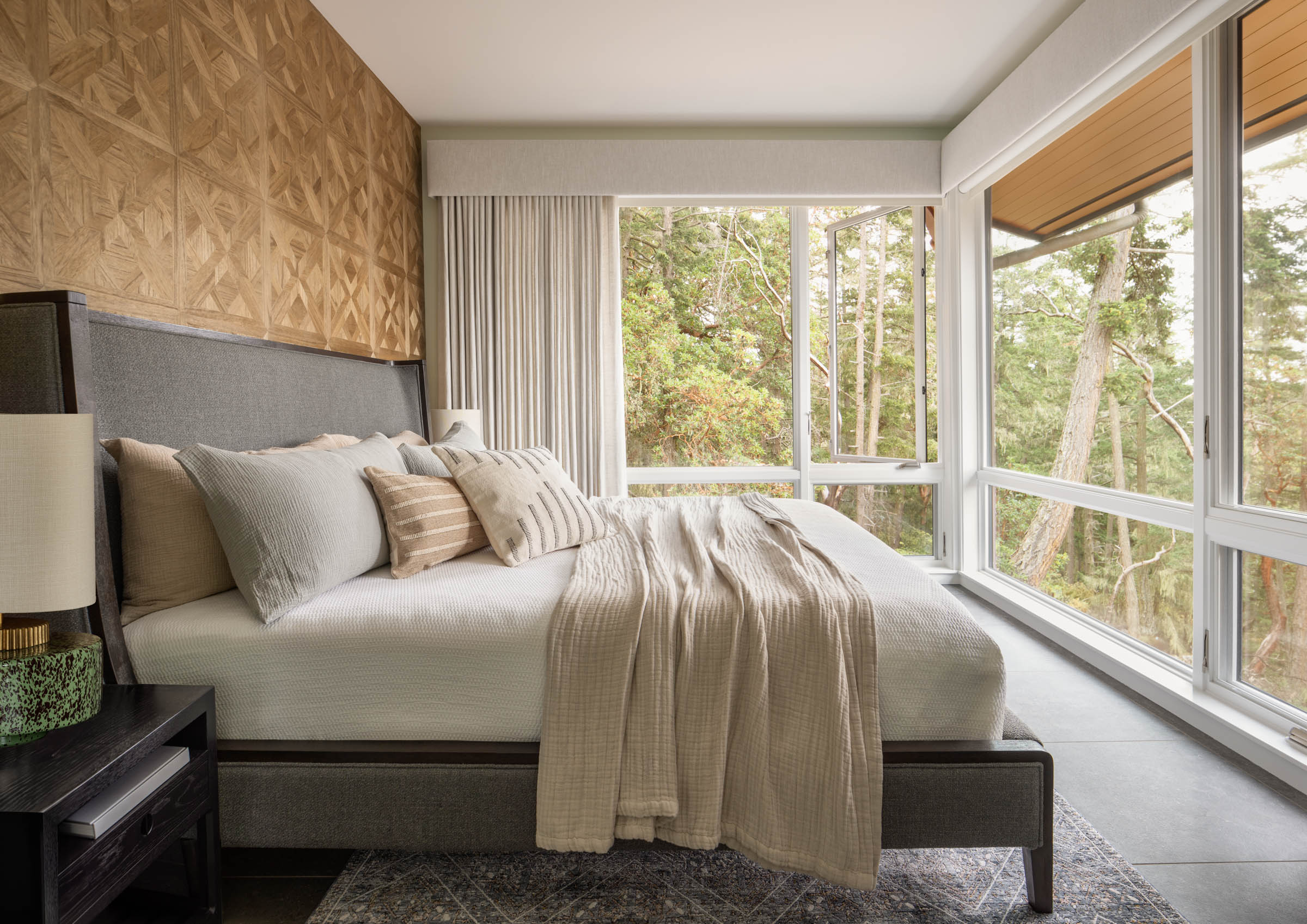
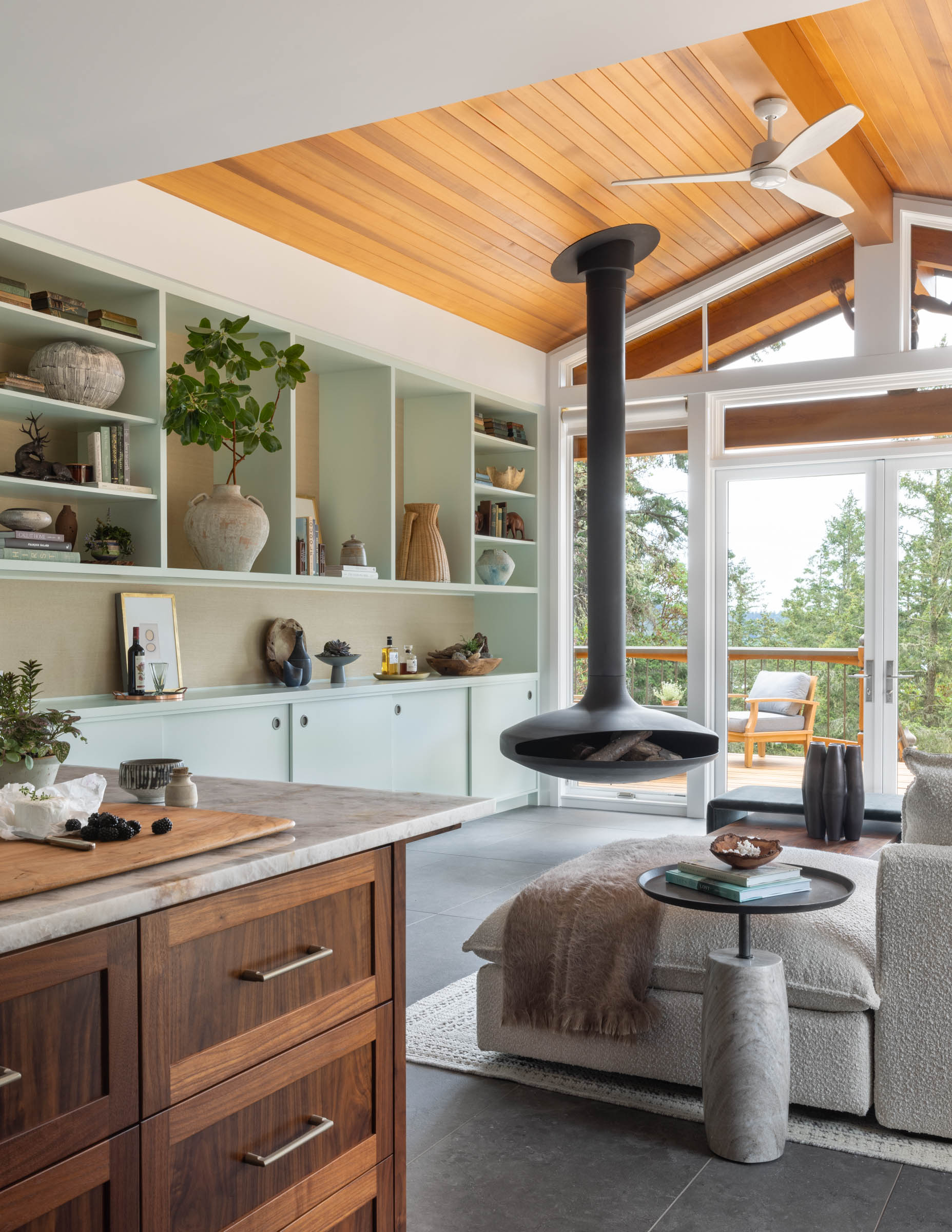
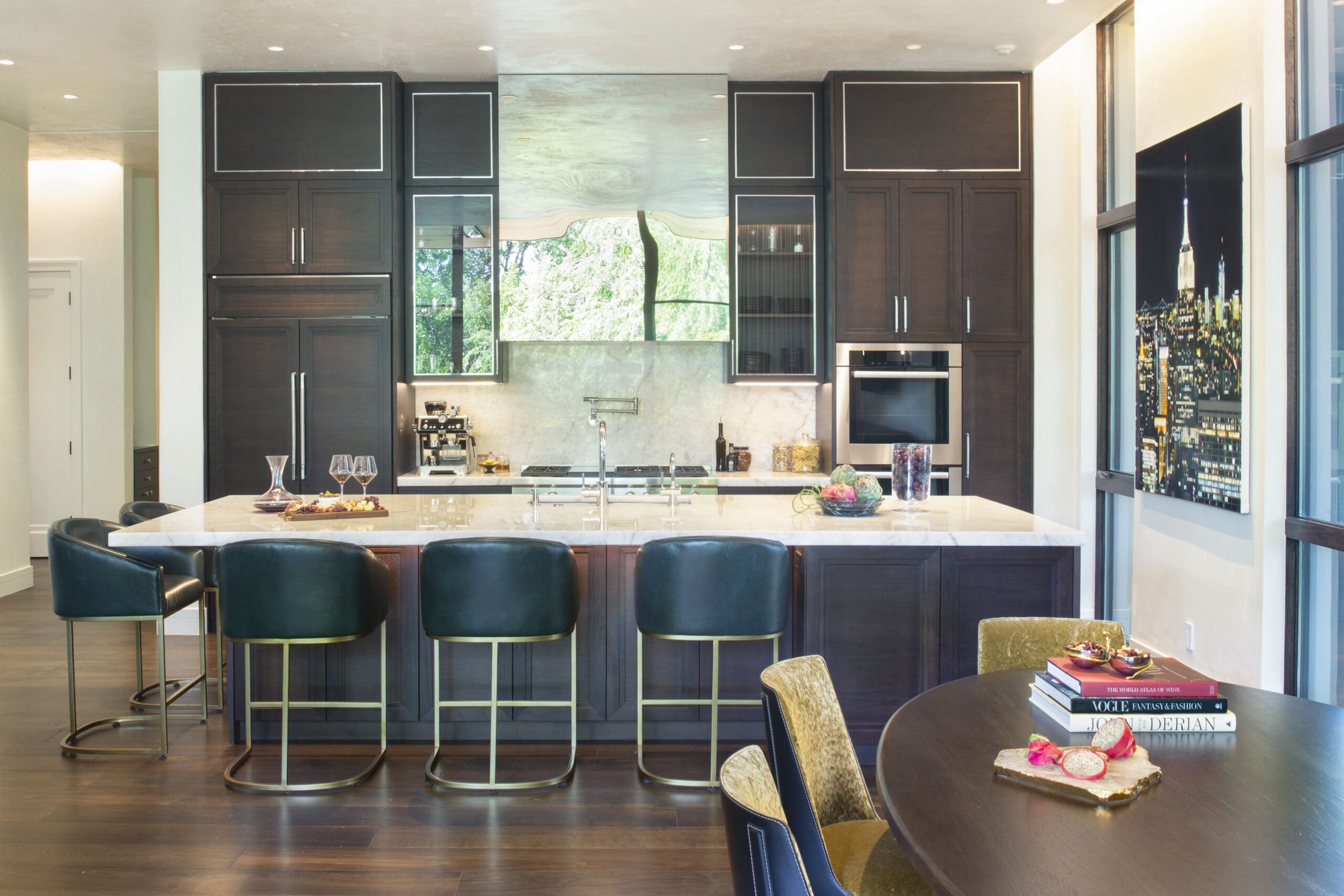
Inside, a complete remodel is marked by the addition of sidelights flanking the new, repositioned wood front door, a custom live-edge walnut mirror, and a built-in bench with open cubbies. Beyond the centrally located open kitchen, complete with a quartzite topped walnut cabinet system and island, the main living area features extensive storage and library space. Ample seating offers plenty of room for settling in with a book and warming by the modern suspended fireplace.
Flooring throughout is durable large format porcelain tile, selected to withstand muddy Pacific Northwest dog paws and the area’s variable weather. Existing exterior cedar was repurposed/refinished and new matching cedar was specified for the living area ceiling and exterior soffits. Additional rooms include the main bedroom suite and a flexible guest suite.
Project Size
2,200 SF (4.3 AC)
Project Awards
-
LUXE Magazine – RED Awards
Publications
R+B Services
-
Architecture
-
Interior Design
-
Furnishings / Procurement
Project Team
-
Structural Engineer: Eclipse
-
Electrical Engineer: Friday Harbor
-
Photographer: Lisa Romerein
-
Contractor: Lorne Paulson
-
Contractor: Dovetail
Modern Prairie
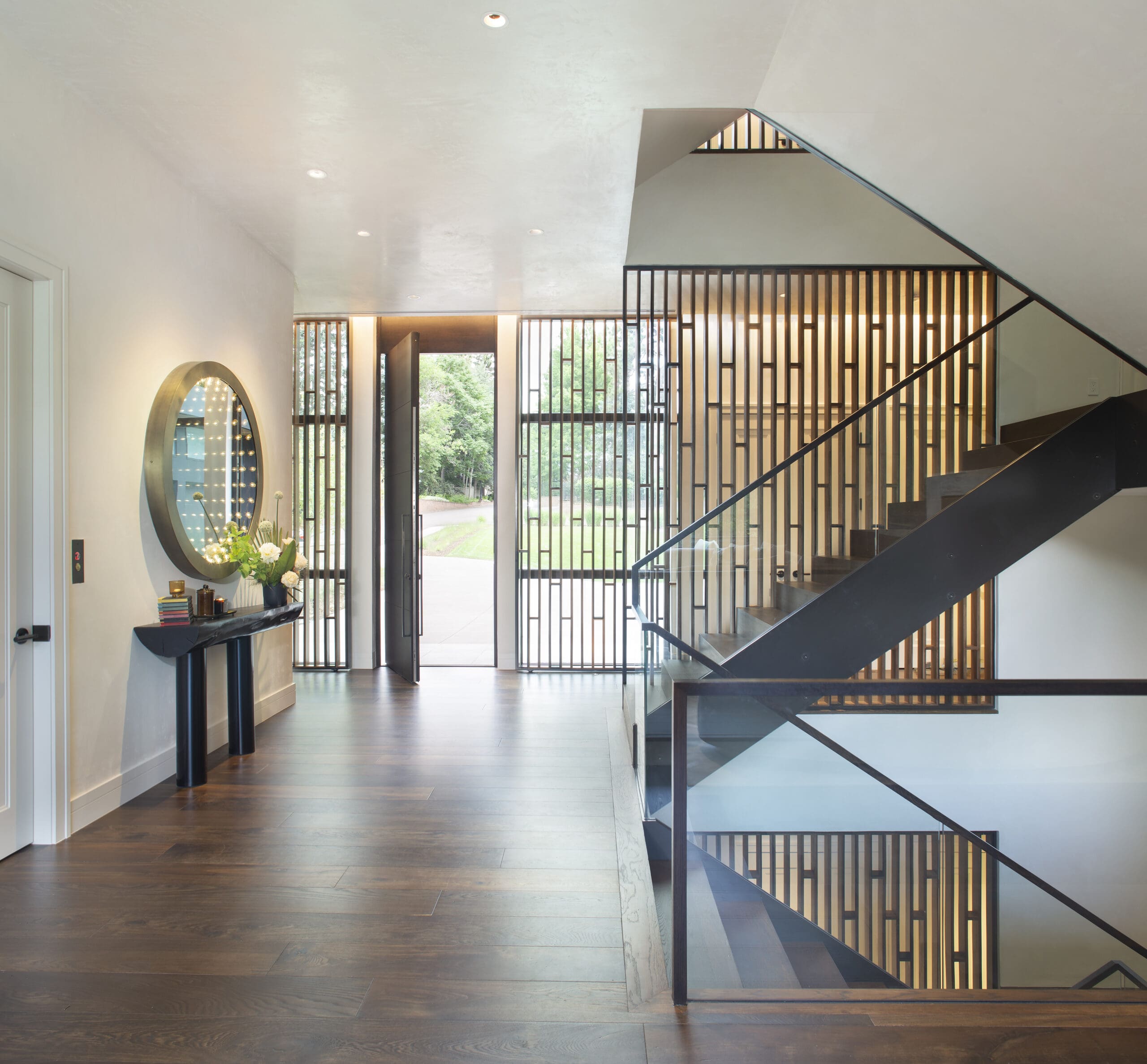
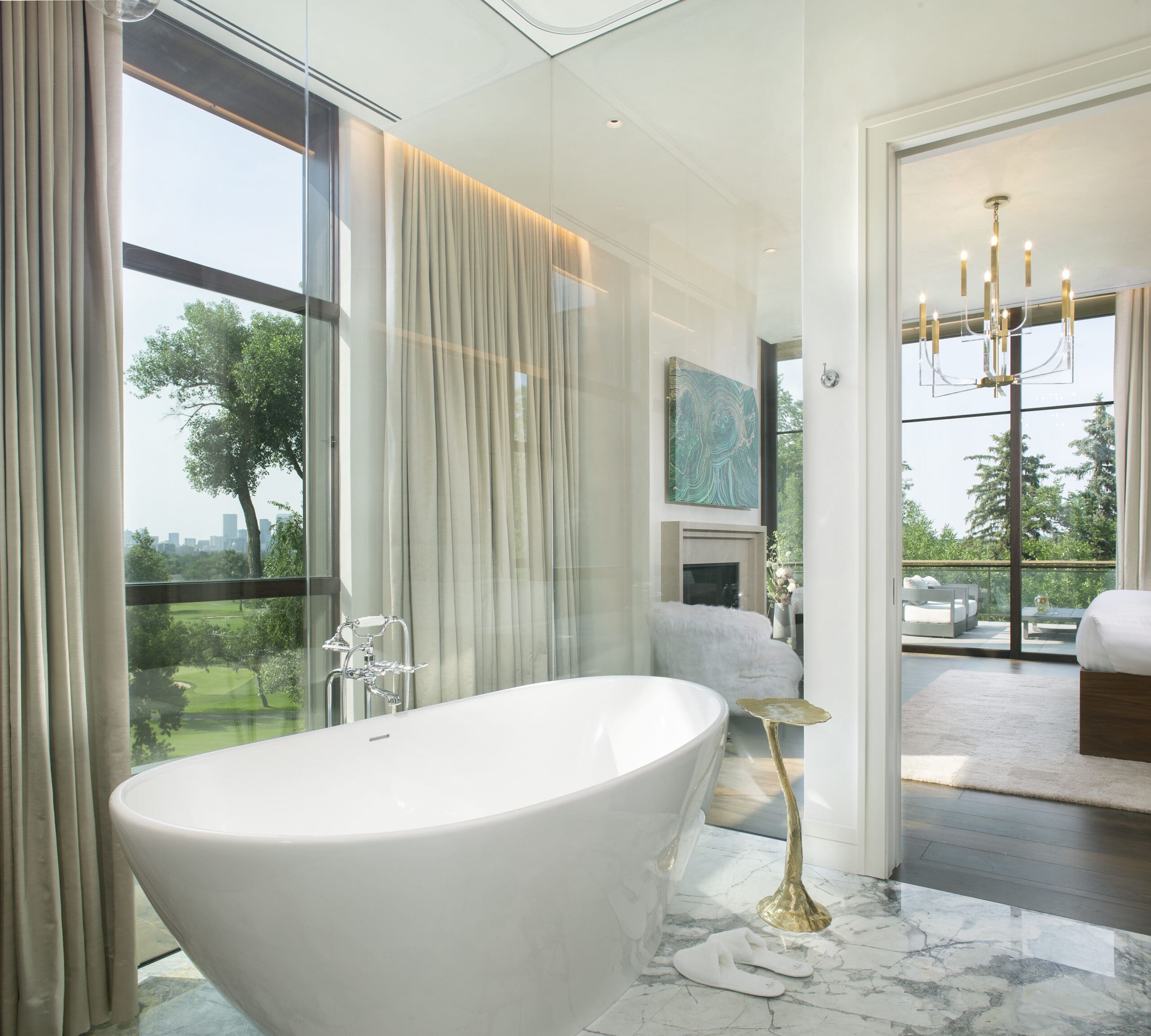
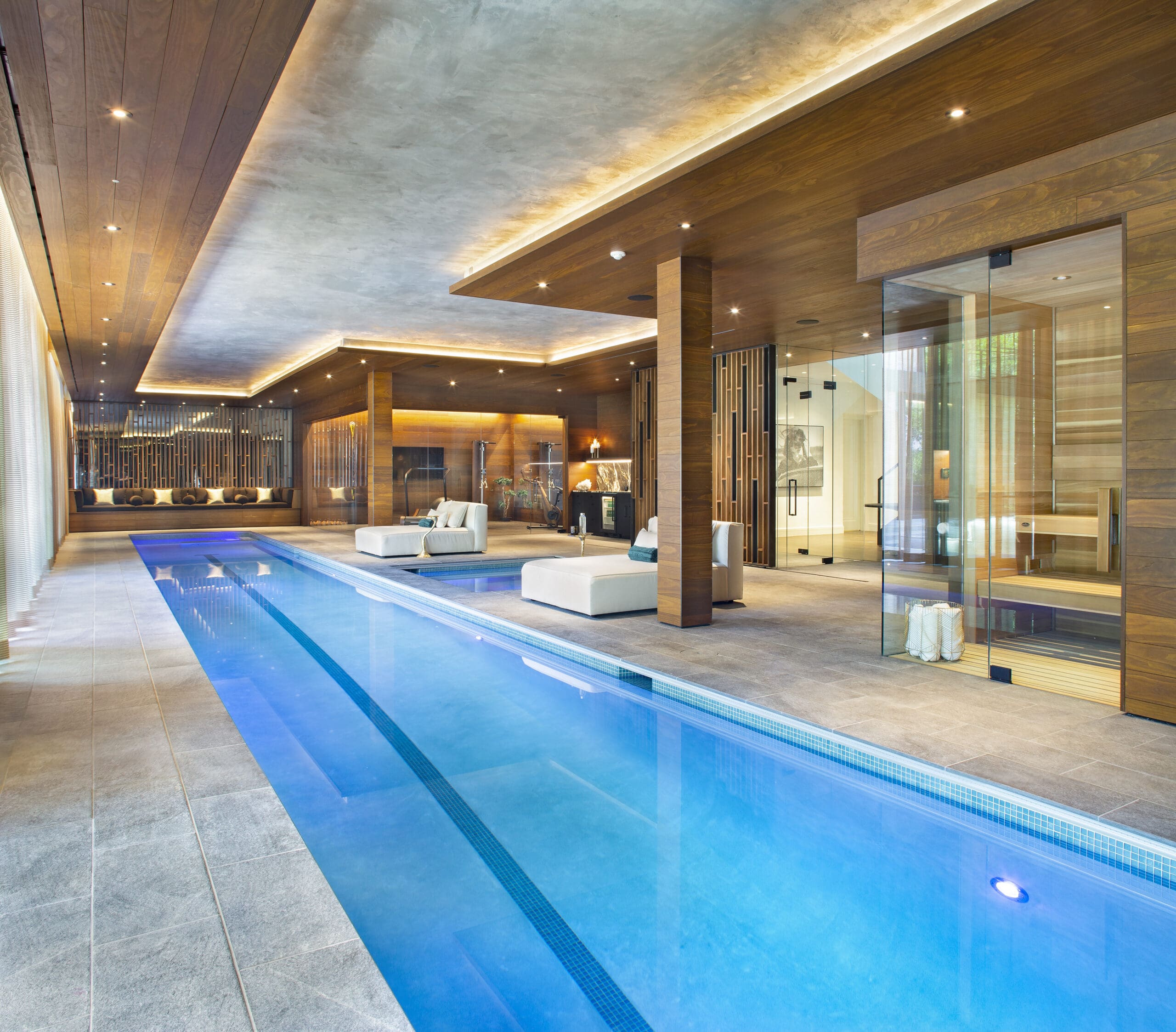
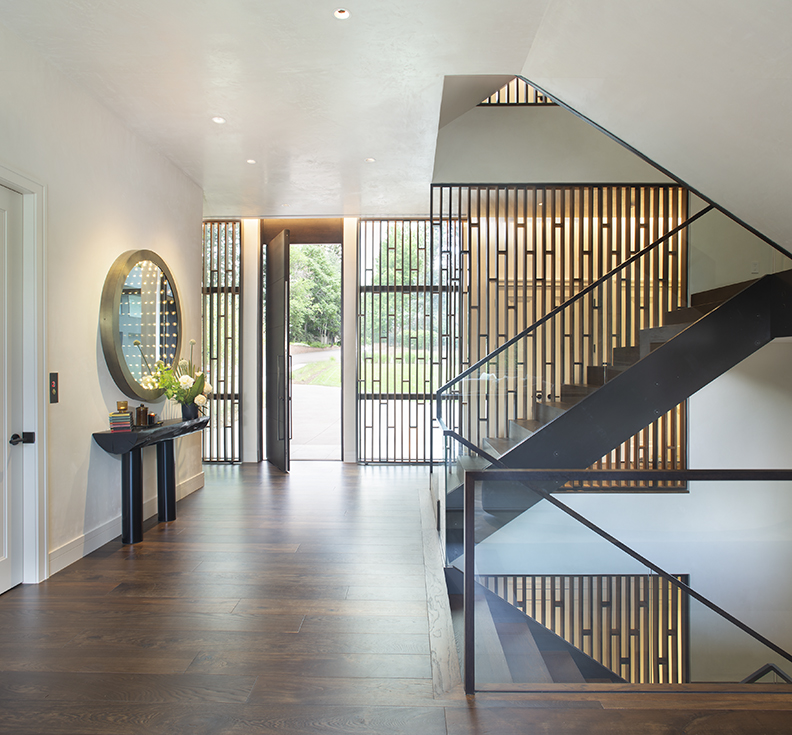
A contemporary take on the Prairie Style of architecture, this modern masterpiece in an exclusive Denver neighborhood is designed to stand the test of time. The modern interpretation of the Prairie Style responds to the historic context of the neighborhood and the surrounding landscape, and also responds to the owner’s musical proclivity and passion. Architectural timelessness is achieved through attention to detail, high quality design and materials, along with expert execution and craftsmanship.
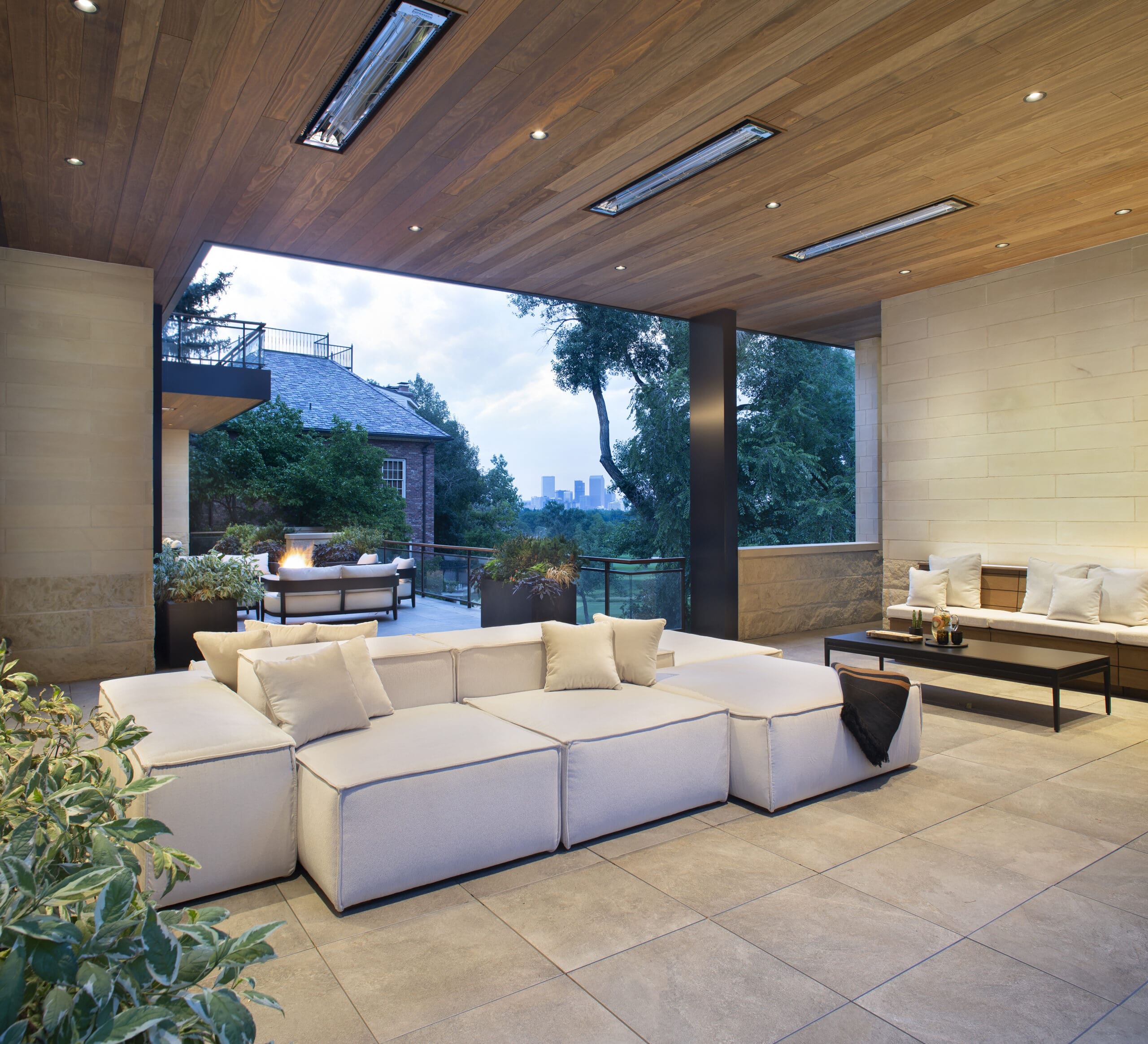
To emphasize the horizontal nature of the home’s design, the team chose a neutral stone palette for the wall surfaces and contrasted it with bands of deep bronze-colored metal. The use of sandblasted-smooth stone and rough cleft-face stone allows for variation of scale and texture, while its coursing emphasizes horizontal lines. The home’s singular fenestration, including floor-to-ceiling windows and doors punctuating the horizontal bands of the façade, was inspired by Musical Instrument Digital Interface (MIDI) wavetables. The end result is an enhancement of the home’s dramatic scale and indoor/outdoor living.
Prevalent during the late 19th and early 20th centuries, and made popular by American Architect Frank Lloyd Wright, the Prairie Style is characterized by use of horizontal lines, broad eave overhangs, flat or low-hipped roofs and high-quality materials. The strong horizontal nature of the structure evokes the expanse of treeless prairie that once dominated the vistas of the Western United States and allows for integration into the landscape.
R+B’s modern take on the Prairie Style reconciles the current-day demand for high ceilings, expansive windows and modern construction techniques with the historic style’s emphasis on craftsmanship, horizontality and sensitivity to the landscape.
Additionally, the landscape design grounds the residence within the established context and aesthetic of the surrounding neighborhood. The chosen planting palette includes mostly native plant species appropriate to the region. In lieu of colorful ornamental plantings, simple massing of ornamental grasses and low deciduous shrubs convey a modern complement to the Prairie Style of architecture.
Project Size
13,500 SF
Publications
LUXE
R+B Services
-
Architecture
-
Interior Design
-
Furnishings / Procurement Renderings
Project Team
-
Landscape Architect: Design Workshop
-
Lighting Designer: Element Architectural
-
Structural Engineer: Studio NYL
-
MEP Engineer: Boulder Engineering
-
Civil Engineer: Yarnell Consulting
-
Photographer: Brent Moss
-
Contractor: Old Greenwich Builders

Art Barn
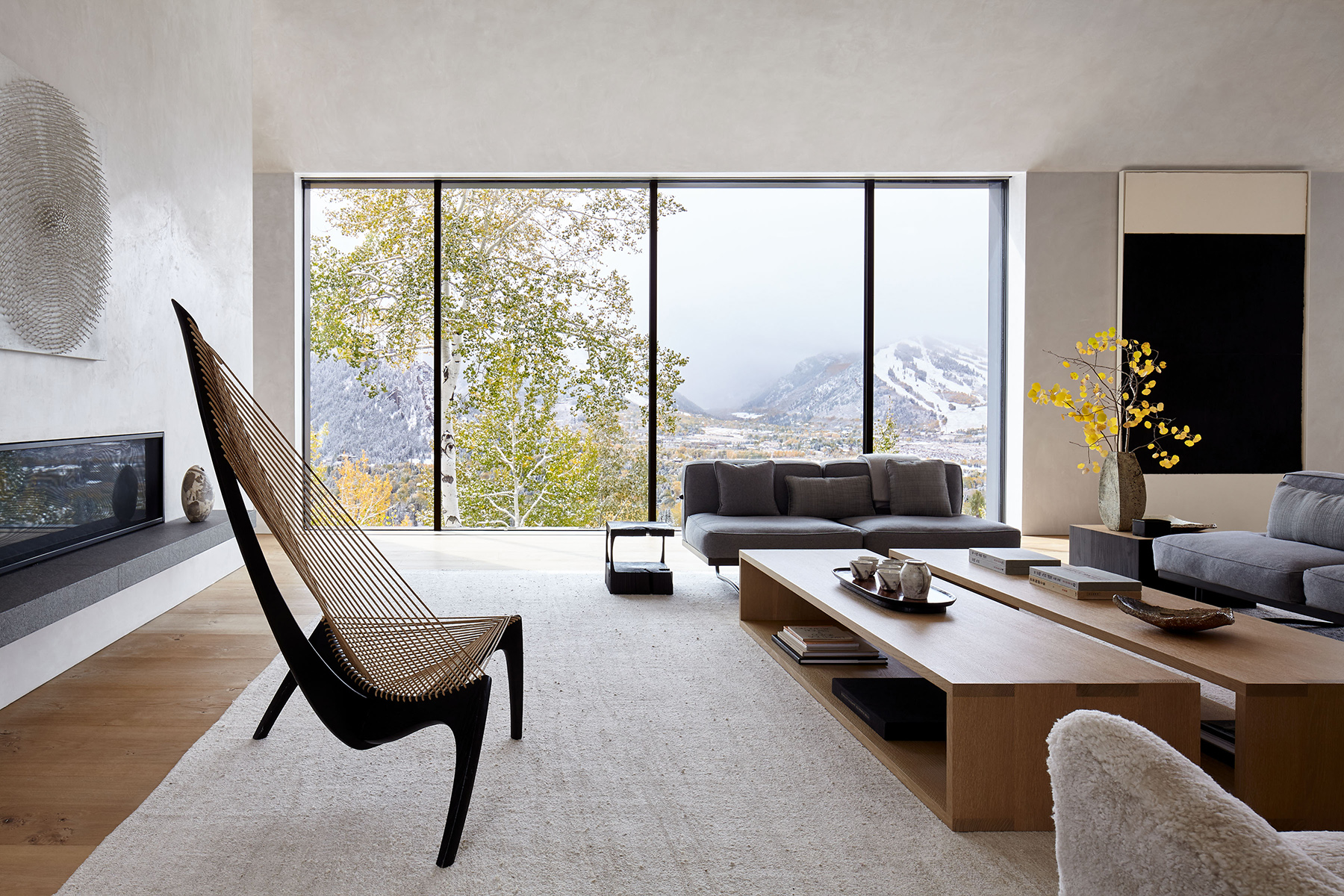
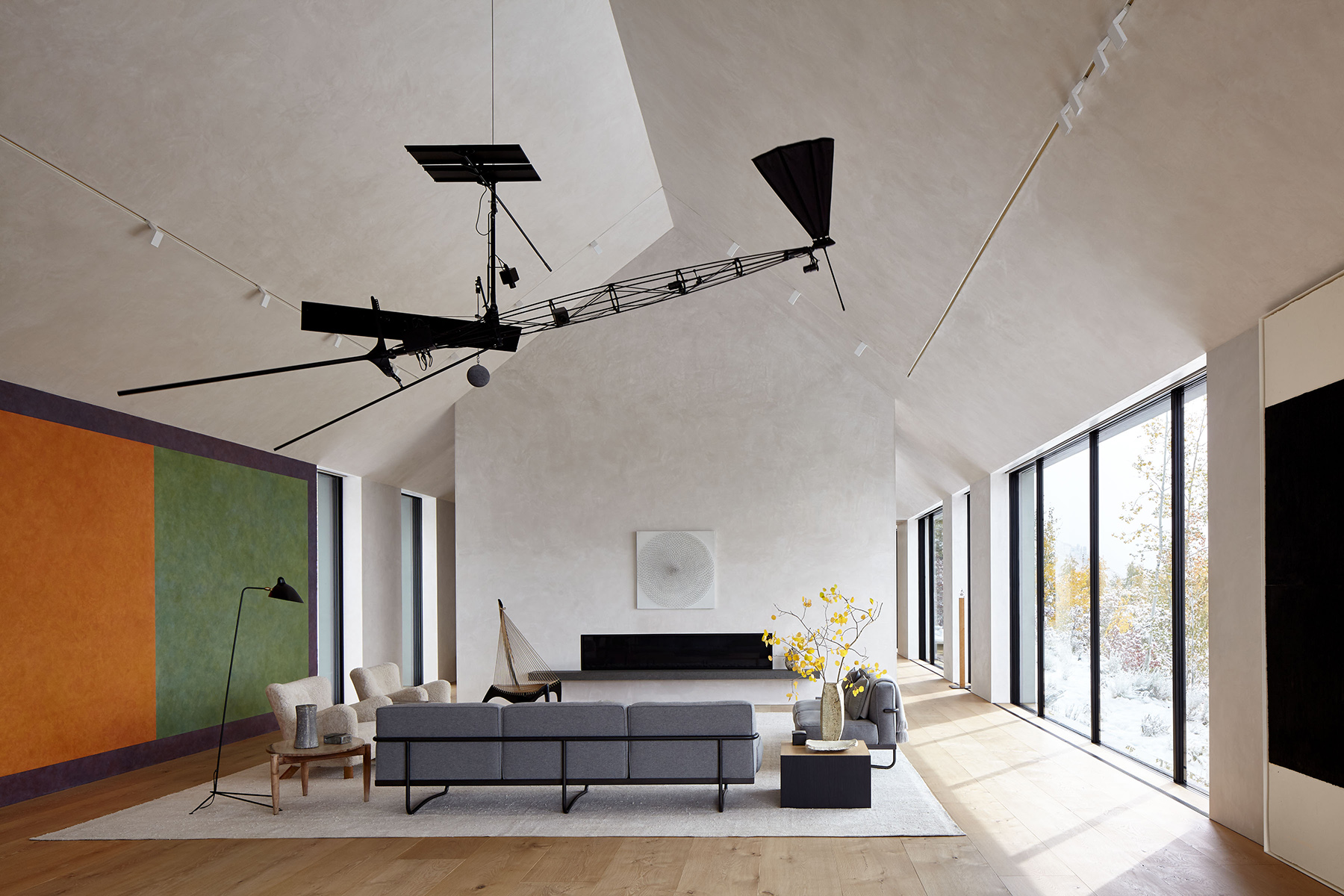
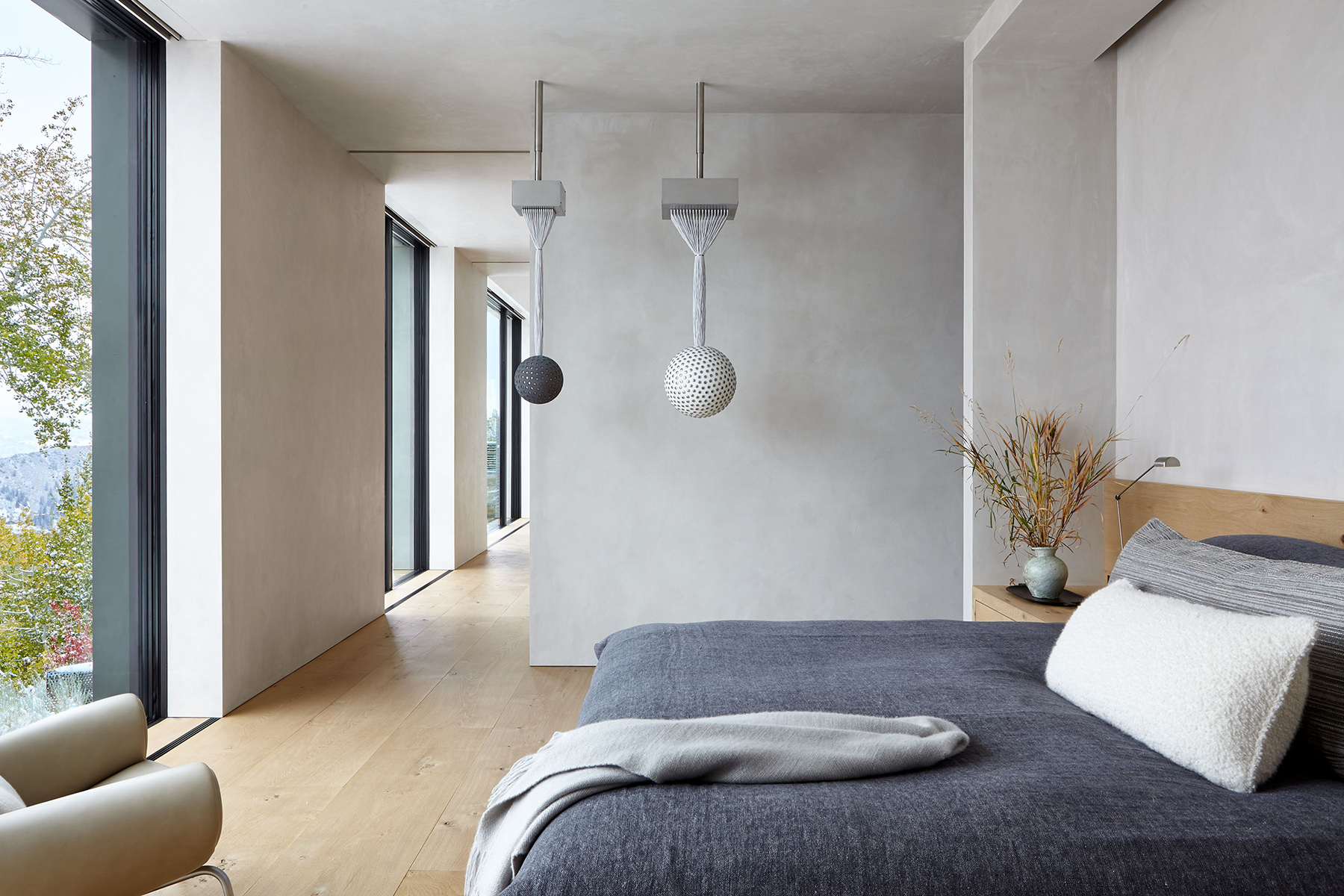
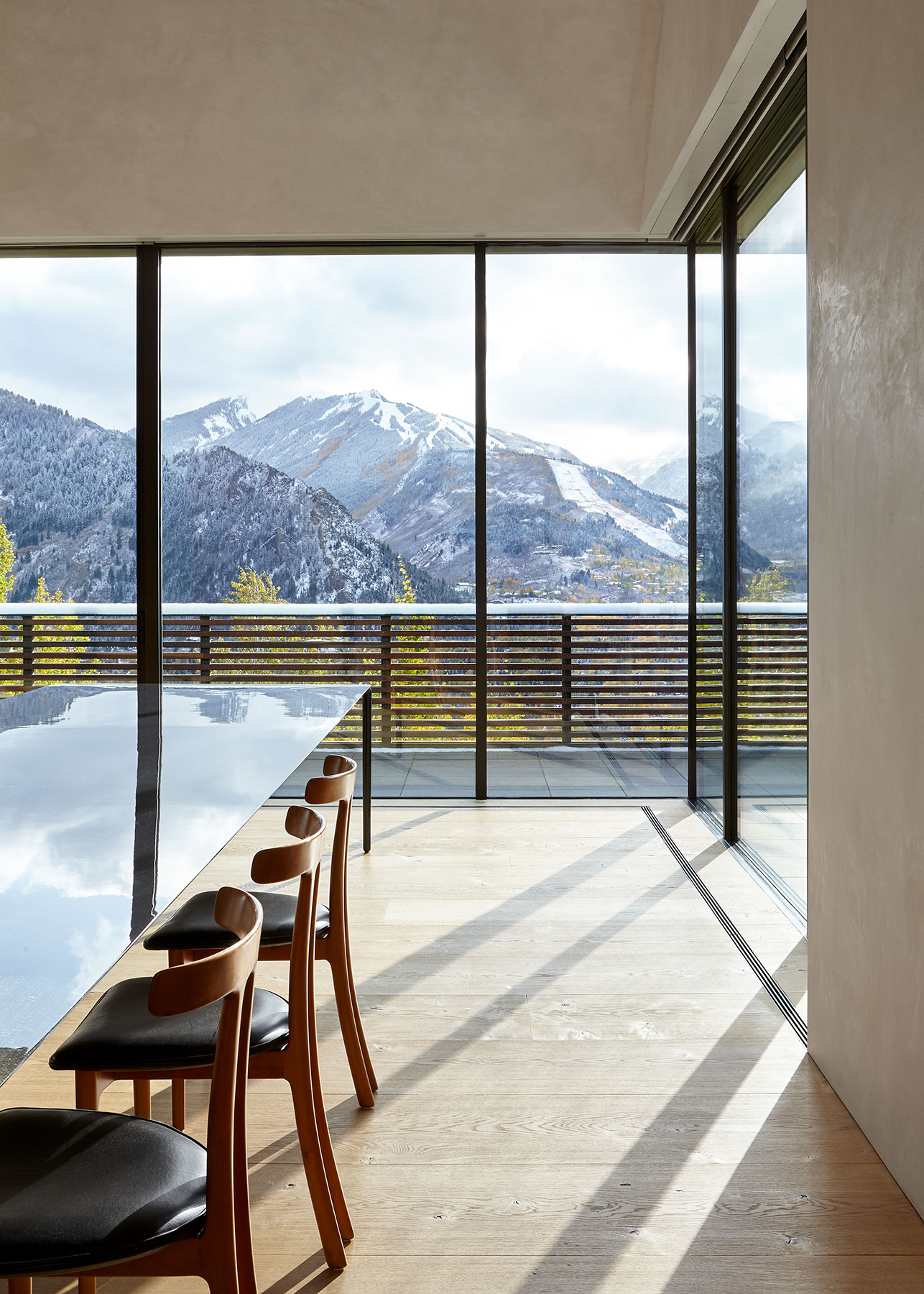
Many of R+B’s projects enjoy spectacular views, and this one, with its panorama of Aspen’s peaks and slopes, is no exception. Yet as regards the world past the windows, Art Barn remains unique. So compelling is the interior that the vista becomes a backdrop. The irony is that the architecture could not be more spare.
Our clients, whose world-class art collection includes not only wall-based works but also sound and video installations, required an environment in which to showcase new pieces. Additionally, the couple needed a place to host get-togethers and events: a combination art and music venue, think tank, and salon. What they had in mind was a rural structure – an ‘intimate and understated, vernacular idea,’ says Rowland.
The outcome is a 113-foot-long gable form, topped by a corrugated zinc roof and clad in charred cedar (shou sugi ban). The front door is signaled by a split rock welcome mat set into the cobblestone motor court and a screen composed of horizontal wood slats, but the façade remains deliberately nonhierarchical: there are four identical sliding glass panels that permit entry into the house at different points along the front elevation.
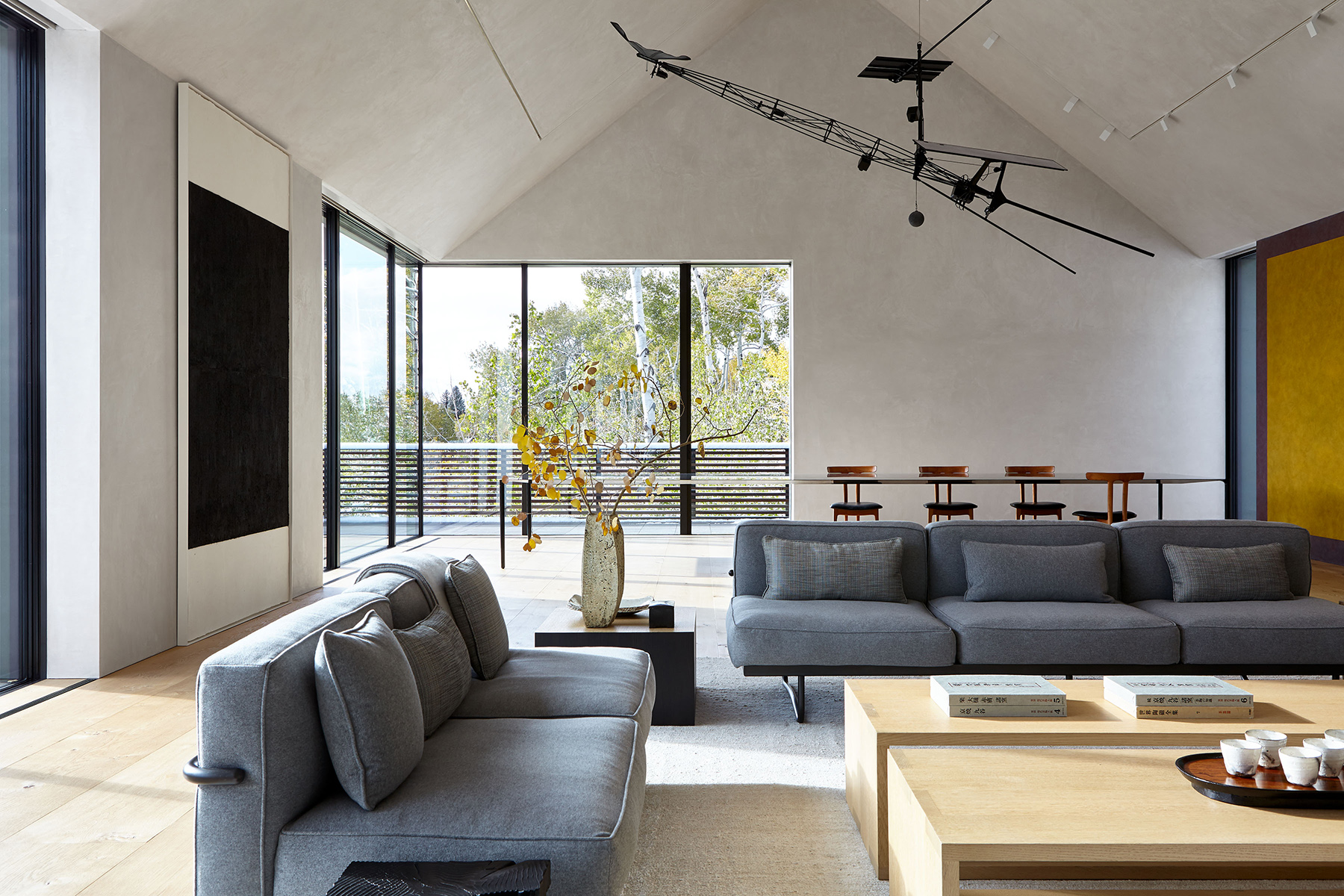
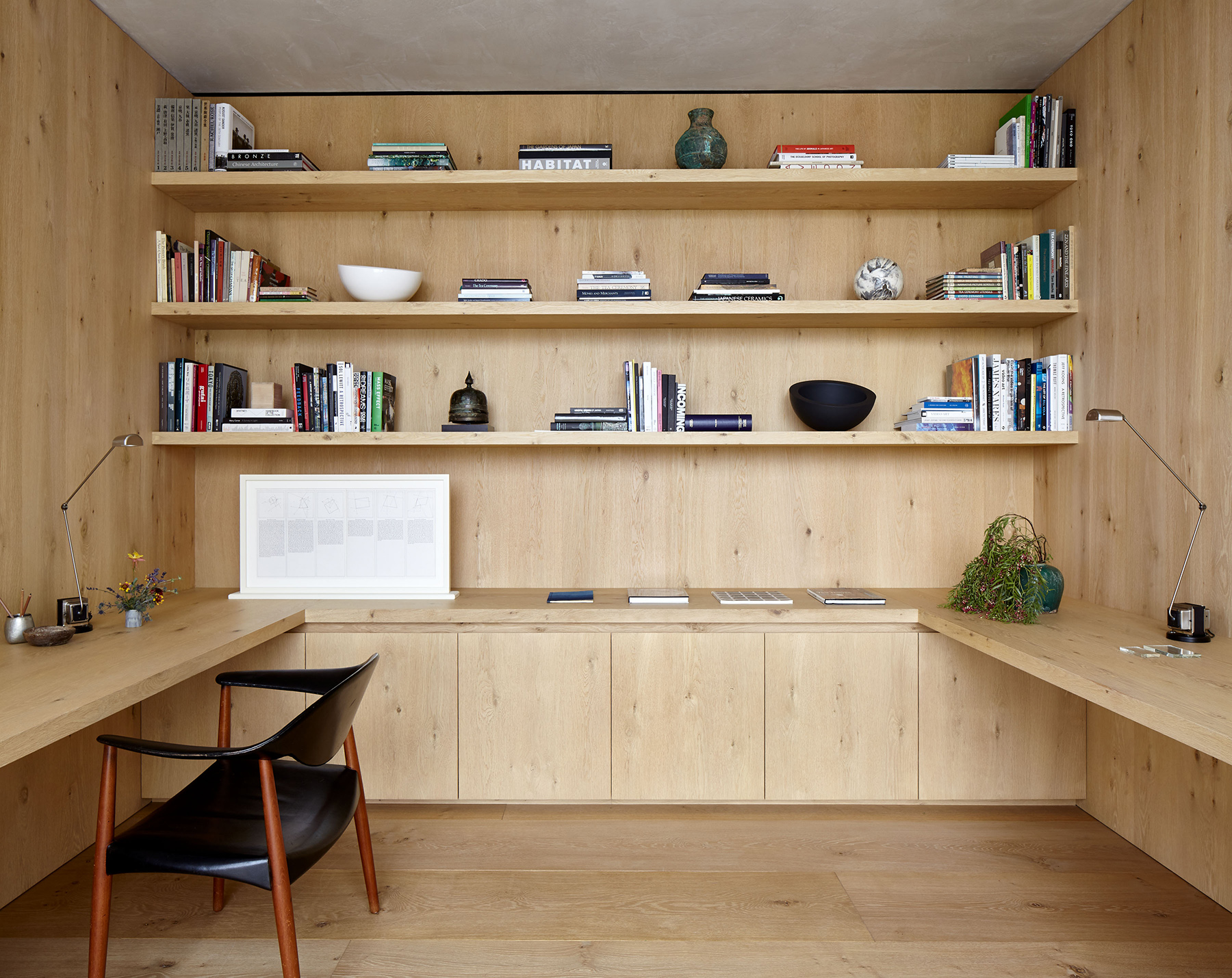
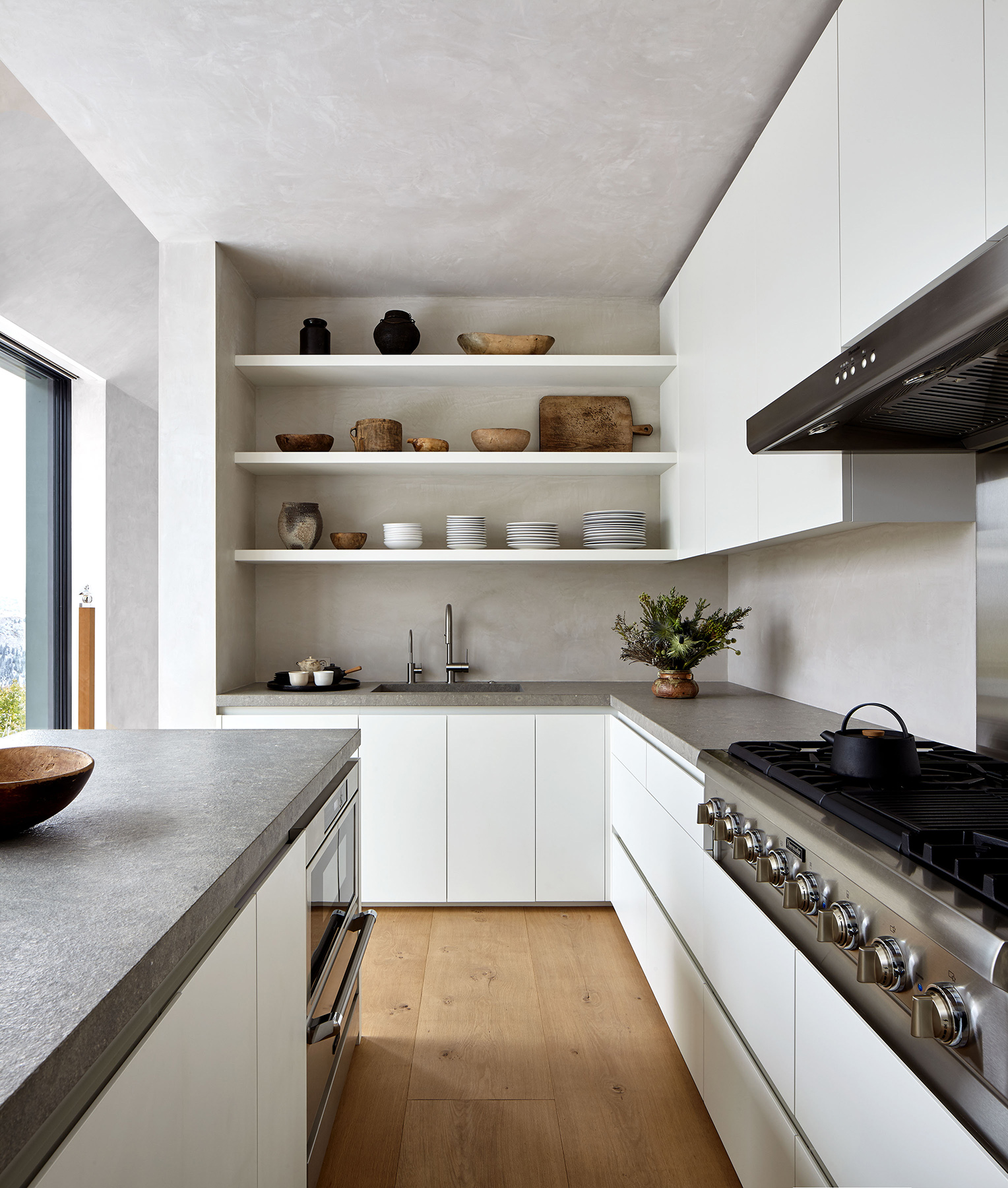
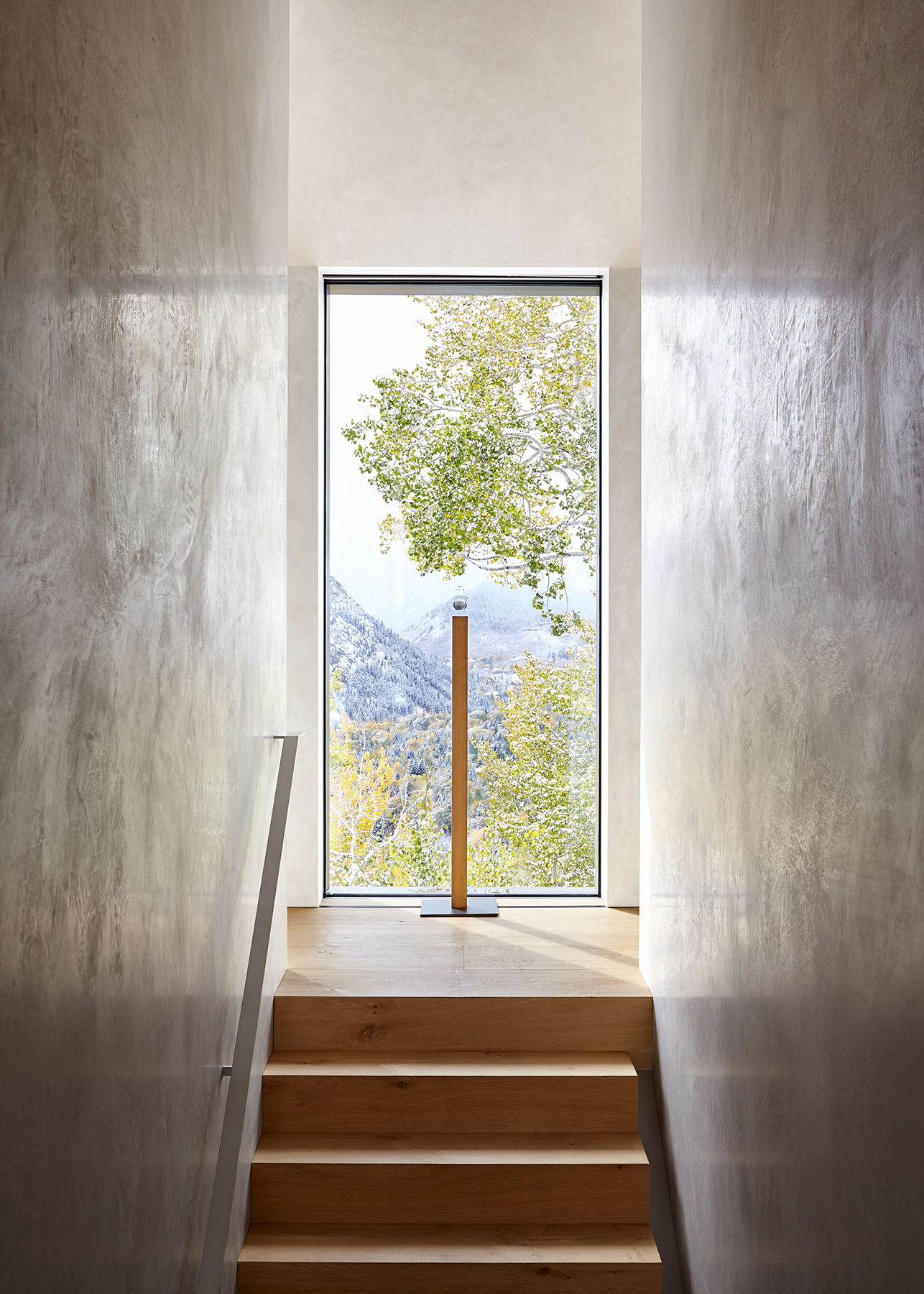
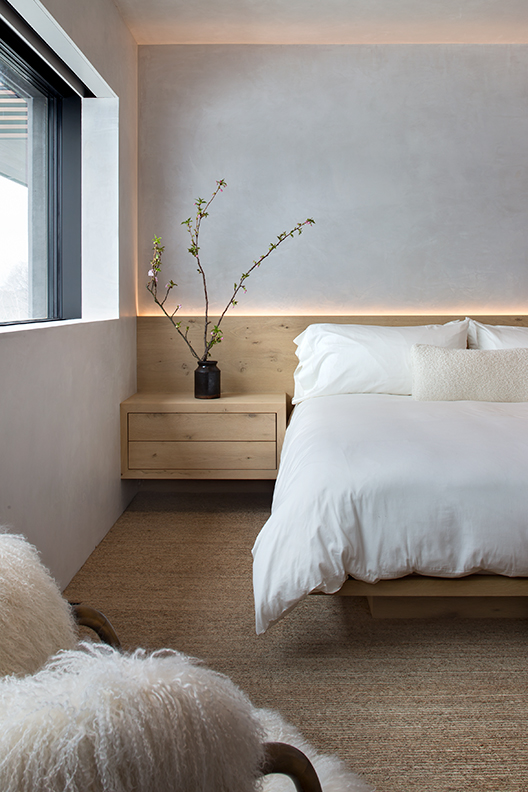
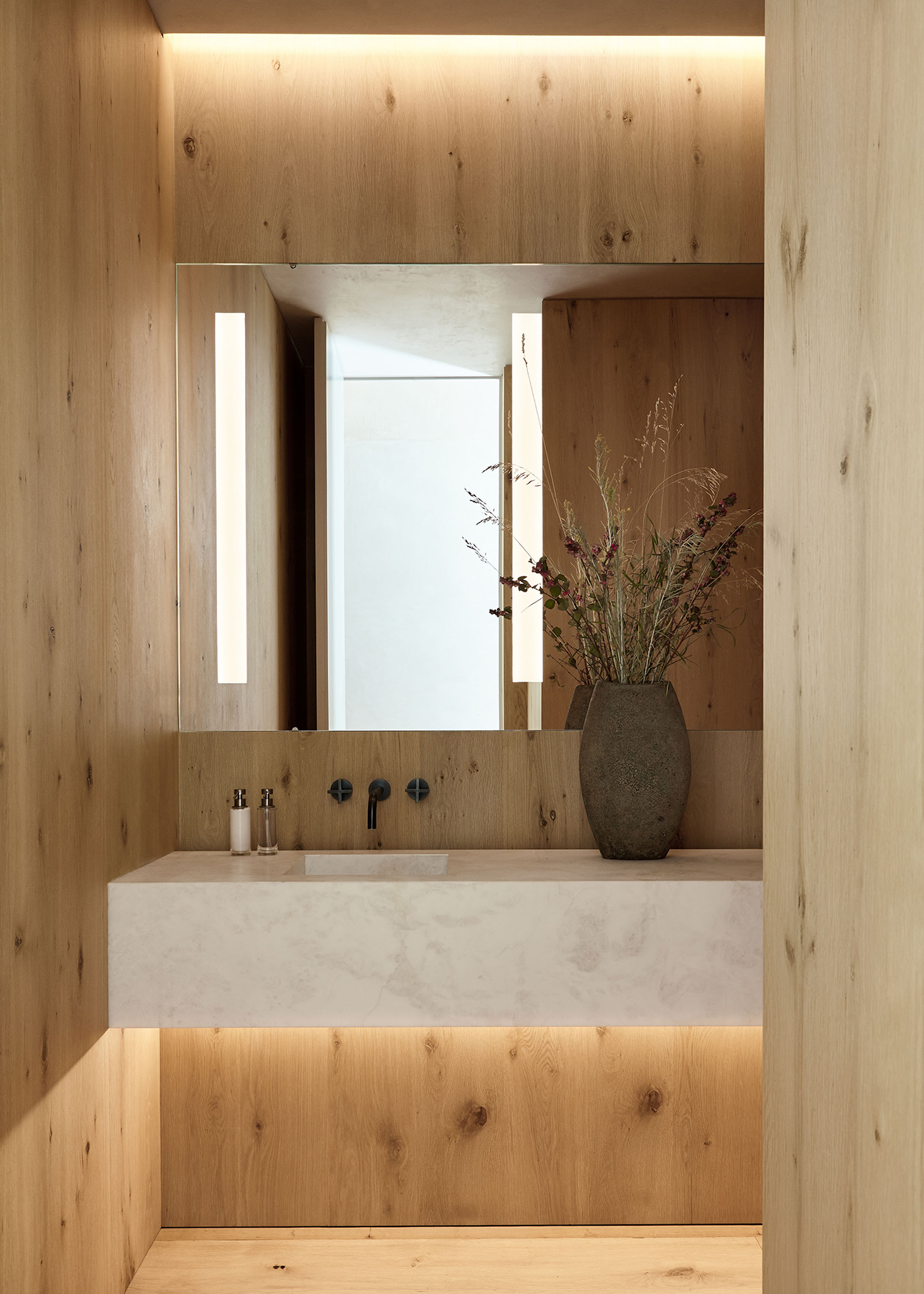
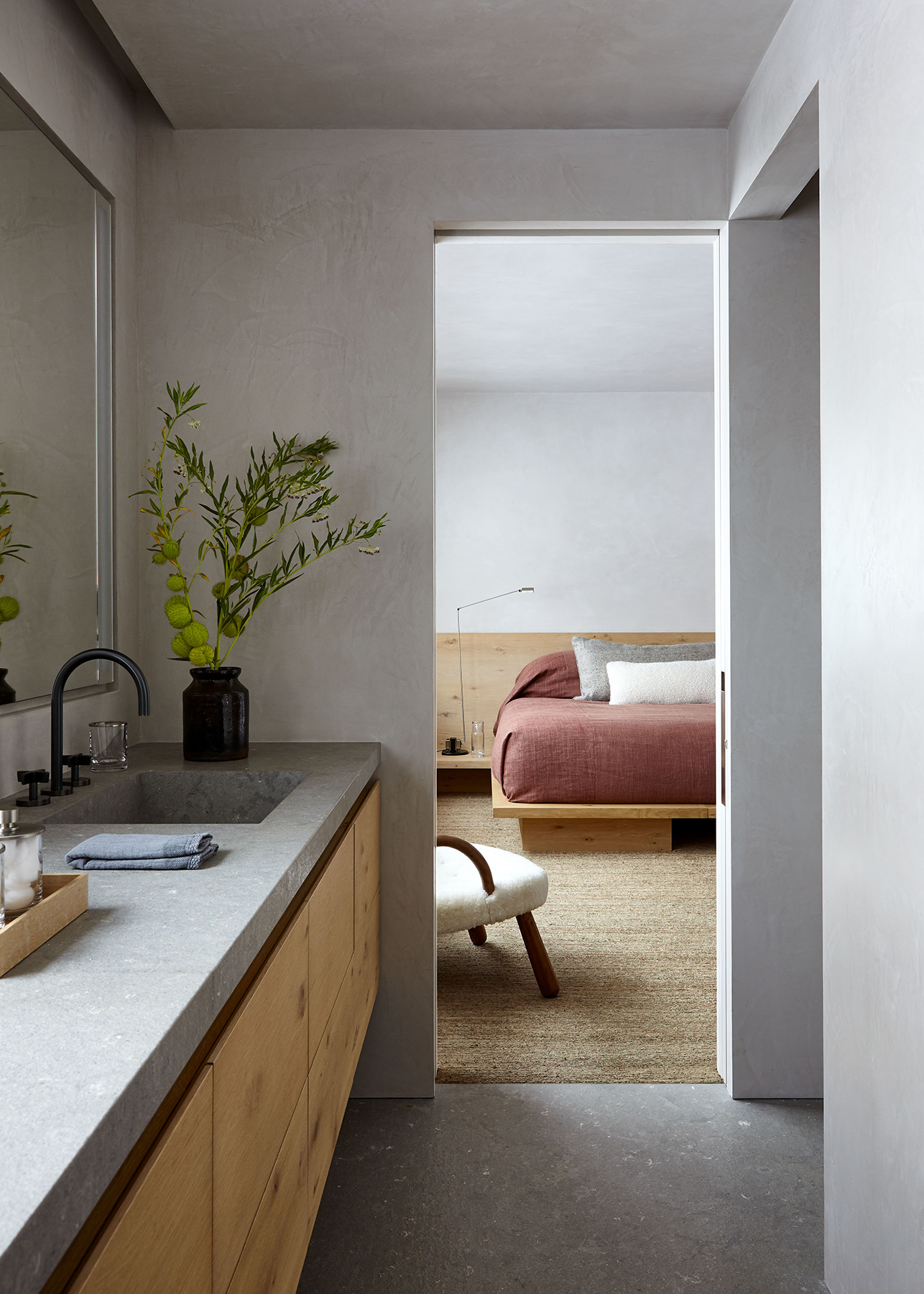
Art Barn’s interior continues this commitment to the pristine: the sustainable palette is limited to oak, plaster, limestone, and concrete. On the main floor, comprising a great room, video gallery, office, kitchen, and primary suite, eighteen-inch-thick walls allow for oversized pocket window and doors systems. Sixteen-inch-wide wood plank floors align with walls to provide total precision; outlets, switches, and solar shades are tucked away, so as not to distract from the overall experience. On the lower level, the province of two additional discreet bedroom suites and more gallery space, the poured-concrete foundation wall is exposed and finished, creating an expanse of utilitarian elegance.
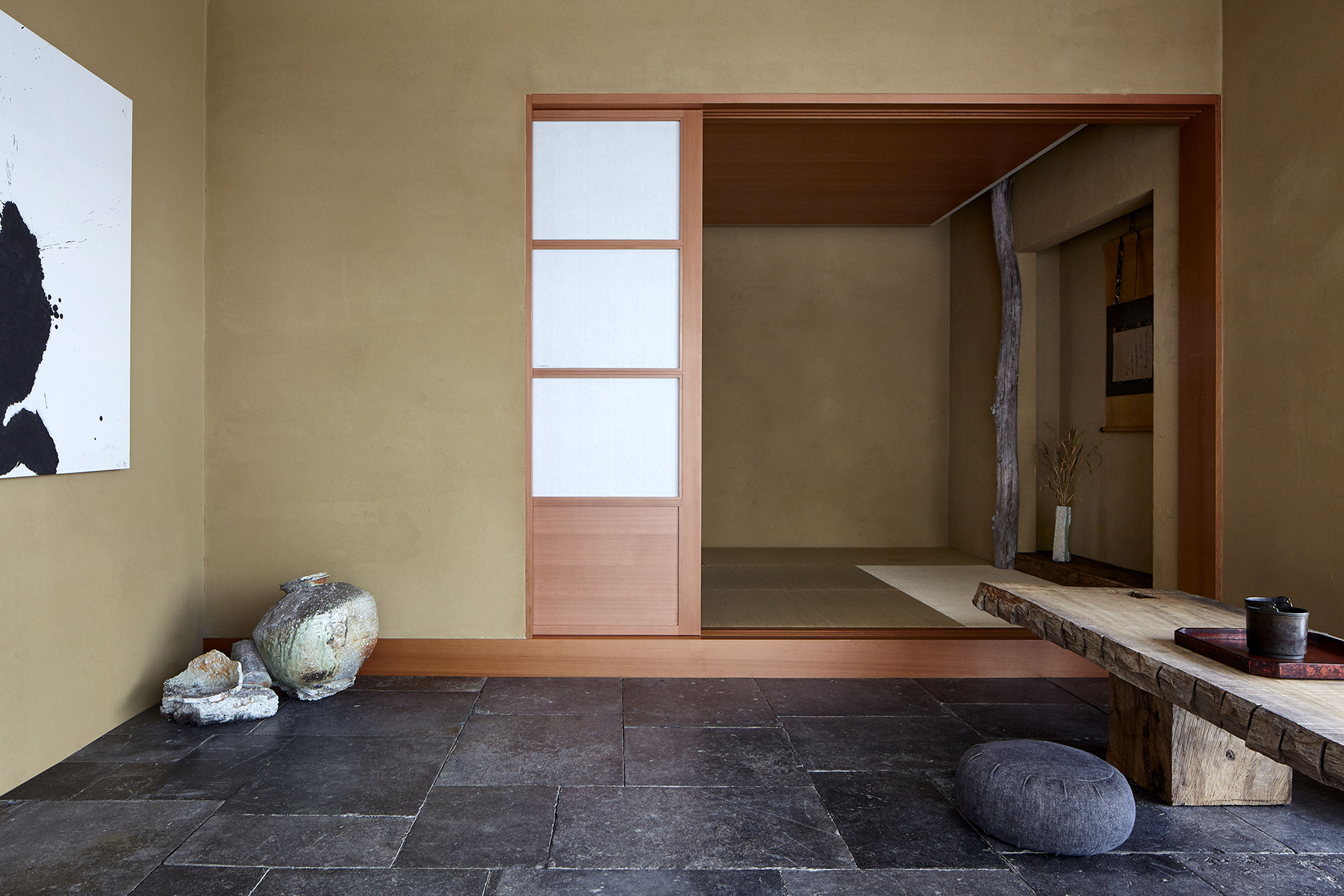
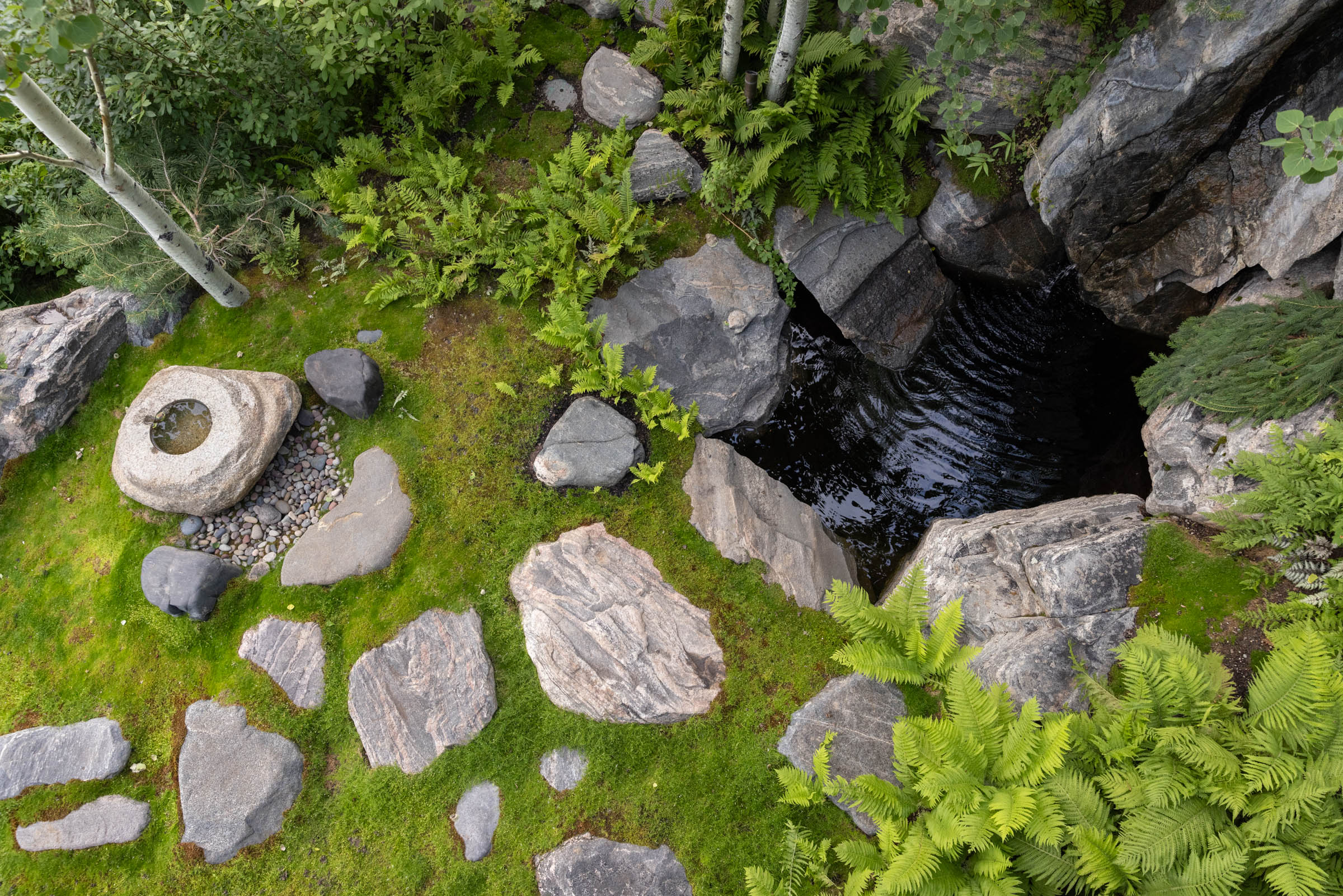
The project’s surprise component is our interpretation of a traditional Japanese tea room, tucked away behind the lower-level video gallery, its full-height sliding-glass corner doors opening the space to an Asian-influenced mountain garden. Consultation with tea masters from University of Kyoto informed the sourcing of traditional Japanese materials, including sliding doors with hand-made shoji inlay, western red cedar paneling, Arakabe plaster walls, and hand-made tatami mats,
If the tea room extends the everyday into the realm of the spiritual, the same might be said of R+B’s design. Our consideration of even the most inconsequential elements, their contribution to the whole, inspires an unusual level of avid attention. The view is always available. But the serenity and simplicity of the interior prompts an awareness of the moment that only deepens with time and experience.
Project Size
6,200 SF (0.9 AC)
Project Awards
-
American Institute of Architects Colorado – Award of Merit
-
International Interior Design Association – BESTaward
-
Colorado Homes & Lifestyle – CARE Award
-
International Design Award
-
American Institute of Architects Colorado – Best Custom Residential
-
Interior Design Magazine – Best of Year
Publications
-
Designing Aspen: The Houses of Rowland+Broughton
-
Rocky Mountain Modern: Contemporary Alpine Homes by John Gendall
-
Aspire Design and Home: A Seductive Mountainous Getaway In Aspen
R+B Services
-
Architecture
-
Interior Architecture
Project Team
-
Landscape Architect: Shannon Murphy
-
Lighting Design: Elumenate
-
Structural Engineer: KL&A
-
MEP Engineer: REG
-
Civil Engineer: High Country
-
Audio/Visual: Paragon
-
Photographer: Lisa Romerein
-
Photographer: Brent Moss
-
Photographer: Joshua McHugh
-
Contractor: Hansen

Lookout House
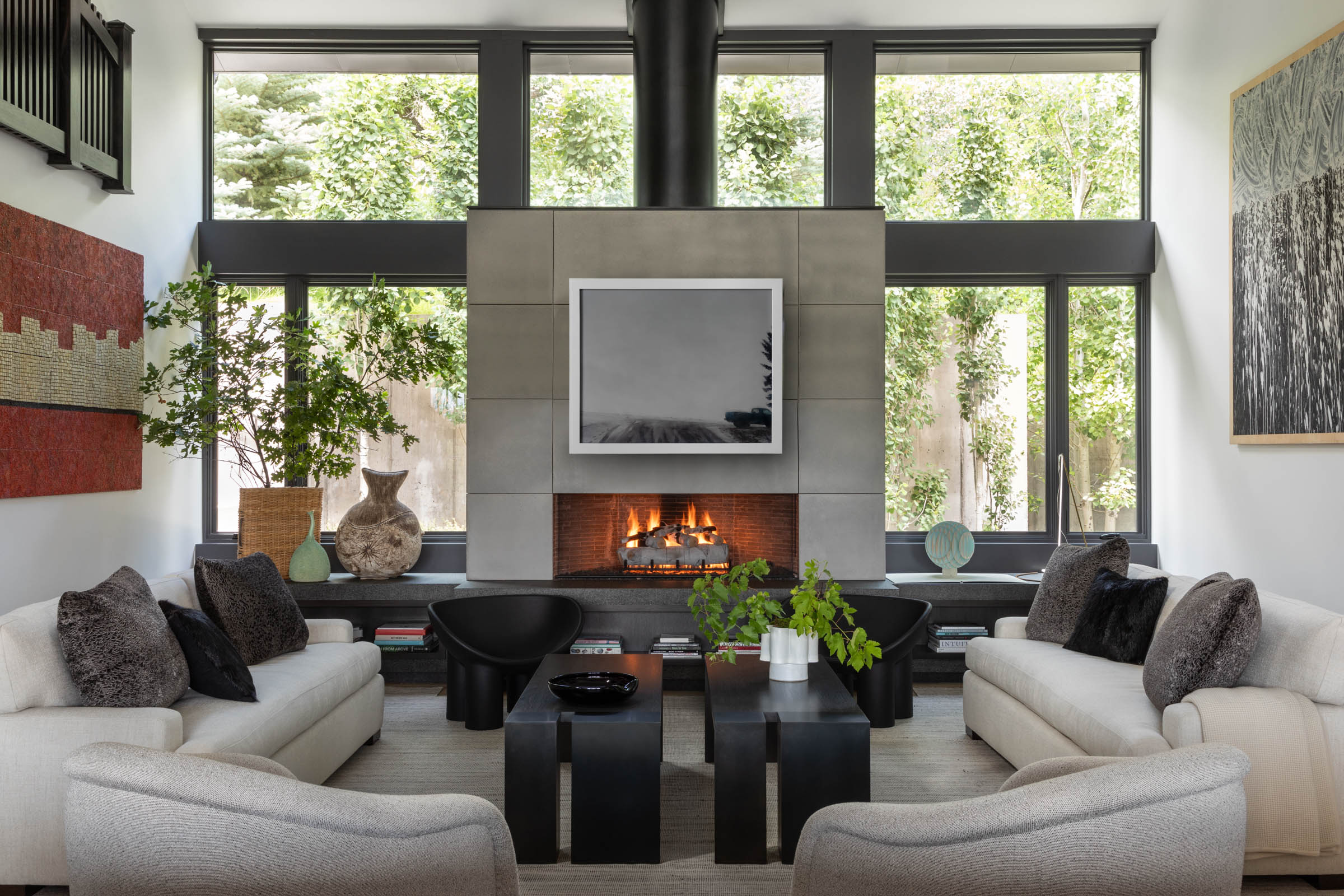
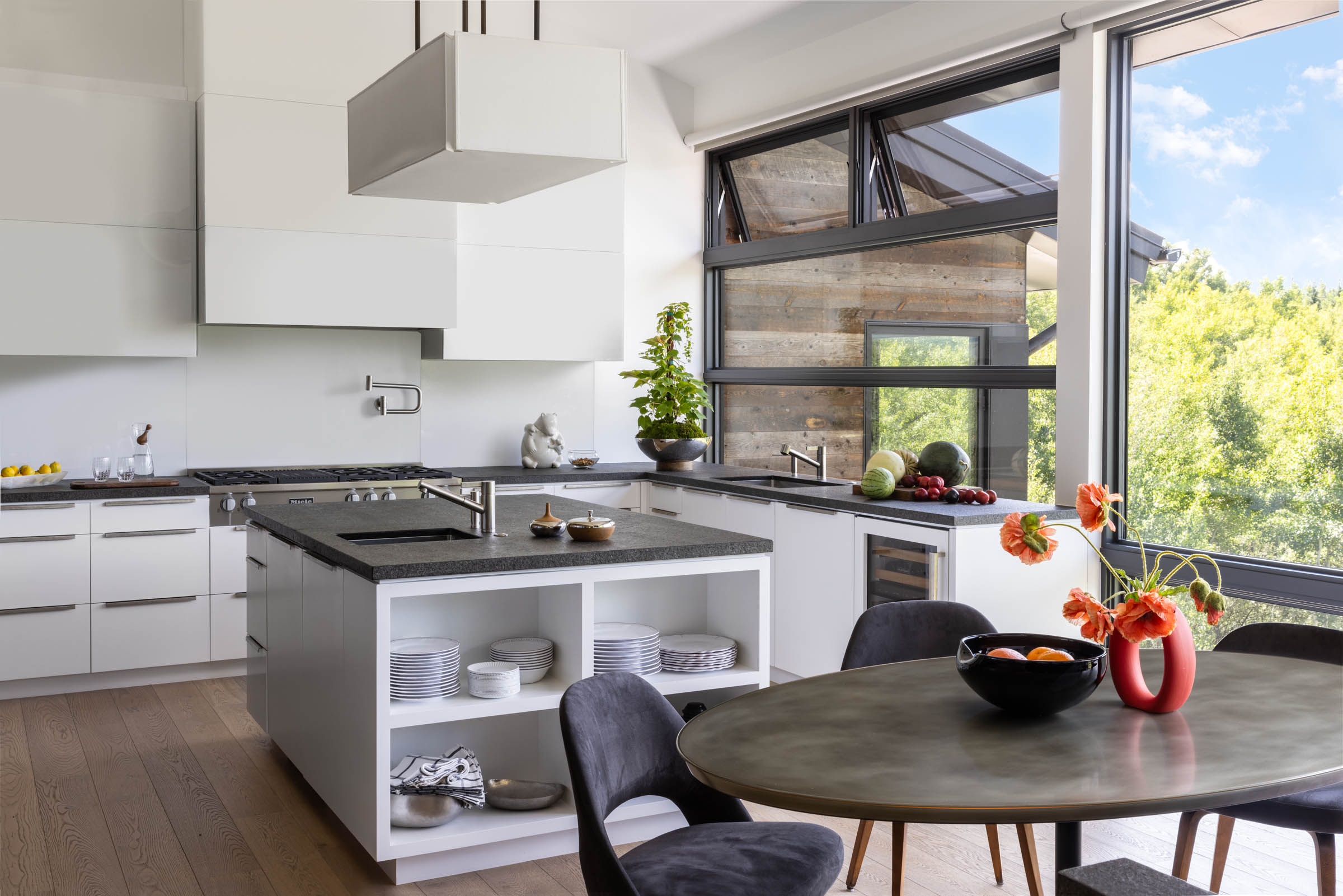
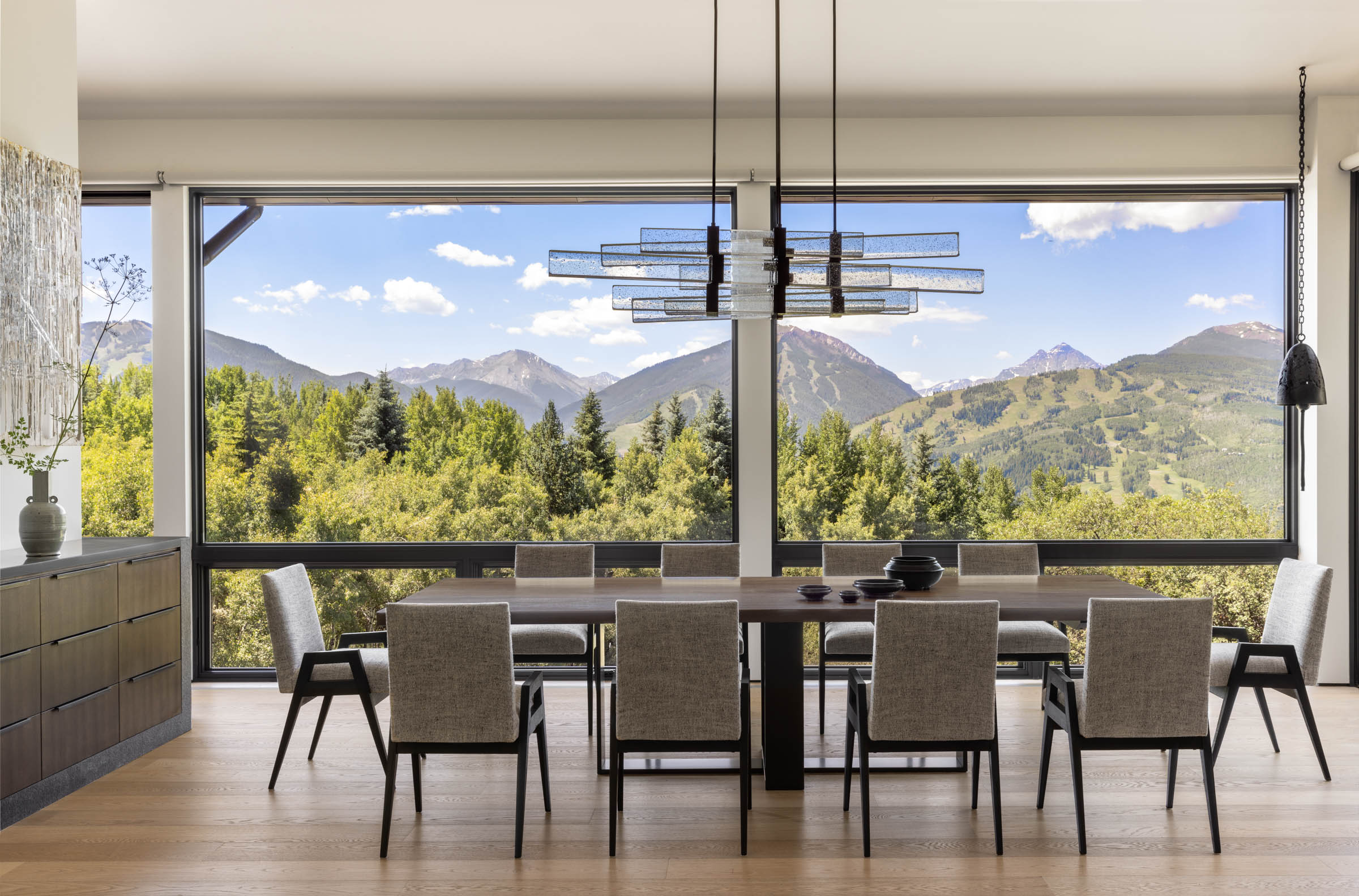
Lookout House, a grand dwelling enjoying sweeping views of Aspen’s Elk Mountains, occupies the footprint of the owners’ previous residence and is roughly the same size. But in its responses to the character of the location and the needs of the residents, Lookout House could not be more different from its predecessor.
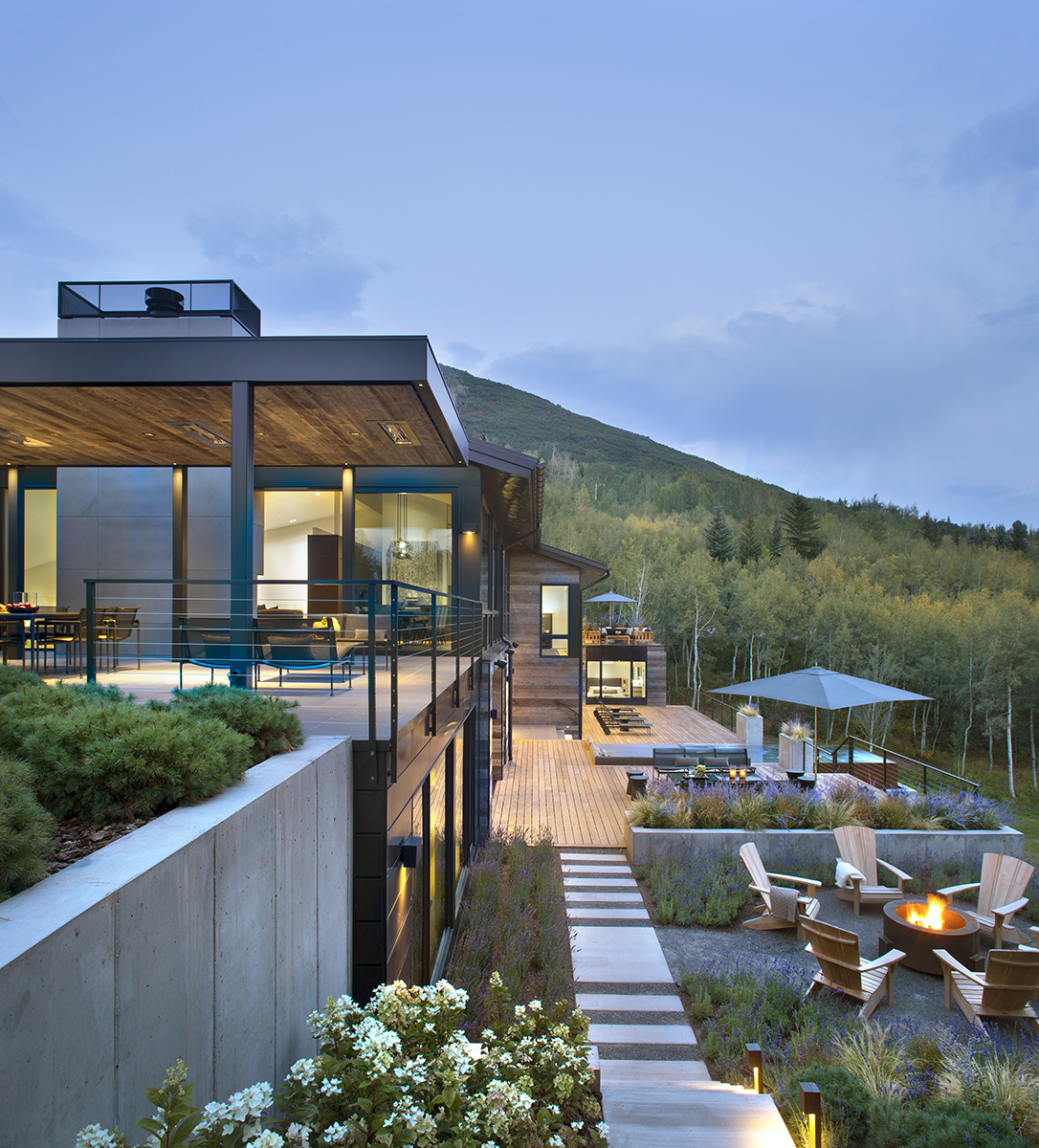
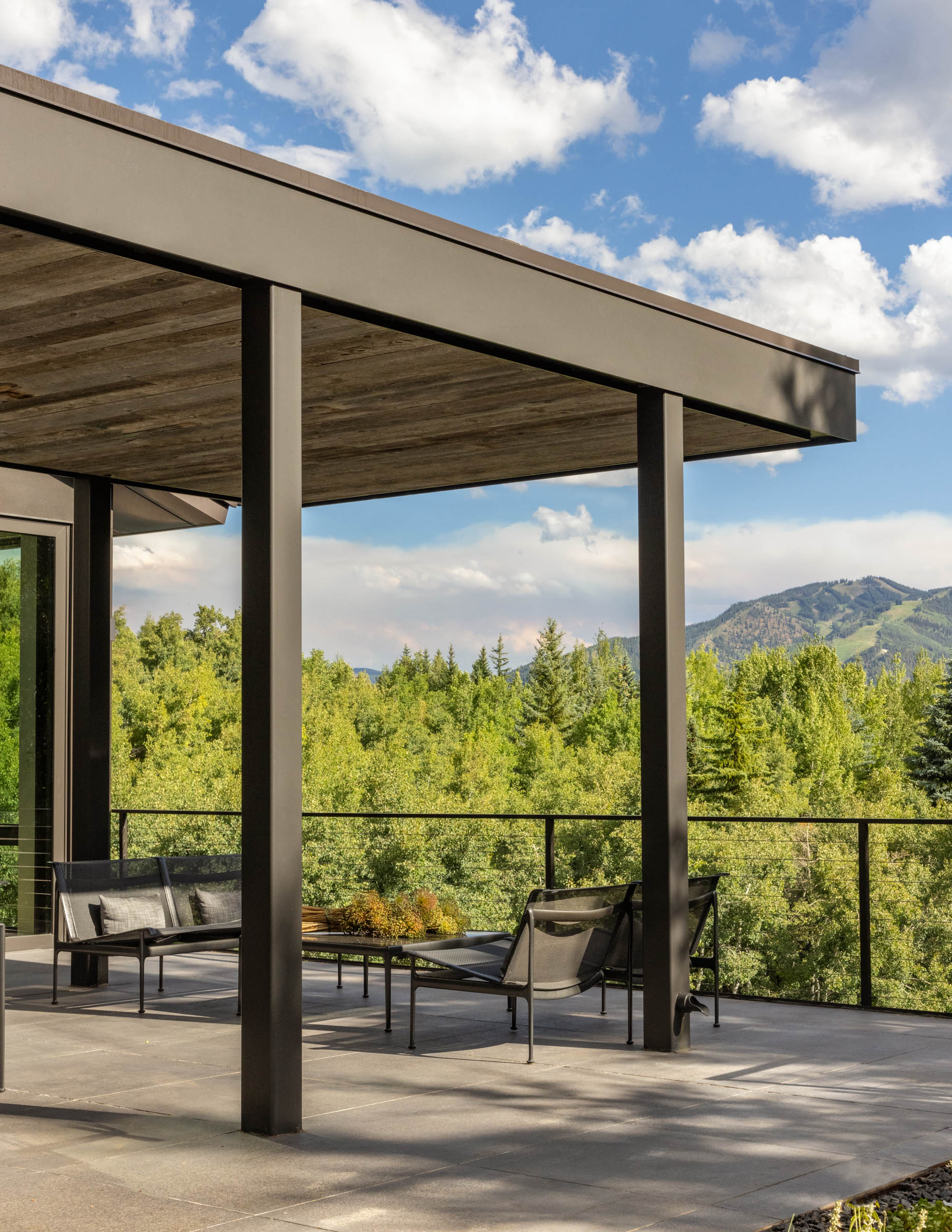
The site overlooks a dramatically down-sloping meadow that, as it is densely forested on each side, remains invisible to the neighbors. Given the circumstances, we perceived two opportunities: to make the house a portal to the meadow, and to maximize the building’s visual engagement with its surroundings.
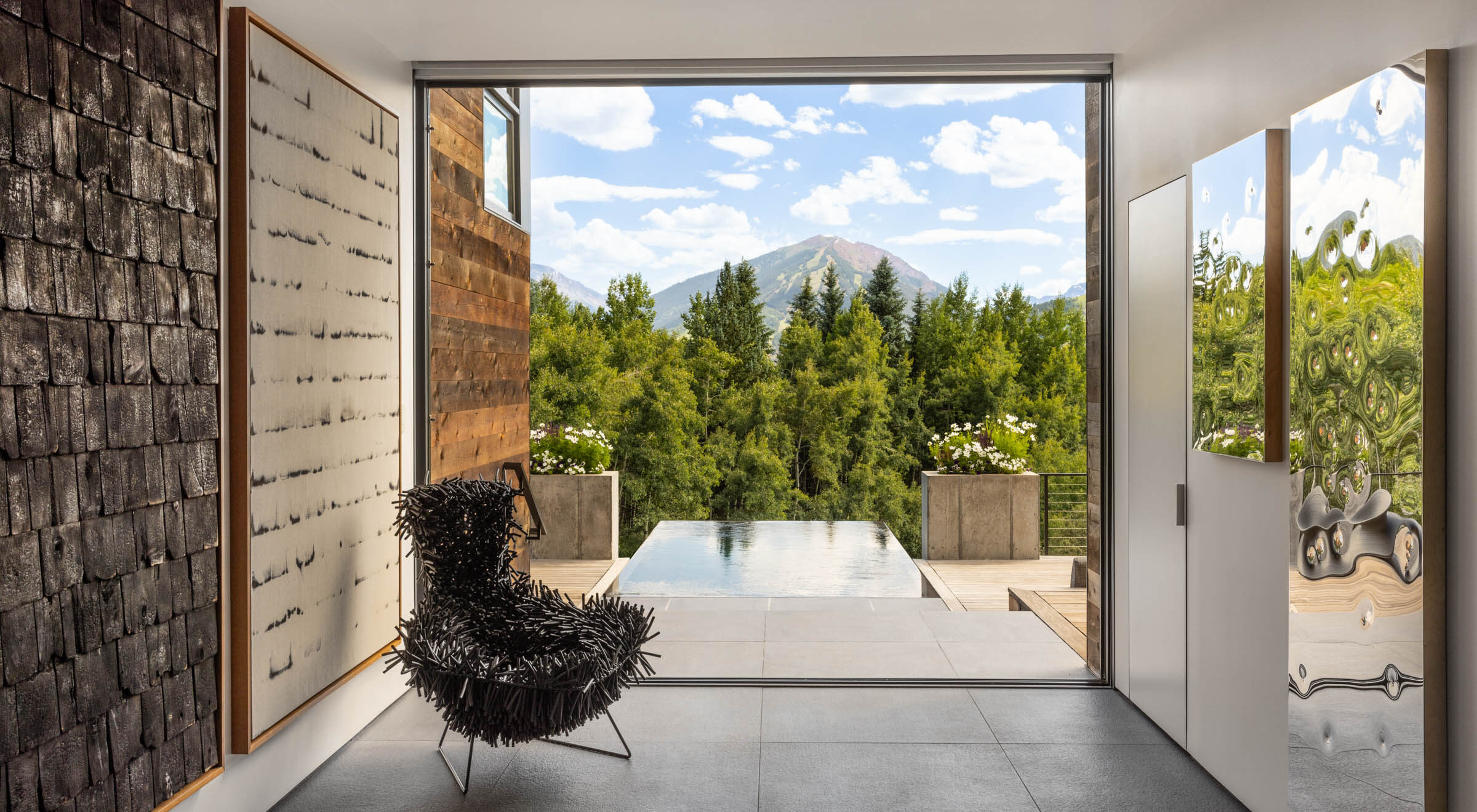
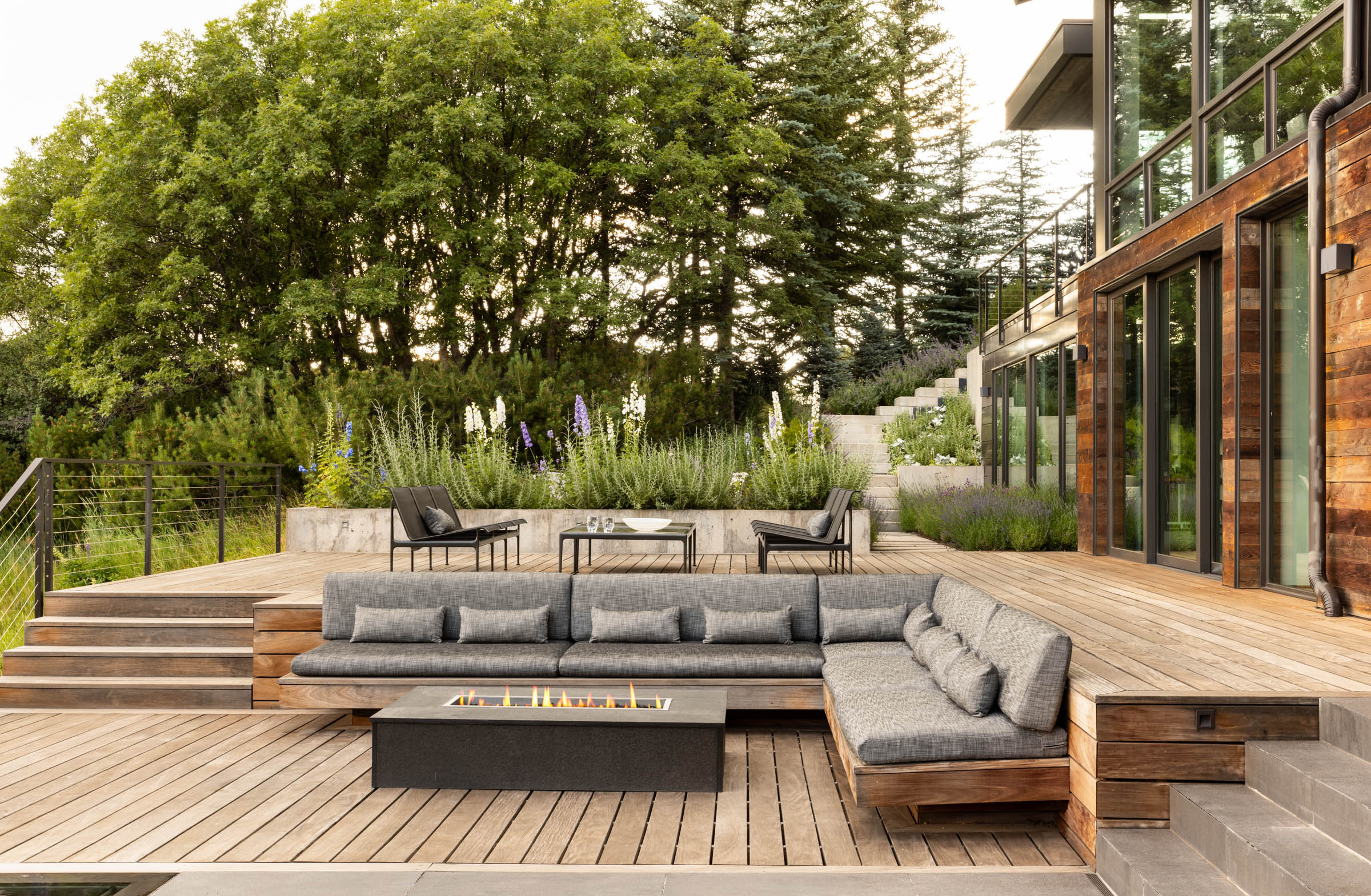
Regarding the former, R+B chose to directly connect the north-facing entry façade to the house’s southern elevation, which overlooks the view. An axis beginning at the covered entry, and continuing through the overscaled pivoting front door, extends directly through the house to a pocketing glazed panel on the south facade, a window that opens onto a mountain-filled vista and, a few steps below on the deck, a copper spa pool.
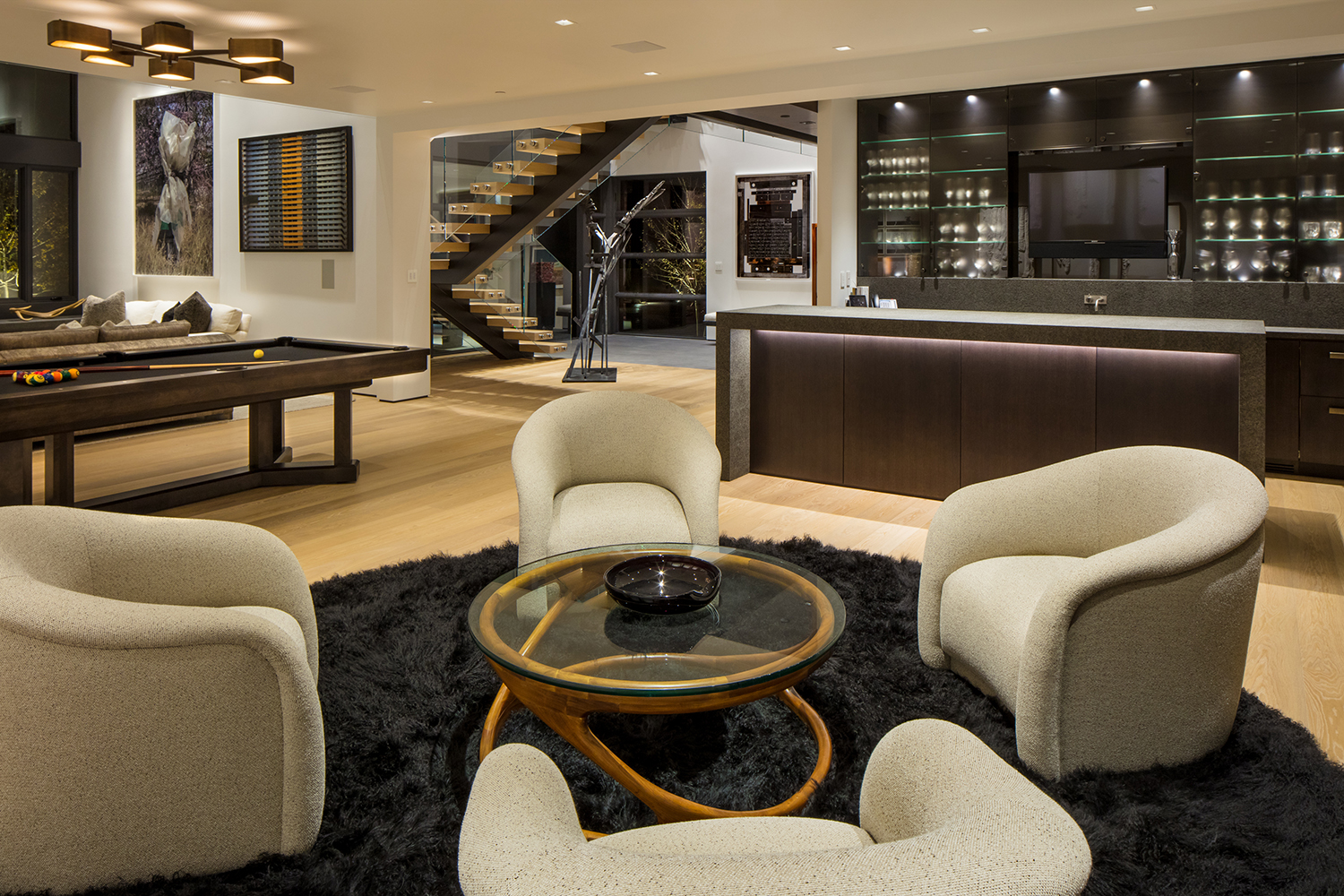
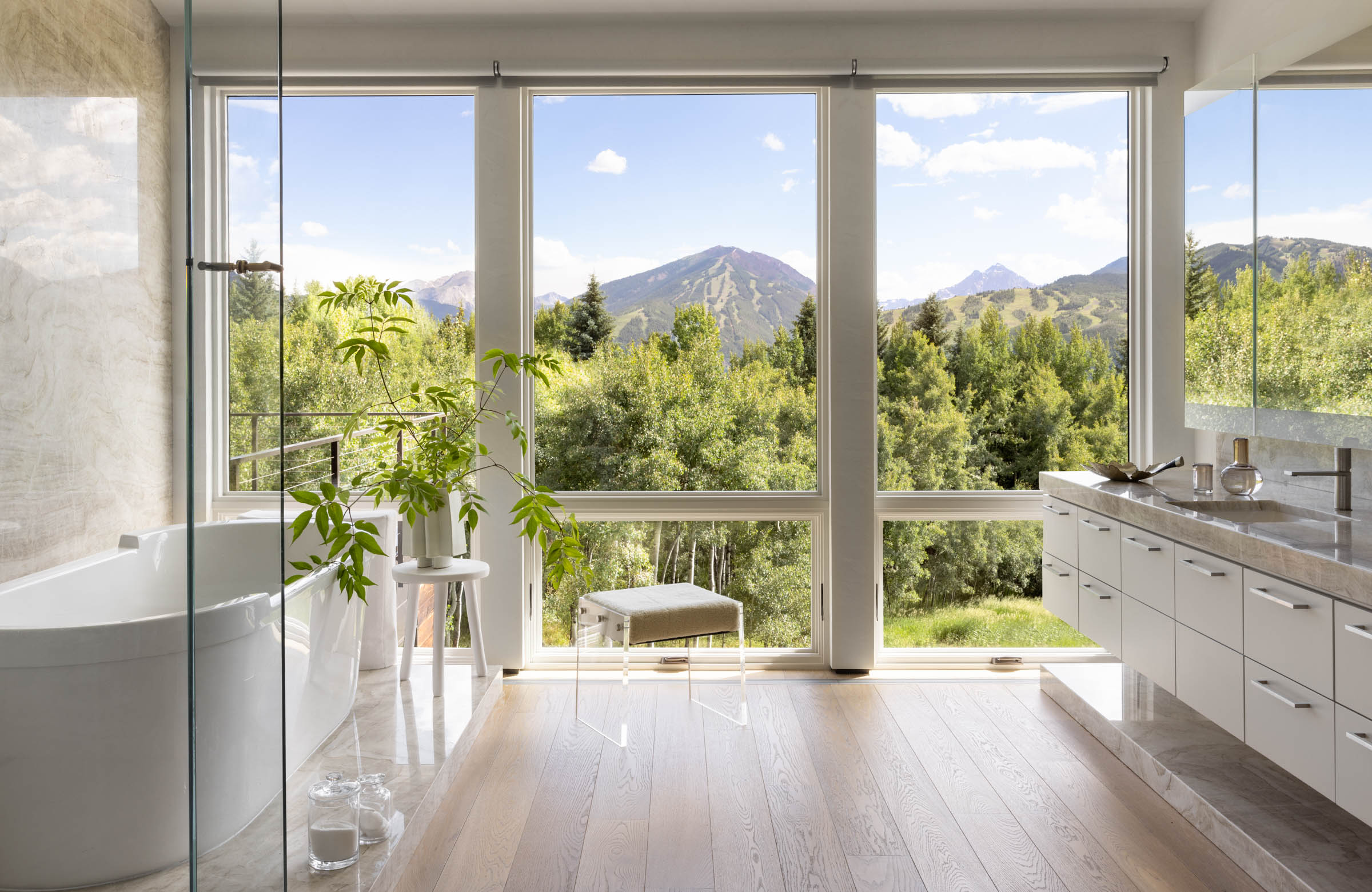
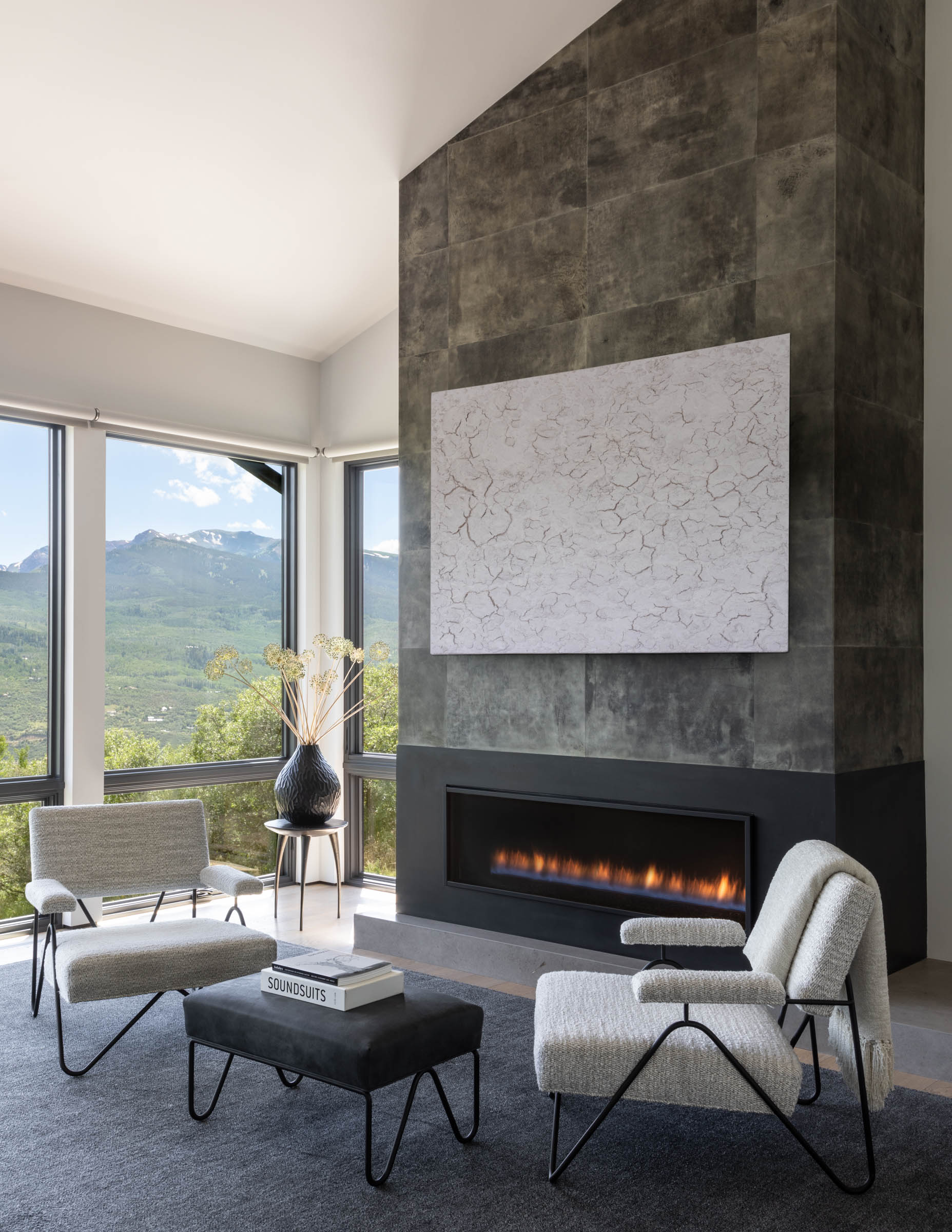
As for the latter challenge—capturing the slope—we set the secondary rooms on the lower level and the primary spaces upstairs, where they enjoy views that, beginning far below at the bottom of the meadow and traveling up to the mountain peaks, are pleasurably commanding.
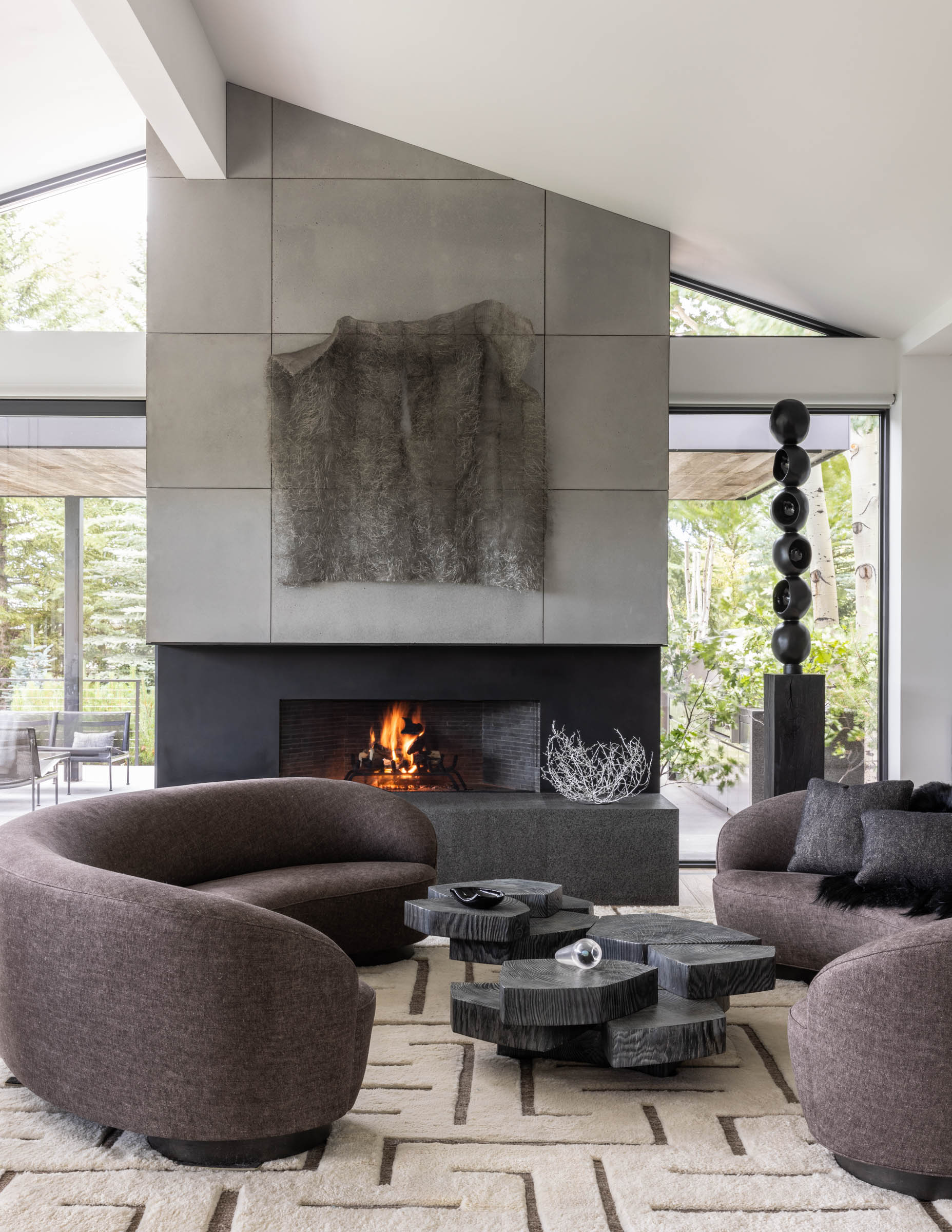
Unusually for Aspen, a place in which the mountain-lodge vernacular predominates, the house’s sensibility is akin to the modernist grandeur of postwar urban architecture. Given the abundance of the owners’ contemporary art holdings, the choice remains entirely appropriate. If there is a dominant design motif, it is horizontality: Floating planes and layered plinths transform in function and character as they slip from space to space, defining rooms as discrete entities and uniting them into a single interlocking experience.
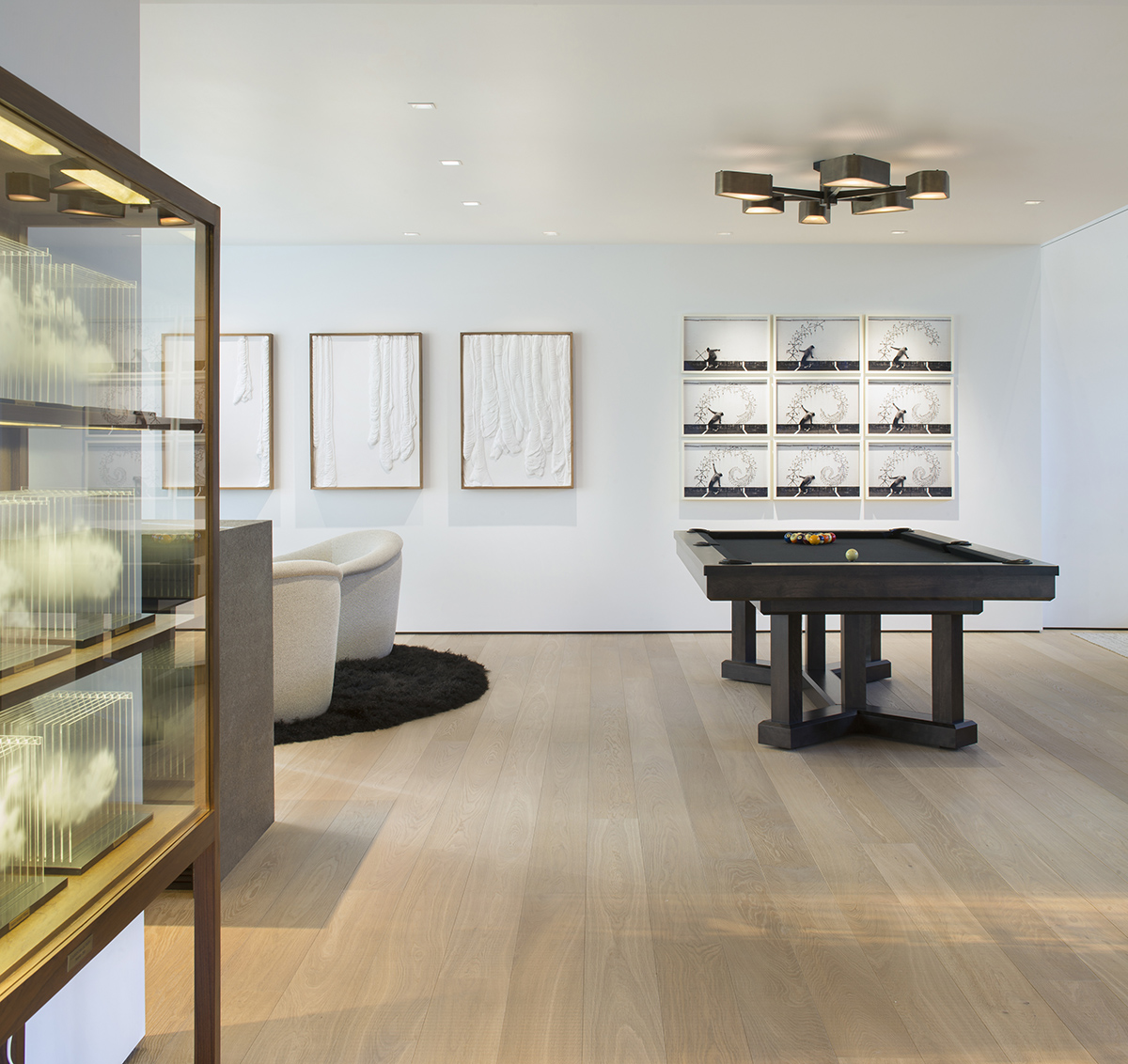
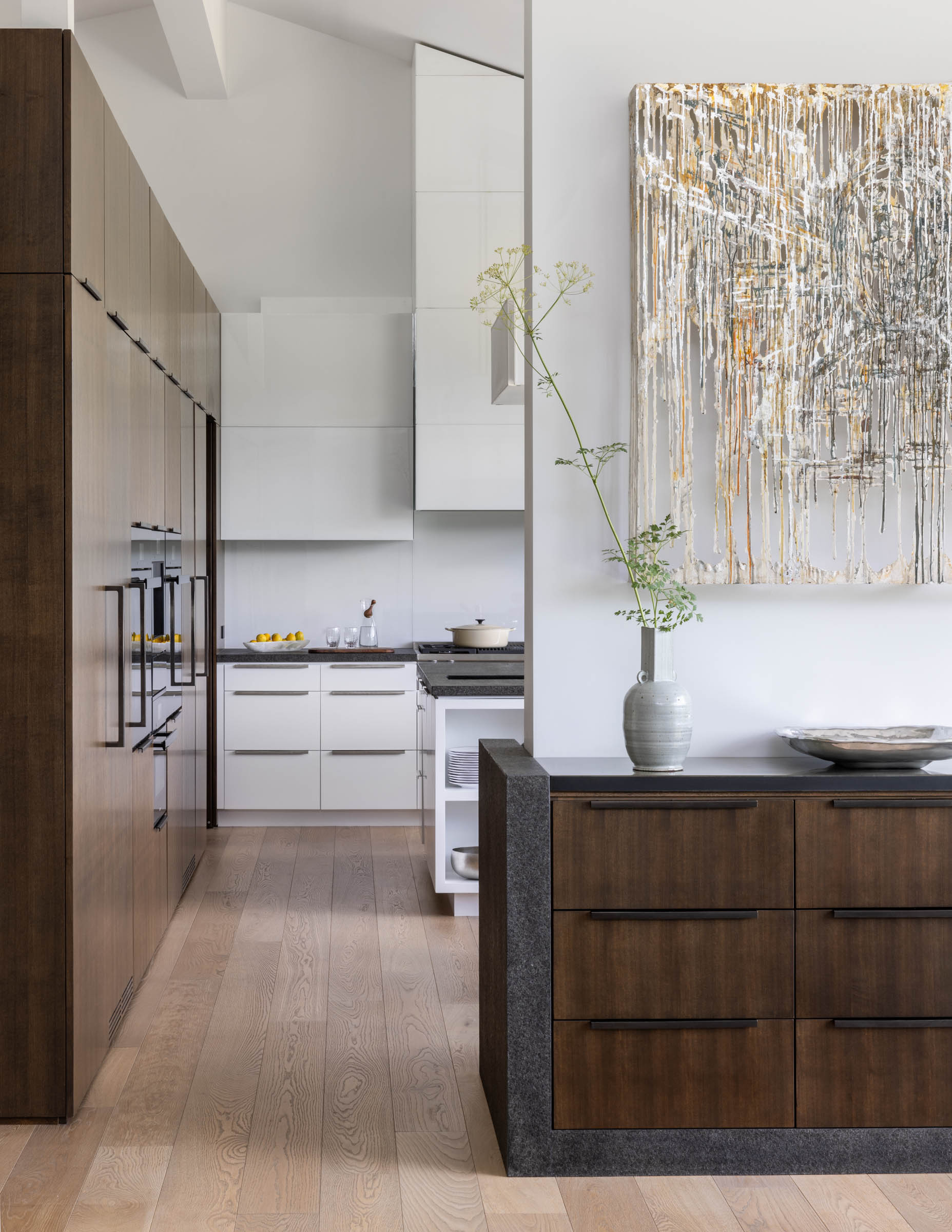
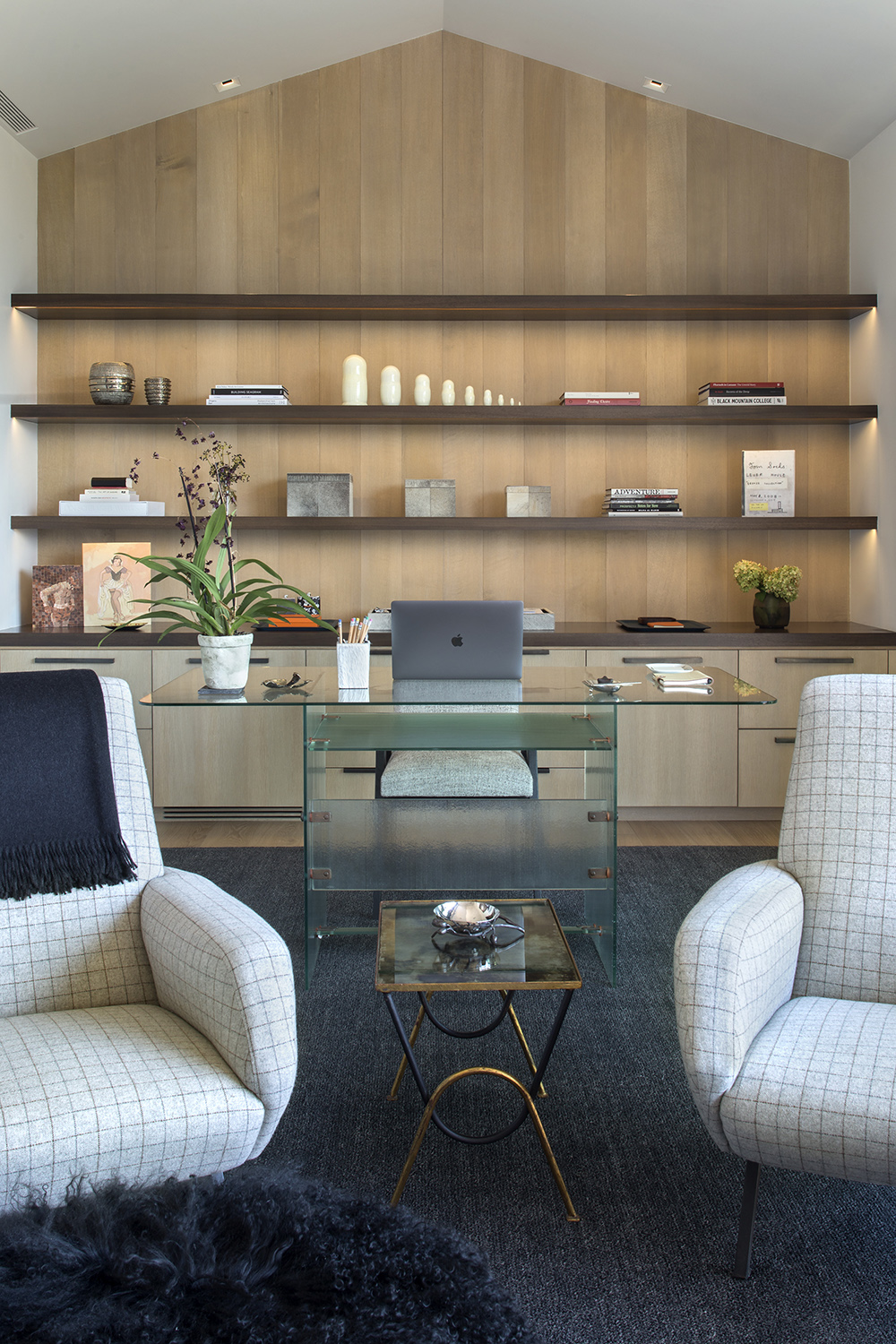
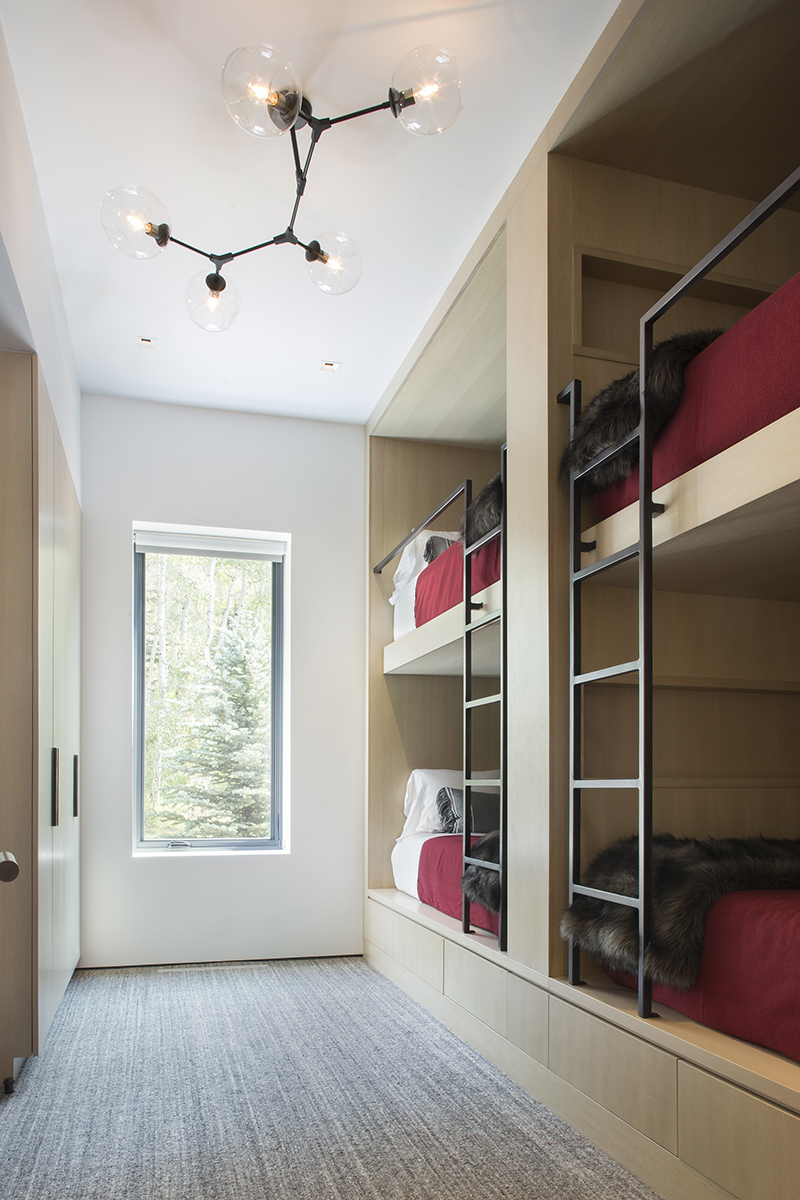
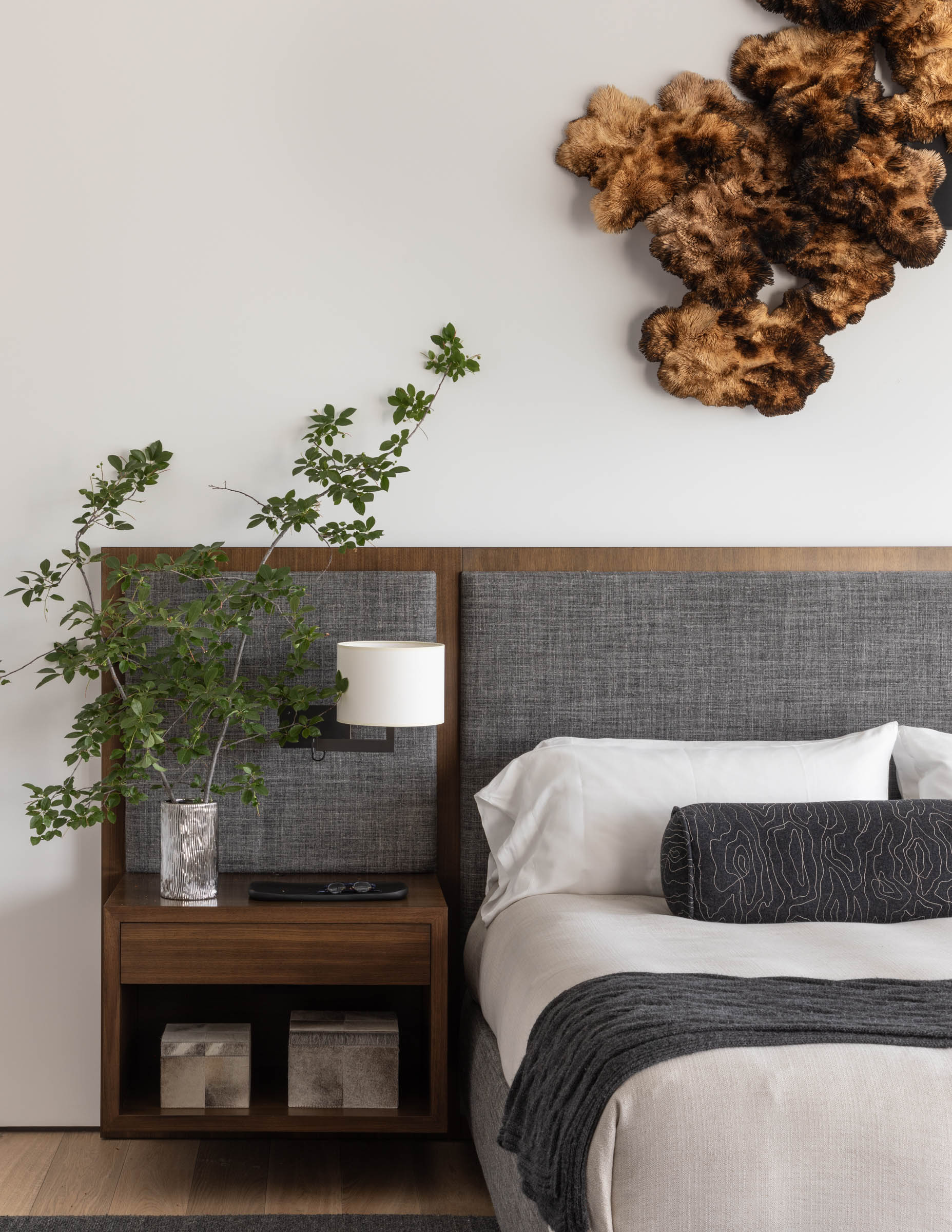
Various of the design’s qualities support an innovative way of enjoying a near-museum scale collection in a relaxed domestic setting. The first is a high level of visual connectivity from room to room and floor to floor. Lookout House is also made welcoming by the fluidity of its palette, which morphs from concrete to oak to limestone to leather as it flows from space to space, connecting to the house’s exterior materials and the natural world beyond. Above all the dwelling conveys an overwhelming sense of craft. ‘Everything in this house was custom-designed,’ Broughton observes. ‘Not only did we design the beds, we even made the pillows. It was an incredible opportunity.’
Project Size
8,700 SF (1.9 AC)
Project Awards
-
Colorado Homes & Lifestyle – CARE Awards
-
ASID – Crystal Awards
Publications
R+B Services
-
Architecture
-
Interior Design
-
Furnishings / Procurement
Project Team
-
Interior Decorator: Manuel de Santaren
-
Landscape Design: Busy Beavers
-
Lighting Designer: Robert Singer
-
Structural Engineer: KL&A
-
MEP Engineer: Rader
-
Civil Engineer: Sopris
-
Photographer: Lisa Romerein
-
Photographer: Brent Moss
-
Photographer: Steve Mundinger
-
Contractor: Brikor
First Light
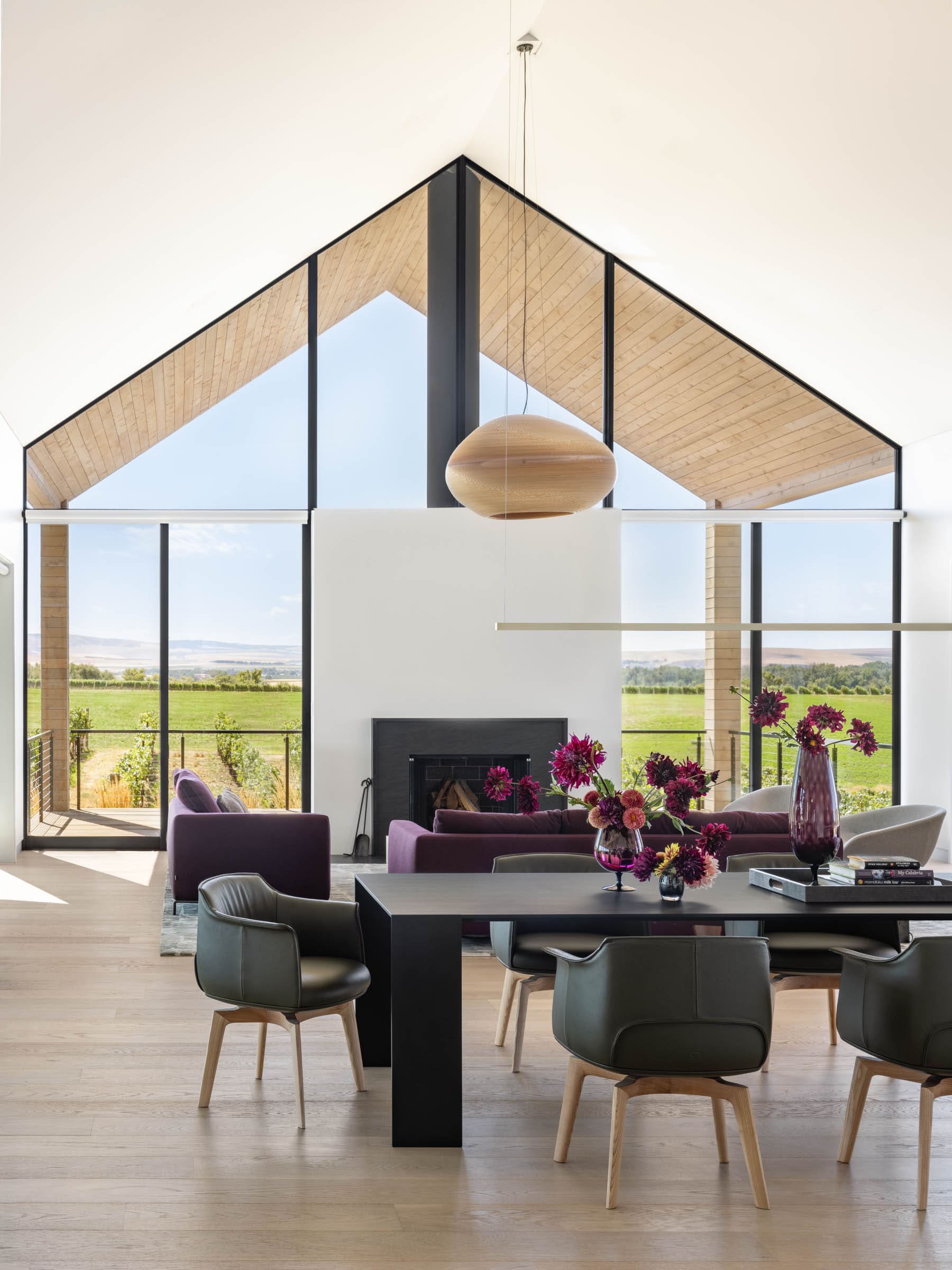
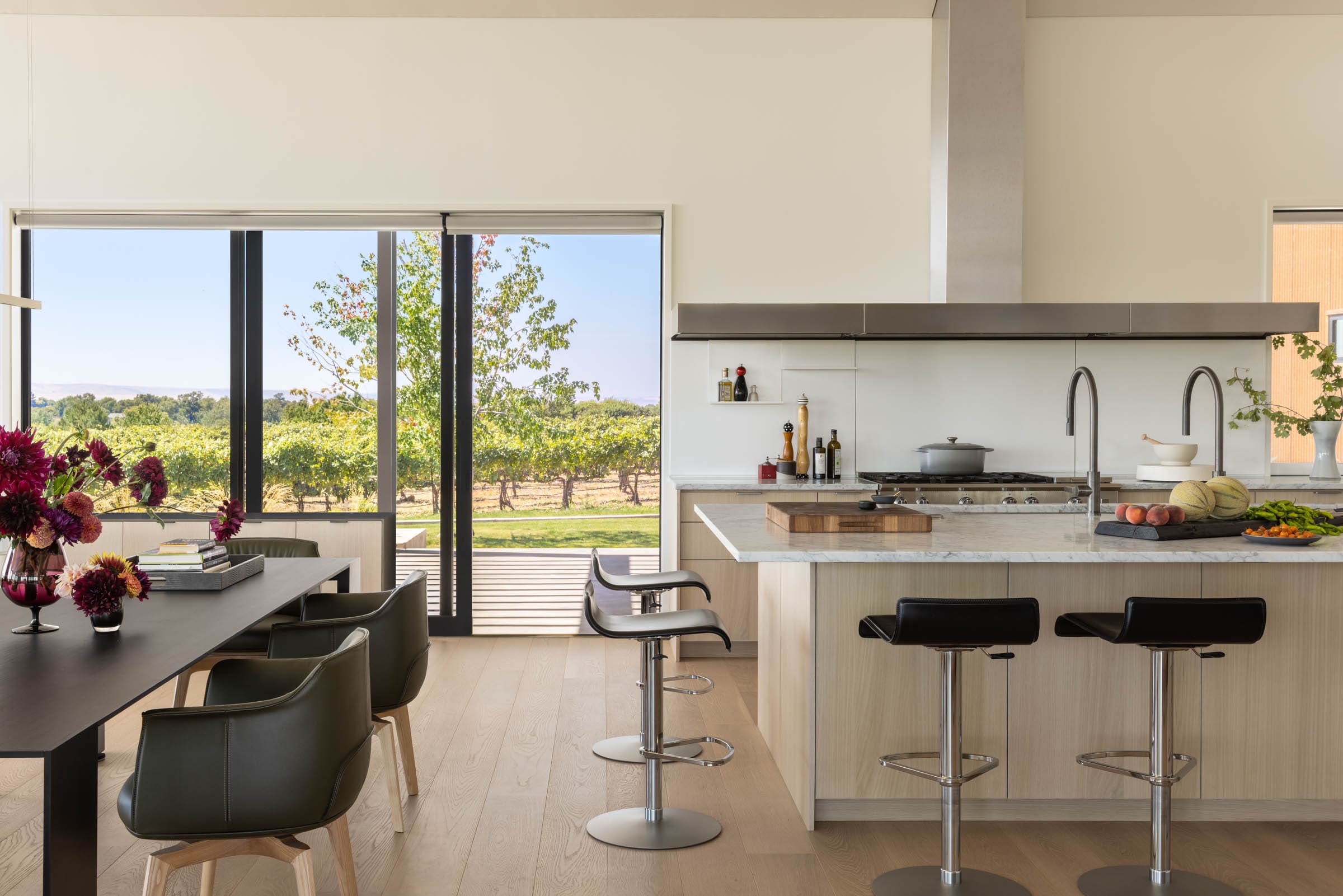
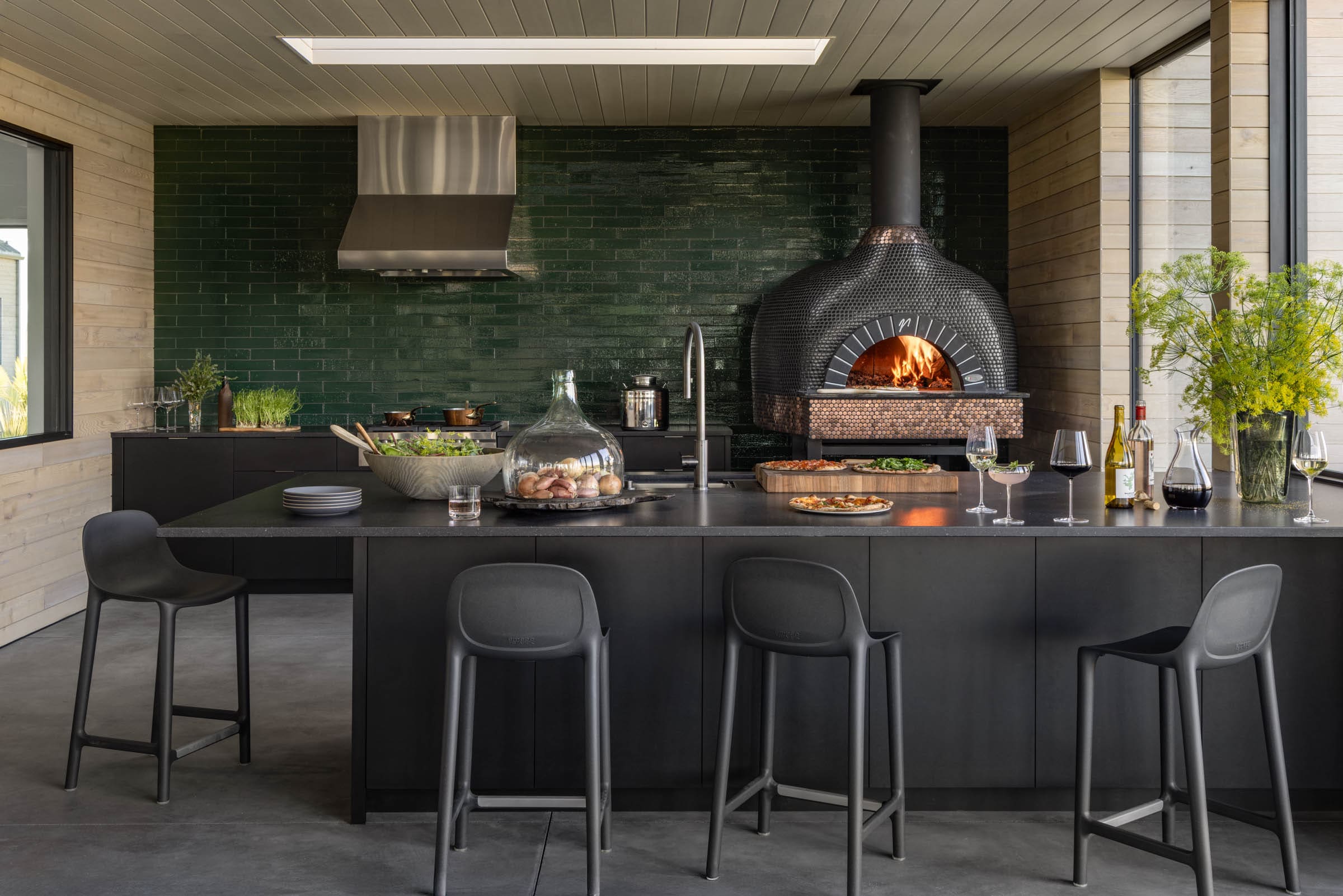
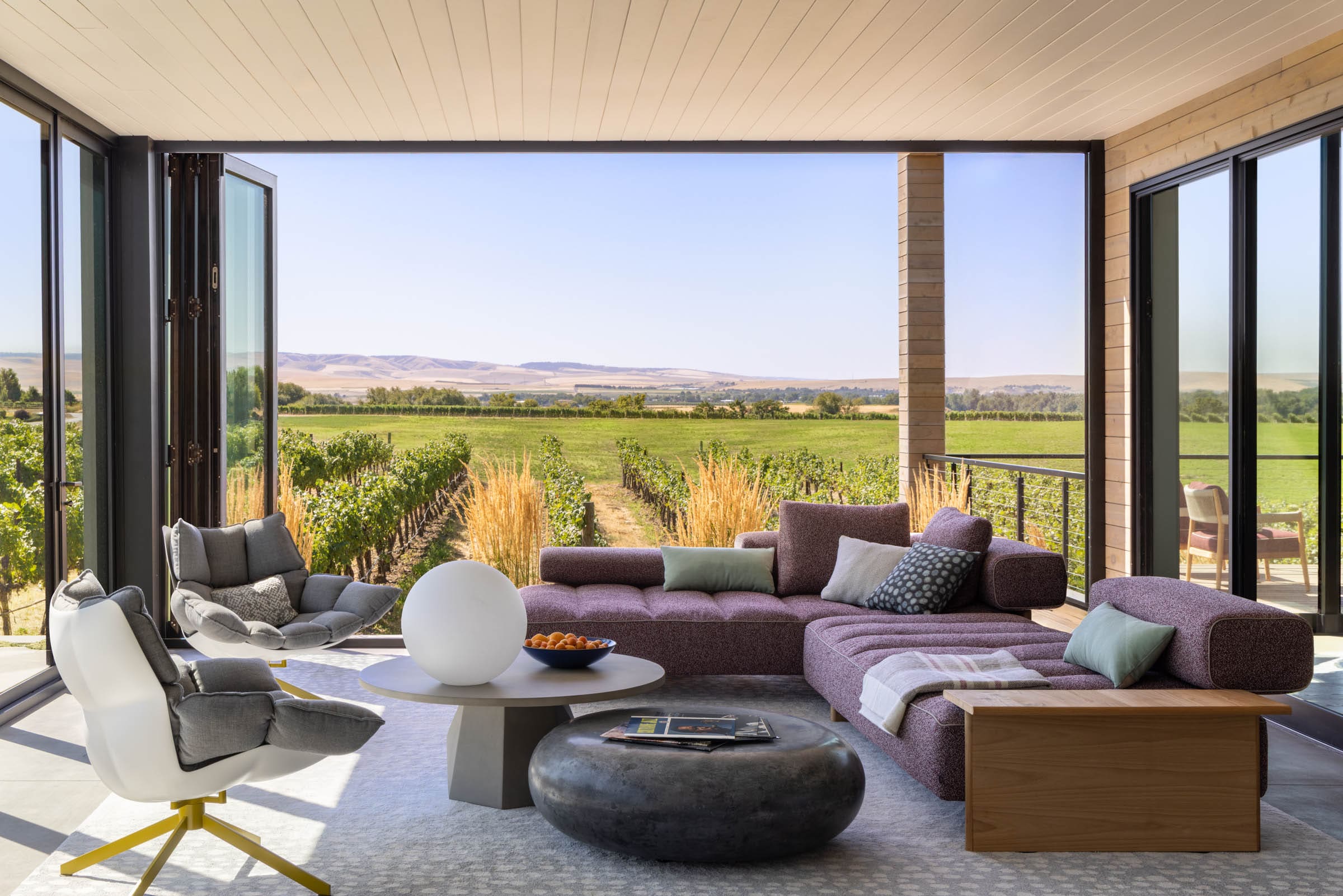
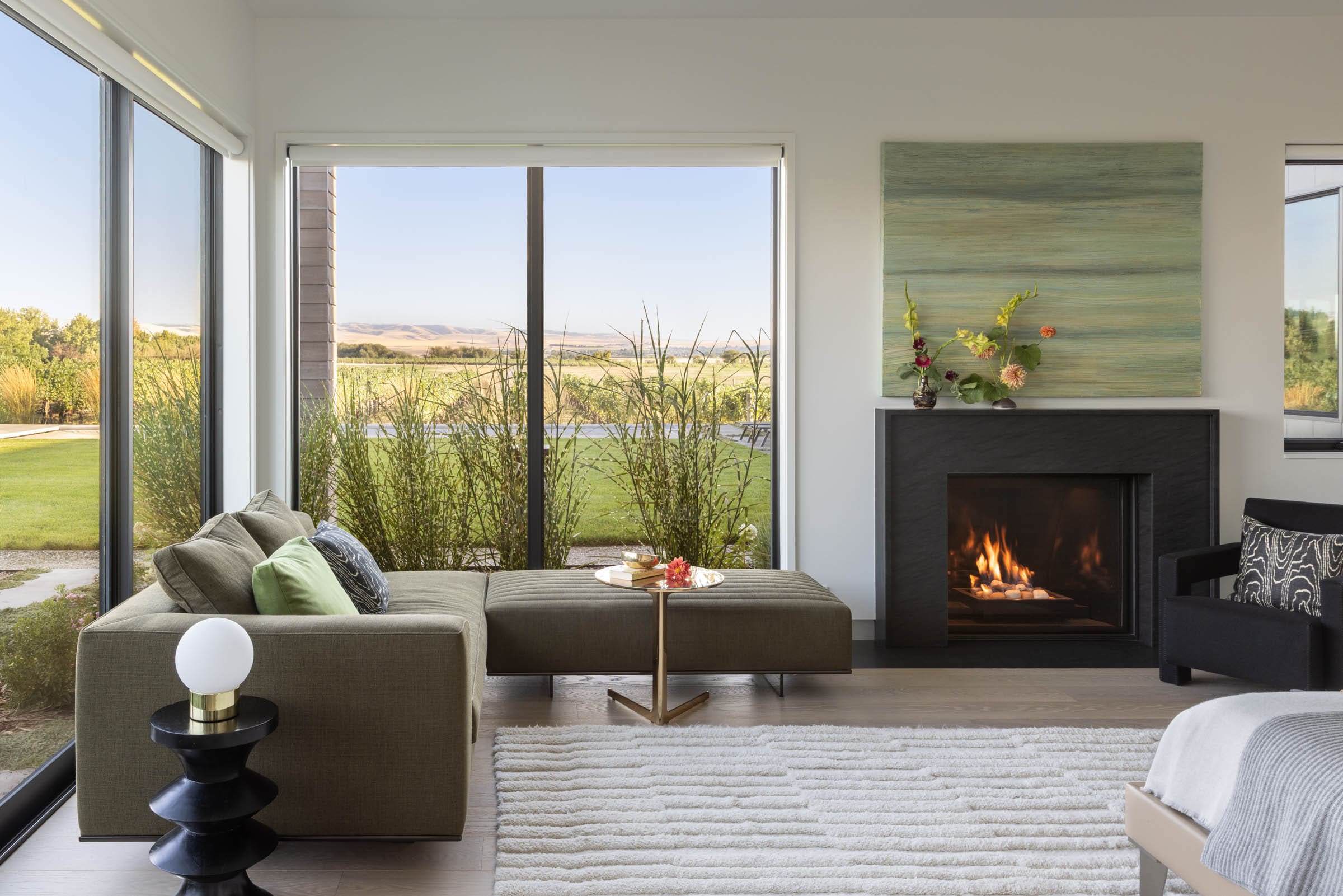
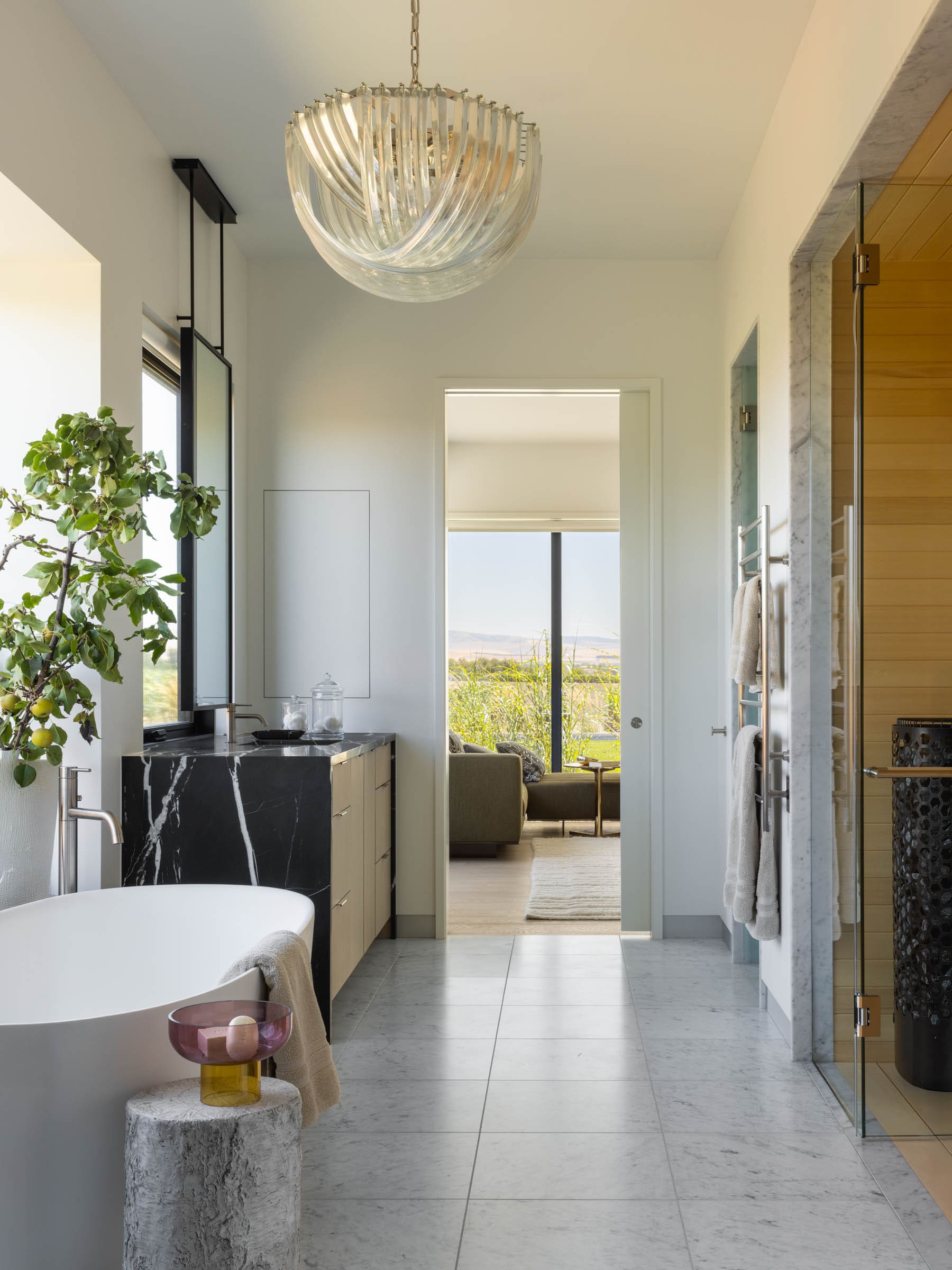
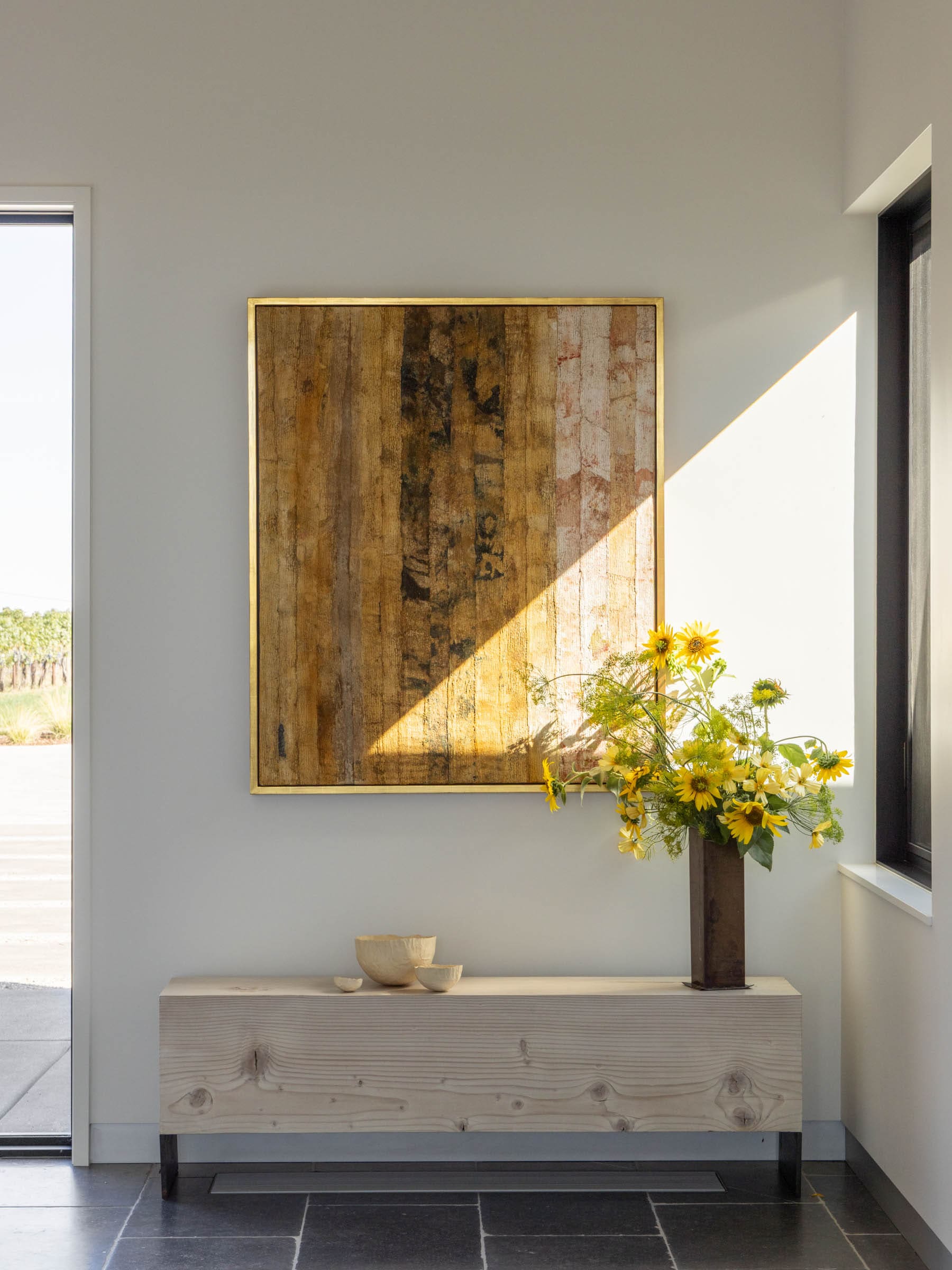
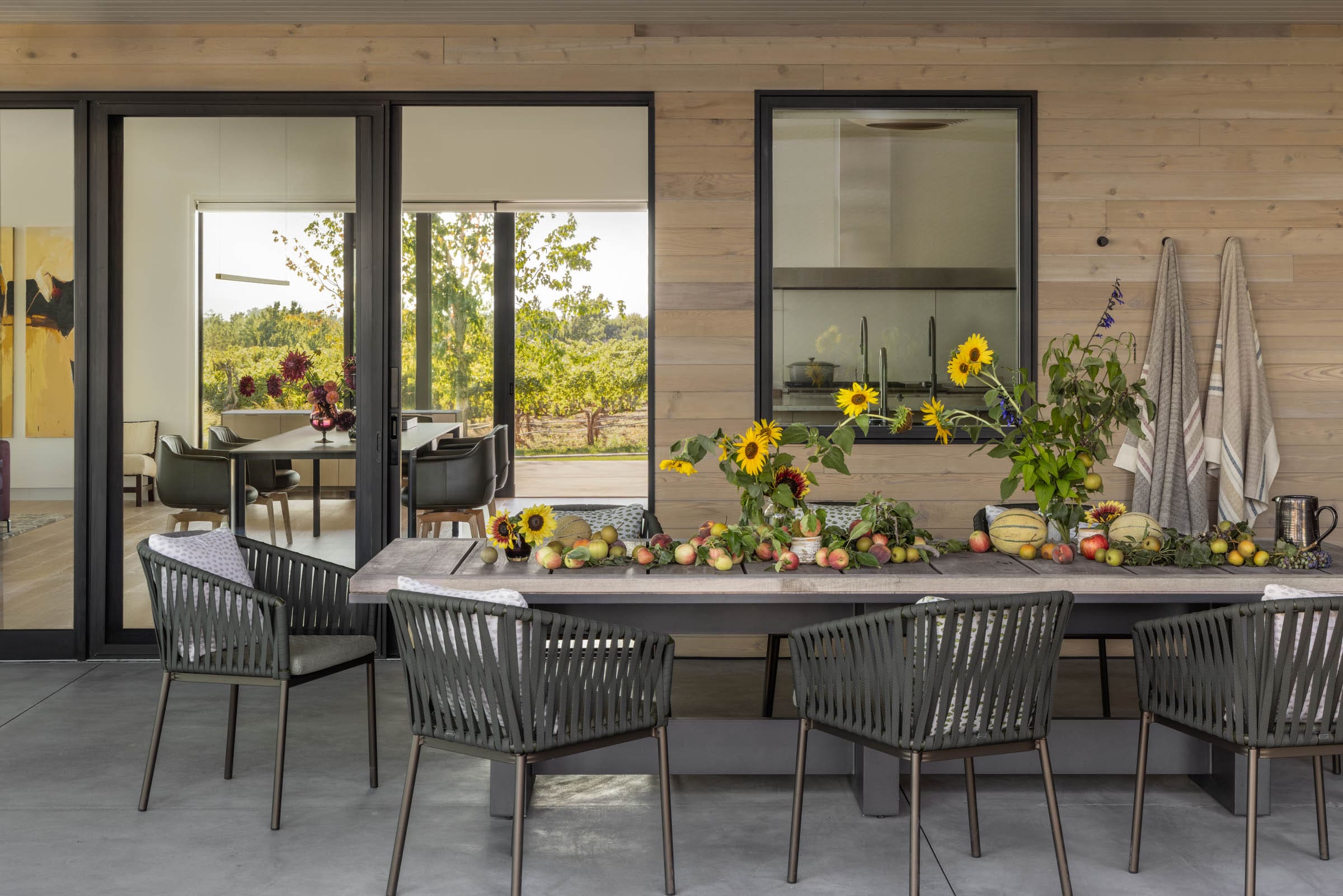
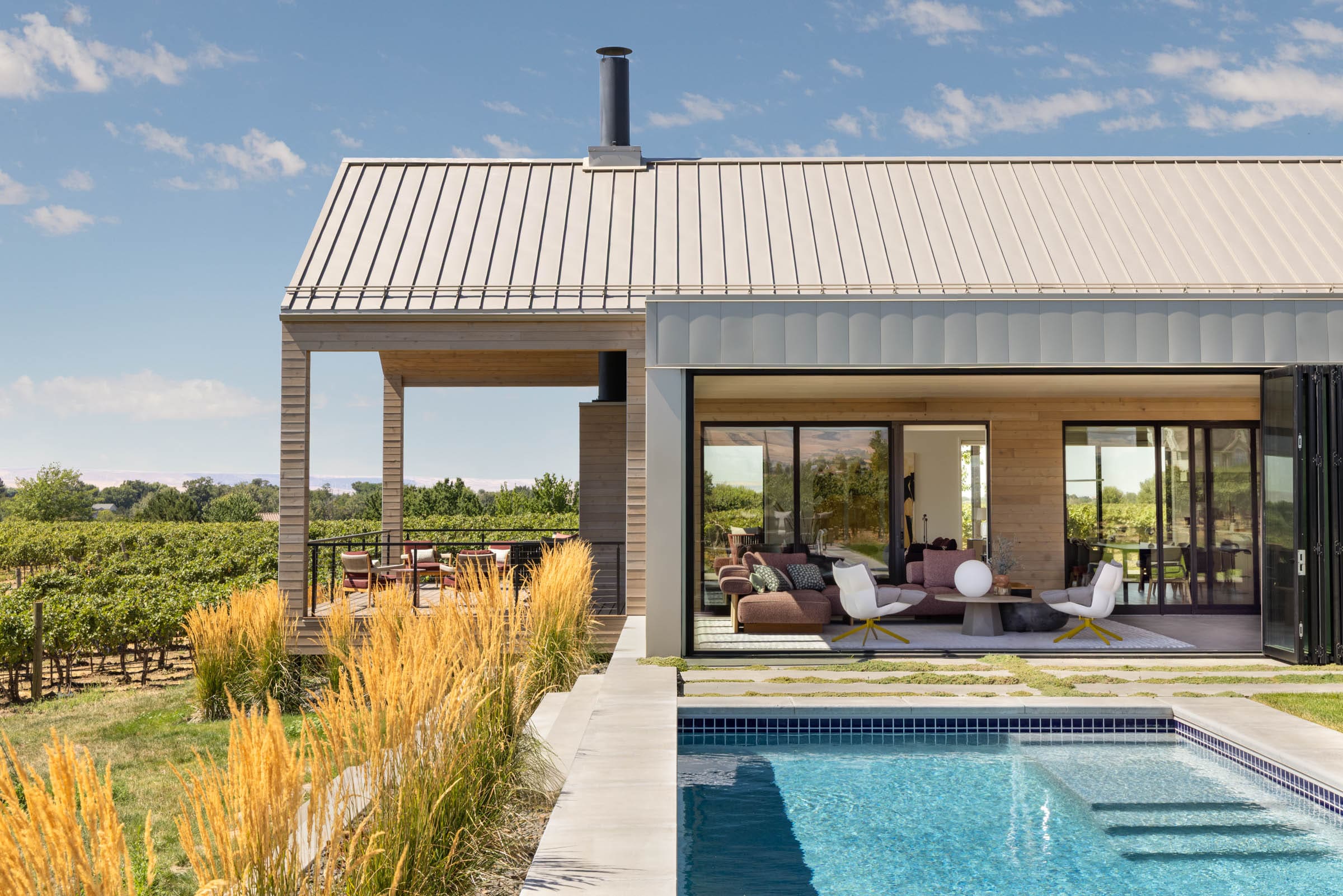
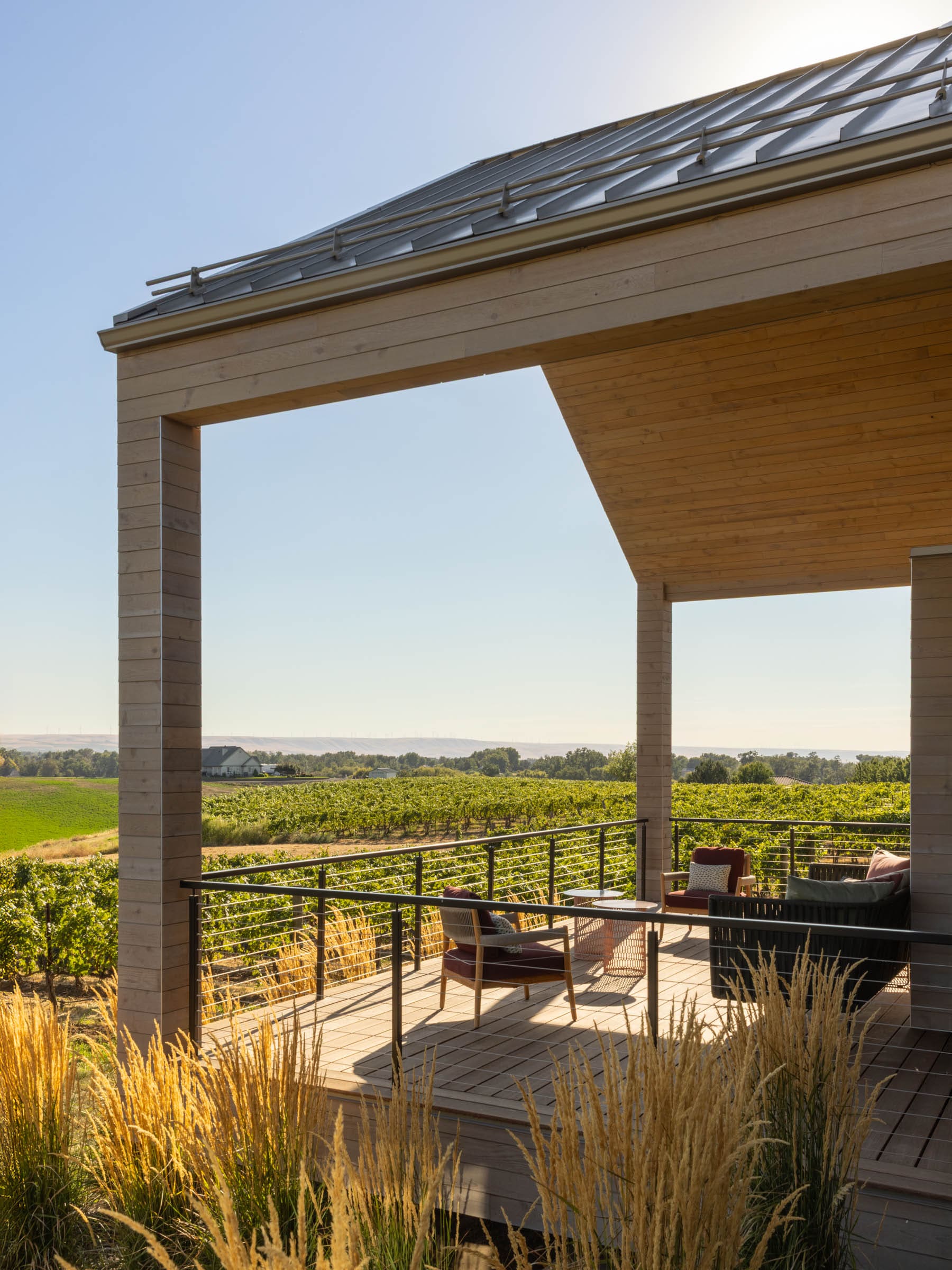
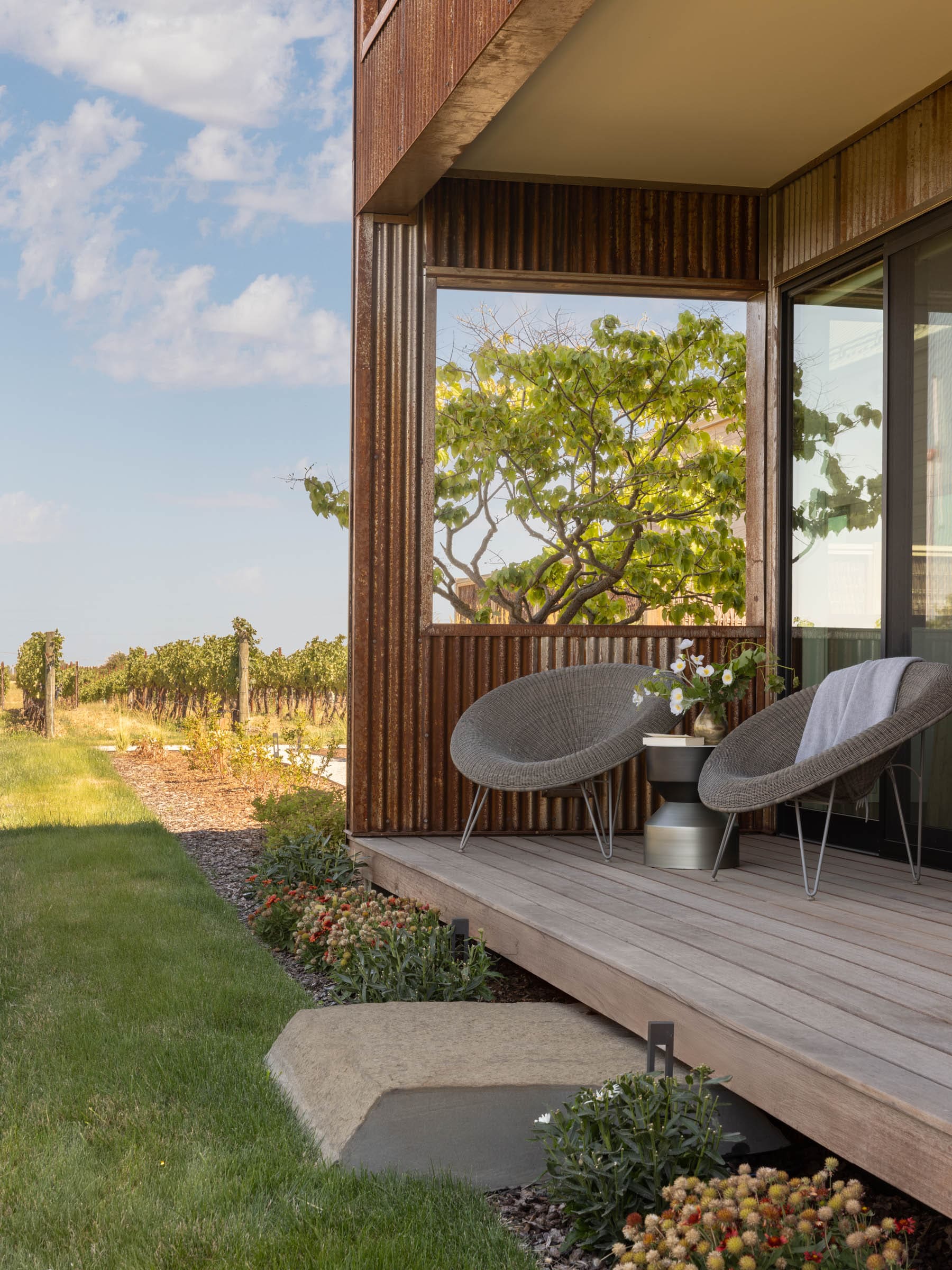
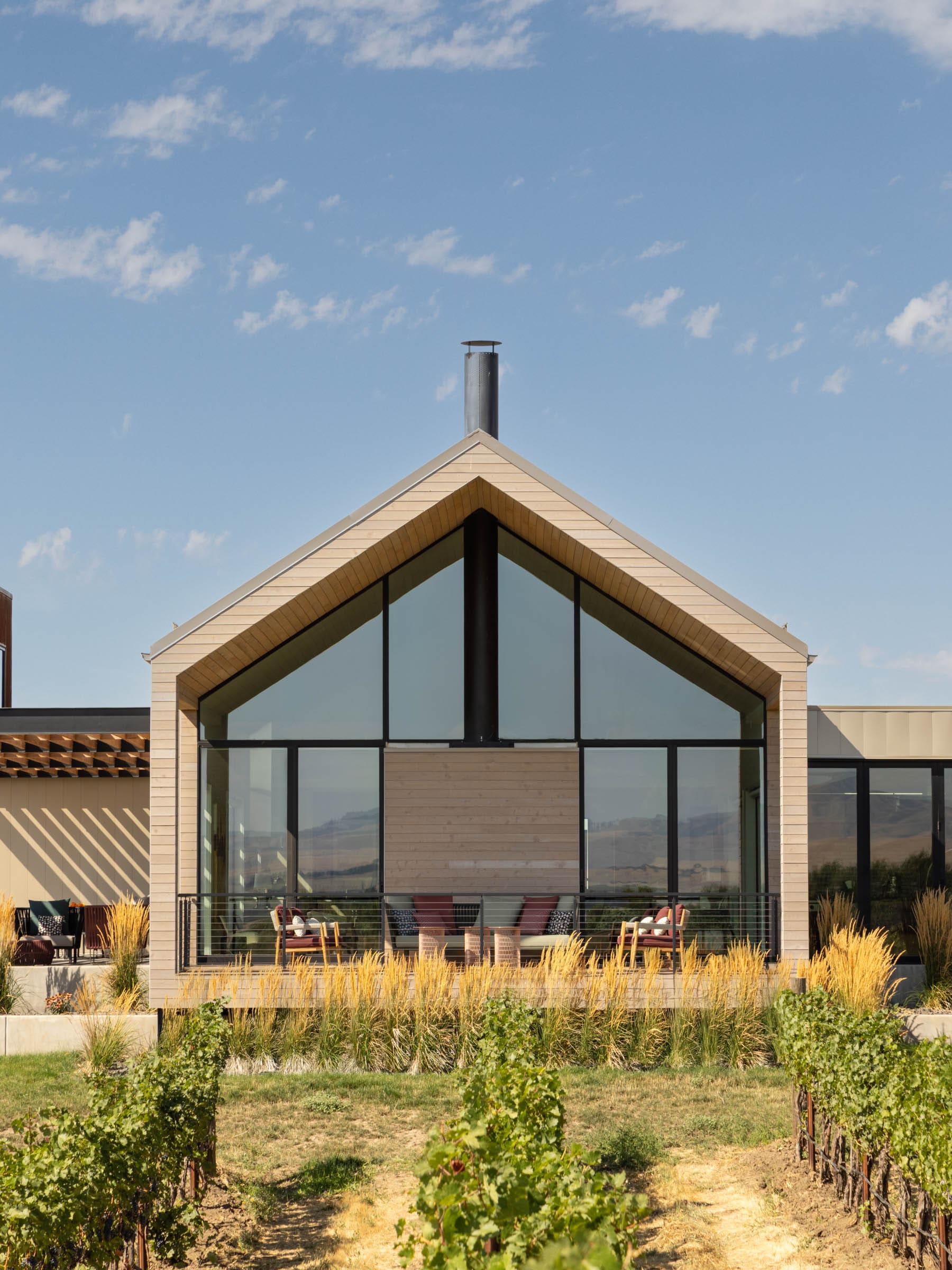
Set within the Walla Walla Valley, one of the State of Washington’s most prolific wine regions, this contemporary residence for a repeat client (passionate winemakers) is rooted in and responds to the surrounding agrarian landscape. Progressive yet contextual in design for the area, the clean, refined lines of the overall structure ensures that it settles unobtrusively onto the gently sloping 10–acre site.
Primary materials were purposefully specified. Gray metal emulates the abundant basalt rock indigenous to the area (and that contributes to the quality of grapes used for winemaking). Cedar recalls the color of wood stakes supporting grapevines in the surrounding vineyard.
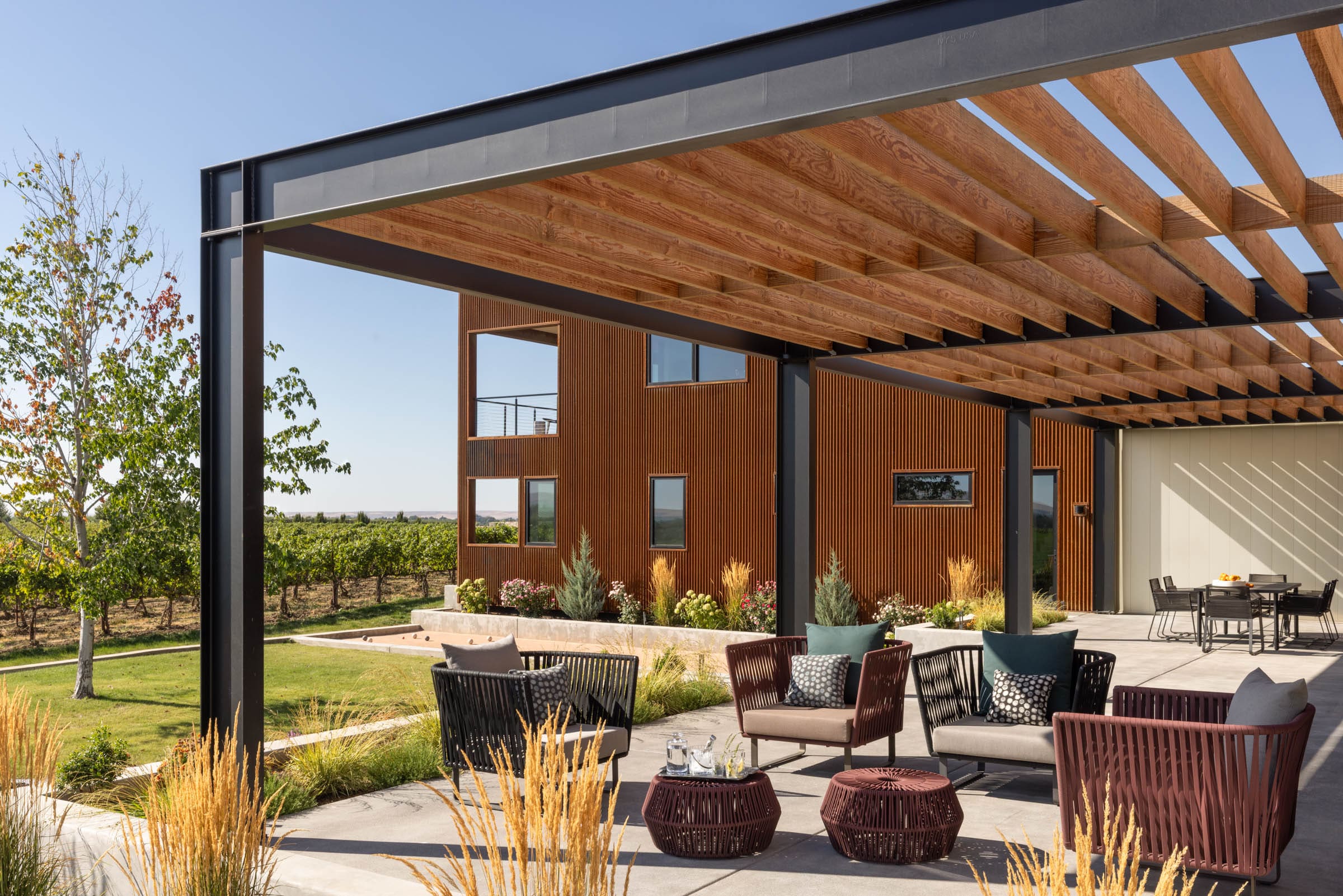
Sensitive to the intended lifestyle of the client-family and with the intent of capturing views of the Blue Mountains to the east, multiple structures were integrated into the surrounding landscape. Anchored by a new two-level volume reminiscent of historic buildings inherent to the area, three extruded gable structures appear to emerge from the vineyard. The gable structures were pushed and pulled around the site to meet programmatic needs, and smaller block volumes were purposely designed to link the four structures together.
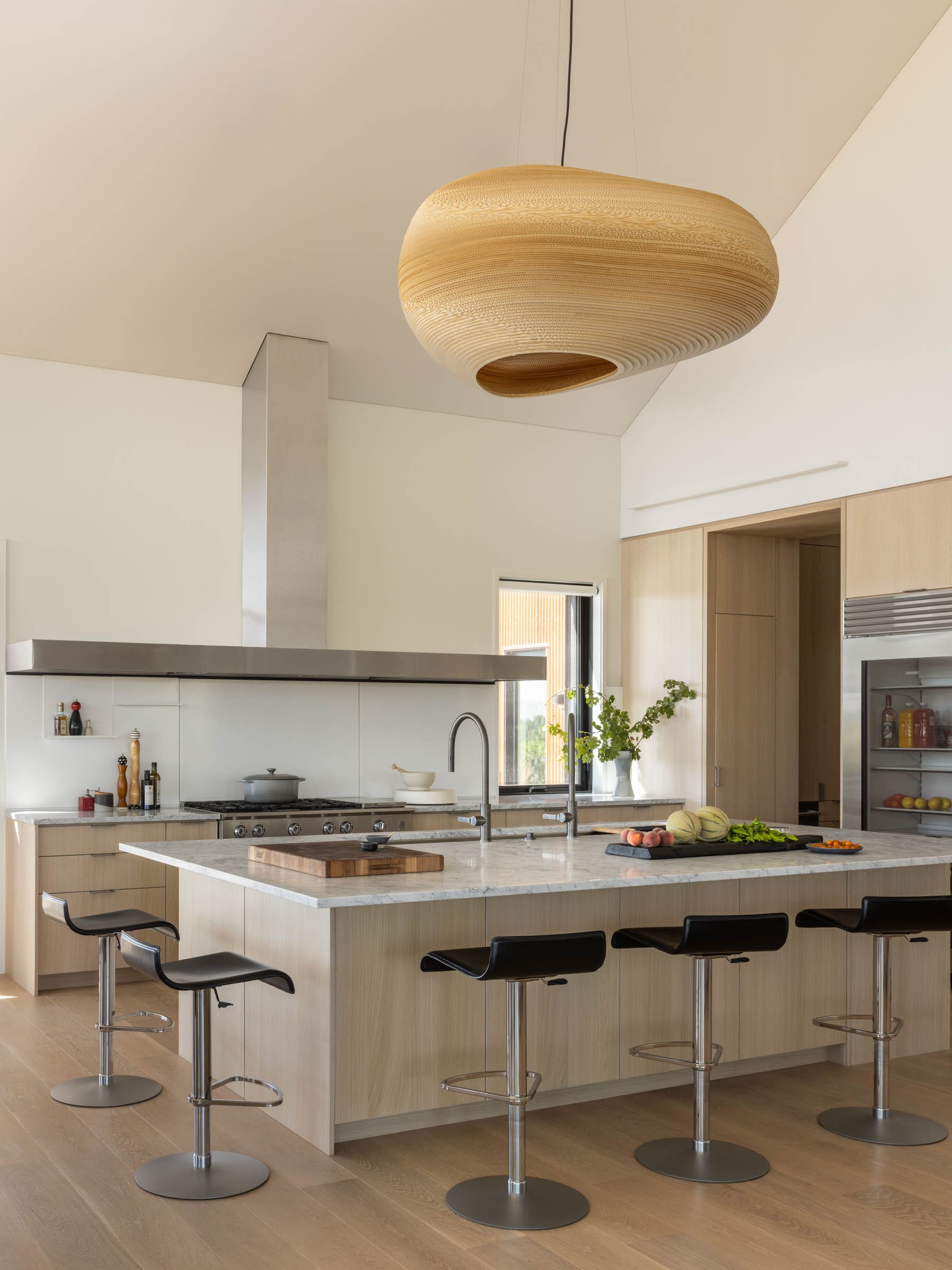
Two of the gable structures, encompassing kitchen, dining, and living areas in one and the primary bed and spa-like bathroom suite in the other, provide single-level living. The third functions as a garage. The two-level metal volume accommodates a pair of guest suites on the ground level with a gym and office on the upper level. Wine storage and mechanical areas are below grade.
Outdoor rooms, green space, a sculpture garden and a pool area are thoughtfully designed between the structures, taking into consideration sun, wind and views. Access is through the surrounding vineyard via a pebbled drive, on axis with the main gable volume, and a central courtyard designed for outdoor gatherings and food trucks.
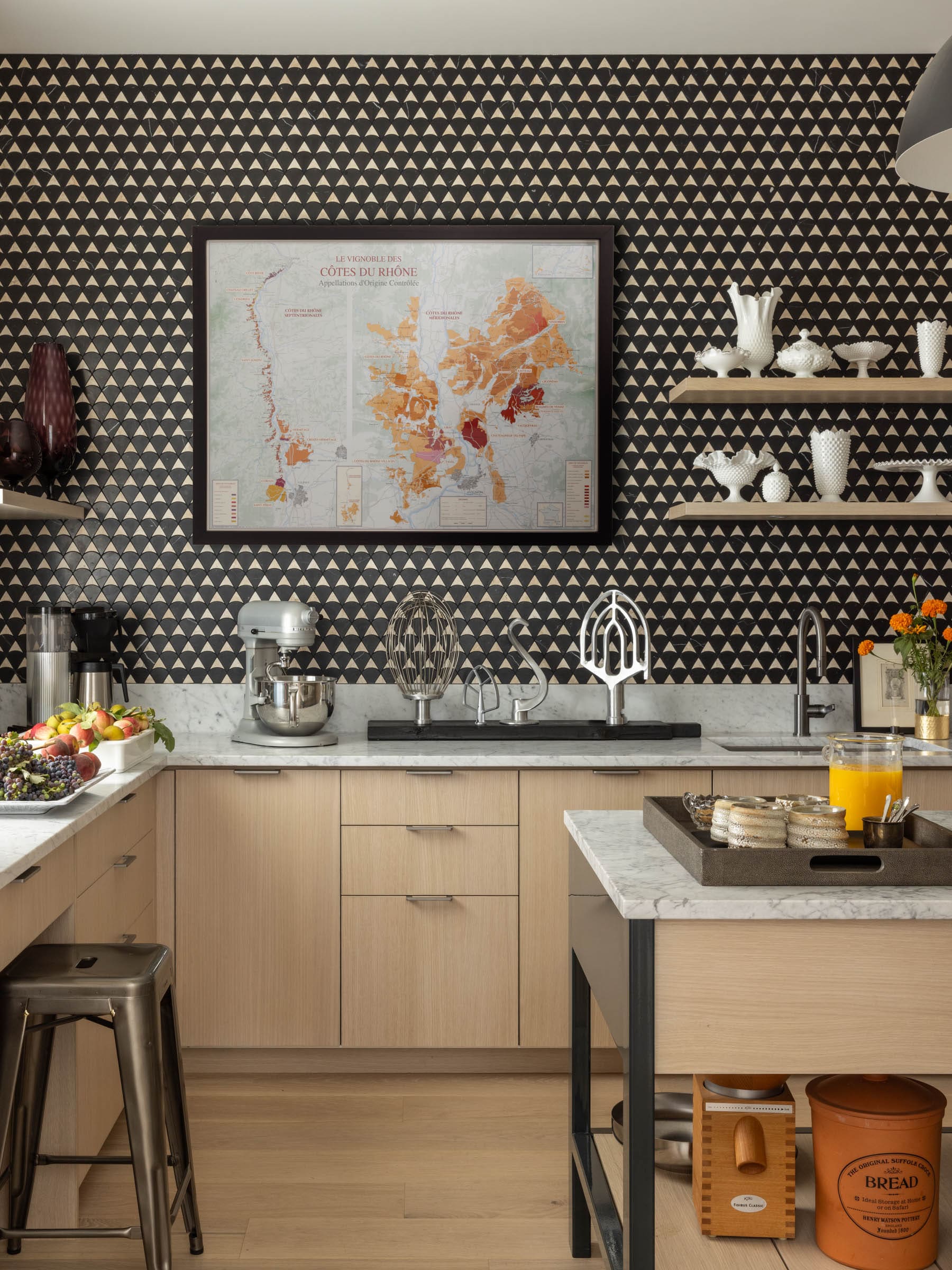
Every material, furniture selection, and light fixture was chosen as an extension of the architectural idea.
Project Size
7,615 SF (10.0 AC)
Publications
R+B Services
-
Architecture
-
Interior Design
-
Furnishings / Procurement
Project Team
-
Landscape Architect: Arterra
-
Structural Engineer: Coffman
-
MEP Engineer: Helix
-
Contractor: Ketelsen
-
Photographer: Lisa Romerein
Barn Studio
While renovating a building may seem to offer less opportunity than a blank slate, a considerable creative challenge is presented when the preexisting component is picturesque: a relic or ruin, ideally dating from a bygone, colorful age. Then, all manner of possibilities come into play, the most interesting being how the old might become part of something new: the structural and emotional interplay between the vivid past and the practical present.
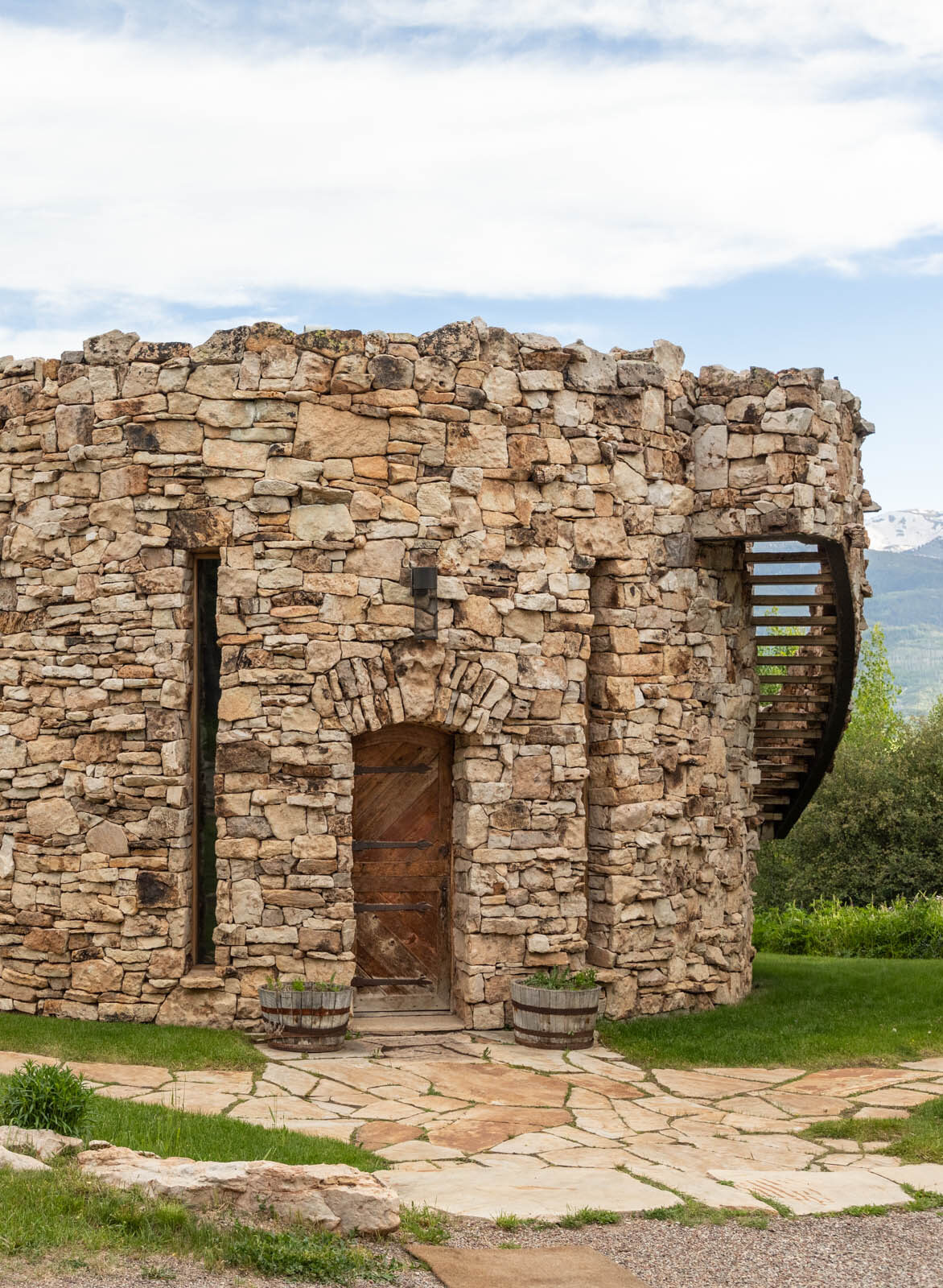
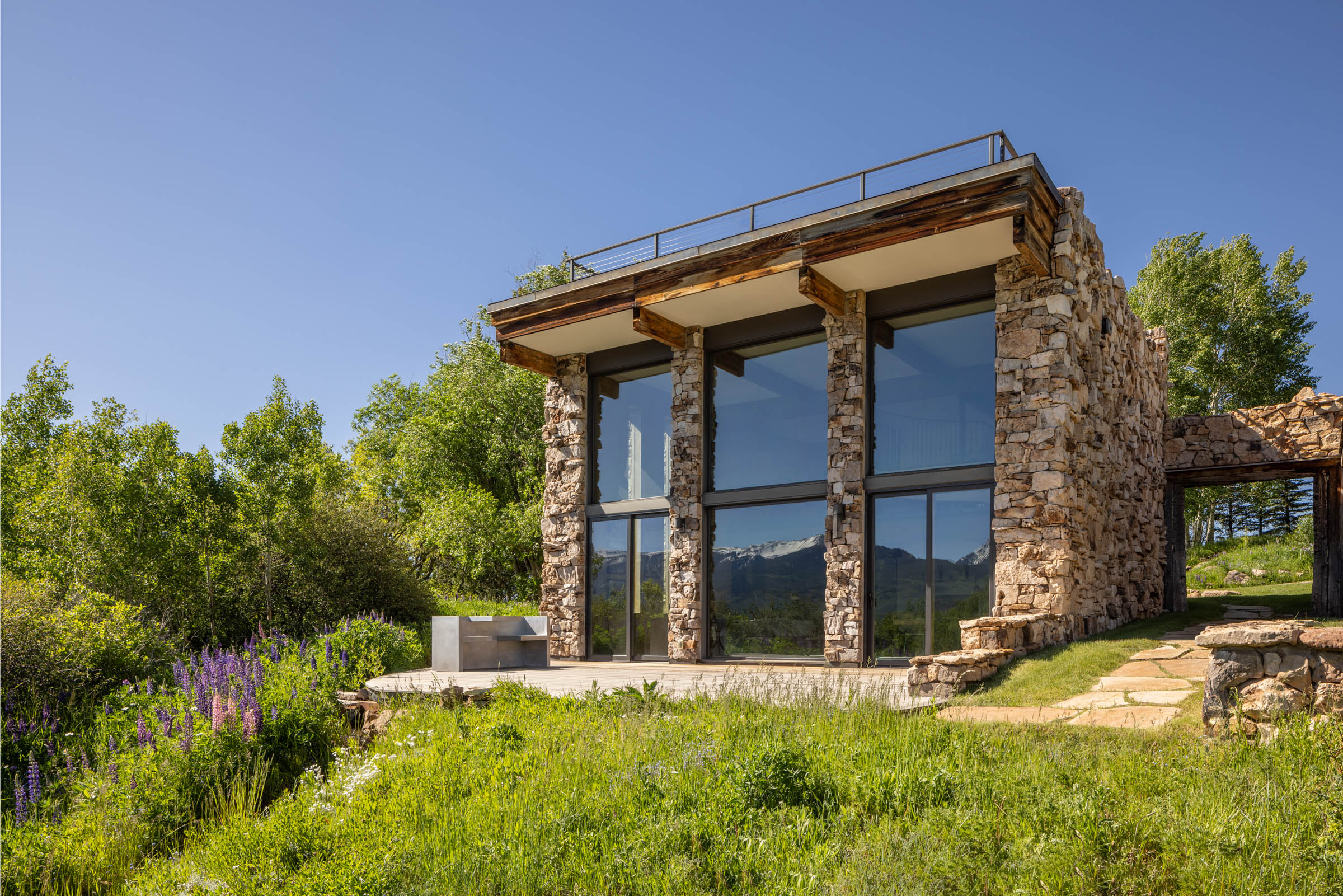
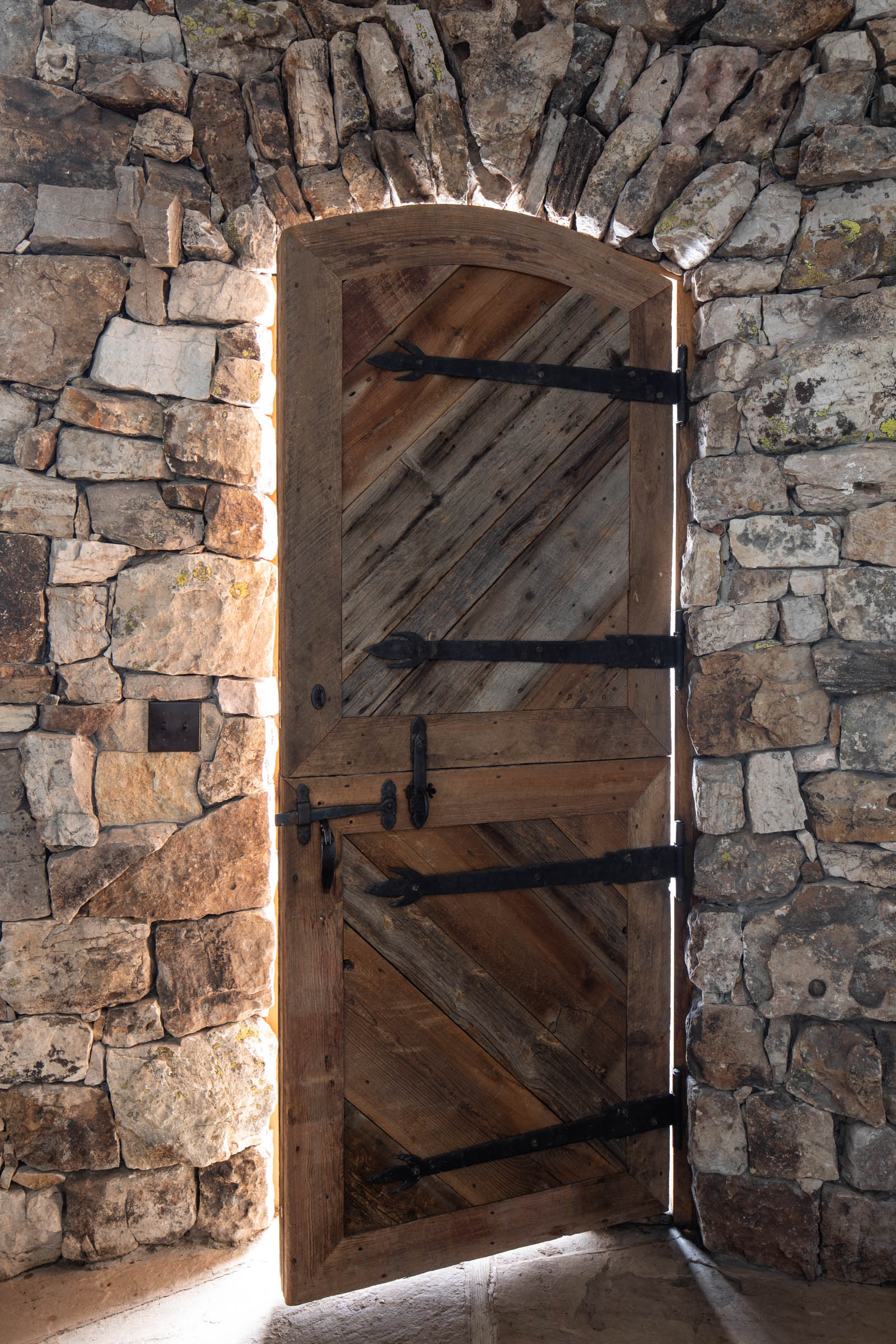
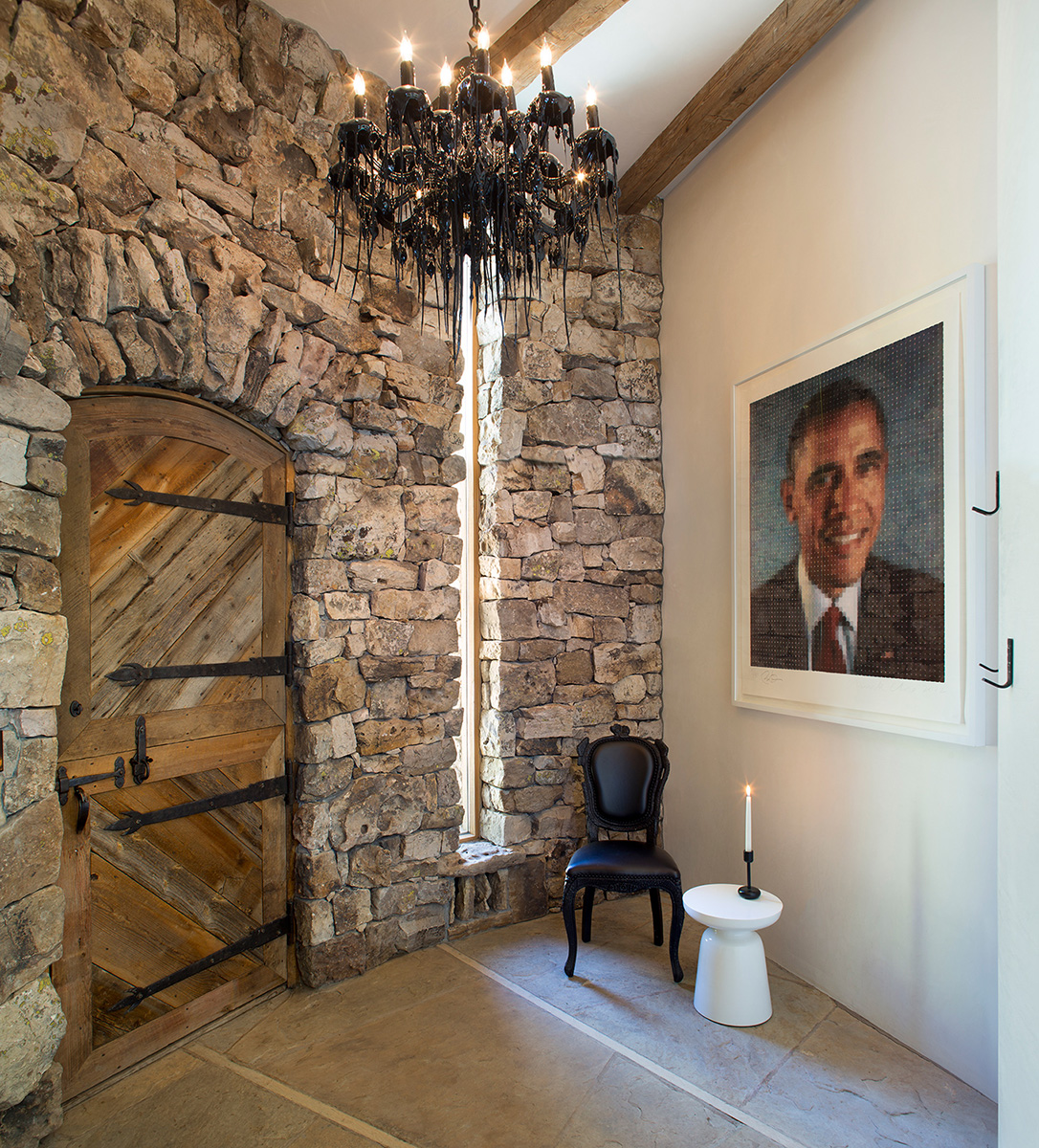
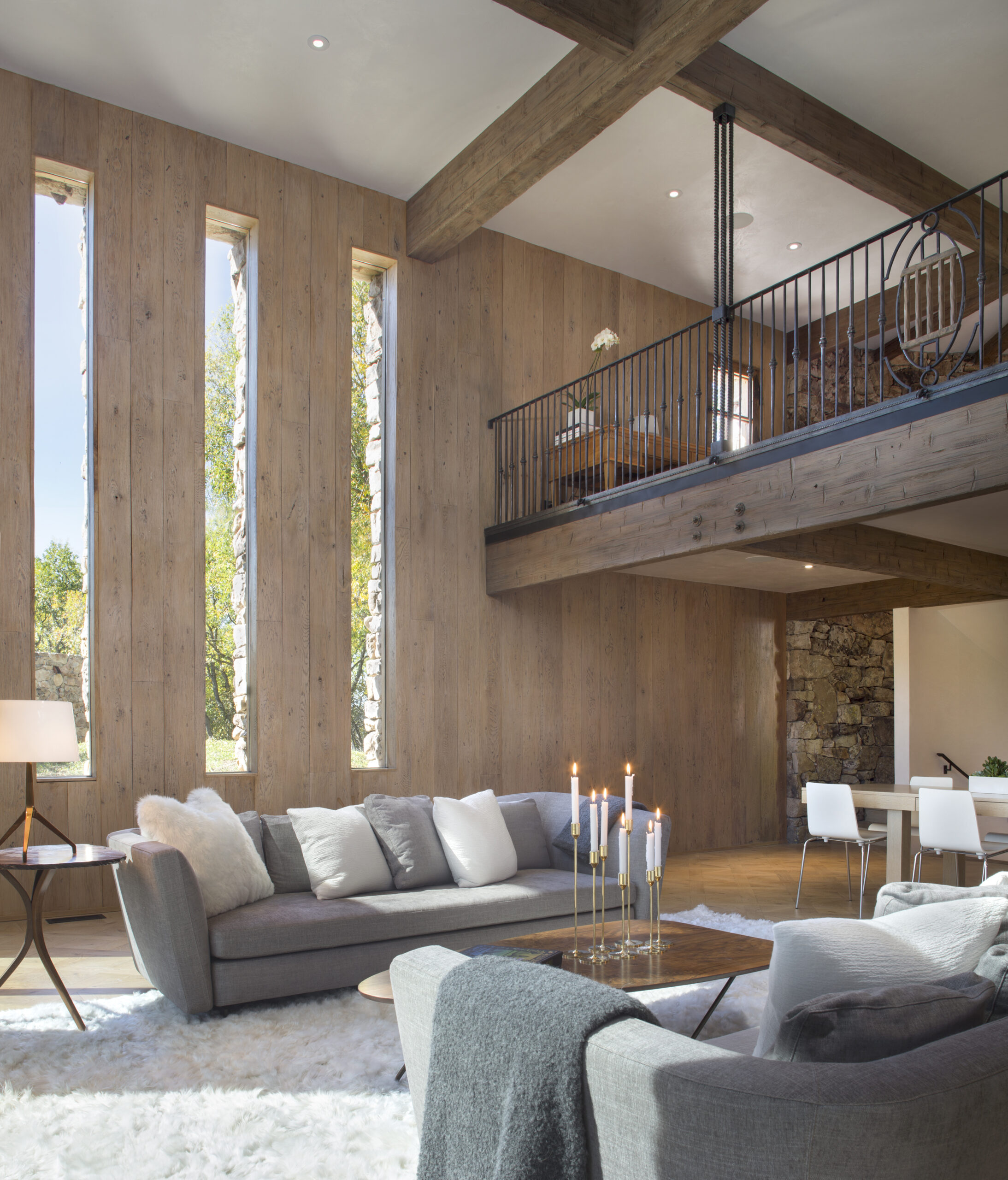
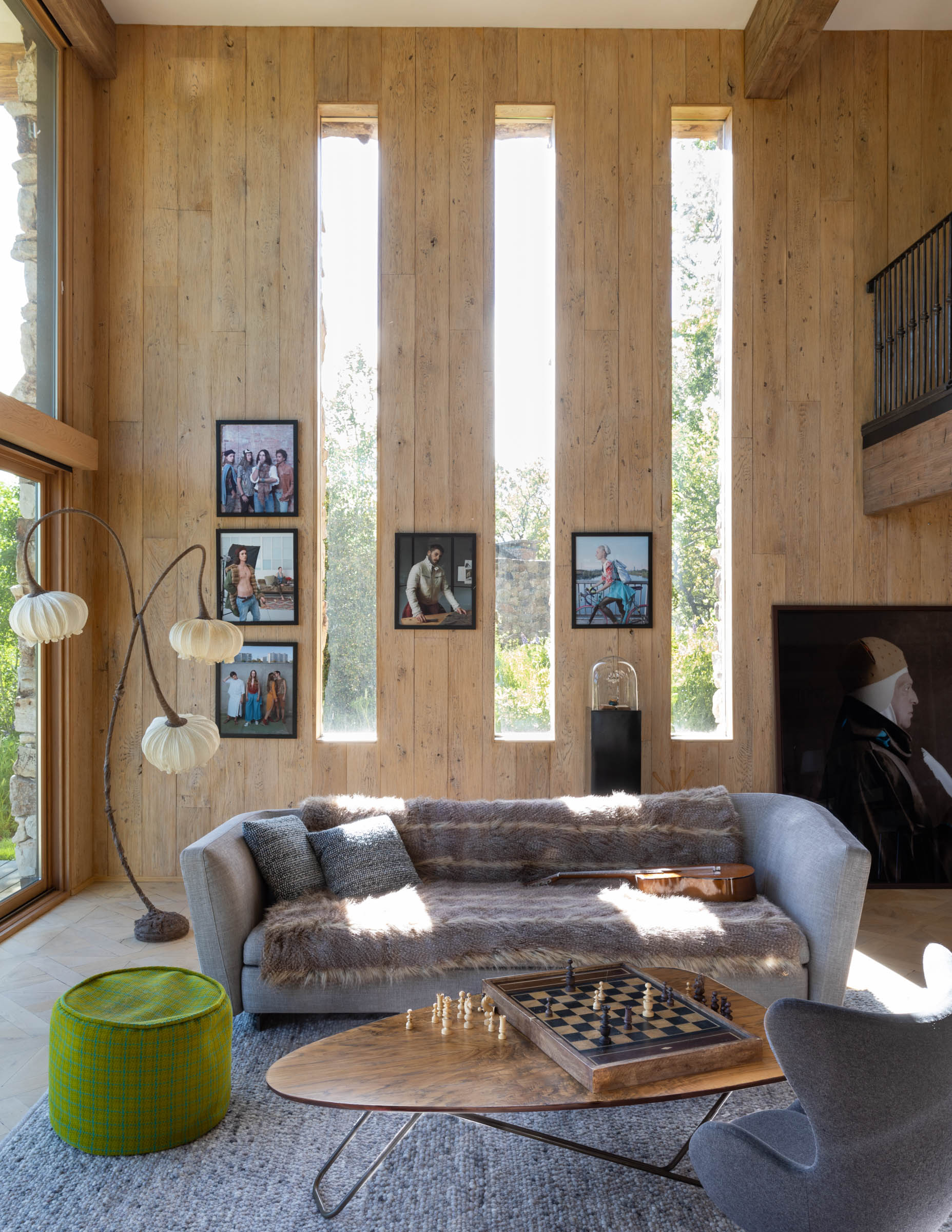
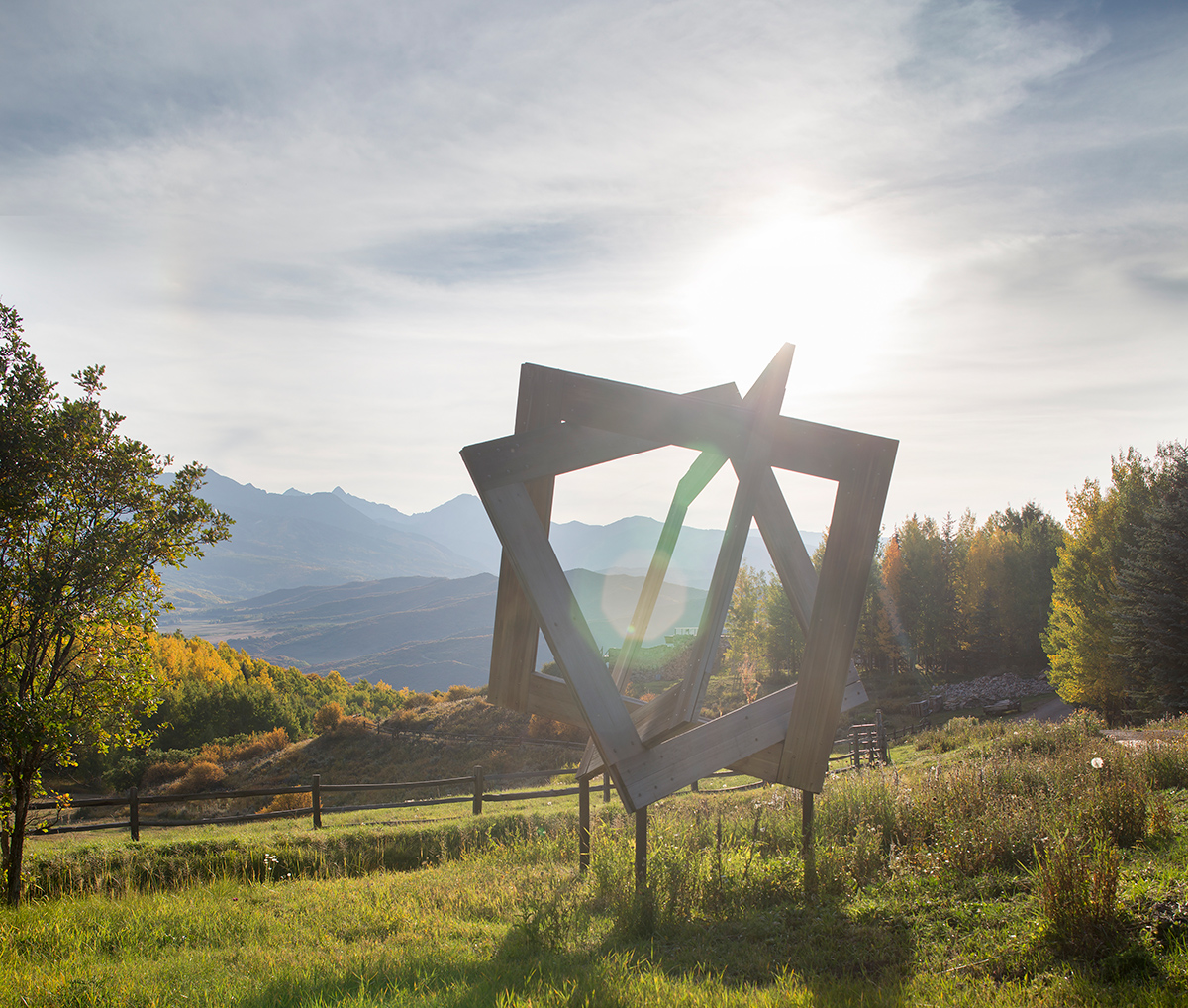
Our design for Barn Studio, perched on a ridge with picturesque Aspen views, rings an interesting change on the idea of the new-old house. The original building appeared to be a remnant of a mostly collapsed, rubble-stone agrarian structure, reconceived as a residence via the insertion of contemporary living amenities. In fact, it was entirely modern, designed by its owner to resemble a clever meeting of modern life and the golden days of Colorado’s yesteryear.
R+B’s clients, a couple with three young children, purchased this folly and its surrounding acreage, seeing it as the cornerstone of a compound that would ultimately include a range of building types. The idea was to make it livable for five people while the other structures took shape, and to create a paradigm for building on the site, one that respected the area’s rural-agrarian history while extending that legacy into the future.
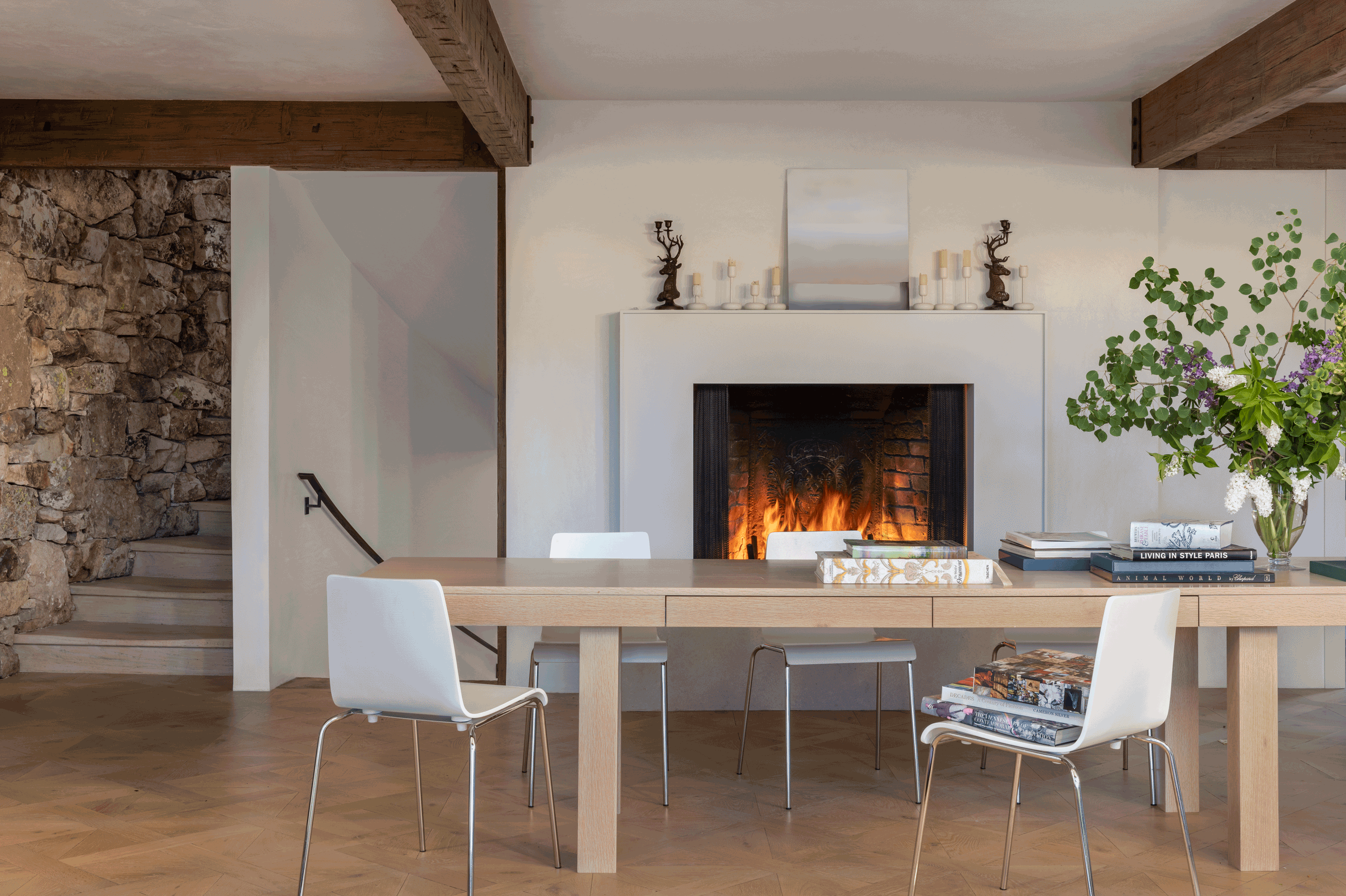
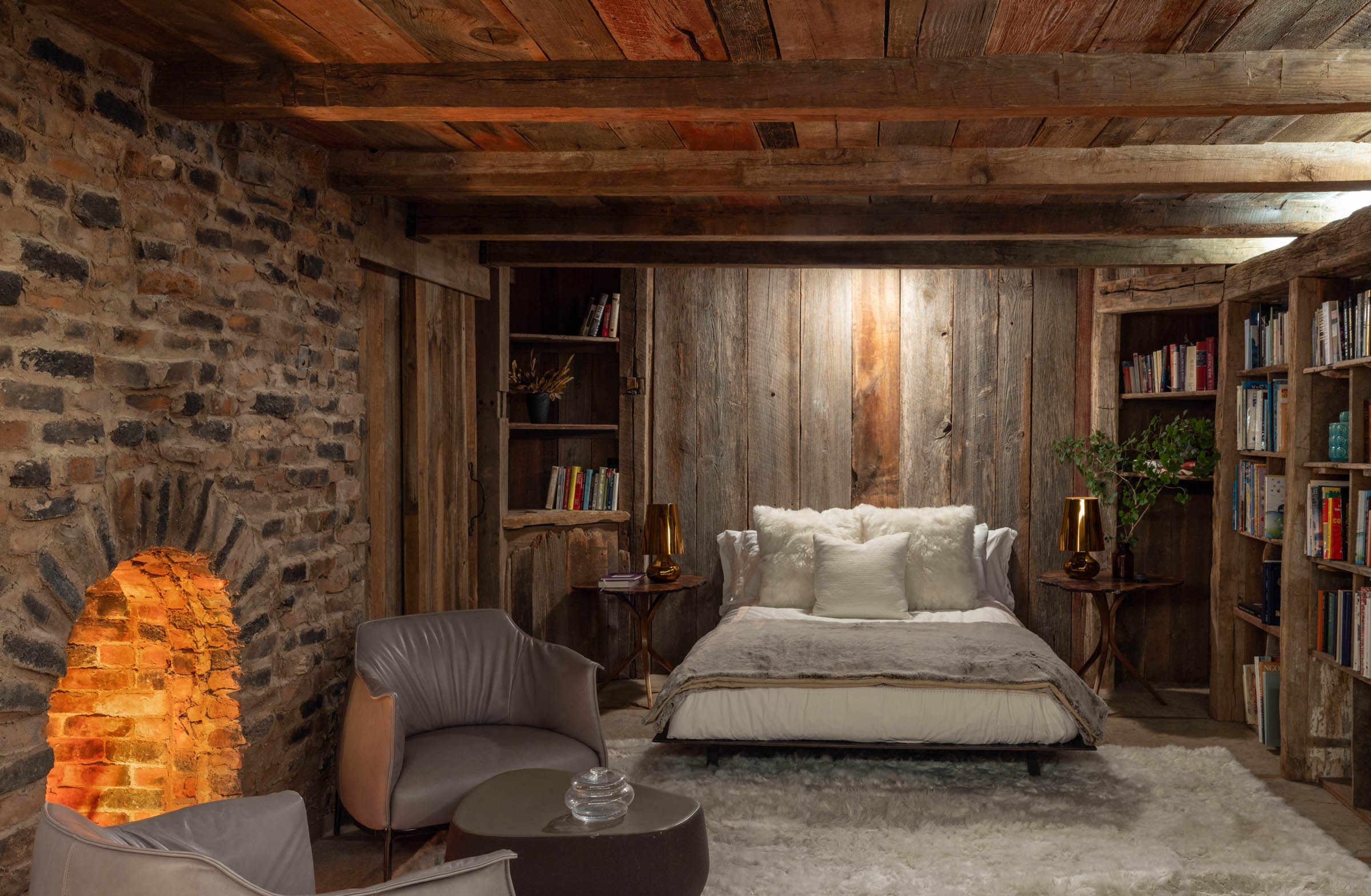
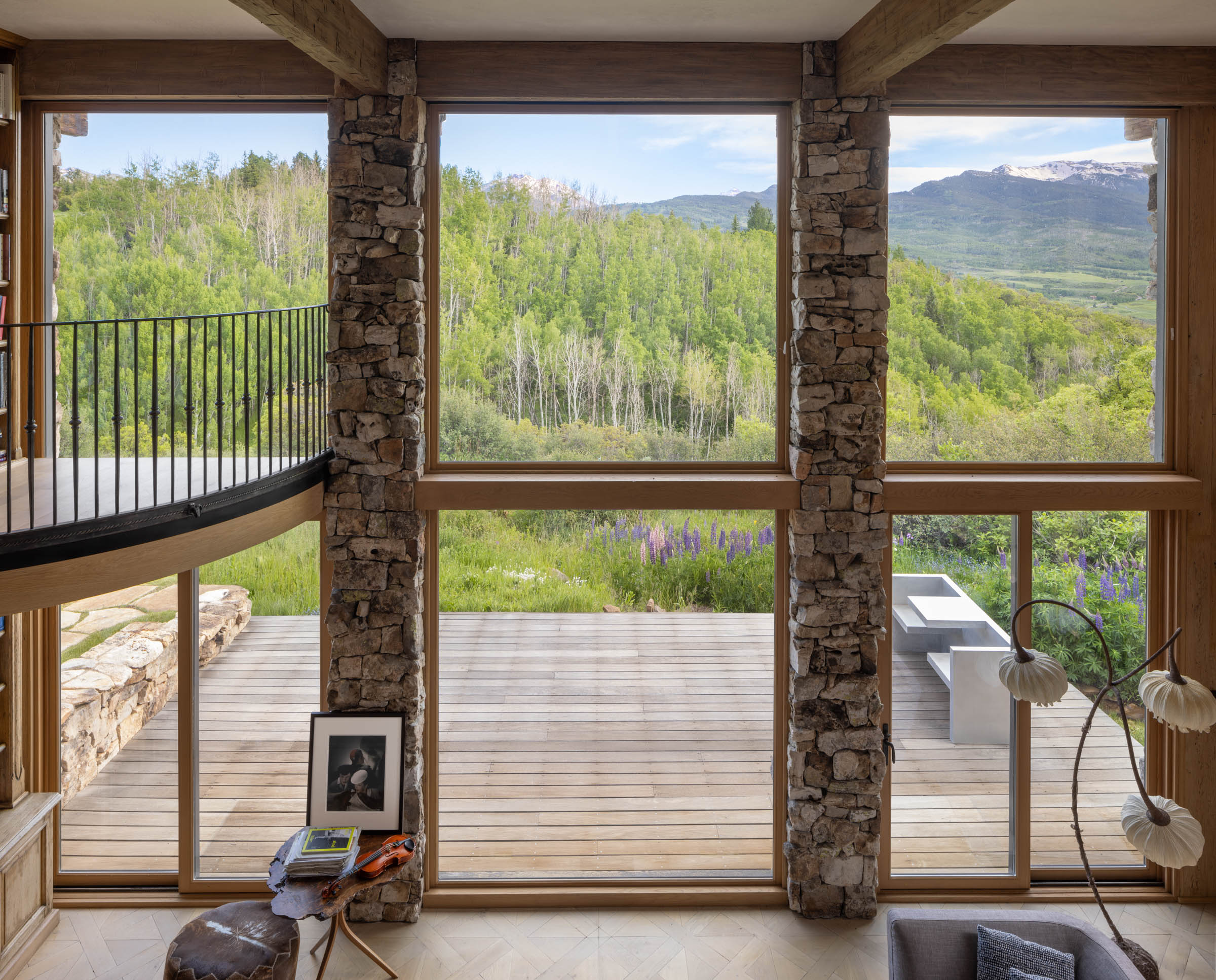
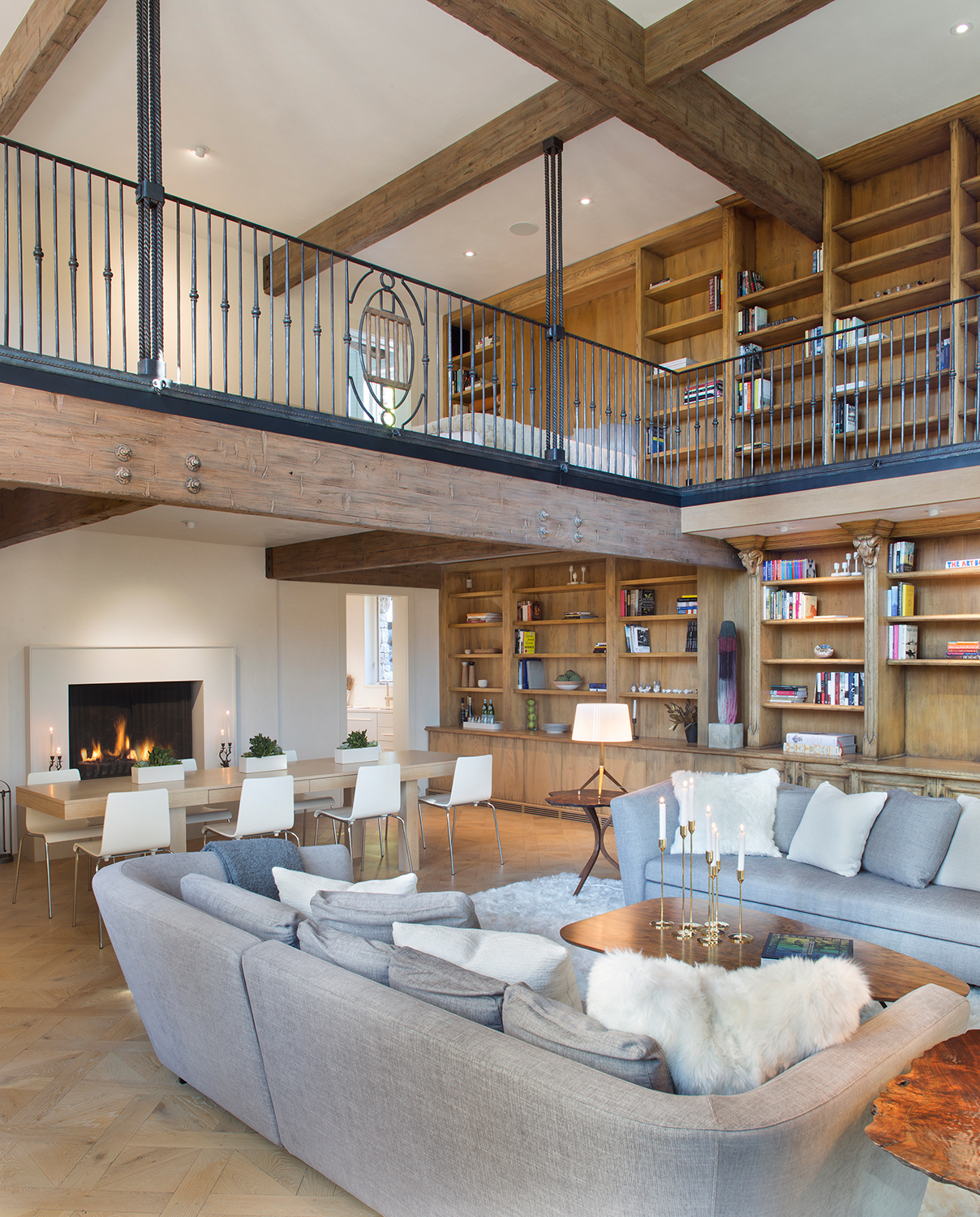
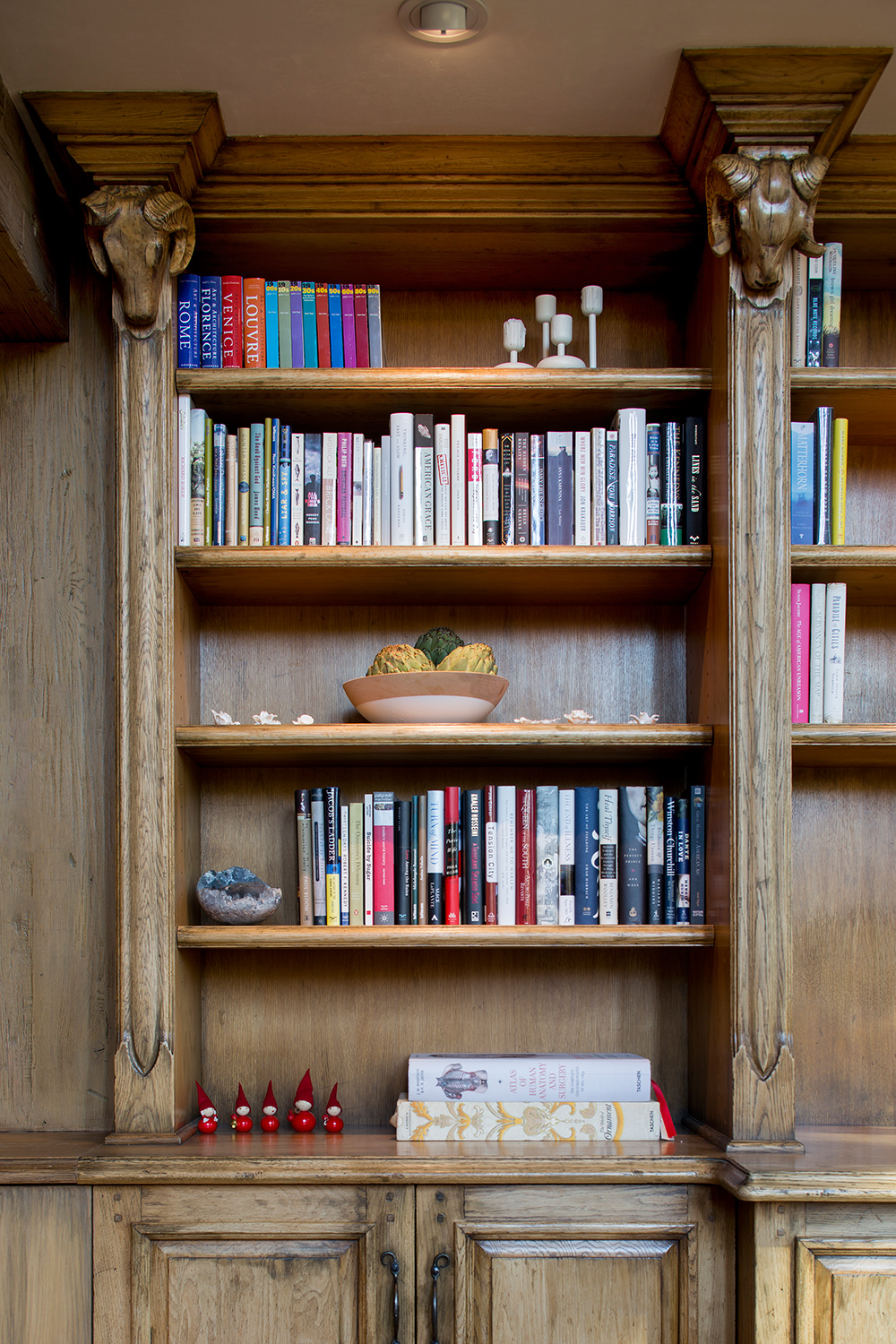
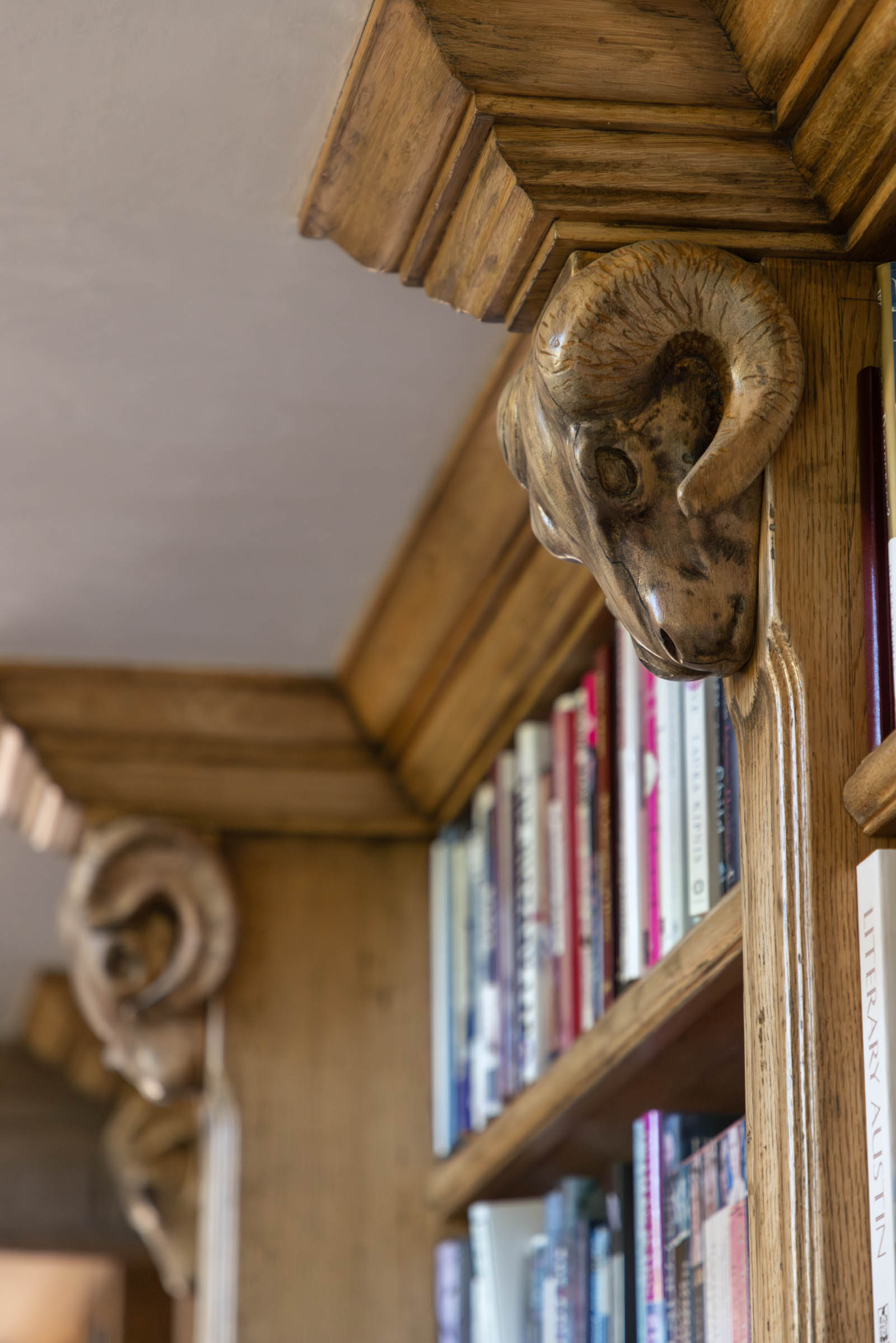
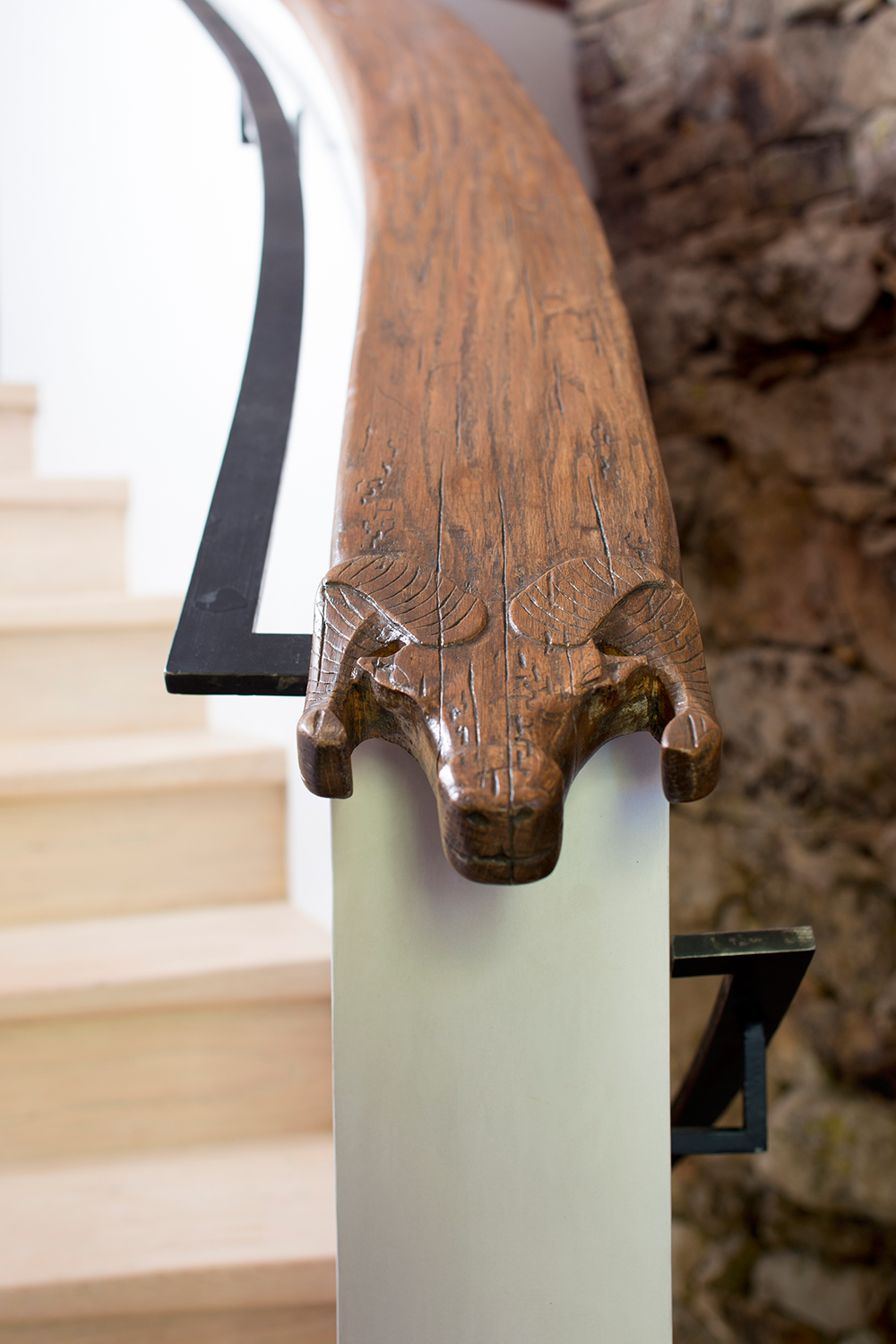
Barn Studio unfolds on three levels: a subterranean space incorporating media and game rooms; a double-height main floor, which we lightened and contemporized; and an L-shaped mezzanine that doubles as a sleeping loft and library. Although there are abundant reminders of the place as it was, notably a distinctive carved ram’s head motif, the design’s reimagining is at once more useful and more cheerful: a welcoming, offbeat hideaway – and elegant, fully-equipped crash pad for a family of five – that belongs to the past without being mired in it.
Of the two R+B-designed residences that followed Barn Studio on the property, says Broughton, ‘they’re informed by what we did here first. It’s all about stewardship – uniting the past with today’s processes while respecting and appreciating the people who were here before.’
Every material and furniture selection was chosen as an extension of the architectural idea.
Project Size
3,197 SF (3.4 AC)
Project Awards
-
AIA Colorado – Editor’s Choice
-
Colorado Homes & Lifestyles Magazine – Home of the Year
-
LUXE Interiors + Design – RED Awards
-
IIDA – BESTawards
-
Colorado Homes & Lifestyle – CARE
-
ASID – Crystal Awards
-
International Design Awards
-
AIA Colorado – YAAG Awards
Publications
R+B Services
-
Architecture
-
Interior Design
-
Furnishings / Procurement
Project Team
-
Landscape Architect: Bluegreen
-
Lighting Designer: 186 Lighting Design Group, Inc.
-
Structural Engineer: KL&A
-
MEP Engineer: REG
-
Civil Engineer: SGM
-
Photographer: Lisa Romerein
-
Photographer: Brent Moss
-
Contractor: Schlumberger Sherer
Thunderbowl
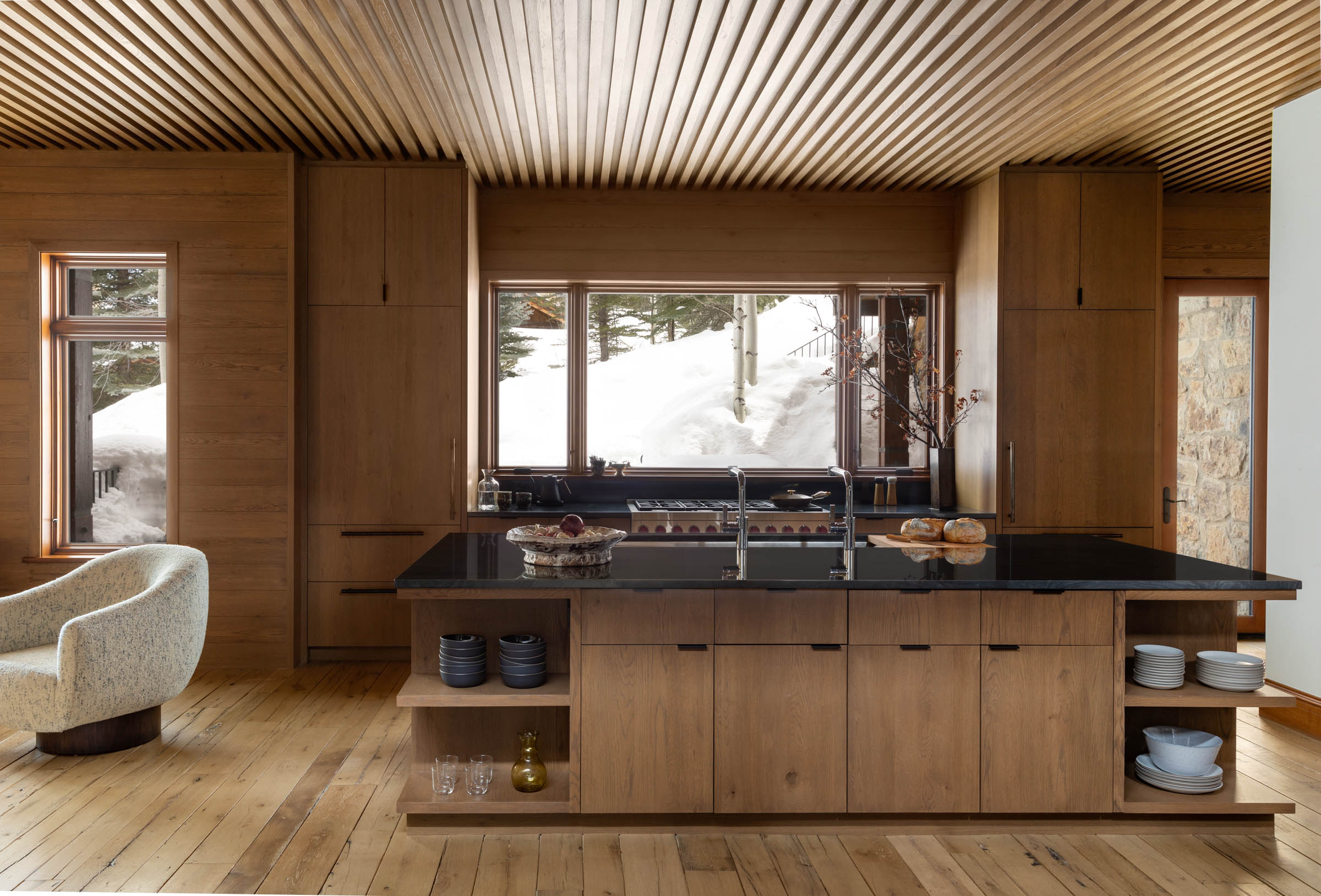
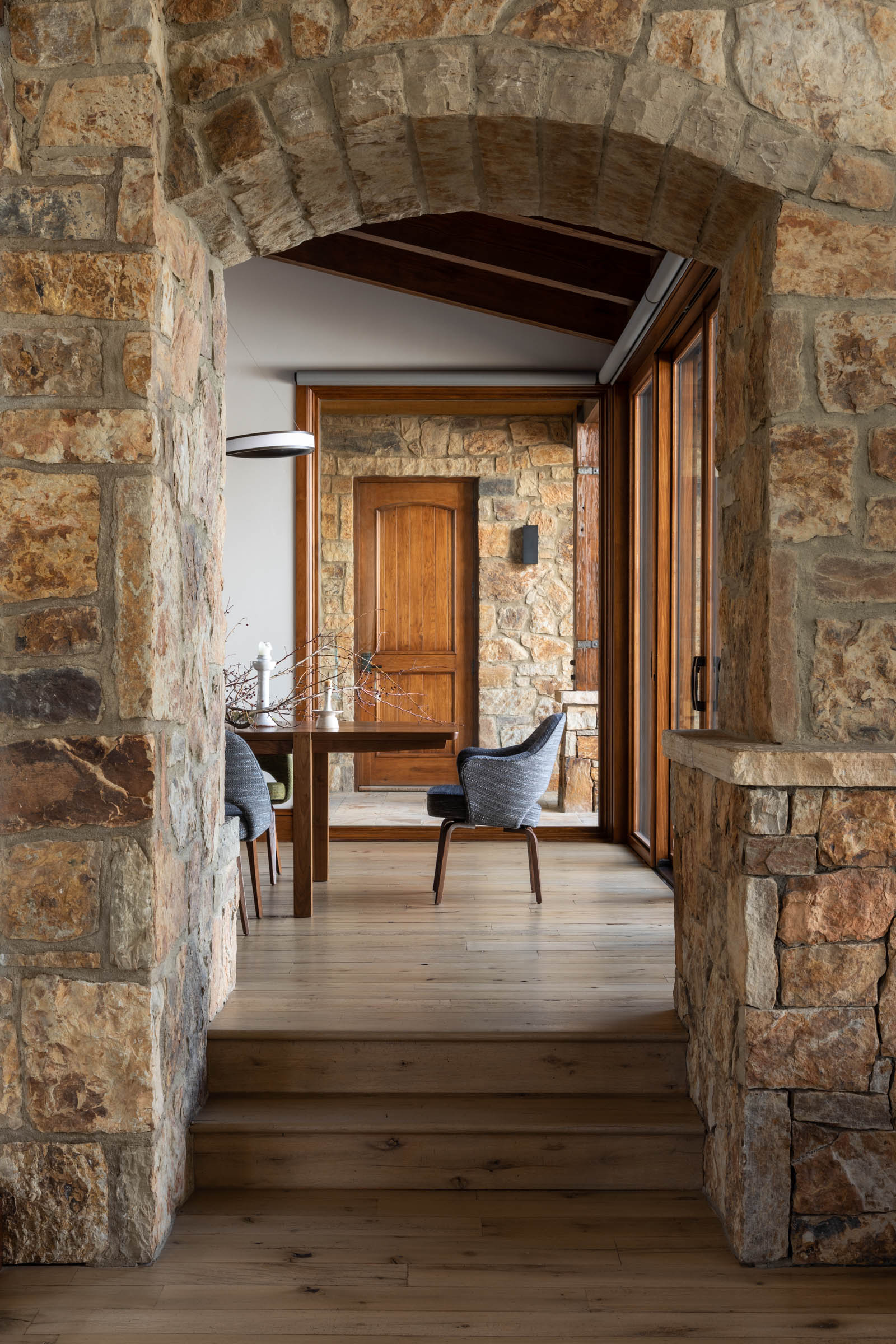
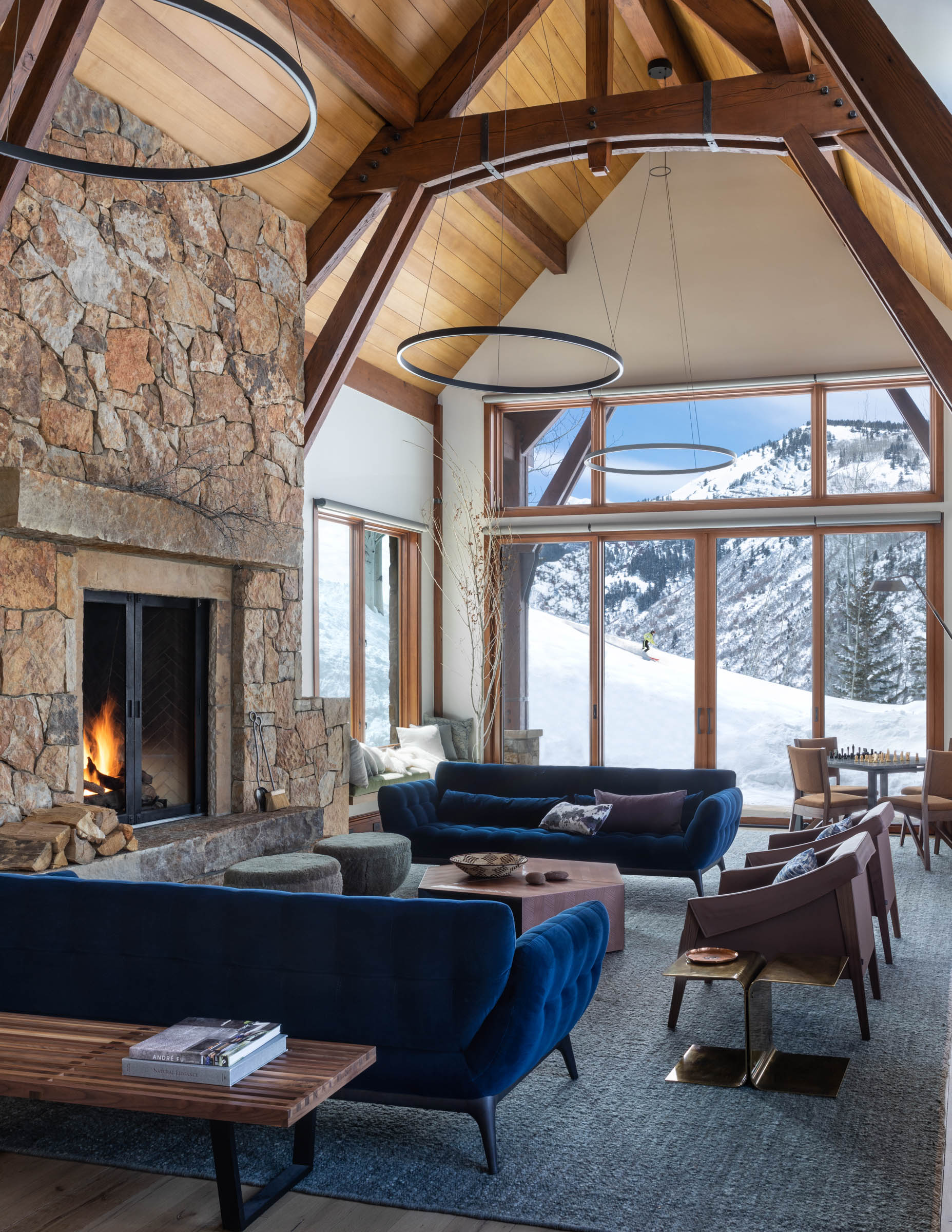
Over and again, a word that arises in regard to R+B’s work is sustainability, most of all in our commitment to renovating rather than demolishing buildings, one of the greenest of architectural pursuits. Thus it was that at this existing alpine mountain house – which takes its name from the Thunderbowl ski run, its next-door neighbor on Aspen Highlands mountain – we thought, not of wiping the slate clean, but rather about what was essential.
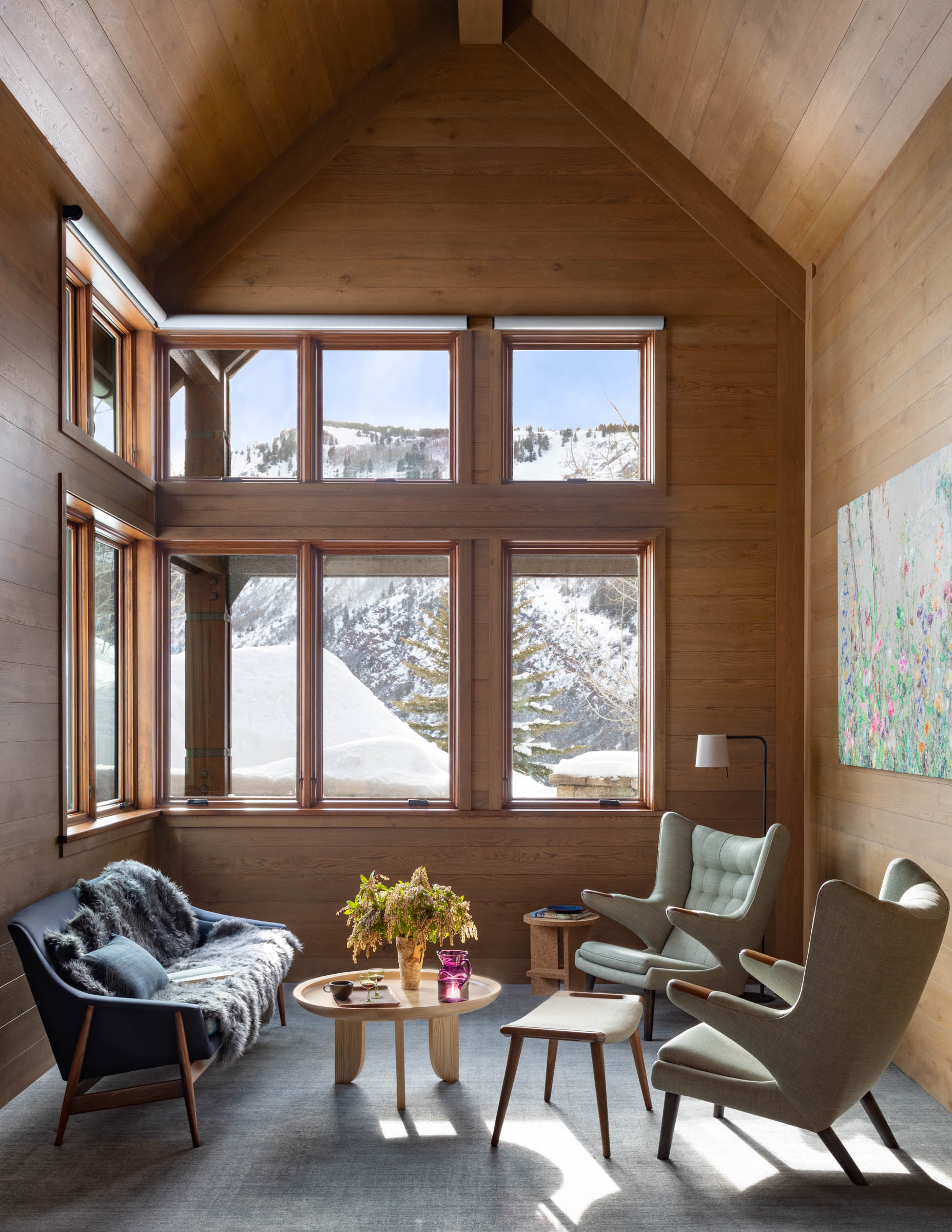
On the exterior, edits were made to unnecessary architectural details and overly prominent window mullions, and new, purposefully positioned glazing in the living and dining rooms, kitchen, and guest bedroom drew the experience of the house outward to the majesties of Aspen. Yet the primary challenge lay in the overbuilt interior, with rooms that didn’t communicate and structural elements that interfered with light, views, and flow. The residence lacked the permeability that is R+B’s specialty, and we were intrigued by the prospect of releasing its potential.
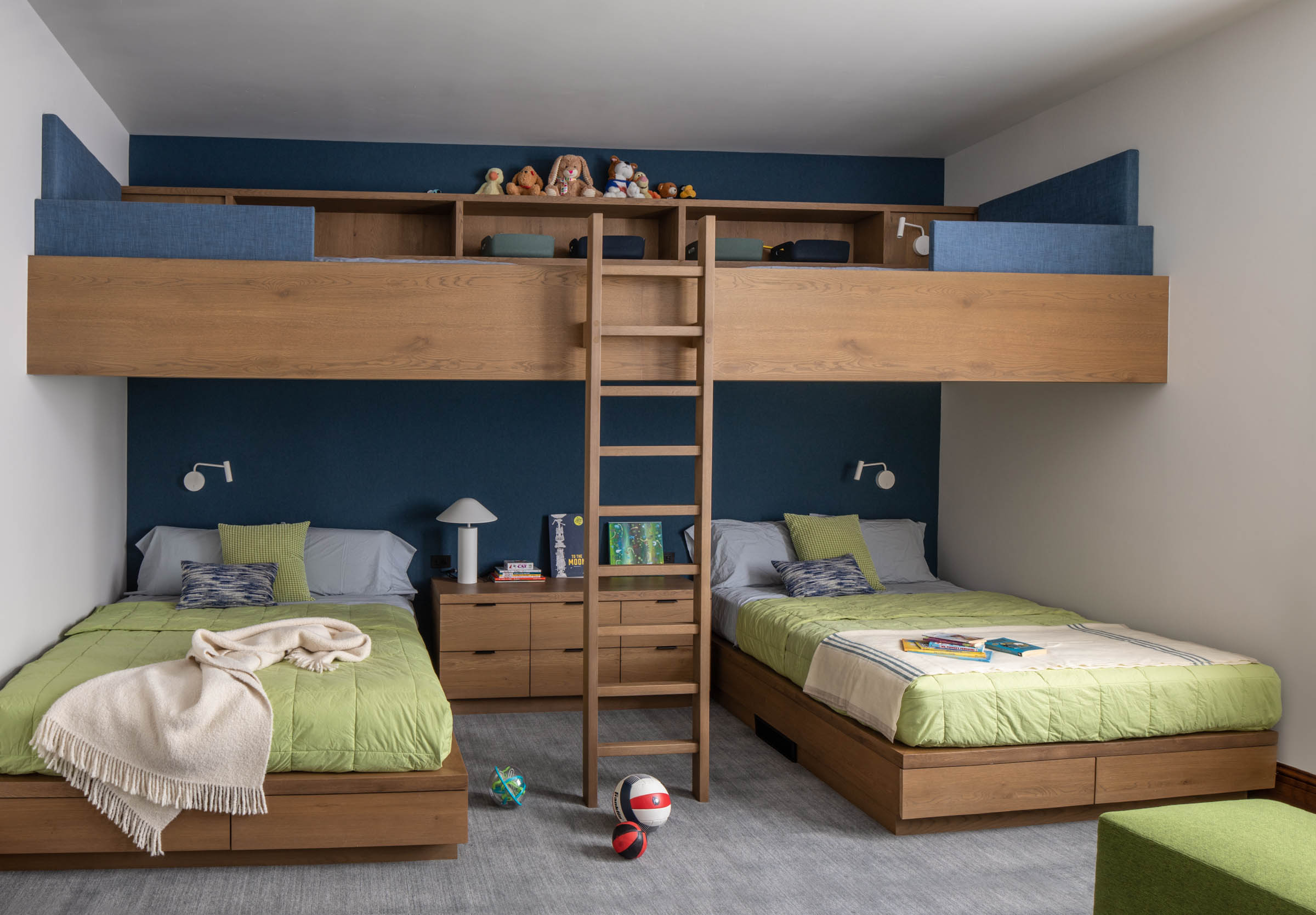
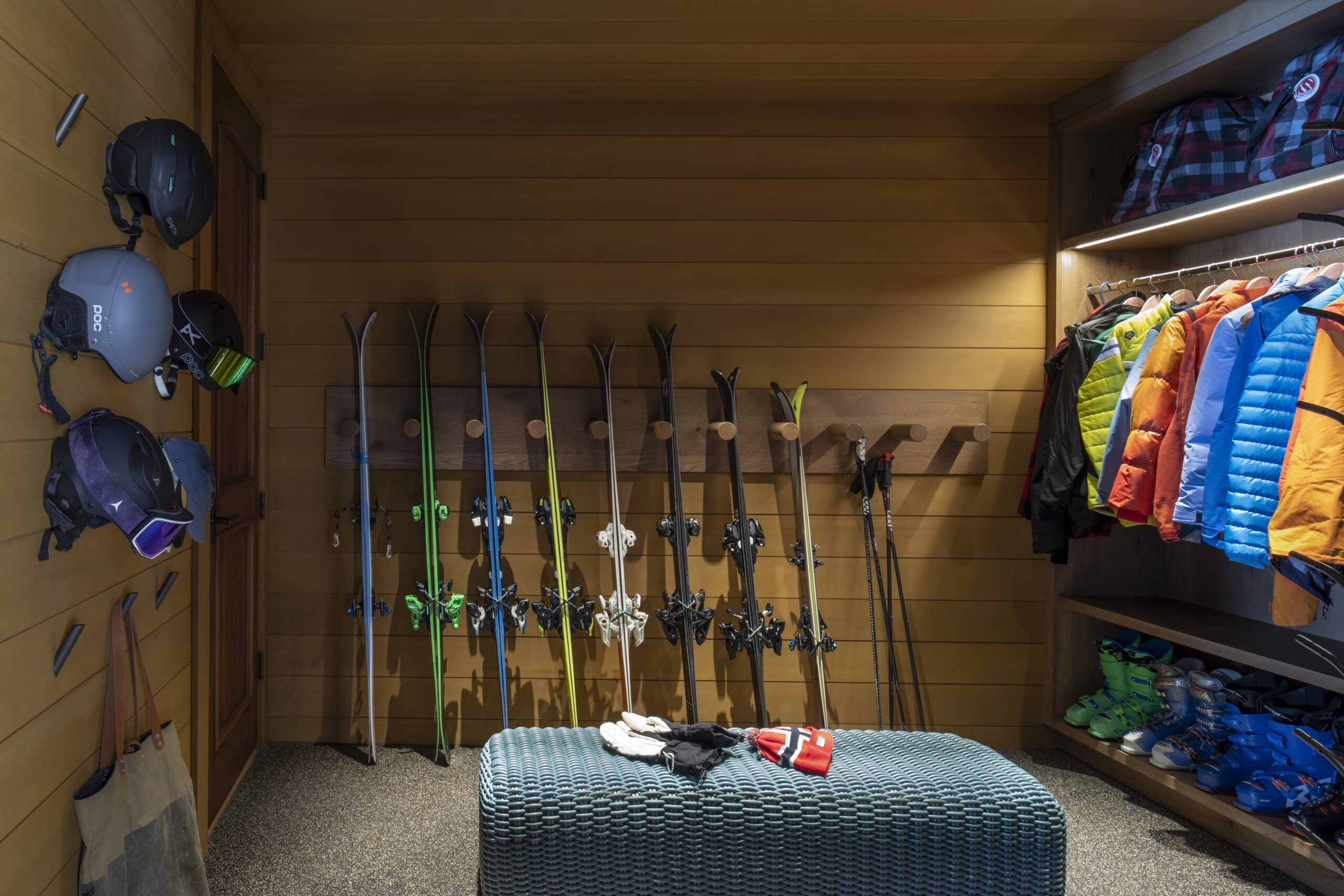
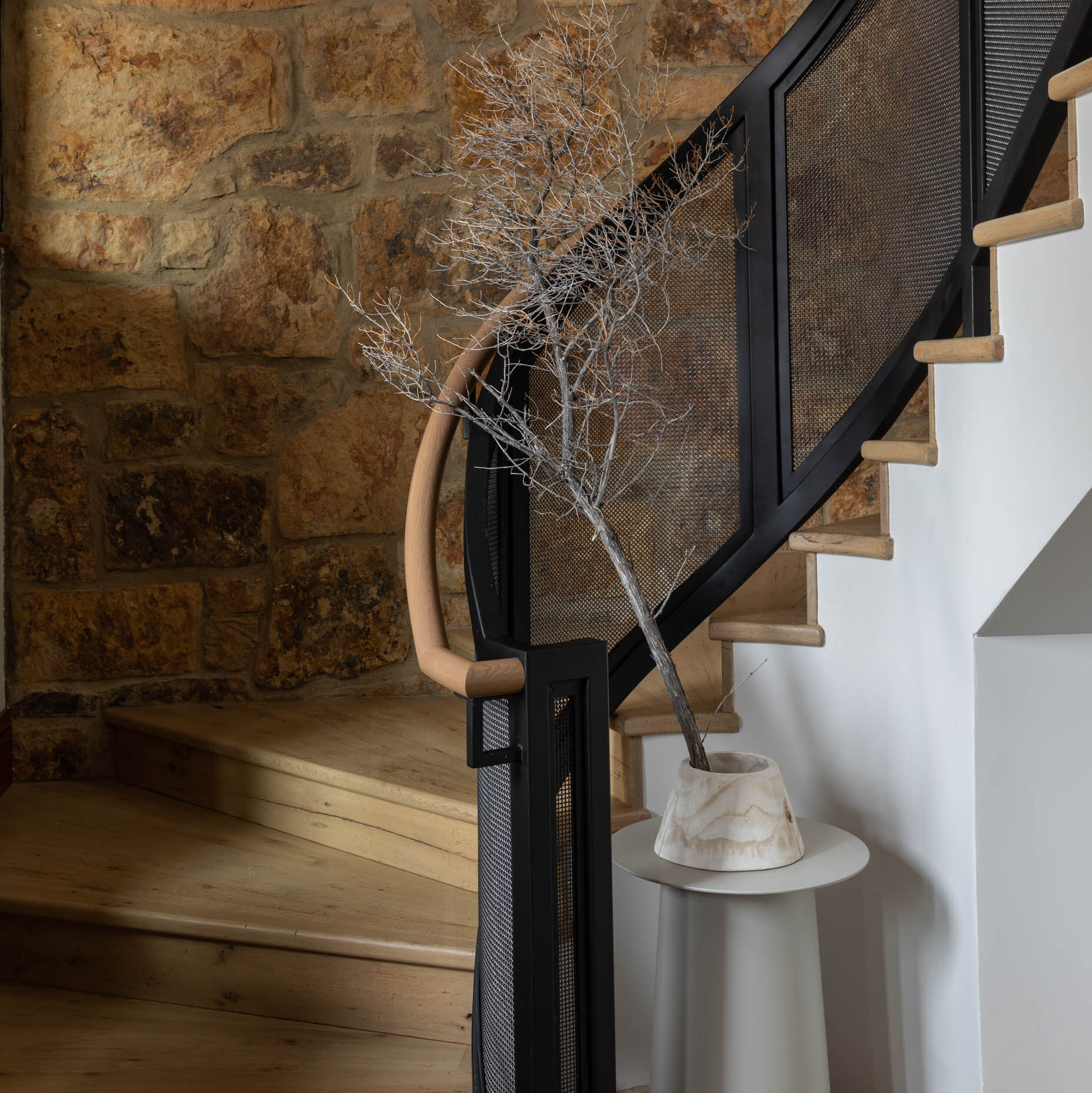
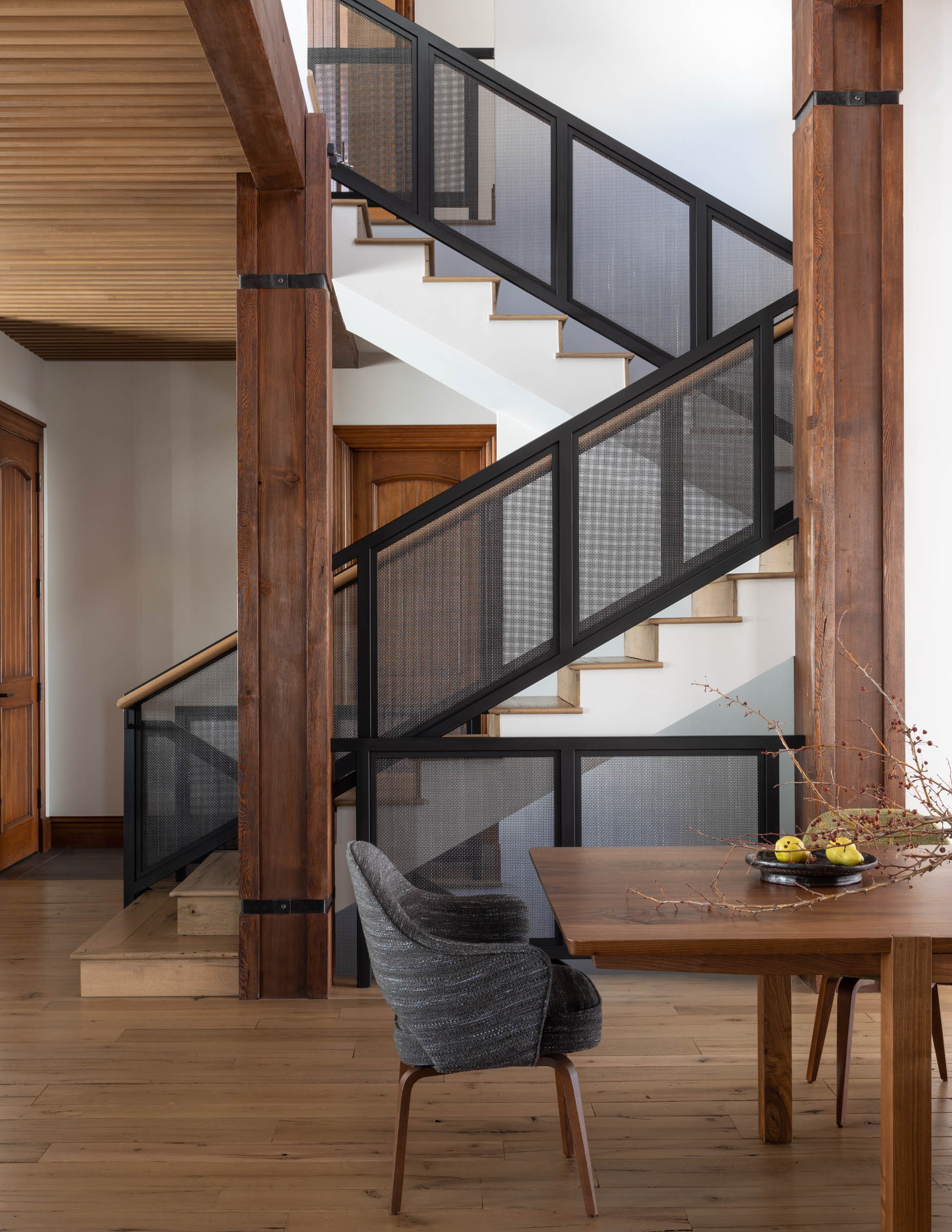
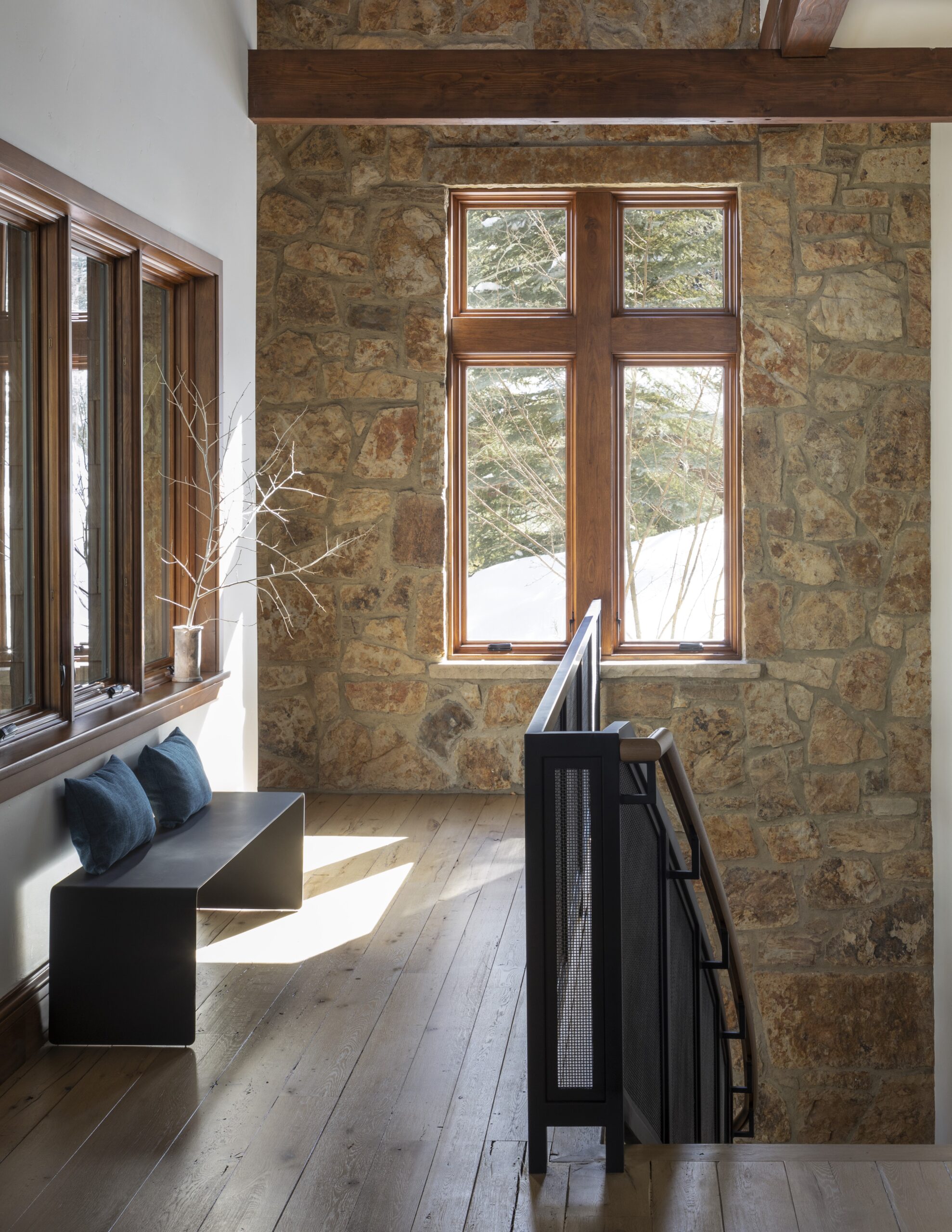
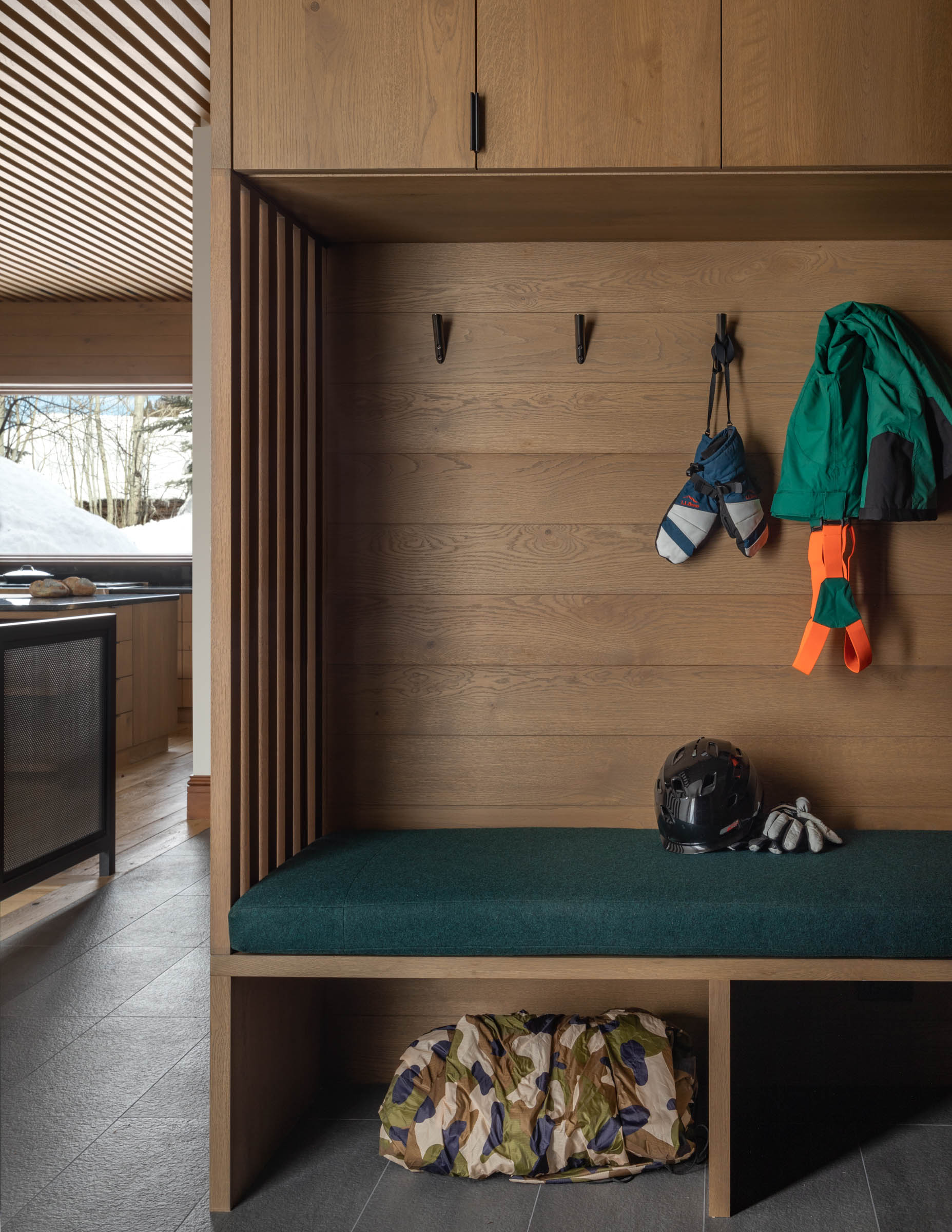
A lounge off the living room, a few steps below the kitchen, was entirely walled off; we elevated it to the kitchen level and merged the two spaces, giving the lounge better light and linking it to the house’s larger social experience. The stairway between the first and second floors had been entirely enclosed; the enclosure was replaced with steel mesh, producing a visual connection between the two stories. New interior windows on the second floor offer views from a hallway down to the dining room. A remotely located guest bedroom/sitting room suite creates privacy for elders (and an elevator connecting all three levels makes access easier for all ages). Mountainside terraces and nooks extend the living experience to the outdoors, and a ‘ski-in/ski-out’ gear room provides access to the slopes.
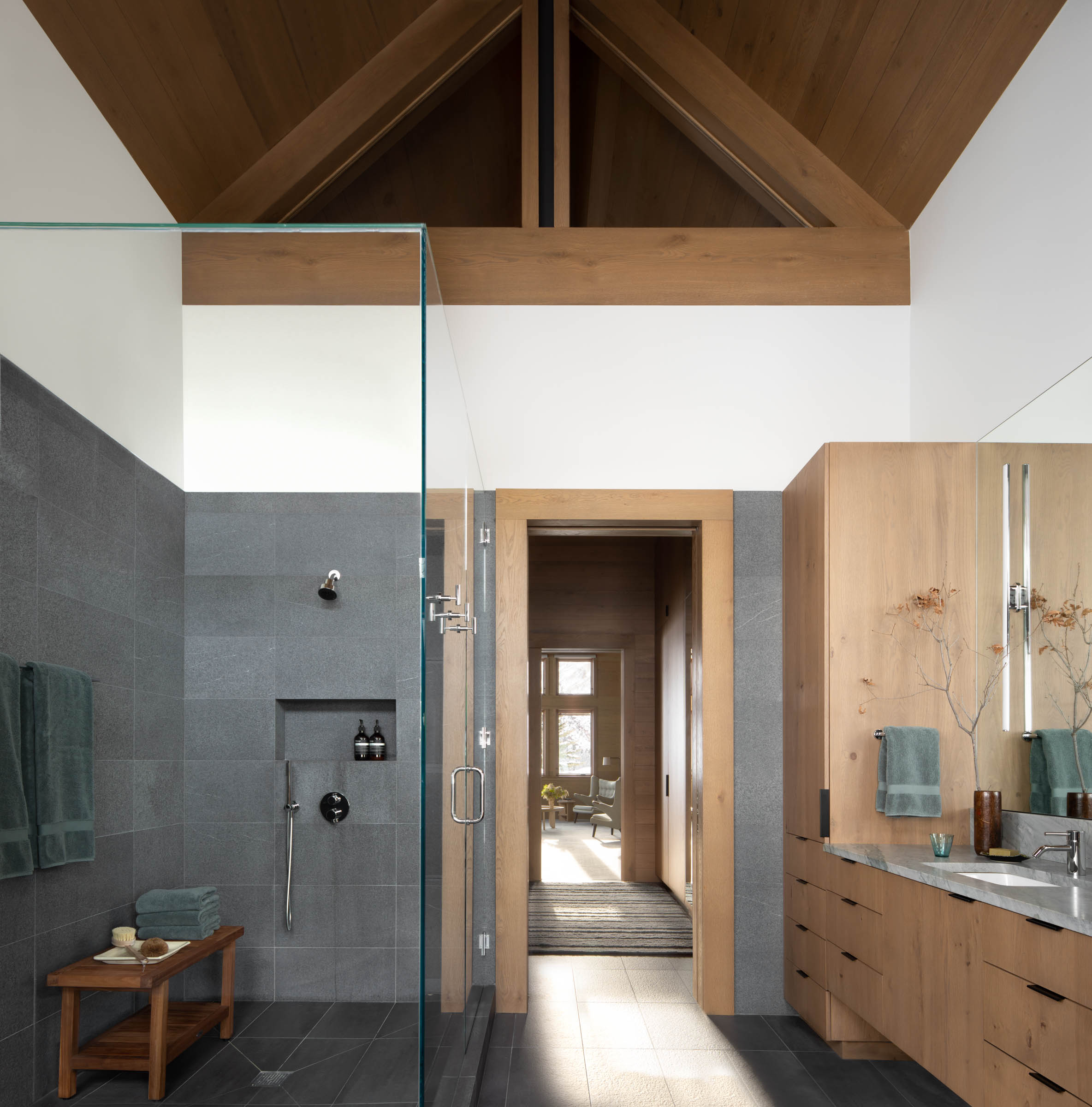
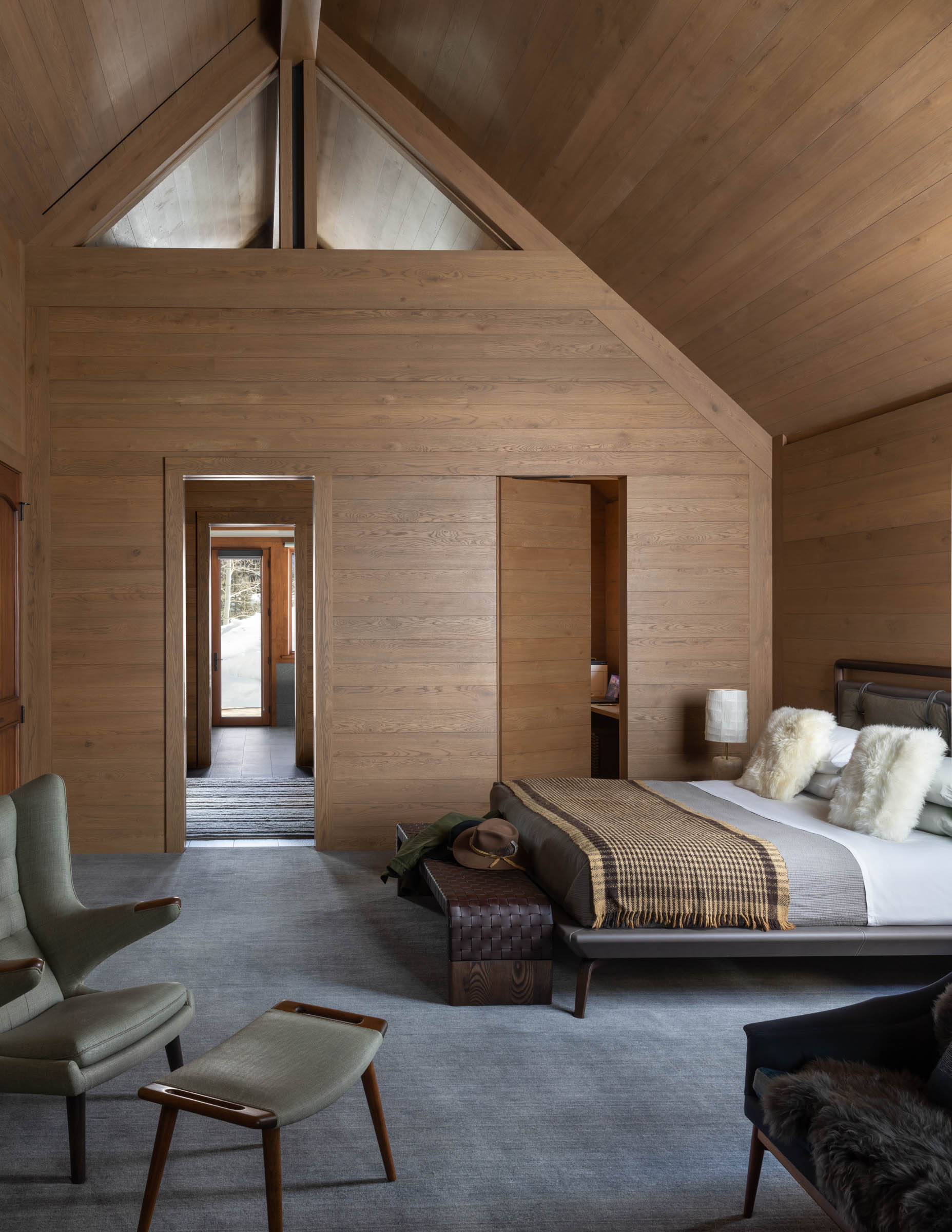
The most difficult challenge lay in the second-floor primary suite, an ungainly bricolage of overbuilt rooms extending the house’s full width. R+B removed the structural clutter and crafted a soaring, shaped ceiling; part of an existing bathroom closet became a small office, secreted behind a hidden door; and a new dressing area joins the bedroom to the expanded, almost entirely glazed bath. What had been fussy and confusing is now comfortable, useful, and elegant in its organic simplicity.
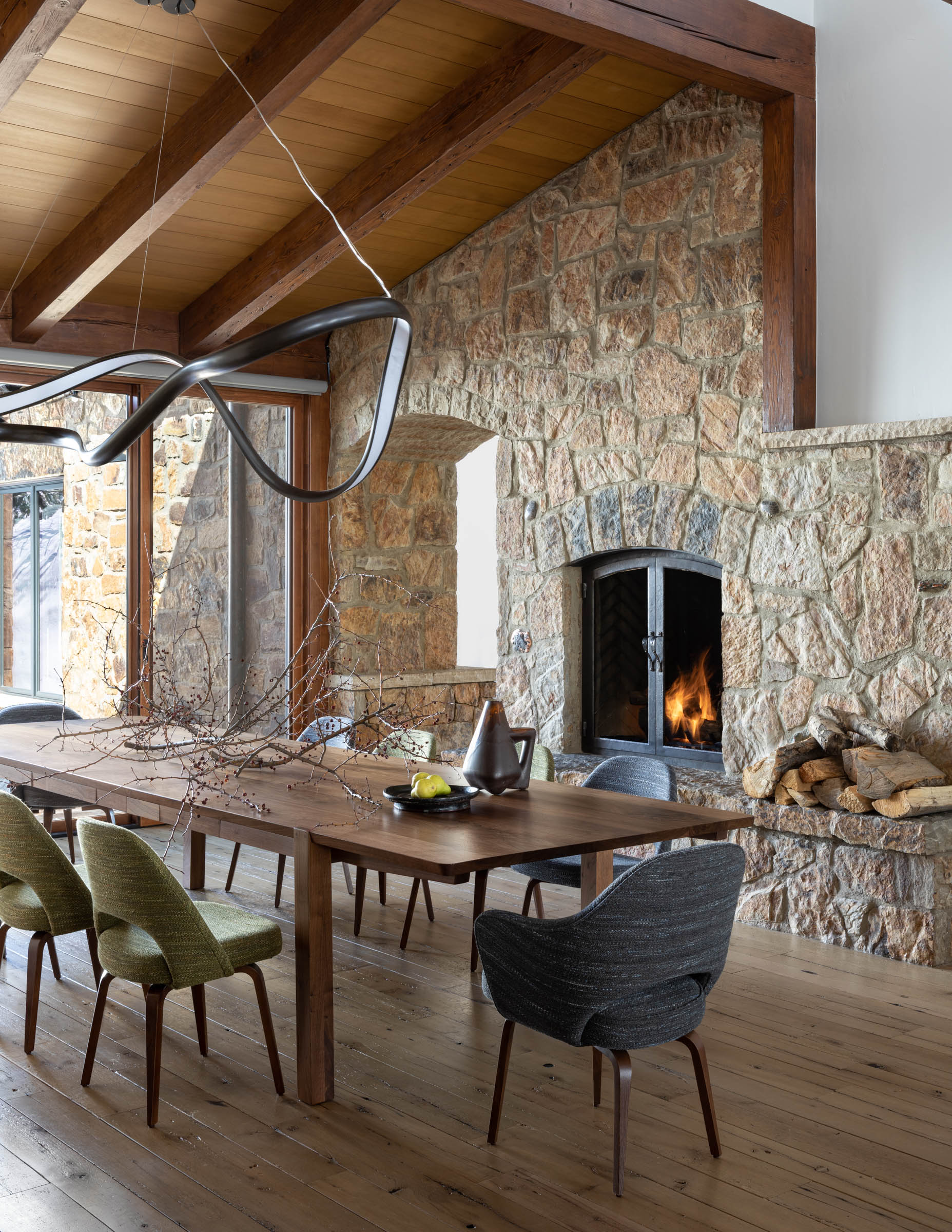
Throughout the home, special attention was given to existing woodwork. A lightening of the overall palette included bleaching the original floors and ceilings to enhance texture. The introduction of lighter oak in certain areas purposefully emphasized the juxtaposition of old and new.
Injecting character and vitality into an existing house without gutting it requires a restraint born of humility, a recognition that even quotidian architecture can be distinctive. R+B, with judicious interventions, bestowed light, transparency, axiality, and an unmistakable overlay of pleasure, creating for a young family of four a true, lasting home.
Project Size
9,217 SF (1.0 AC)
Project Awards
LUXE Interiors+Design – RED Awards
Publications
-
Designing Aspen: The Houses of Rowland+Broughton
-
Aspen Magazine
-
Interior Design Magazine
R+B Services
-
Architecture
-
Interior Design
-
Furnishings / Procurement
Project Team
-
Landscaping: Aspen Valley
-
Lighting Designer: 186 Lighting
-
Structural Engineer: Oddo
-
MEP Engineer: Rader
-
Photographer: Lisa Romerein
-
Contractor: Schlumberger Scherer

Villa Verde
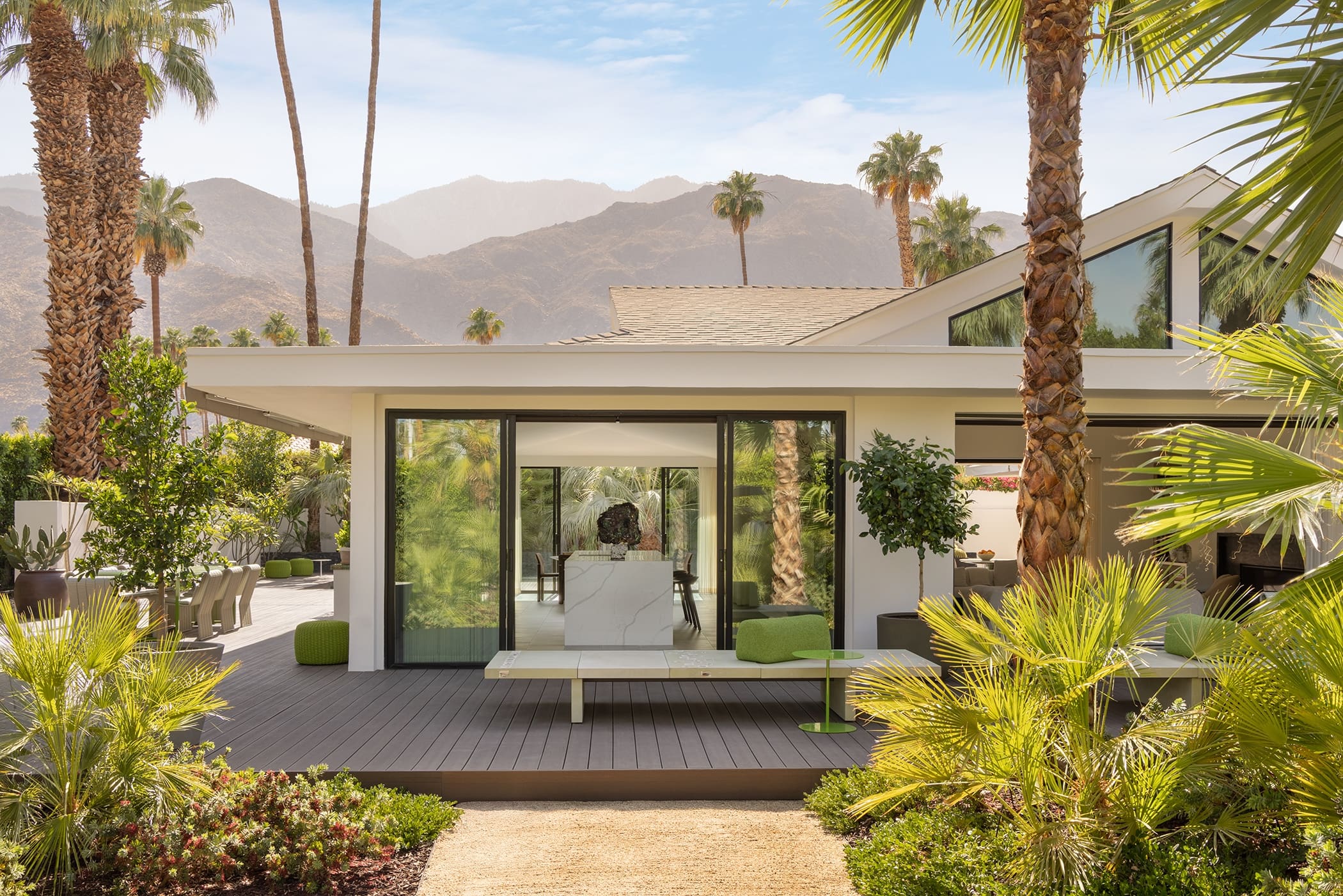
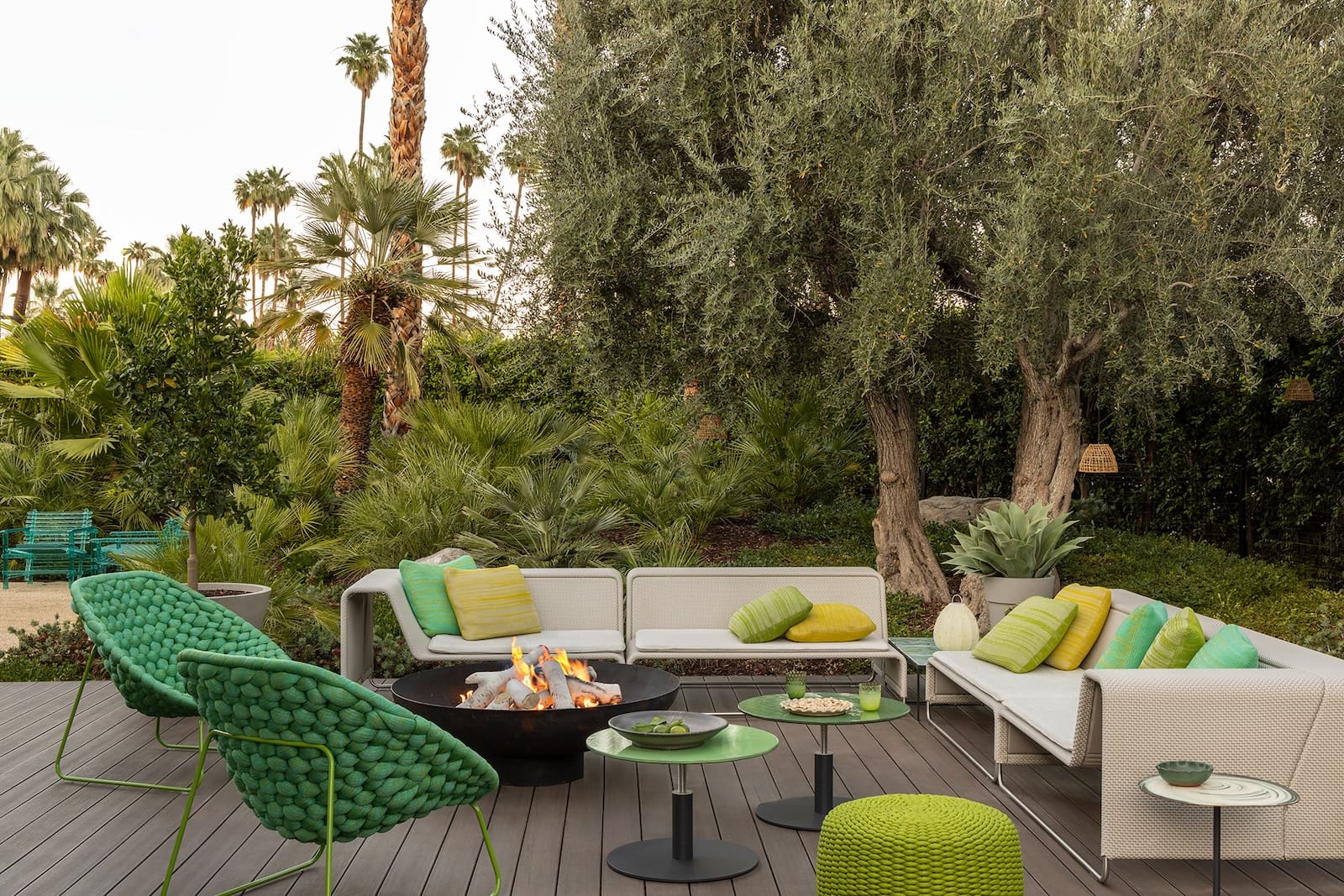
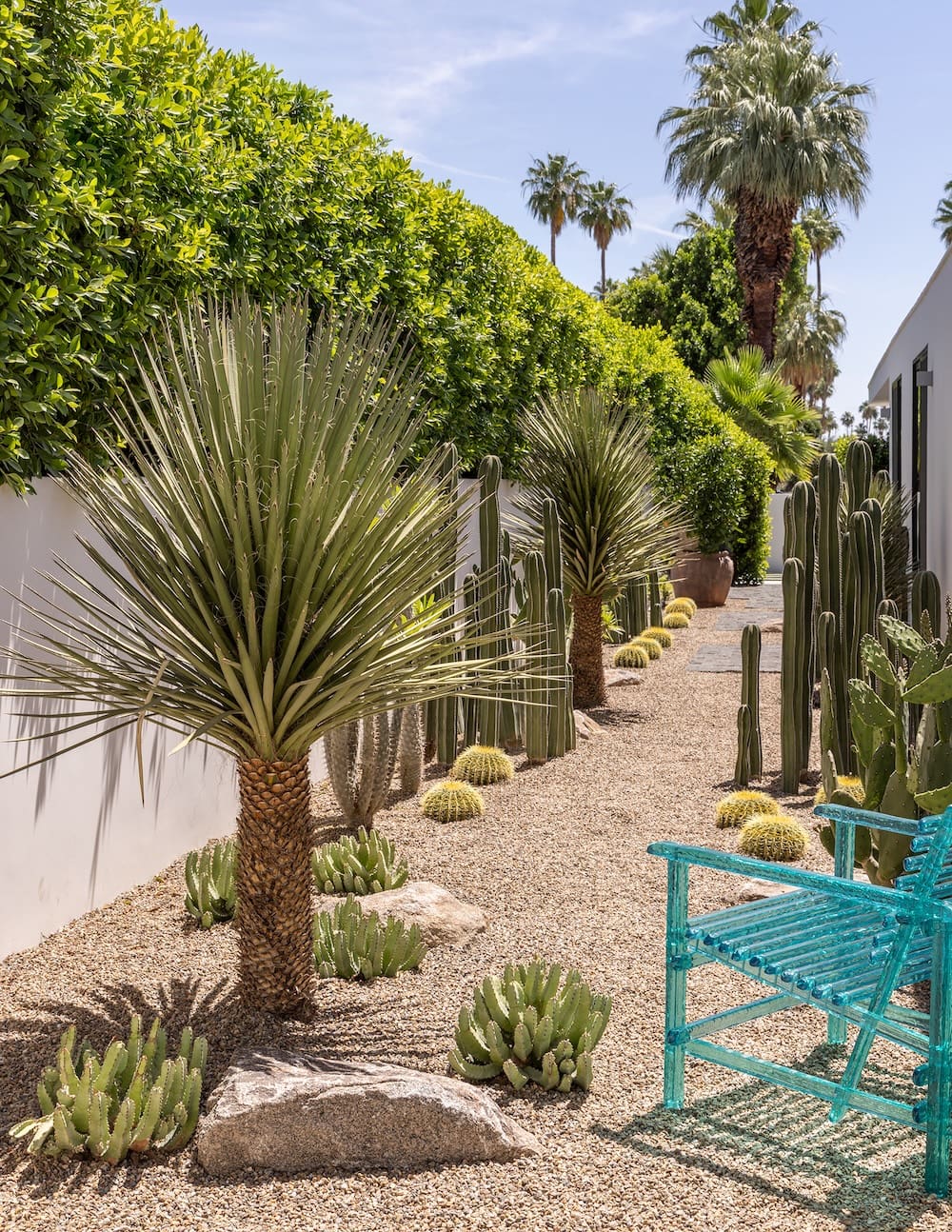
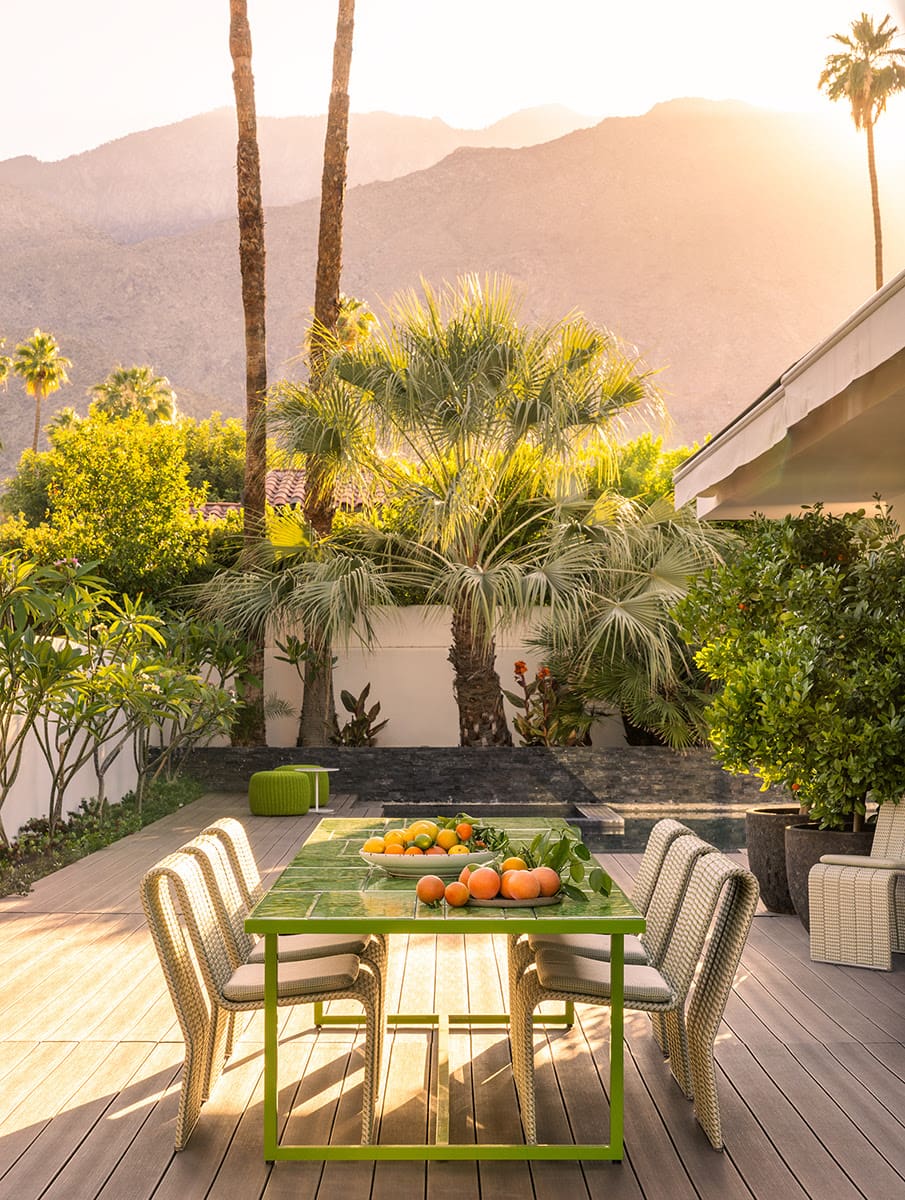
Villa Verde began in the 1960s as a modest Mid-Century residence in Palm Springs’ Deepwell Estates neighborhood. While the architecture was understated, its real assets were already in place: mature gardens, generous outdoor rooms, mountain views, and a seamless relationship between house, climate, and landscape. Rather than overwrite these qualities, the design amplifies them—honoring Palm Springs’ design legacy while moving beyond nostalgia.
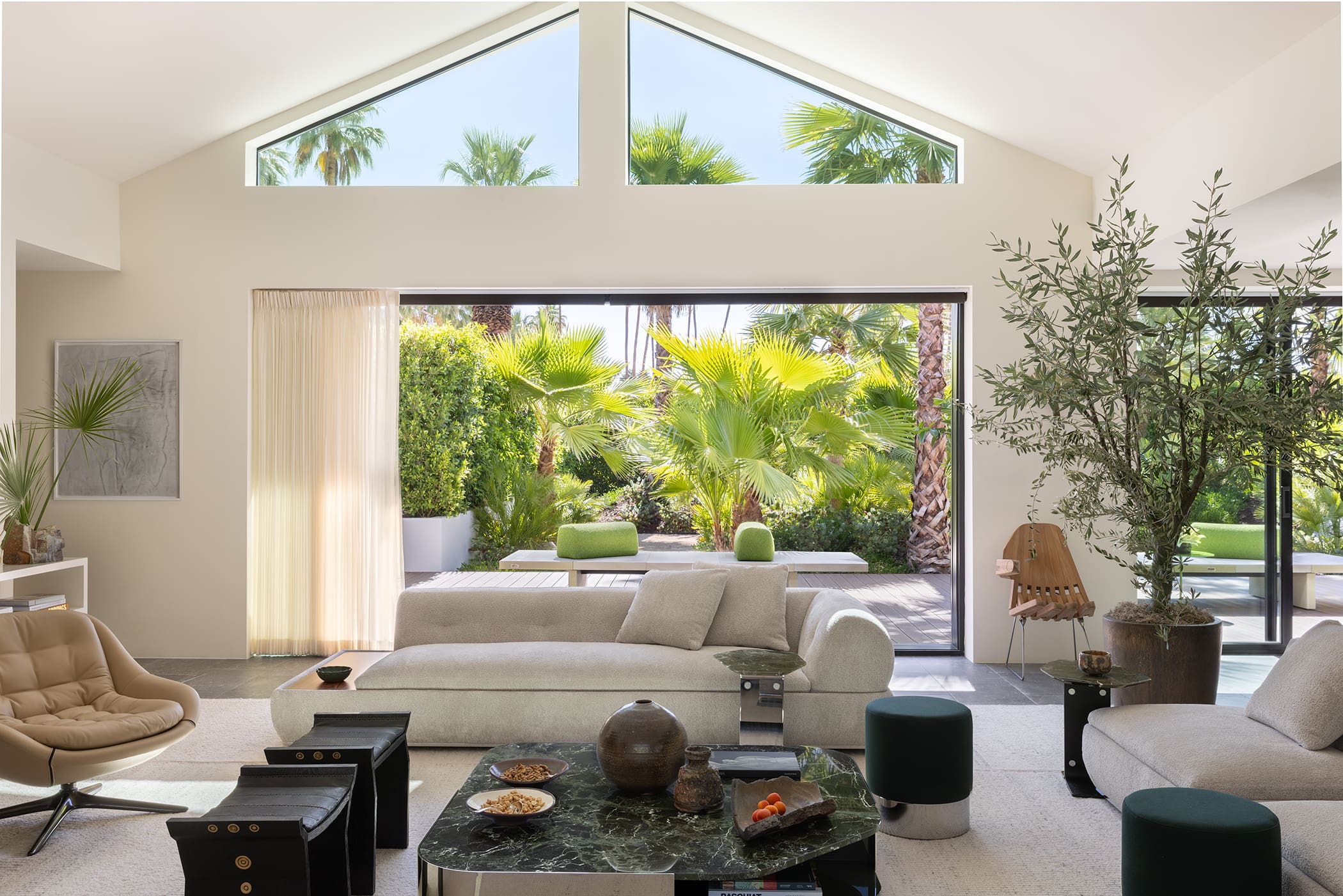
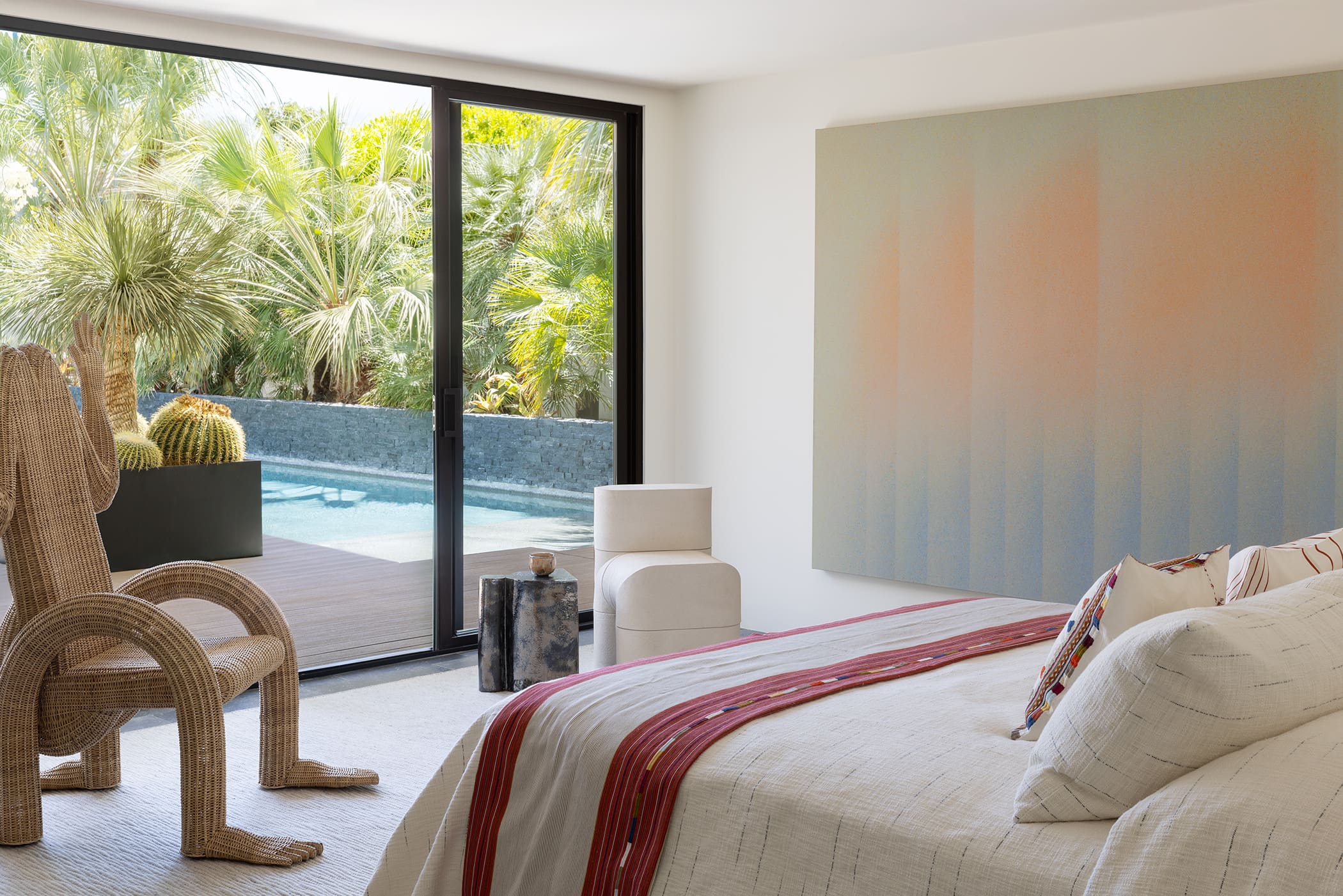
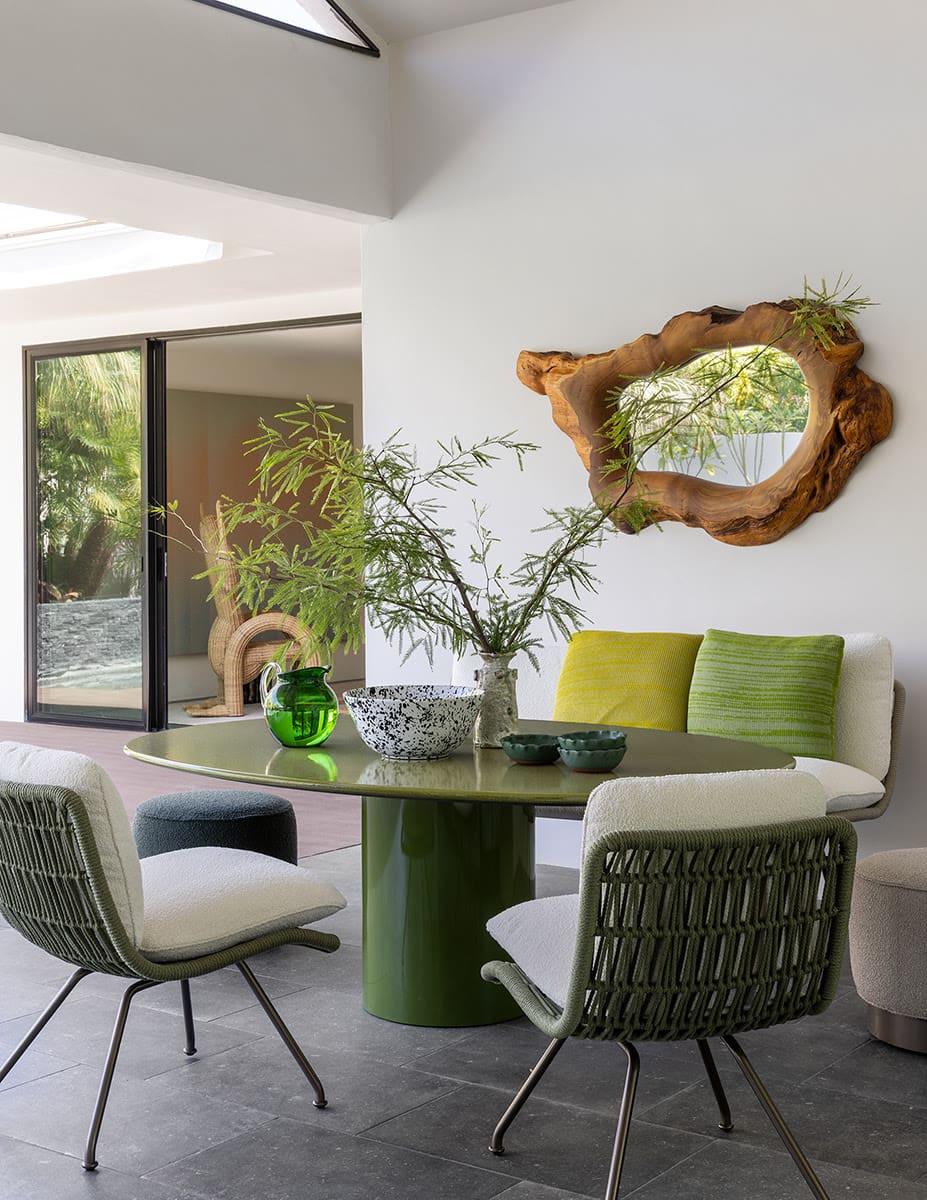
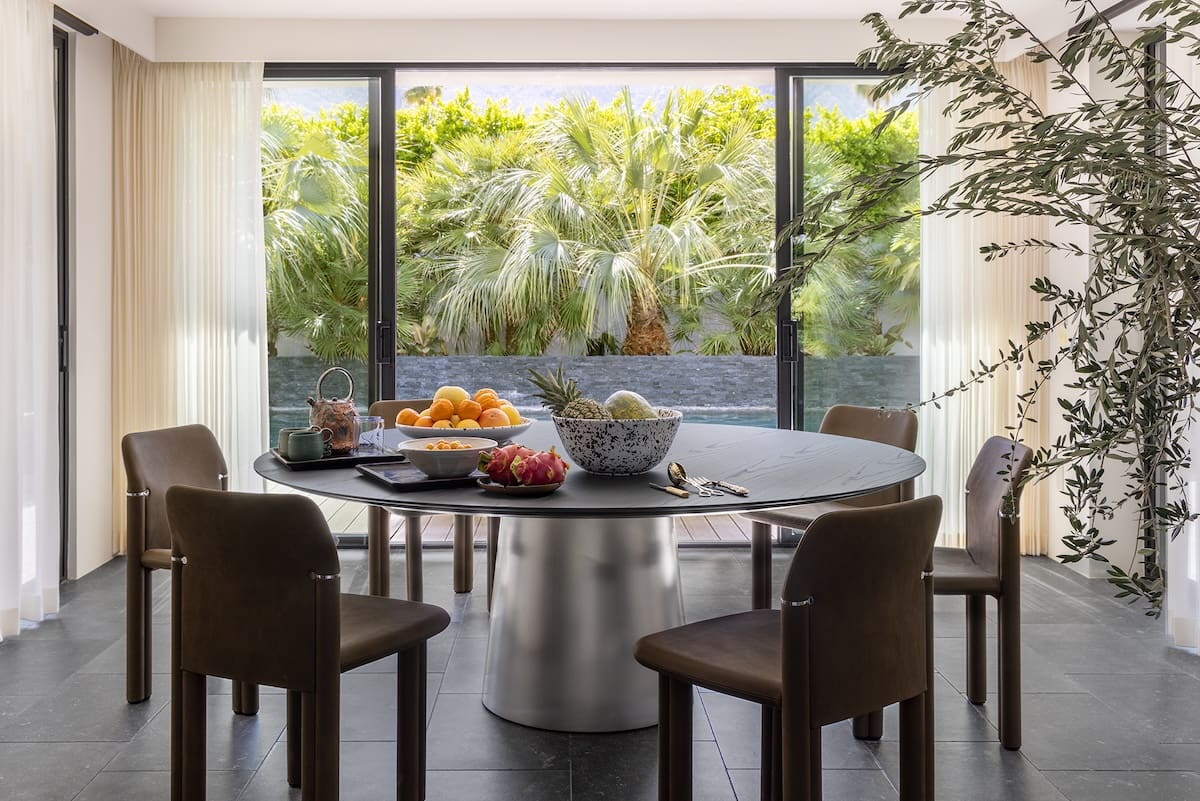
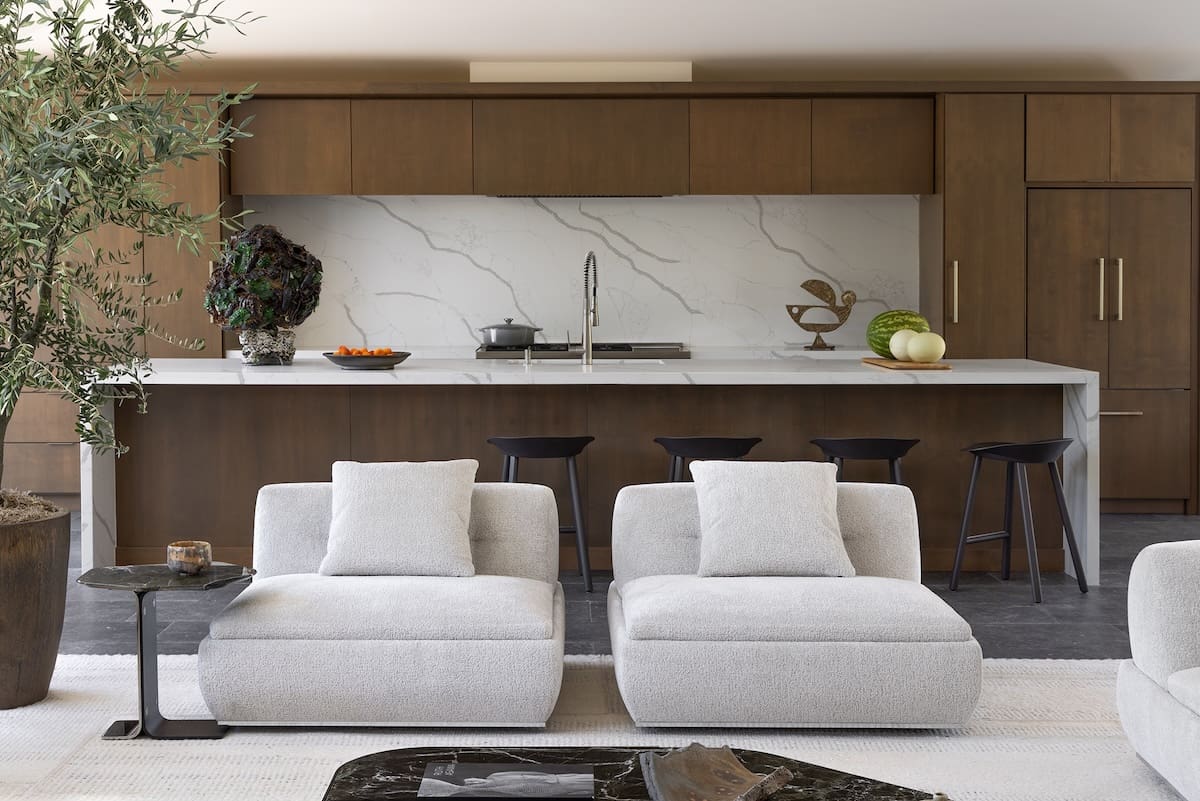
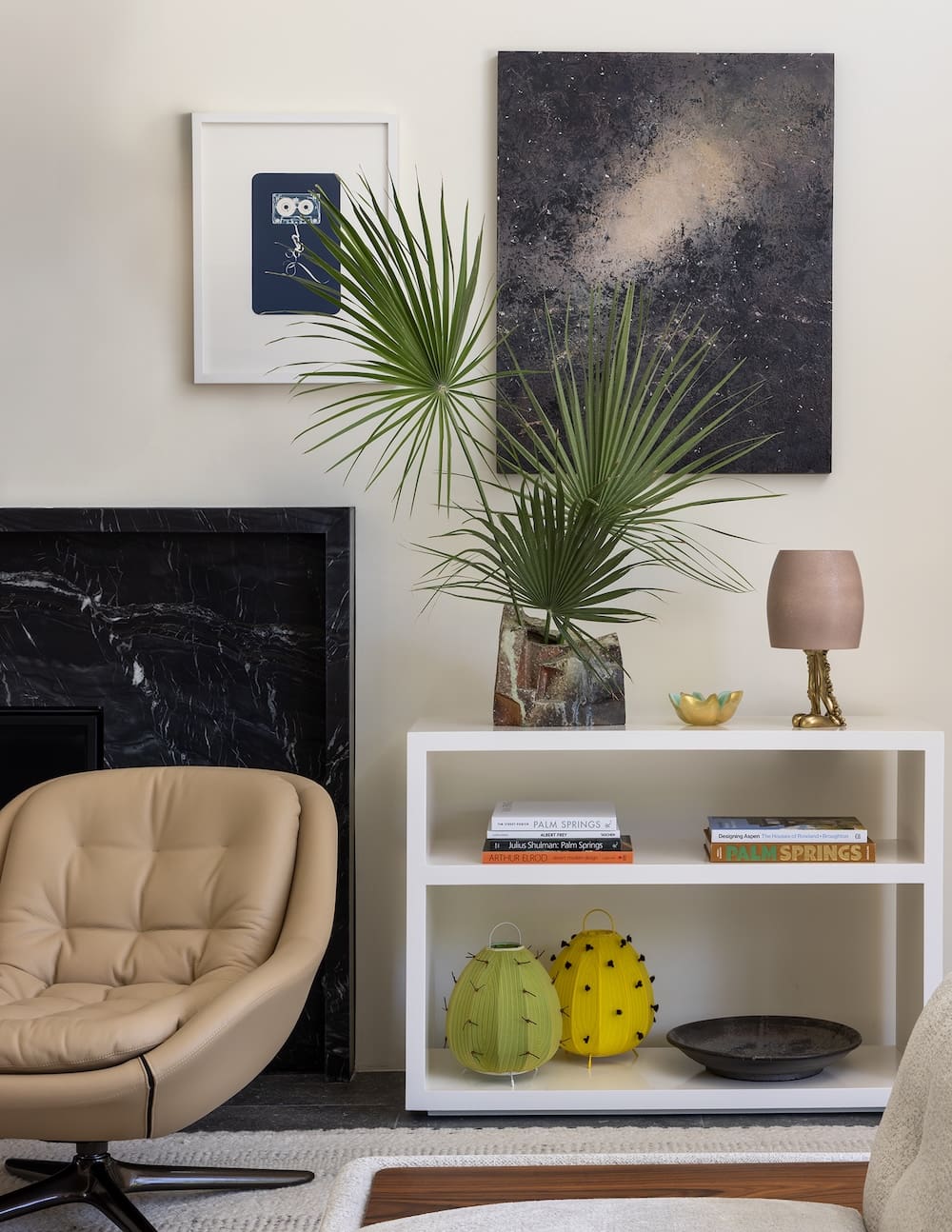
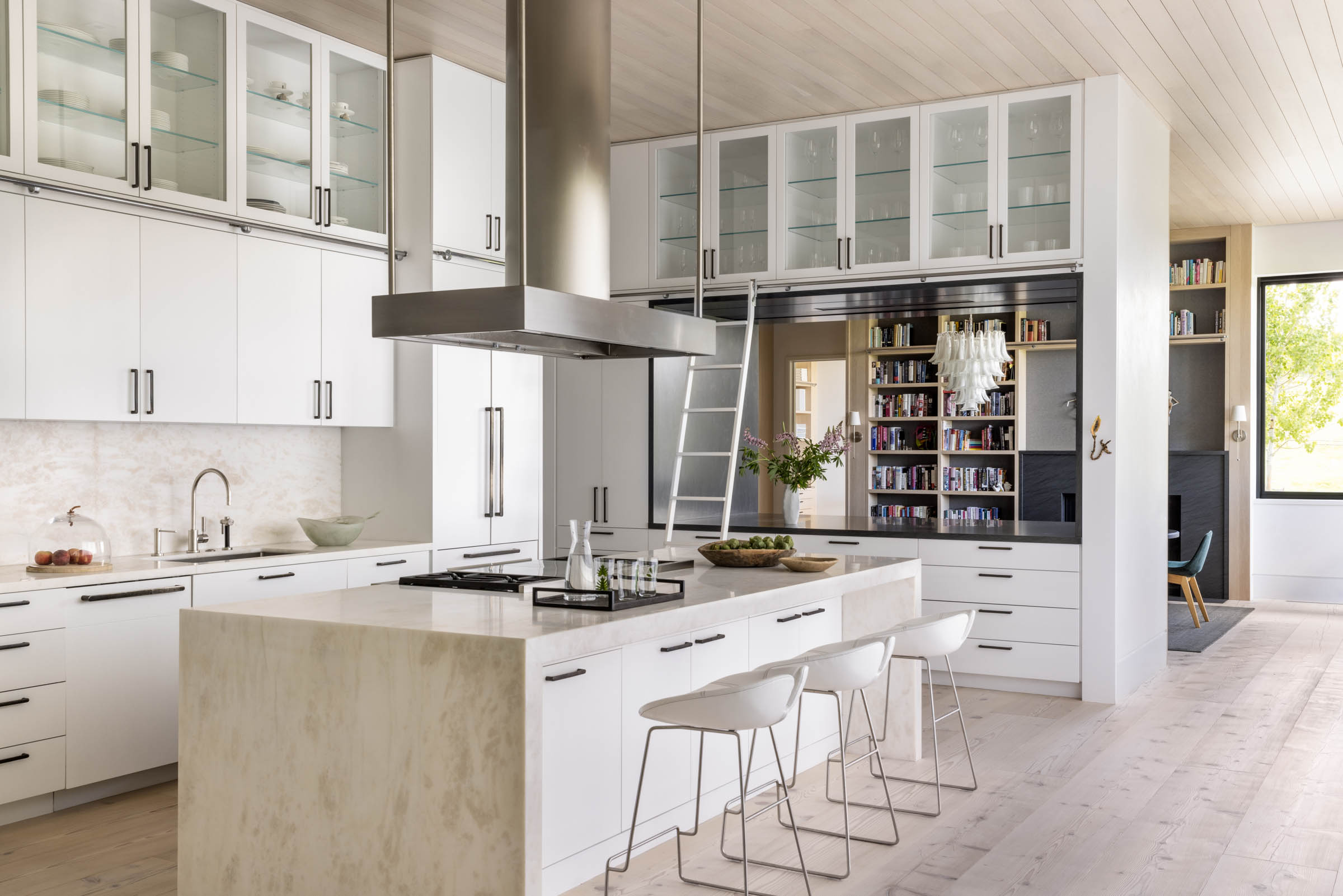
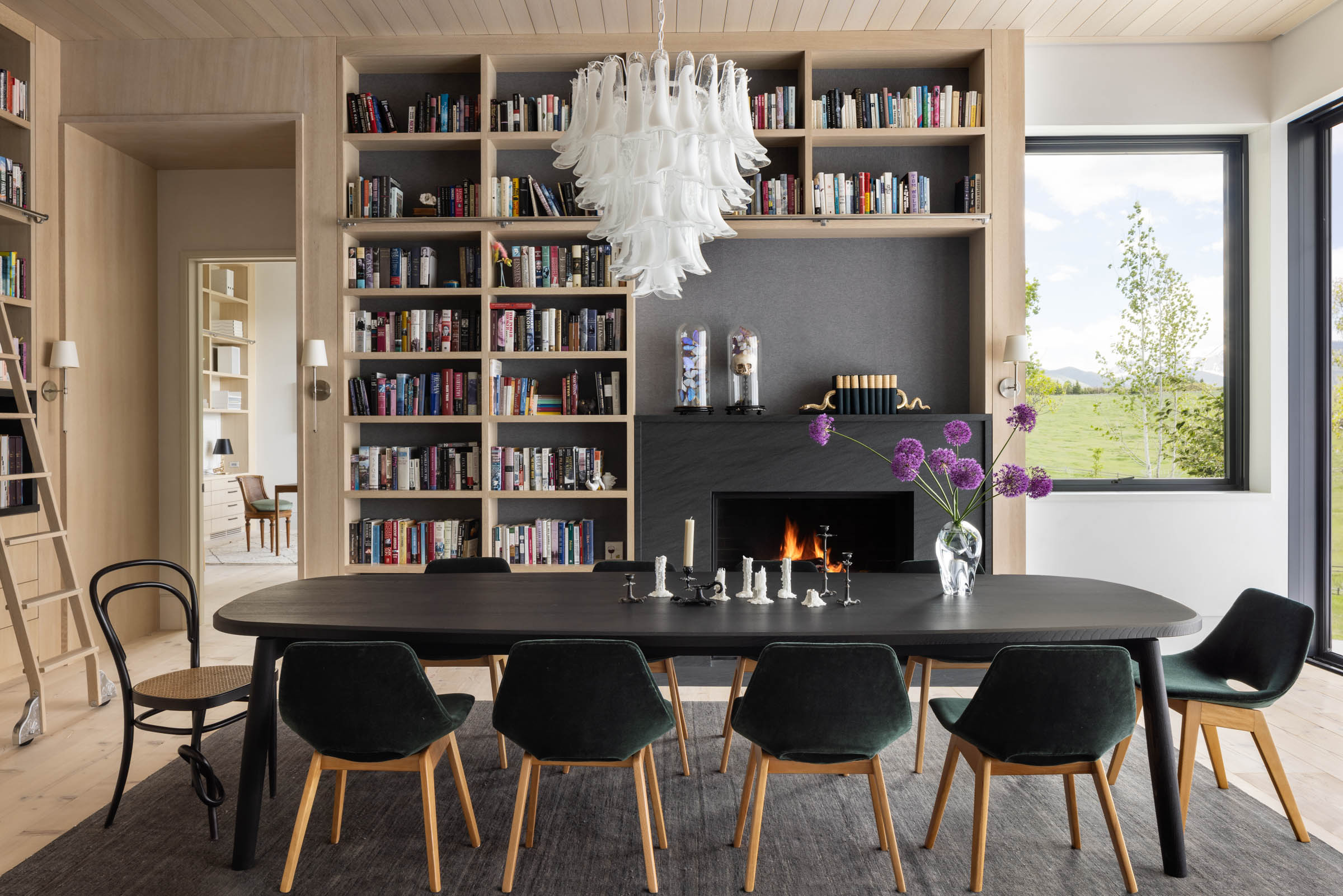
The project is primarily an interior transformation, shaped through atmosphere, materiality, furnishings, and use. Guided by the surrounding gardens and layered outdoor rooms, the interiors extend the landscape inward—colorful, relaxed, and attuned to the rituals of desert living.
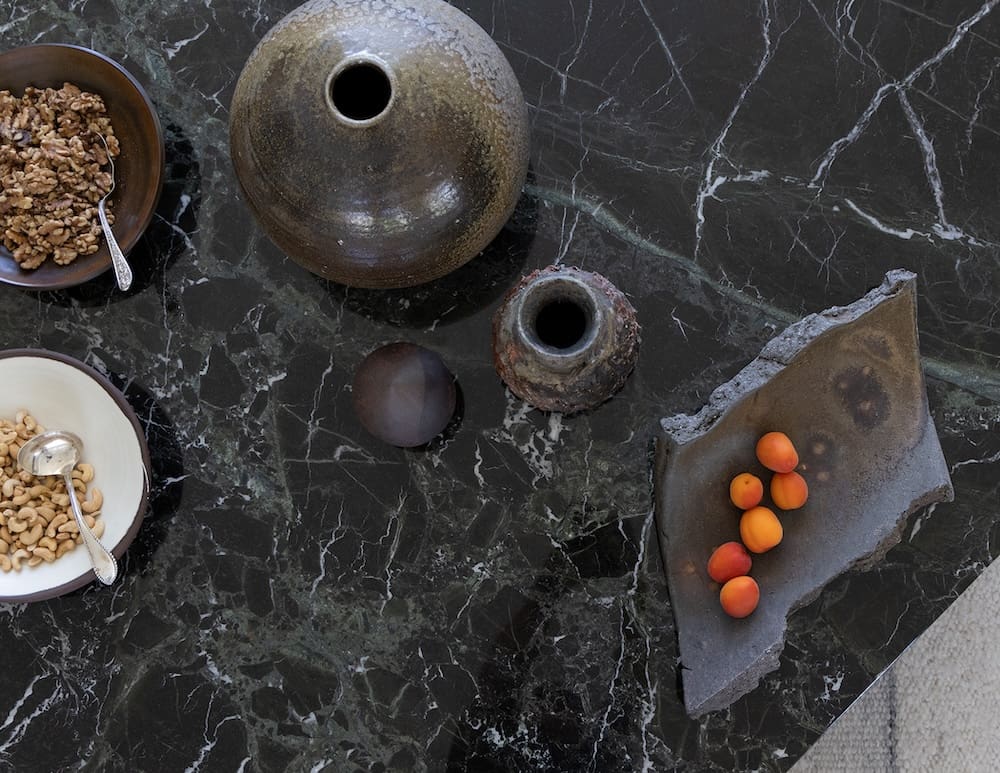
The curation brings together contemporary Milanese furniture, textiles developed with female artisans in Mexico, Japanese ceramics, handcrafted objects, auction finds, and works from the owners’ Aspen collection. Each piece carries its own origin, yet together they form a cohesive, lived-in composition.
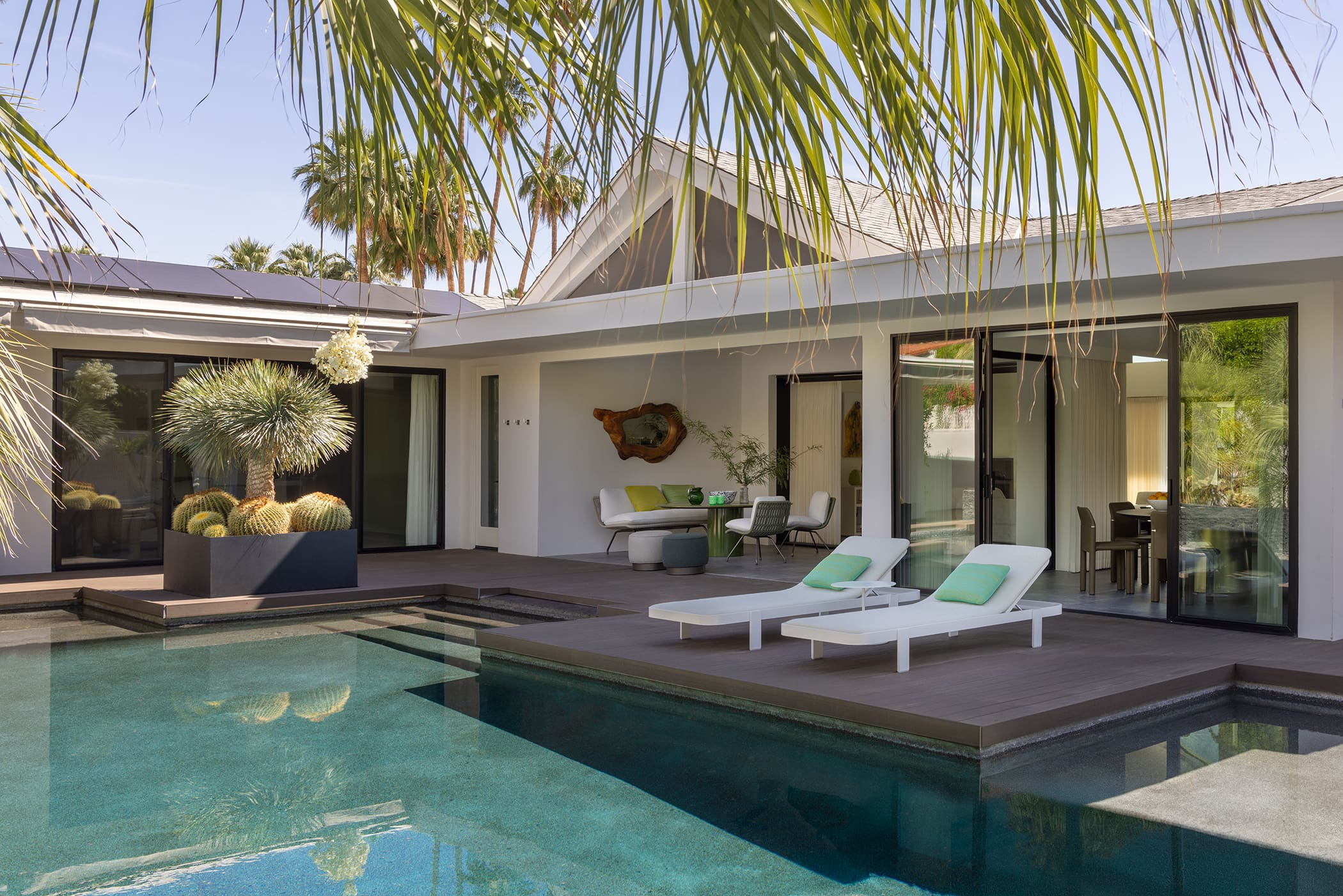
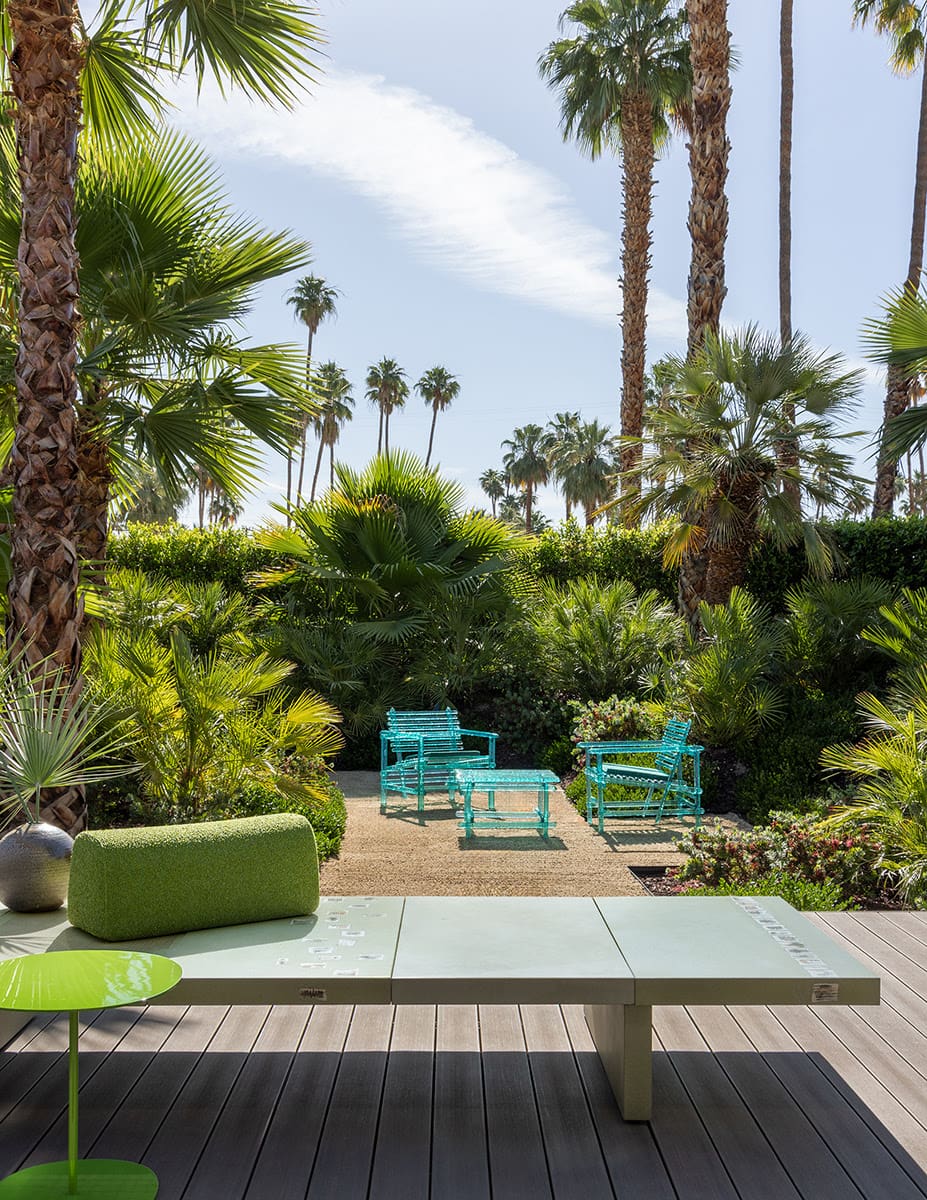
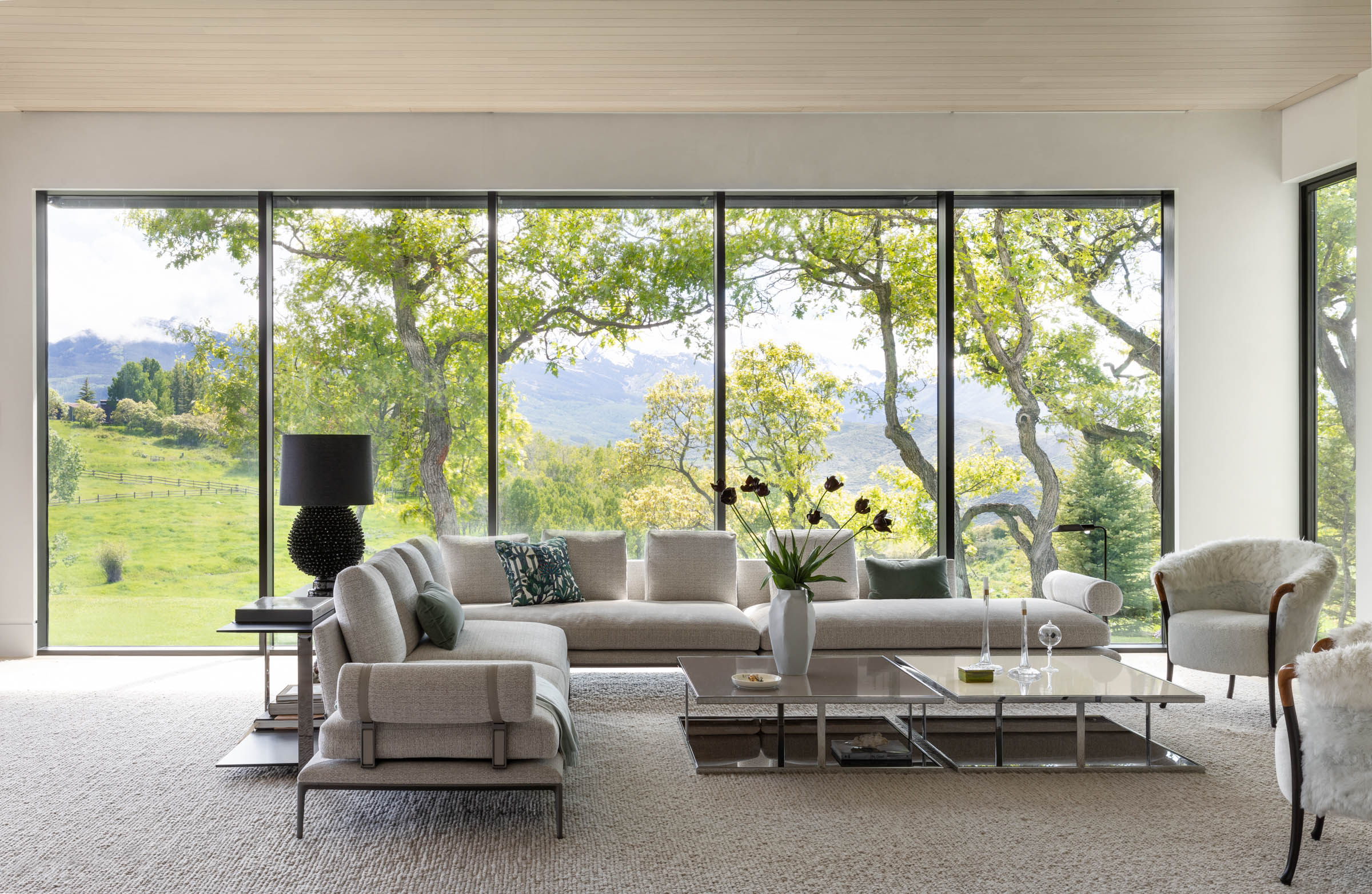
Villa Verde flourishes through the relationship of indoor and outdoor realms. Seamless decking connects rooms, terraces, poolside areas, and gathering spaces into a fluid sequence of experiences, while retractable awnings extend comfort and shade throughout the day. Handcrafted concrete benches embedded with Italian tile frame the entry, Jacopo Foggini A’Mare chairs animate the morning sitting area, and the south-facing dining and living deck becomes the natural center of evening life as the desert cools and the mountains gather the last light. The result is a sophisticated home designed for ease, movement, conversation, retreat, and daily pleasure.
At Villa Verde, indoor and outdoor life is continuous. Seamless decking links rooms, terraces, pool, and gathering areas into a fluid sequence, while retractable awnings extend shade and comfort throughout the day. Handcrafted concrete benches inset with Italian tile mark the entry, Jacopo Foggini A’Mare chairs define the morning sitting area, and the south-facing deck becomes the center of evening life as the desert cools and the mountains hold the last light. The result is a home designed for ease, movement, conversation, and daily ritual.
Named for the many shades of green embedded in its décor and for its deep connection to the lush life of the garden, Villa Verde acknowledges the chrysalis of history while proposing a more individual and contemporary expression of desert modernism. Rooted in Palm Springs but not confined by its visual orthodoxies, the home becomes a colorful, international, and highly personal oasis on the other side of tradition.
Project Size
3,320 SF
Publications
R+B Services
-
Interior Design
-
Interior Architecture
-
Furniture Selection / Procurement
Project Team
-
Photographer: Lisa Romerein
Meadow House
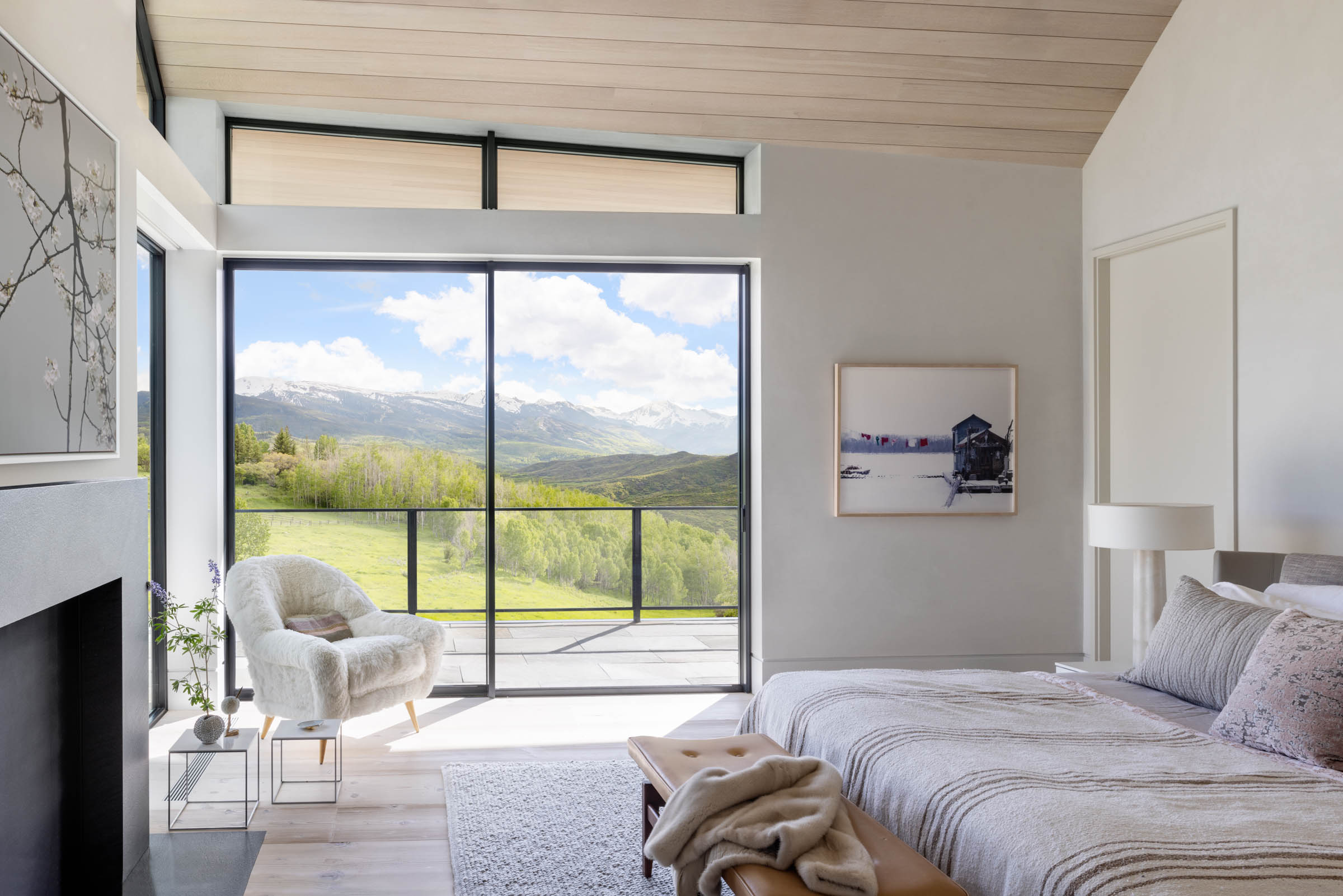
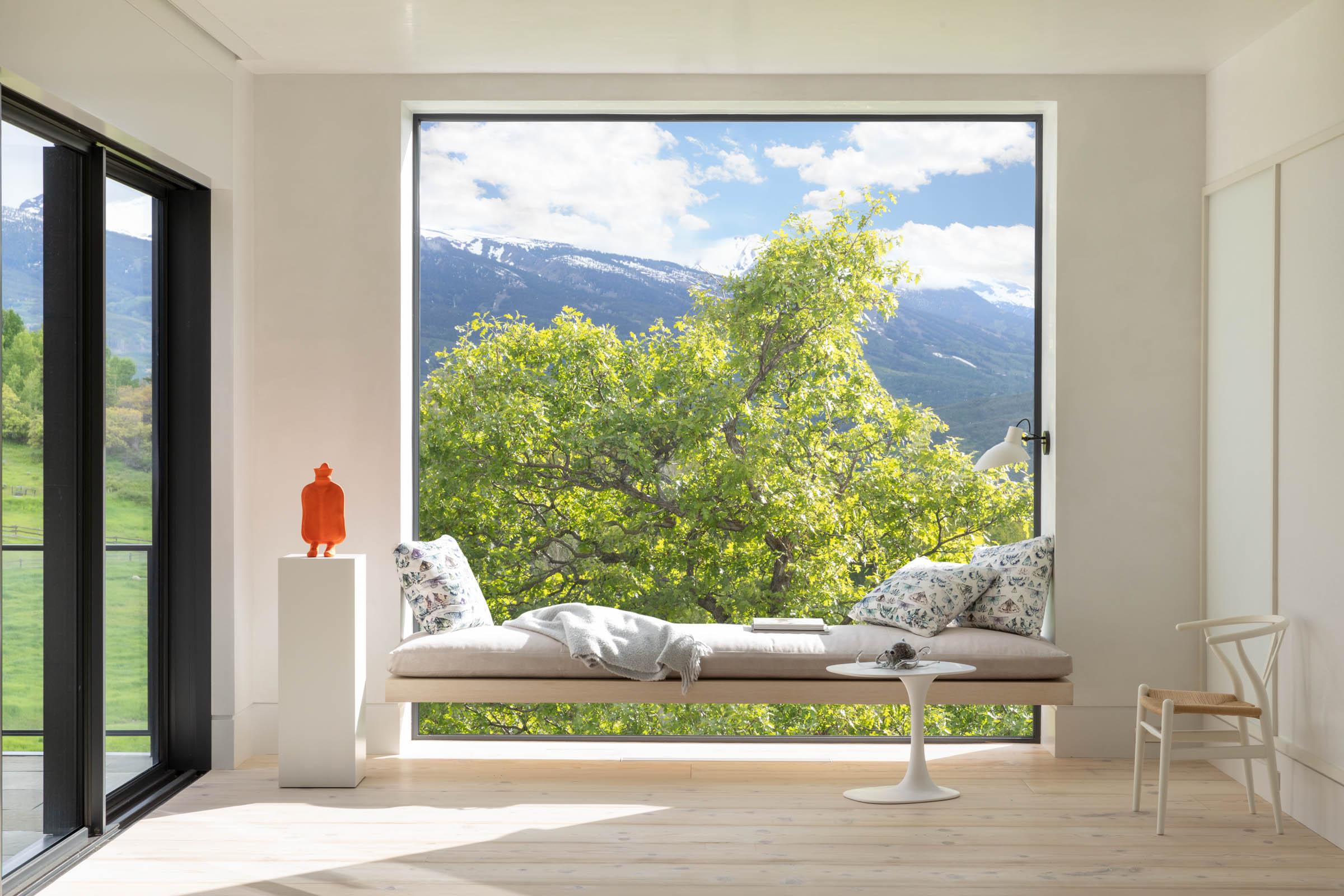
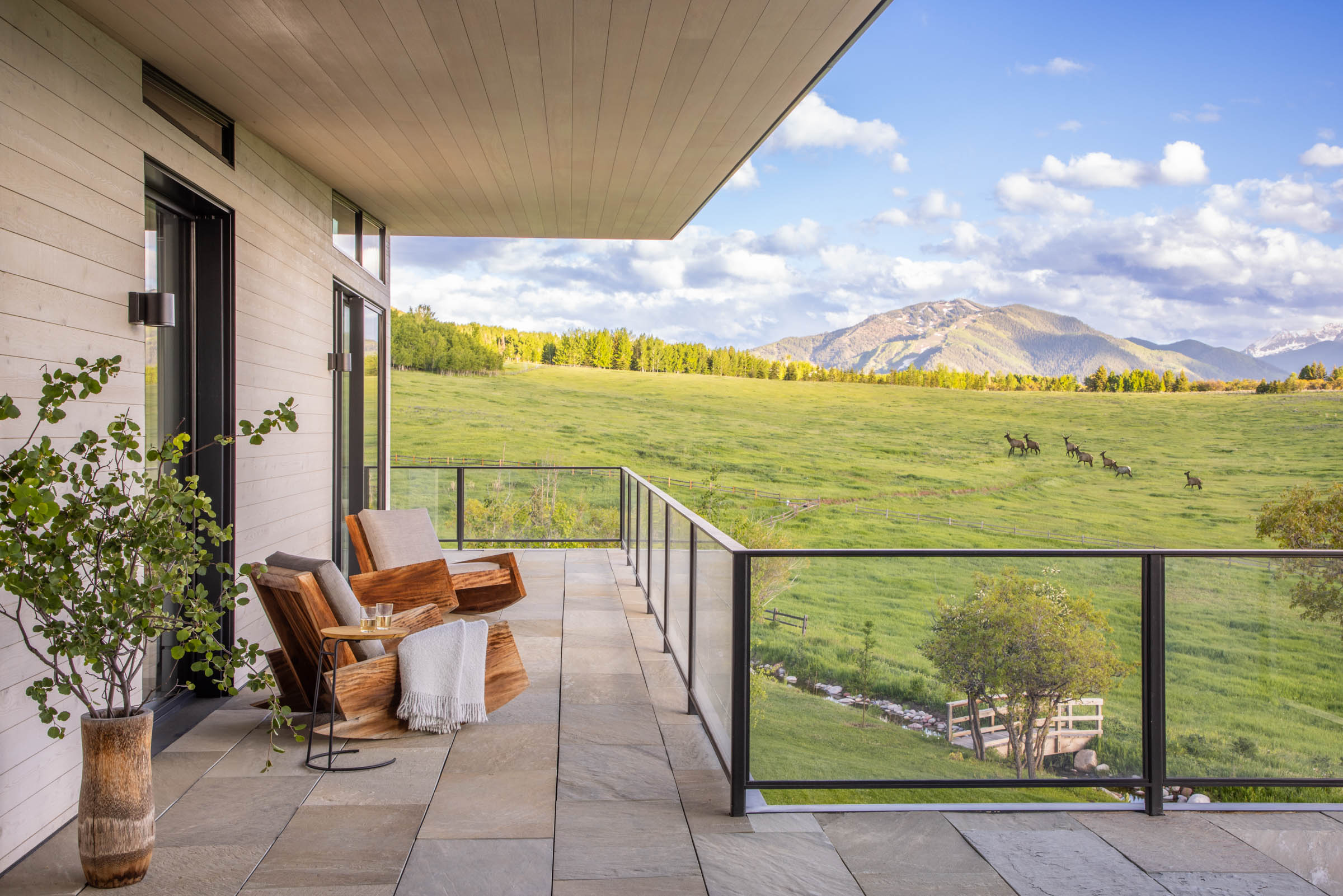
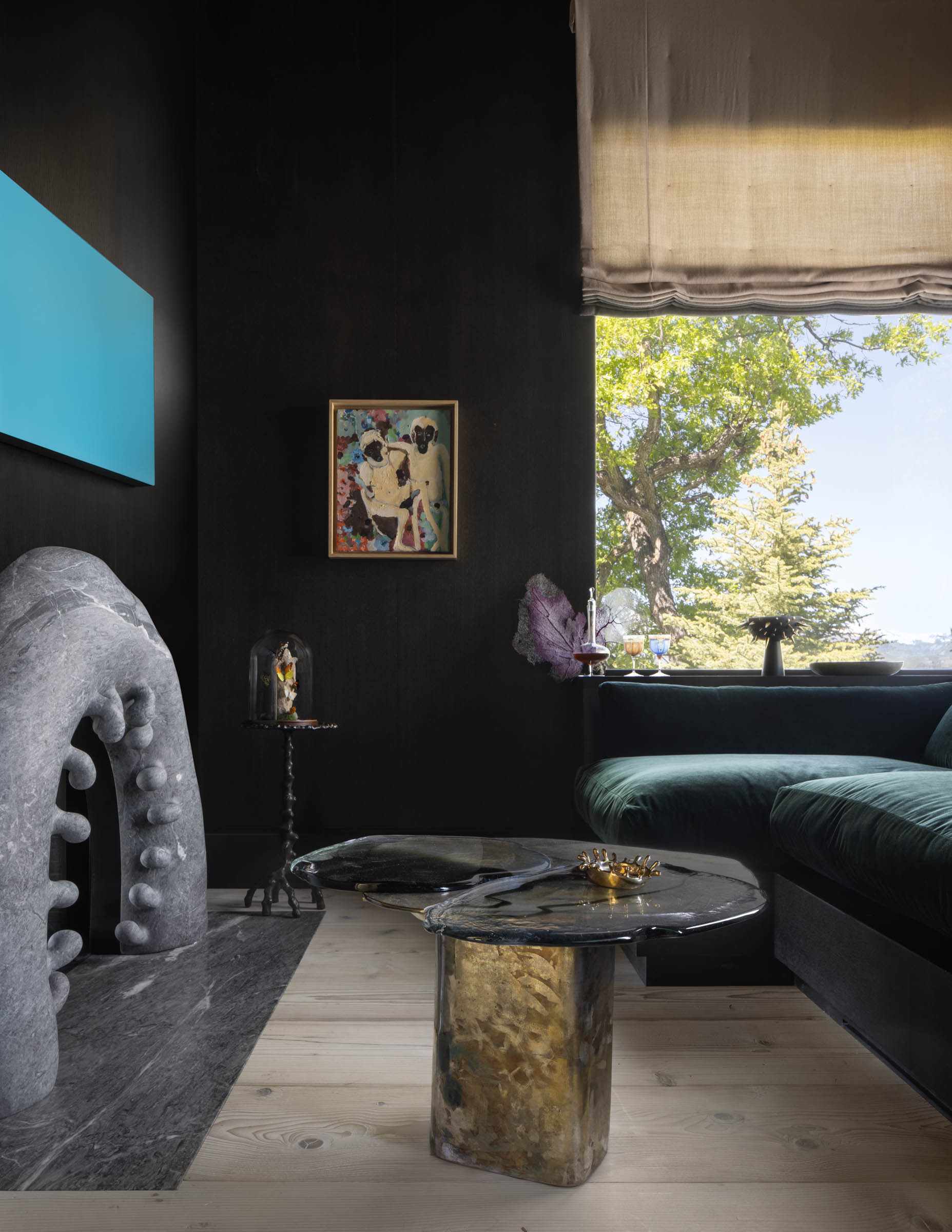
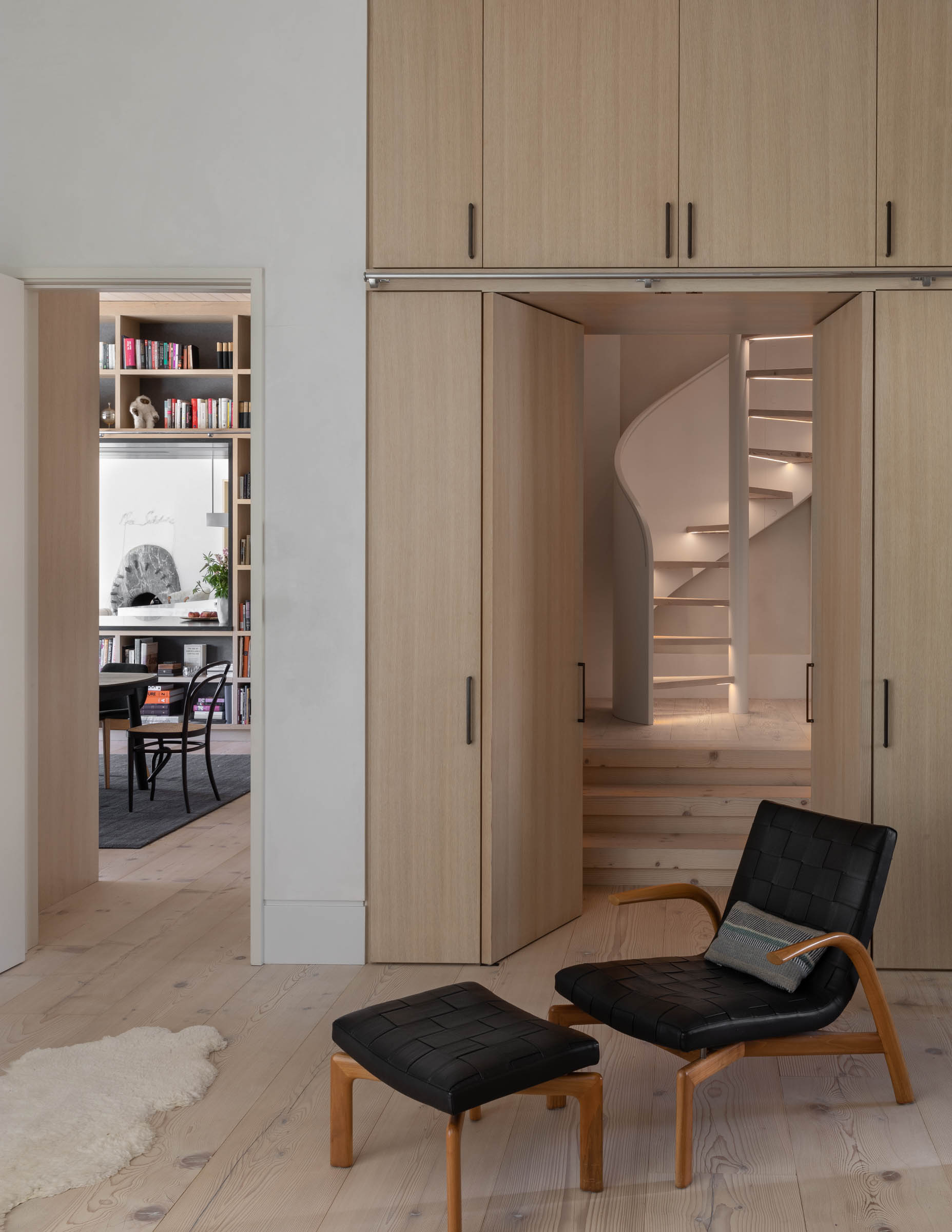
The essence of Meadow House, so named for its siting on an expansive Aspen greensward ringed by evergreen, spruce and scrub oak, lies in the idea of the threshold: between separation and connection, public and private, interior and exterior, architecture and design.
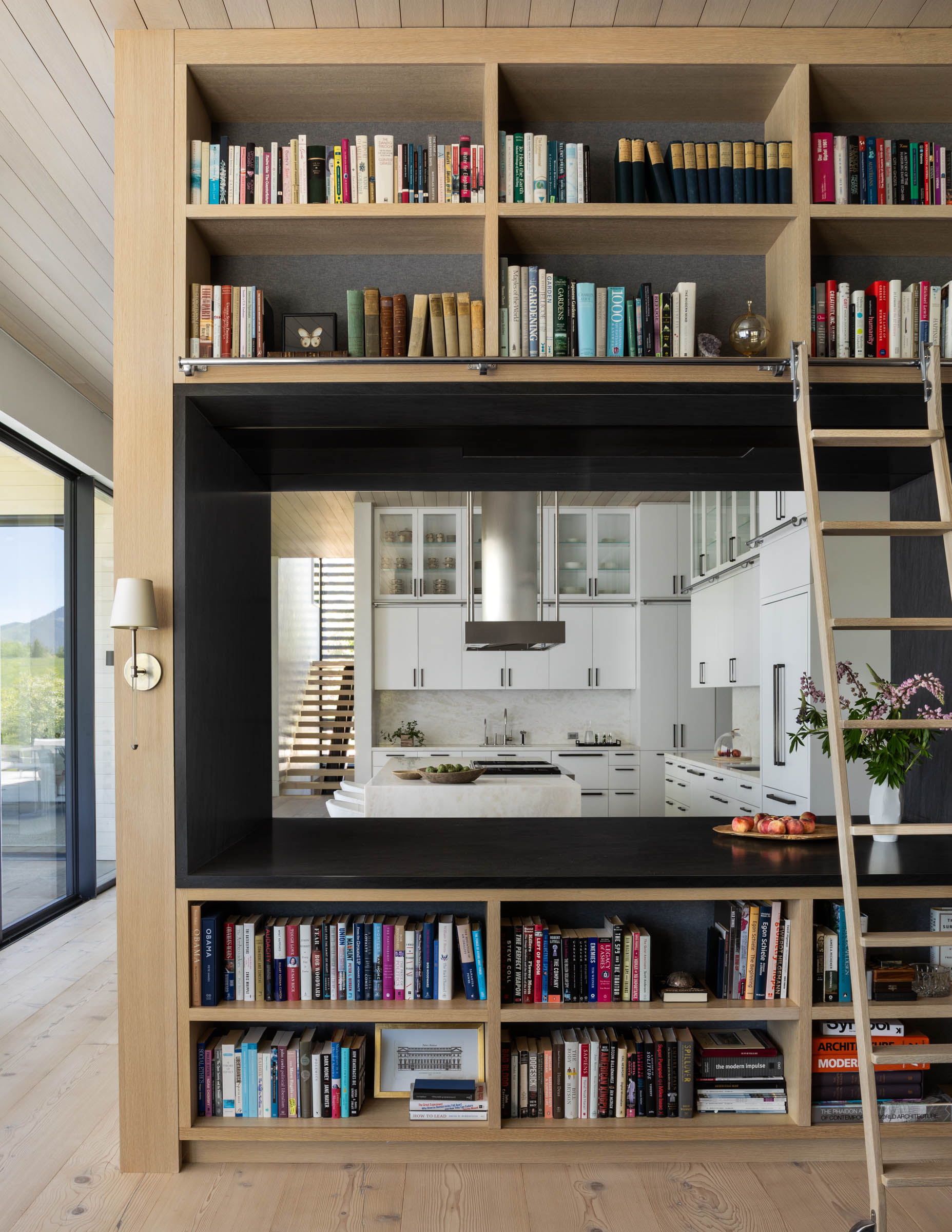
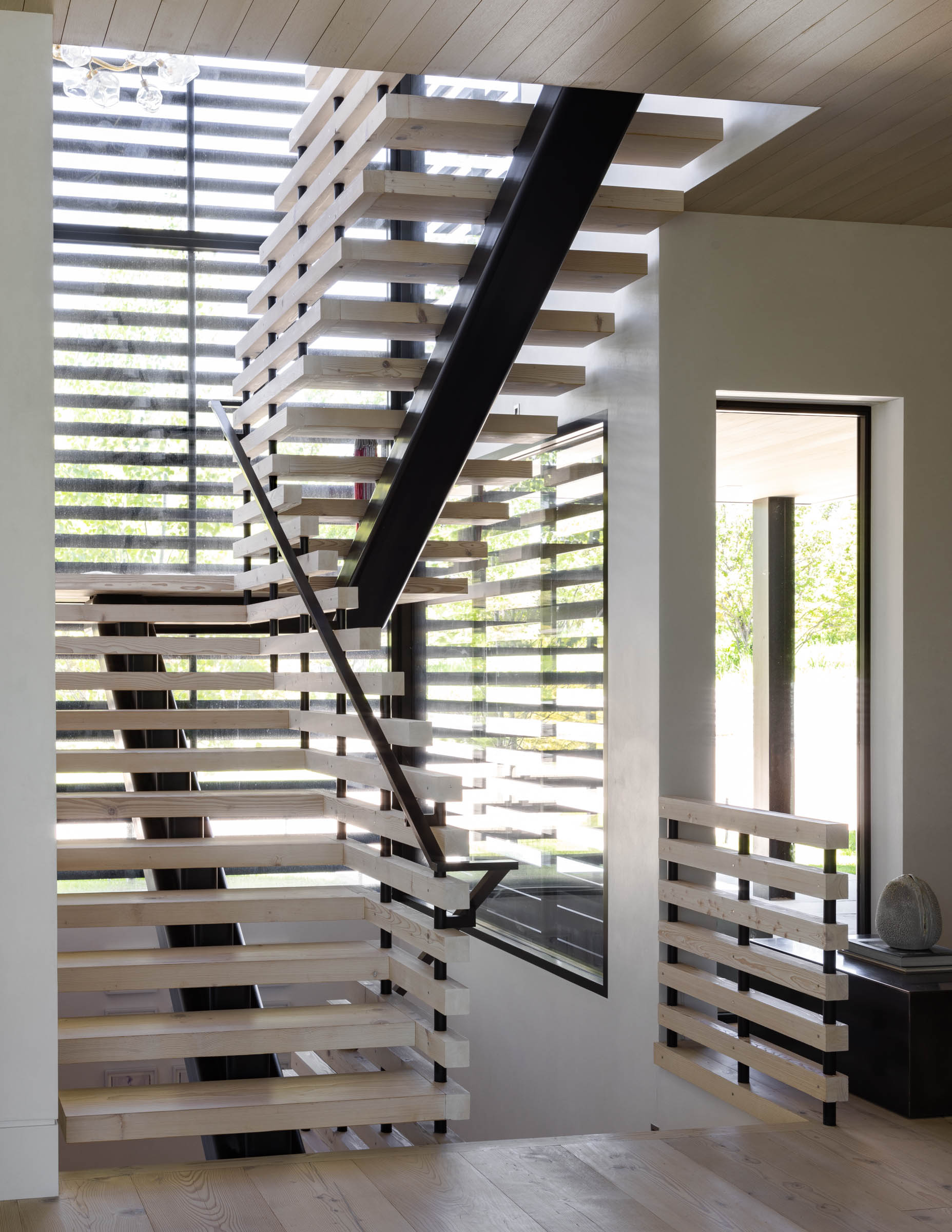
On the main floor, from the entry to the living area to the library/dining room, the sense is of a grand loft space, Scandinavian in its material simplicity, with eleven-foot ceilings and enormous, view-embracing glazed walls. Yet each space retains its own special character: if the overall experience is holistic, the rooms remain distinct and discrete.
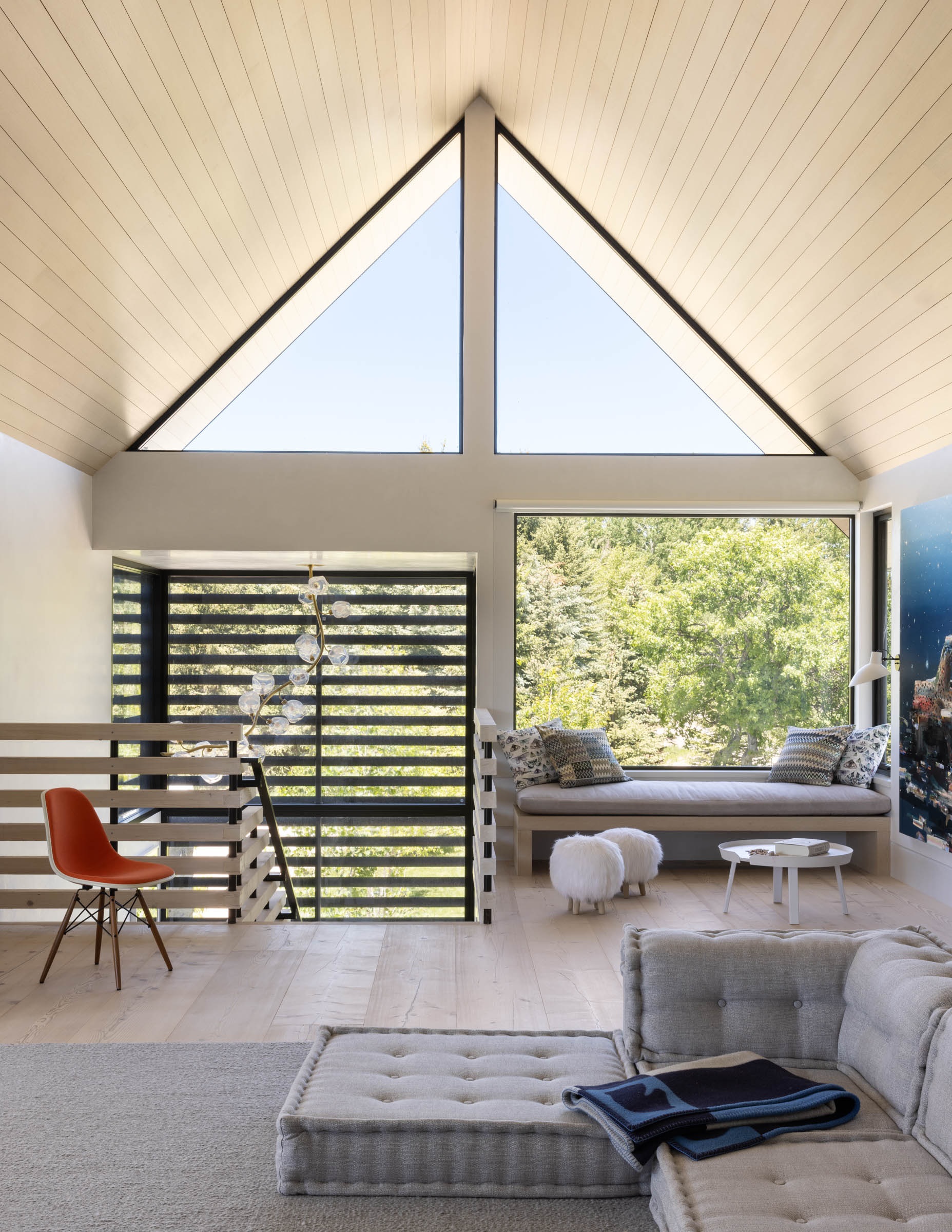
Meadow House’s permeability is especially seductive, and particularly evident in the second-floor primary suite, which features the design’s iconic moment: a windowed agrarian gabled form, that ‘peels upward’ as it moves the full length of the rooms, revealing progressively more of the panoramic view. Here the threshold lies between the interior and the great outdoors, one dissolving into the other in a subtle, exquisite unfolding.
A separate greenhouse, designed for a year-round edible garden and to provide a farm-to-table learning opportunity for the family, offers an additional layer of experience. The greenhouse acts as a viewing machine, offering a different, no less dynamic perspective on the meadow, mountains, and the great western sky.
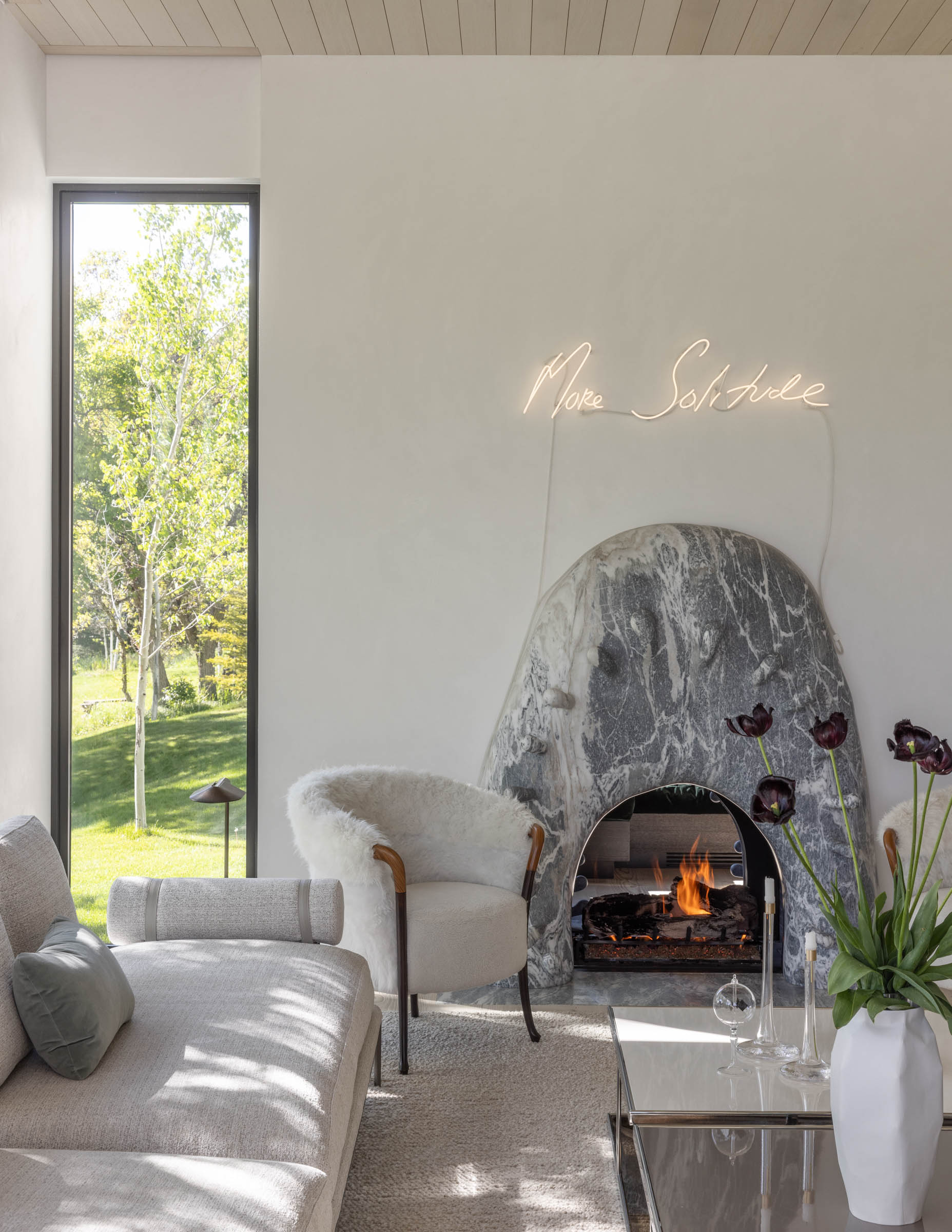
Meadow House also evinces a compelling sense of craft, exemplified by The Haas Brothers’ remarkable double-sided fireplace, commissioned for the project and custom-forged in Portugal. This, and other such moments, invest a capacious residence with the appealingly intimate presence of the hand.
Every material, furniture selection, and art placement was chosen as an extension of the architectural idea.
Every material and furniture selection was chosen as an extension of the architectural idea.
Project Size
8,500 SF (2.2 AC)
Project Awards
-
IIDA – BESTaward
-
ASID – Crystal Awards
-
ASID – Crystal Awards
-
AIA – People’s Choice Award
Publications
R+B Services
-
Architecture
-
Interior Design
-
Furnishings / Procurement
Project Team
-
Landscape Architect: Land Design 39
-
Lighting Designer: Robert Singer
-
Structural Engineer: Albright
-
MEP Engineer: REG
-
Civil Engineer: SGM
-
Audio/Visual: Paragon
-
Photographer: Lisa Romerein
-
Photographer: Brent Moss
-
Contractor: Schlumberger Scherer
-
Greenhouse Consultant: Eco Systems Design
Woodlands
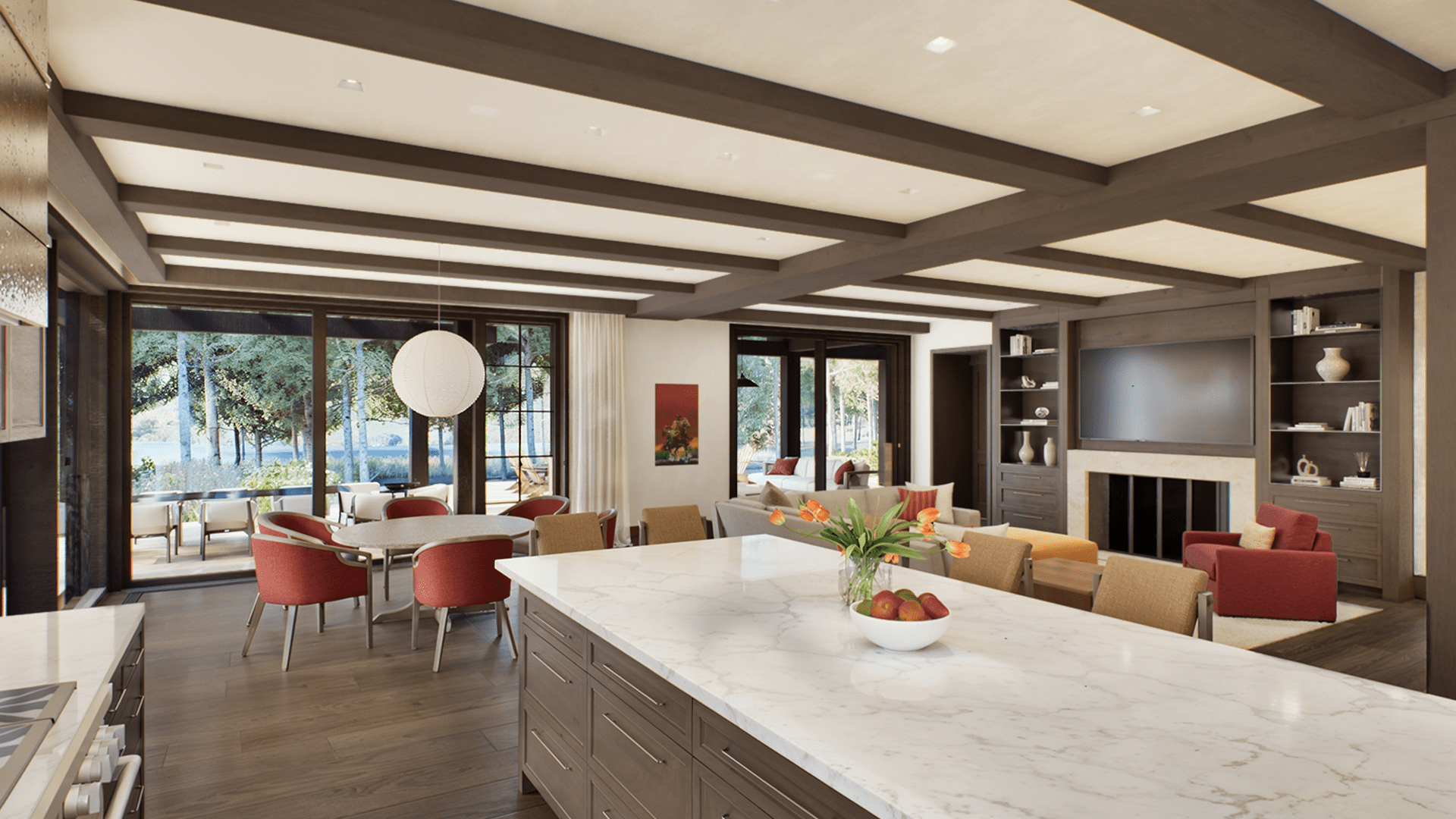
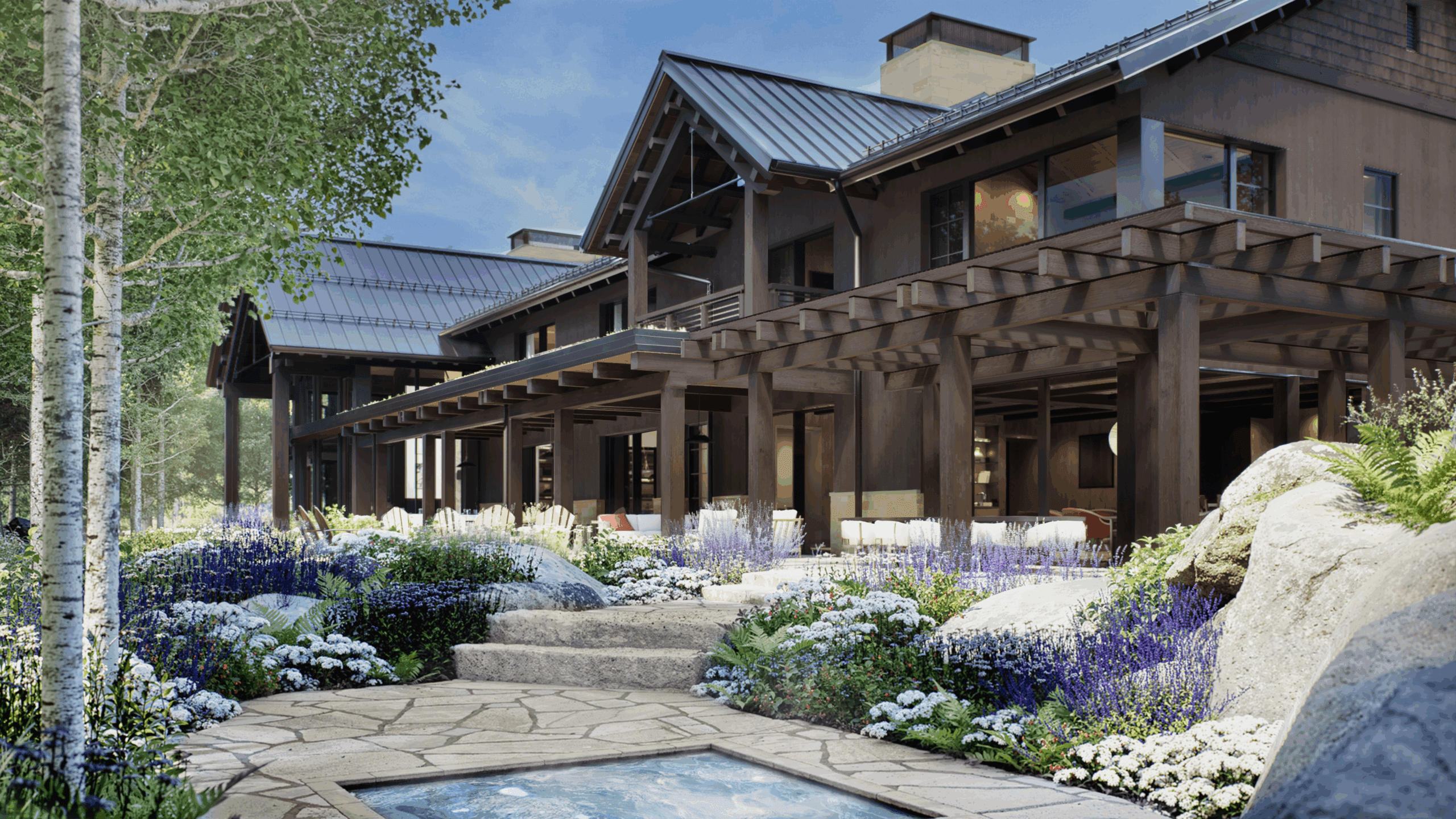
Almost as difficult as reinventing the wheel – architecturally speaking – is transforming a typology: taking a building style so familiar as to be embedded in the collective memory, and doing it differently. And not for novelty’s sake, but rather to reinterpret a beloved historic genre through the considerations of contemporary family life, changing aesthetic tastes, and sustainable building practice.
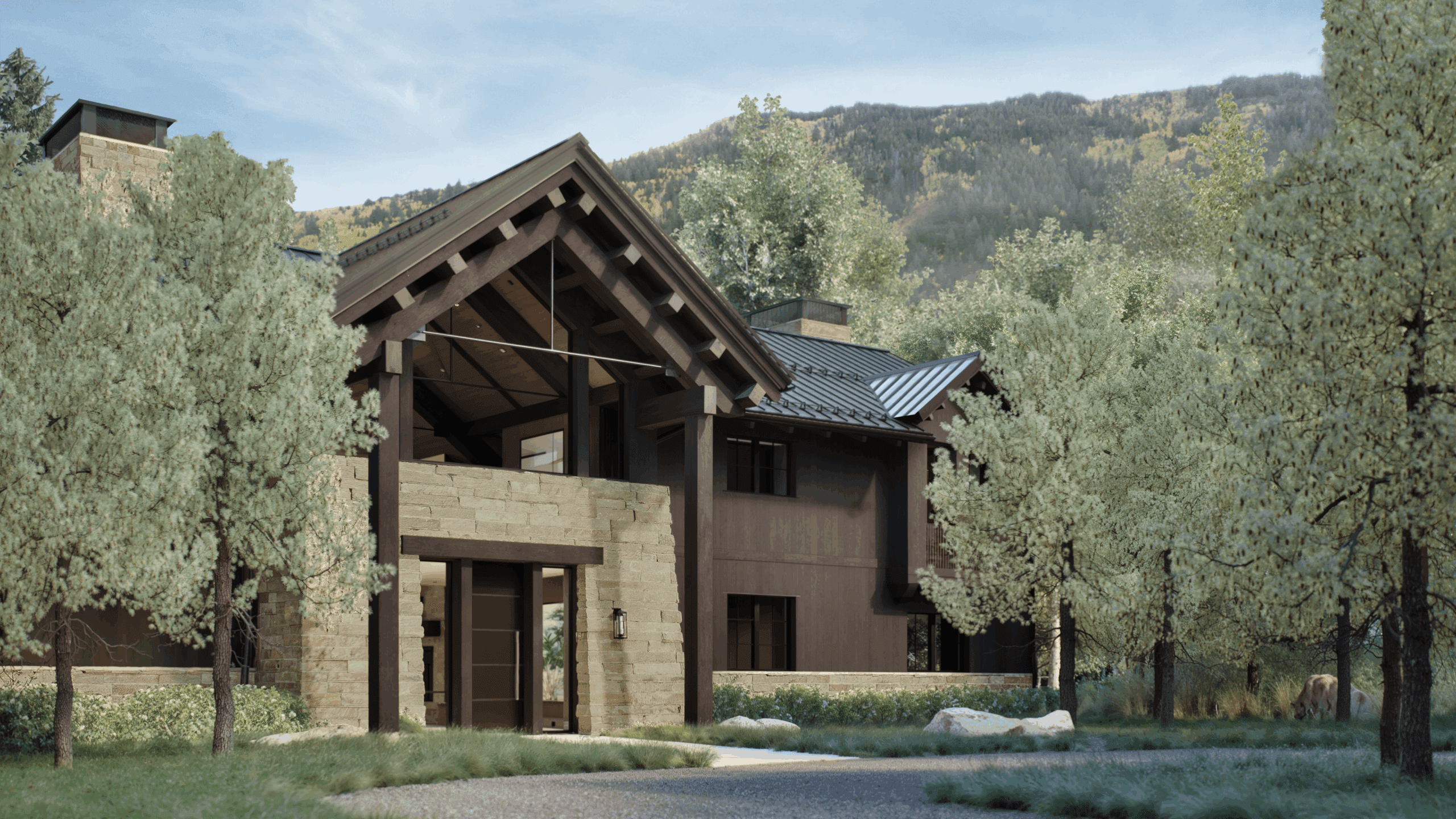
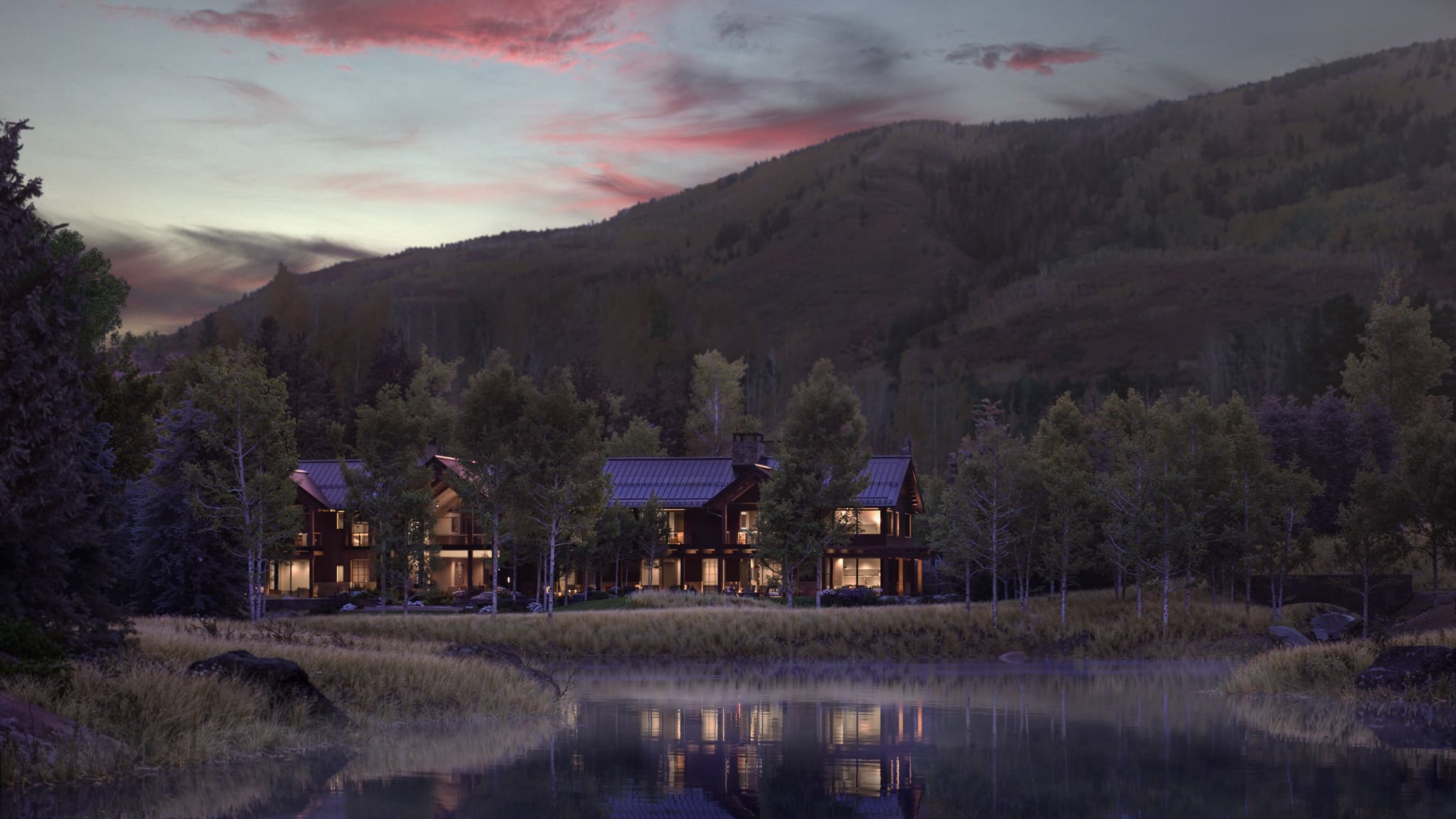
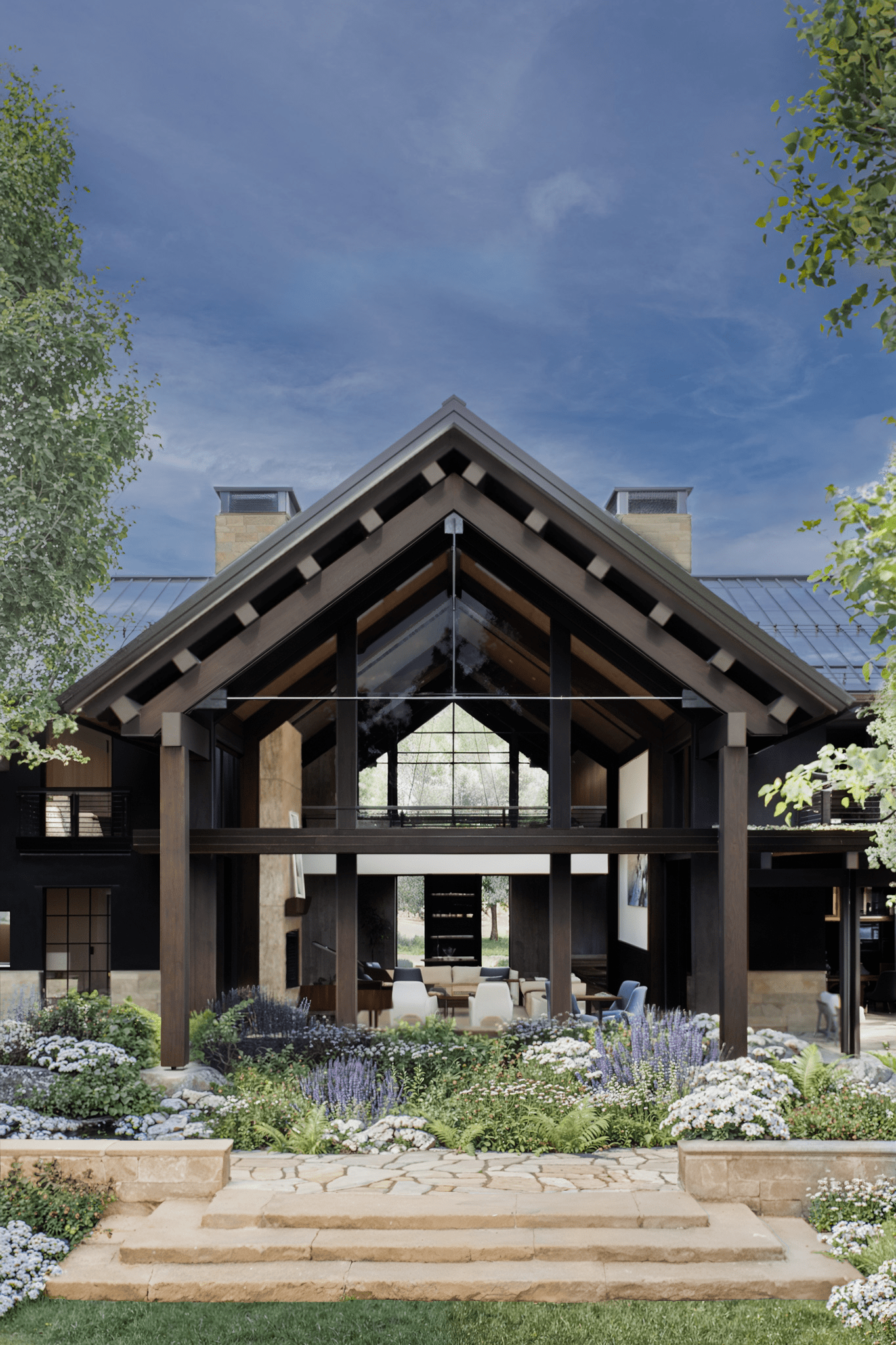
Such were the challenges faced by R+B in the design of Woodlands, a residence nestled in a magnificent valley, beside a pristine lake reflecting sublime mountain views. The architectural model was the national park lodge, a typology associated with rustic grandeur, fast friendship, and the celebration of the American West. All of these traditions remained relevant to the house’s design. But both outside and within, we transformed the late 19th/early 20th century public model to suit the predilections of a modern family in a 21st-century private home.
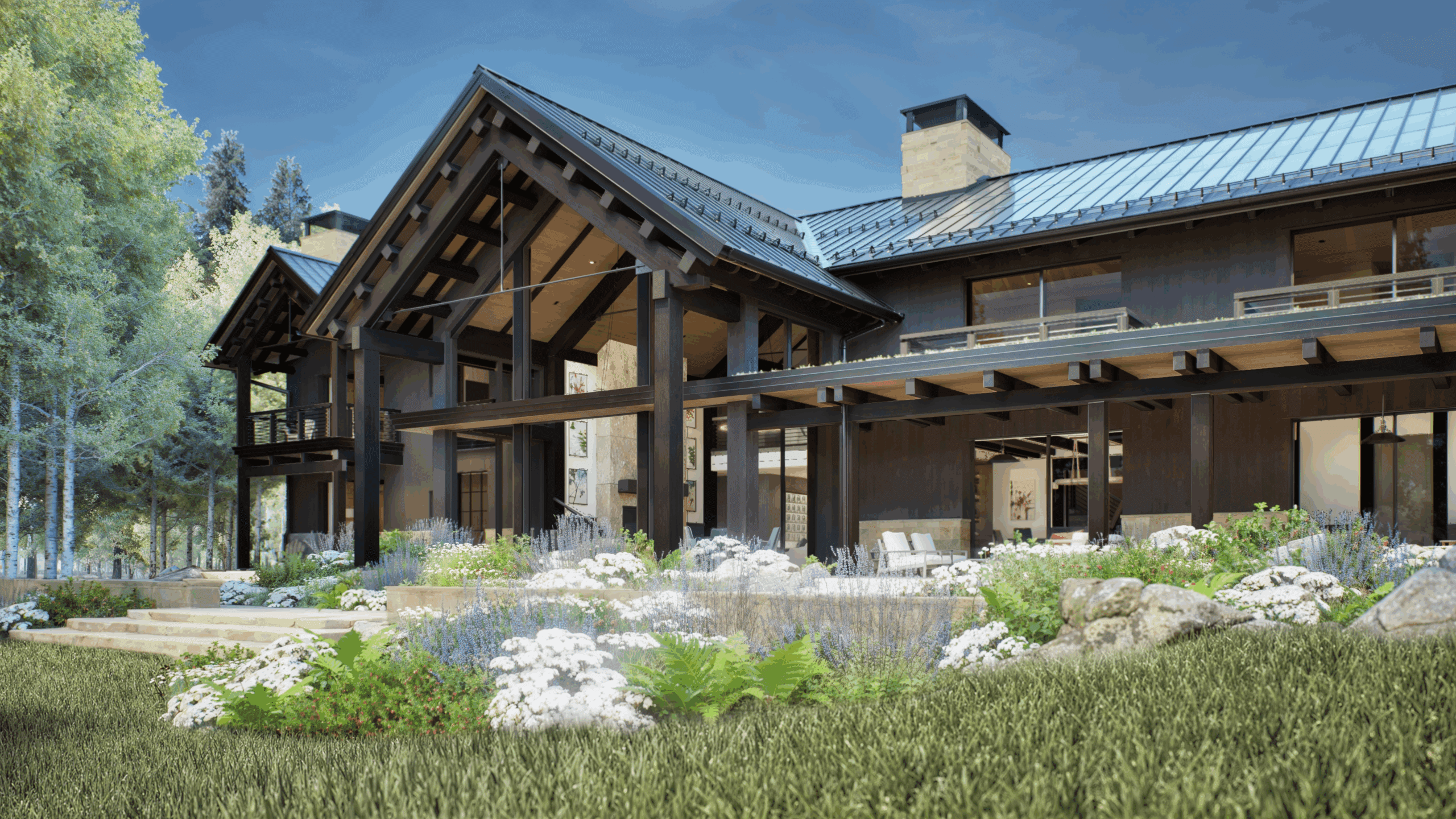
The austere front façade hews closely to the ‘parkitecture’ ideal, with only a back-tilted ‘battered’ stone wall surrounding the front door – suggestive of a temple portal – to subvert expectations. In back, conversely, we took the post-and-beam motif typically associated with traditional lodge interiors and transformed it into an exoskeleton, in the form of a gracious, pergola-style covered porch running the full length of the back elevation, and continuing along the house’s eastern end.
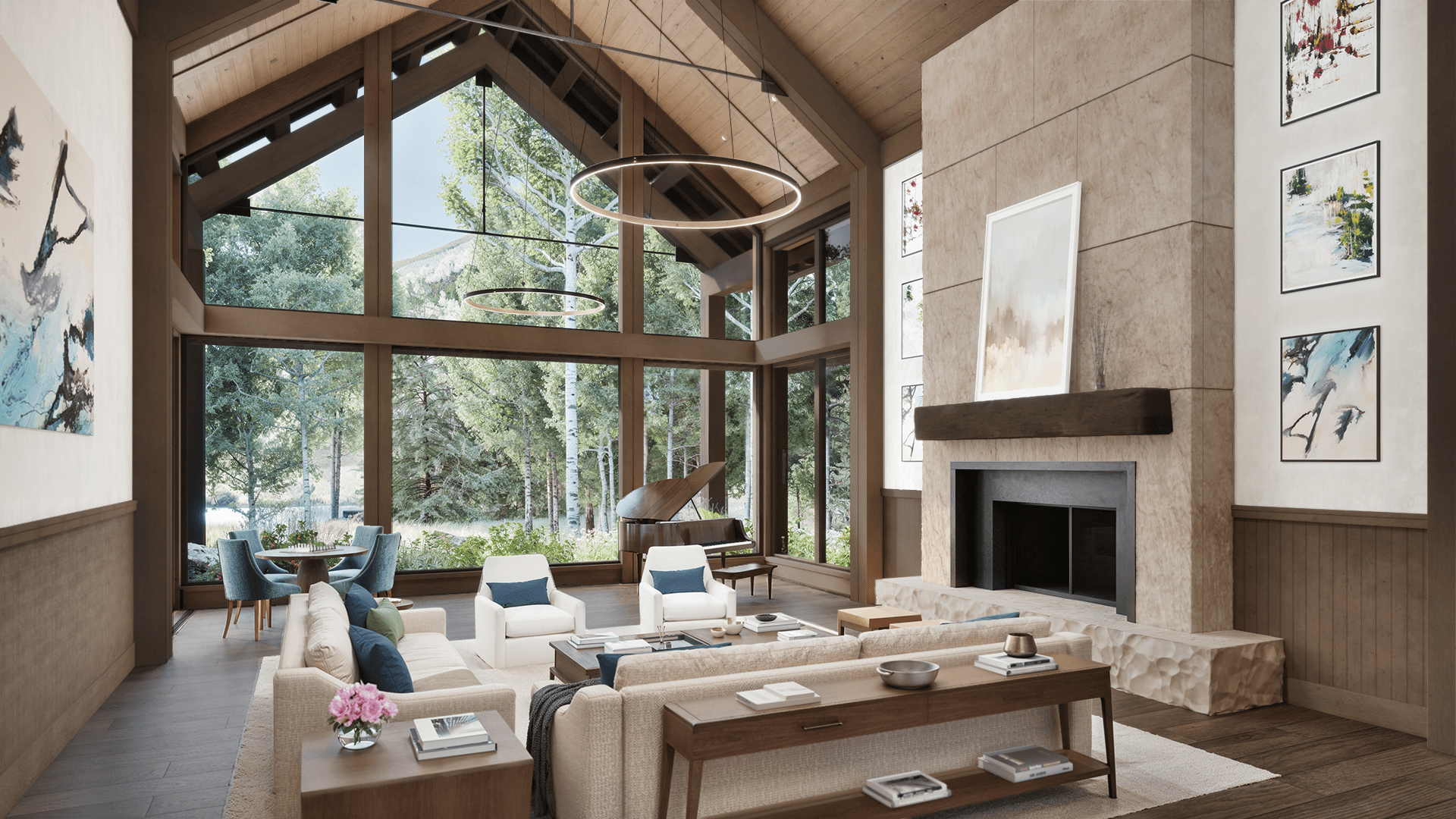
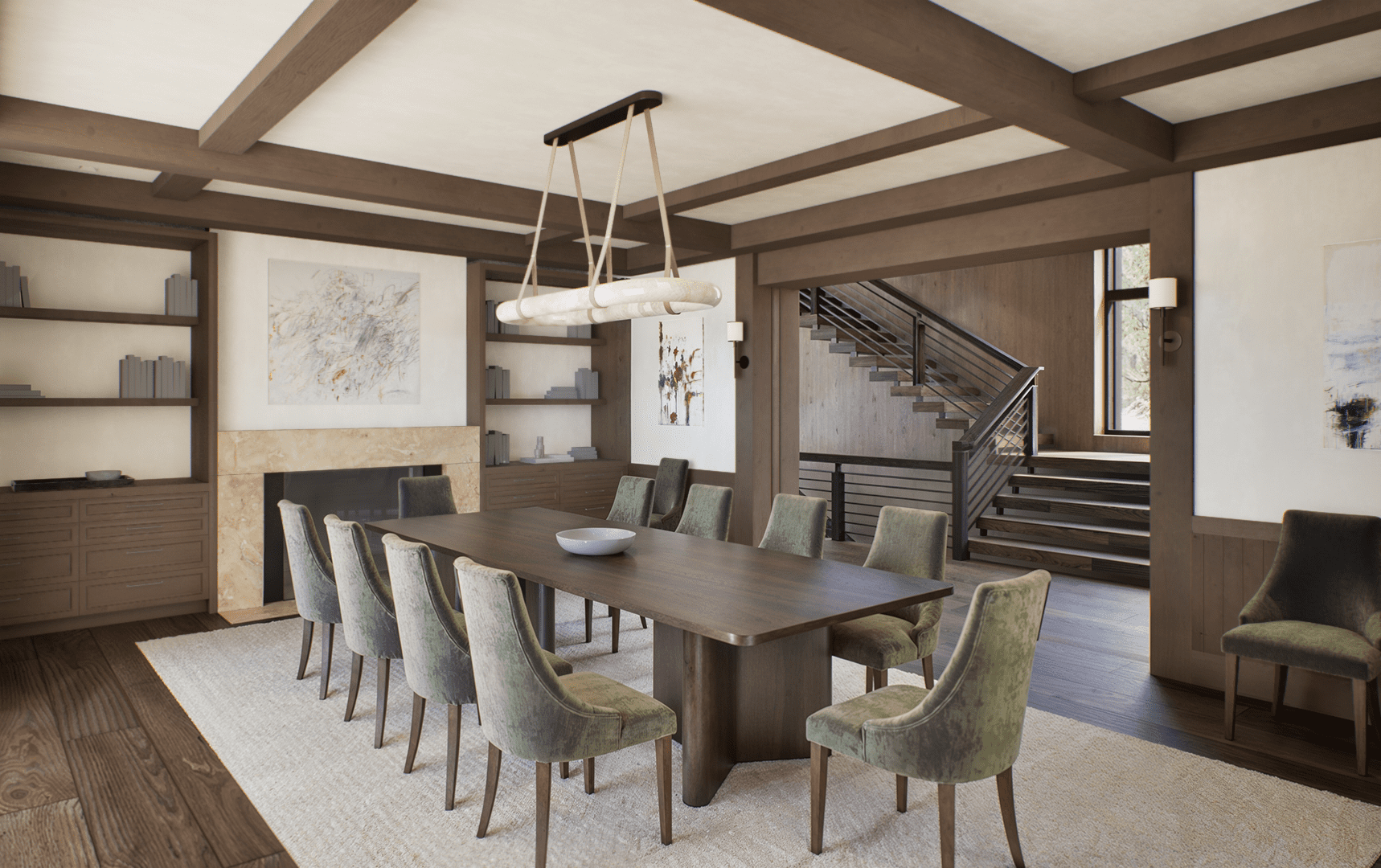
On the interior – replacing a park lodge’s typical aesthetic and social cacophony – the cross-axial plan avoids visual noise and decorative kitsch: apart from the dramatic view from the front door, through the entry and double-height living room, to the lake, the layout is soothingly traditional, with discrete rooms unfolding in a relaxed rhythm; the interior architecture, executed in robust natural materials, offers the clarity and simplicity associated with modern design and contemporary living.
The project incorporates such advanced strategies as maximizing thermal comfort and energy efficiency, via geothermal and solar components, while addressing resiliency and well-being. Filtered outdoor air circulates throughout the interior, finished with natural, non-toxic materials; construction decisions favored lower carbon materials and structural systems, prioritizing wood over steel, and natural insulation over foam. The outcome is a house that not only supports the aesthetic and domestic aspirations of its residents, but stands as a paradigm for near net-zero sustainable design.
Project Size
17,120 SF (36 AC)
R+B Services
-
Architecture
-
Interior Design
-
Visualization
Project Team
-
Landscape Architect: Design Workshop
-
Lighting Designer: Robert Singer
-
Structural Engineer: KL&A
-
Mechanical Engineer: BG Buildingworks
-
Civil Engineer: Roaring Fork
-
Audio/Visual: Paragon